Does Damascus steel in a collectible katana have functional differences?
Updated Feb 2026
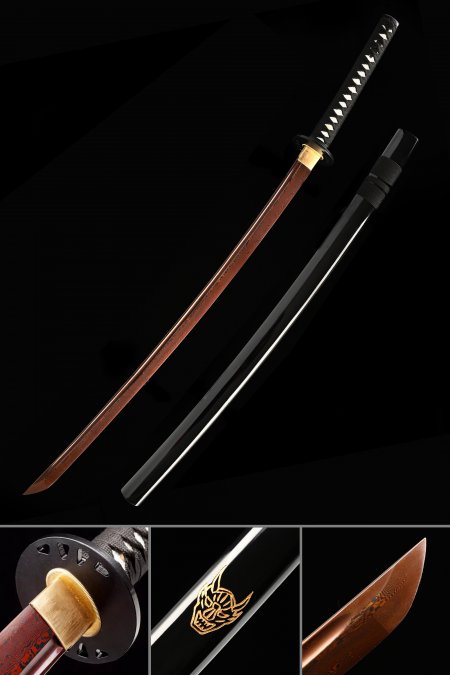
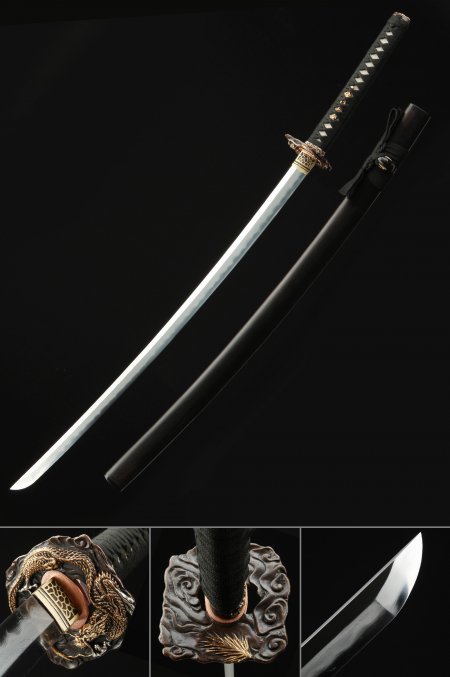
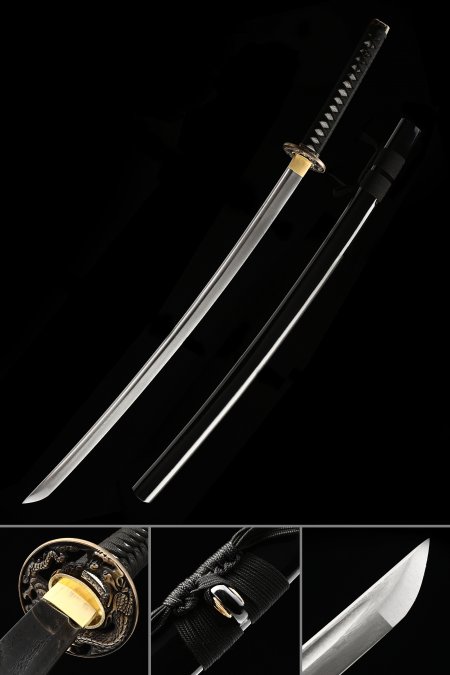
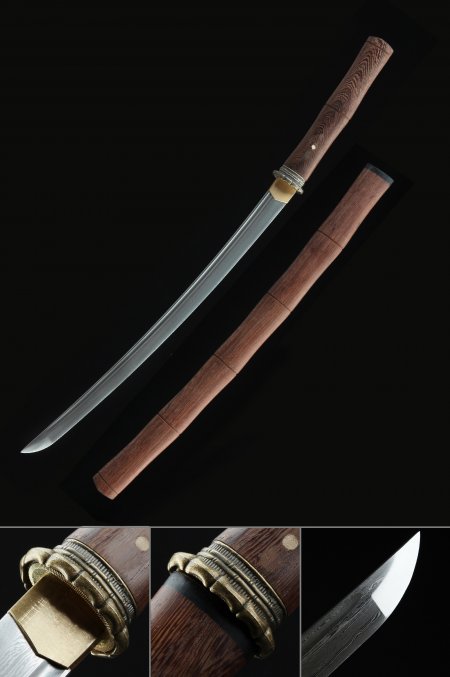
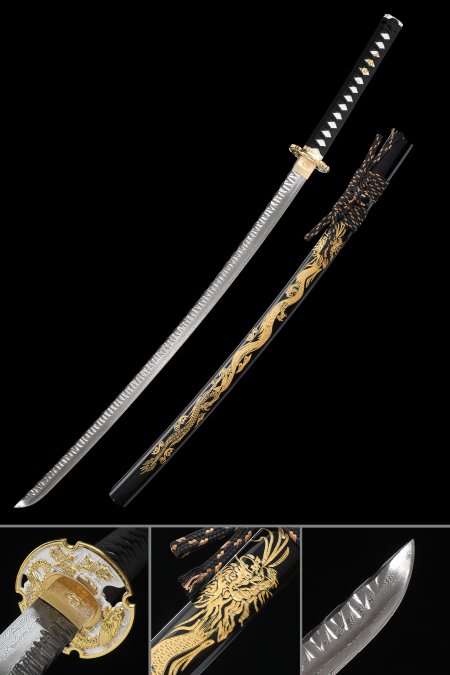
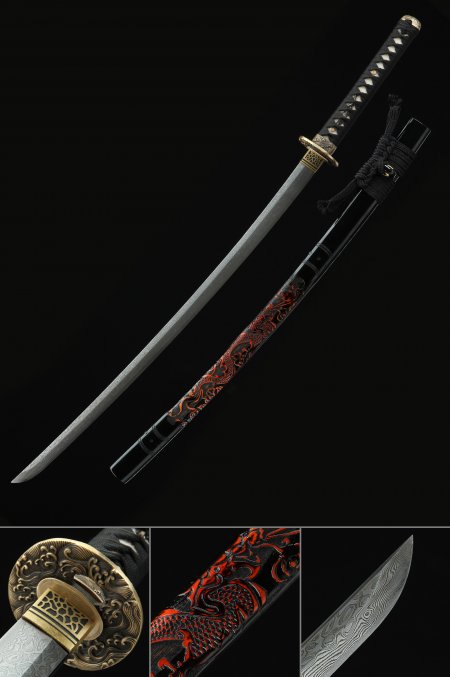
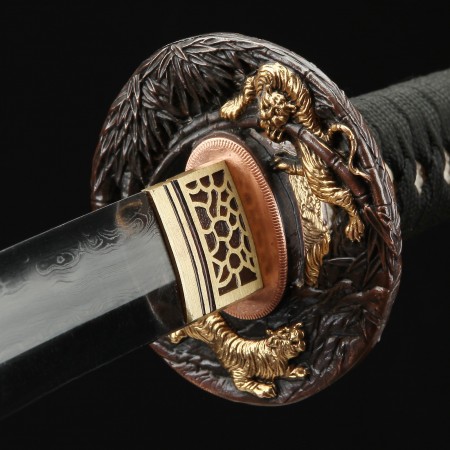
In the context of a collectible display sword, Damascus (pattern-welded) steel is primarily a visual and craft distinction. The billet is formed by layering two or more steel alloys — often 1095 high-carbon and 15N20 nickel steel — then folding, drawing out, and etching the finished blade to reveal the flowing, layered pattern. This process does produce a blade with alternating hard and softer micro-layers across its cross-section, but for display purposes, the real value is visual: the Damascus grain creates a dramatic, organic texture that photographs exceptionally well and pairs with gold tsuba work to produce one of the most visually rich combinations available in collectible Japanese swords. Collectors who want maximum surface interest on both guard and blade typically find Damascus-plus-gold-tsuba pairings to be among the most display-worthy configurations.