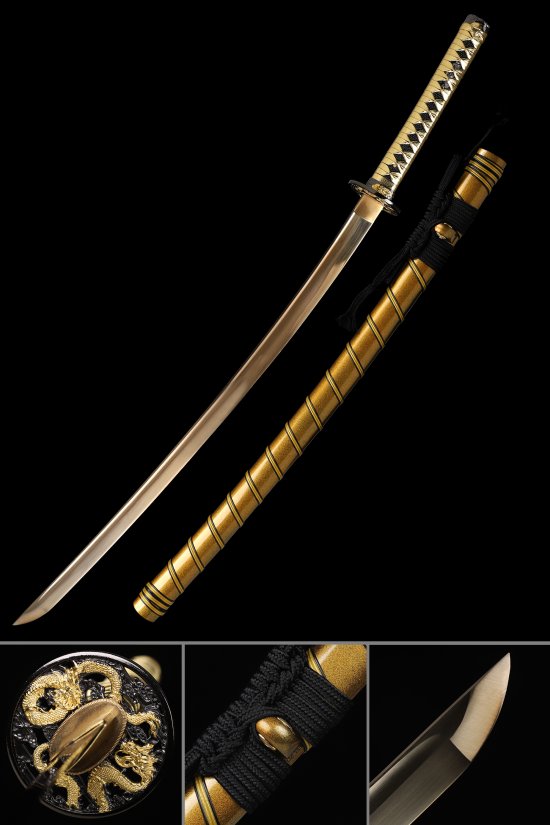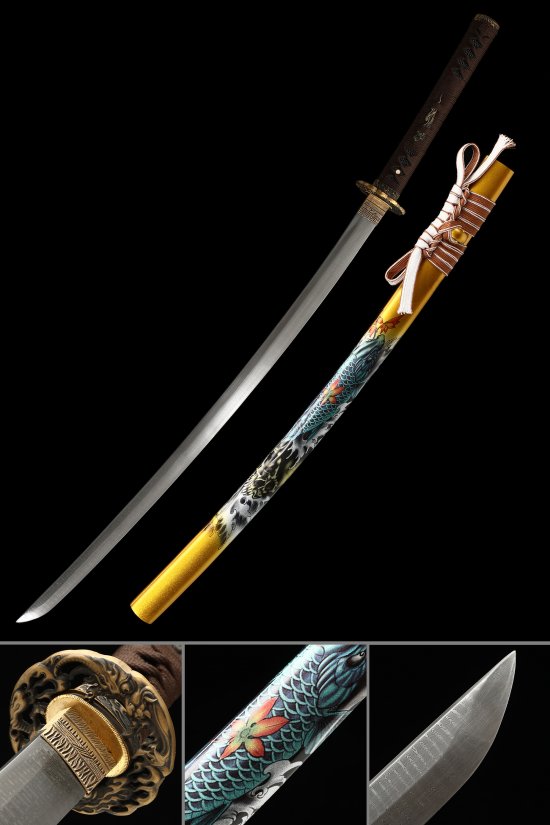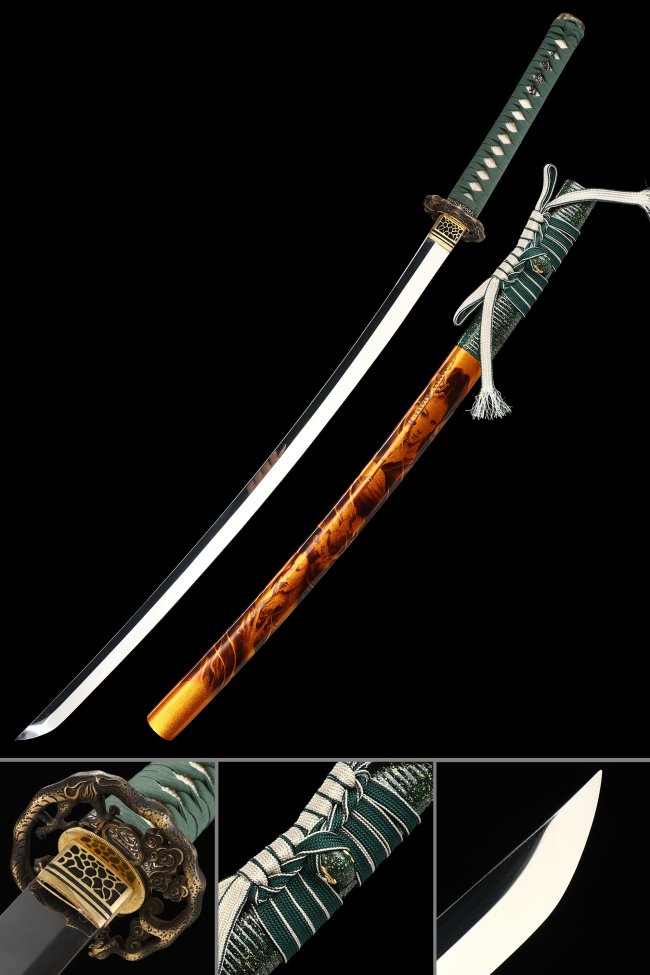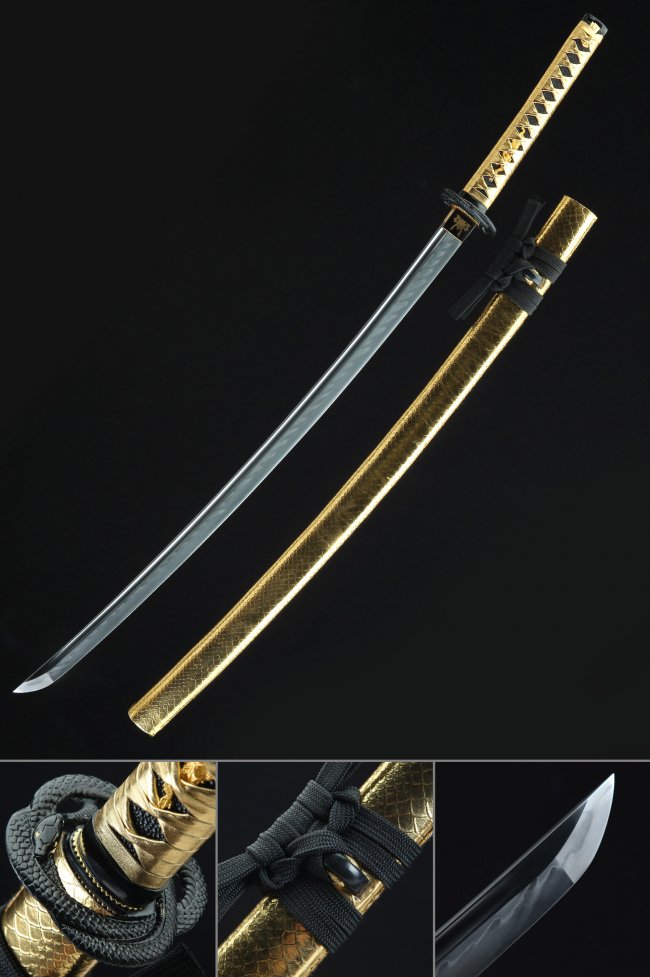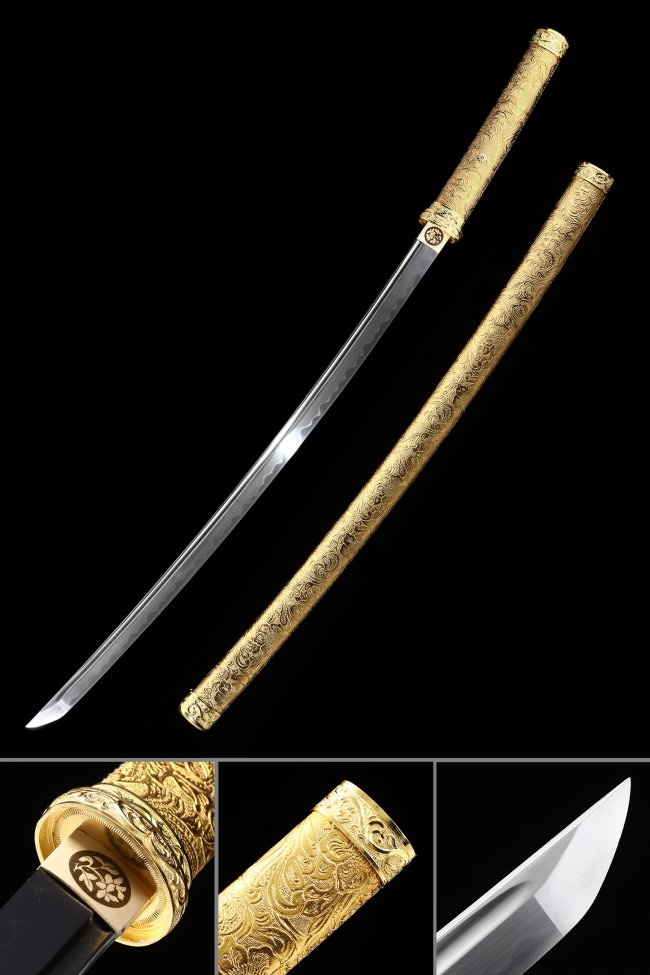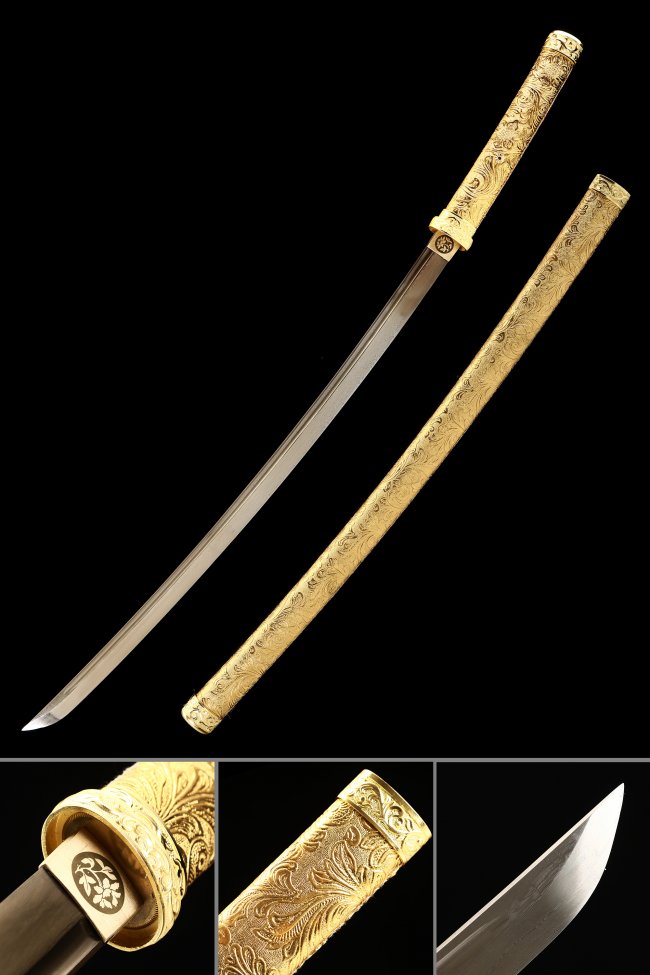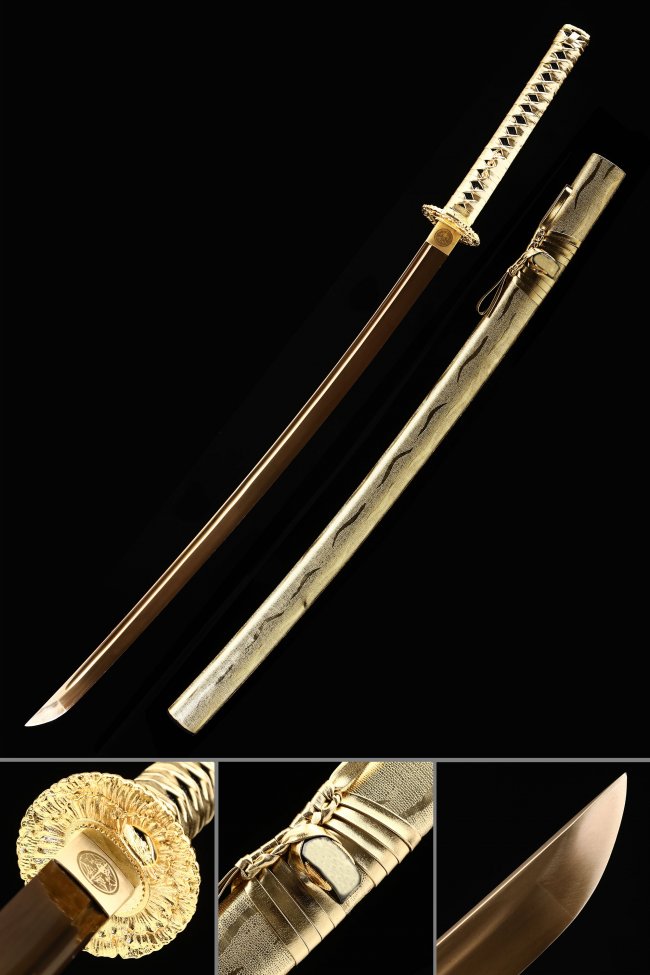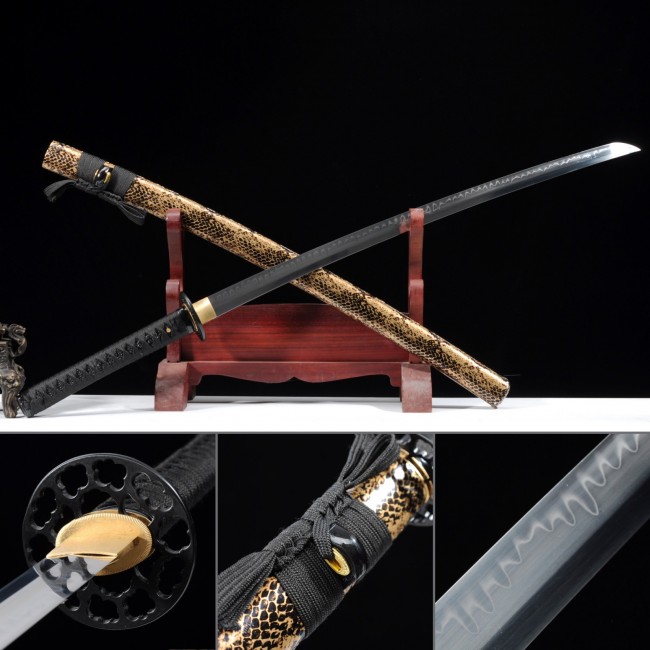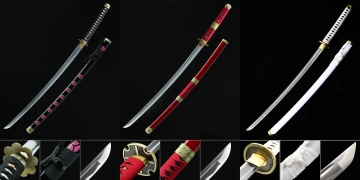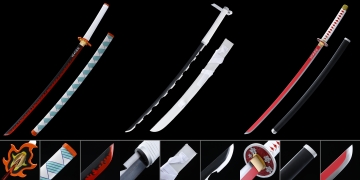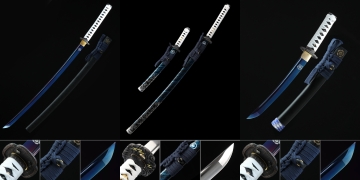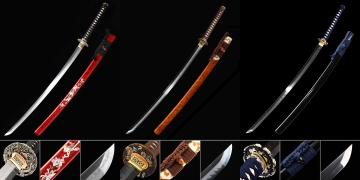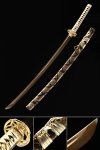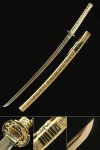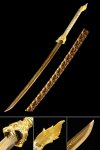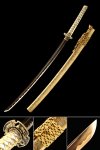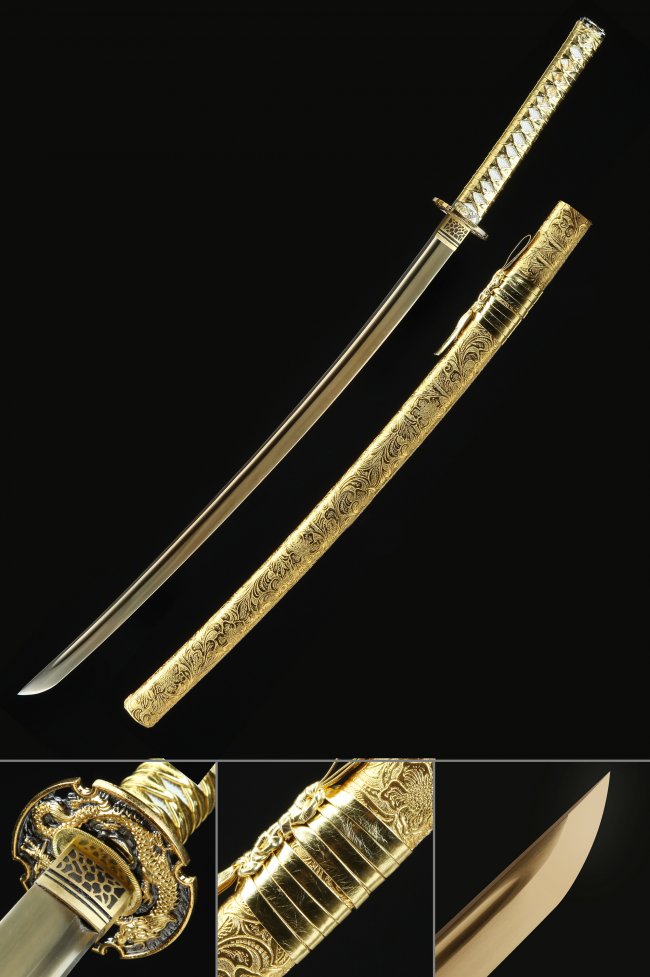
Gold Tsuba Katana

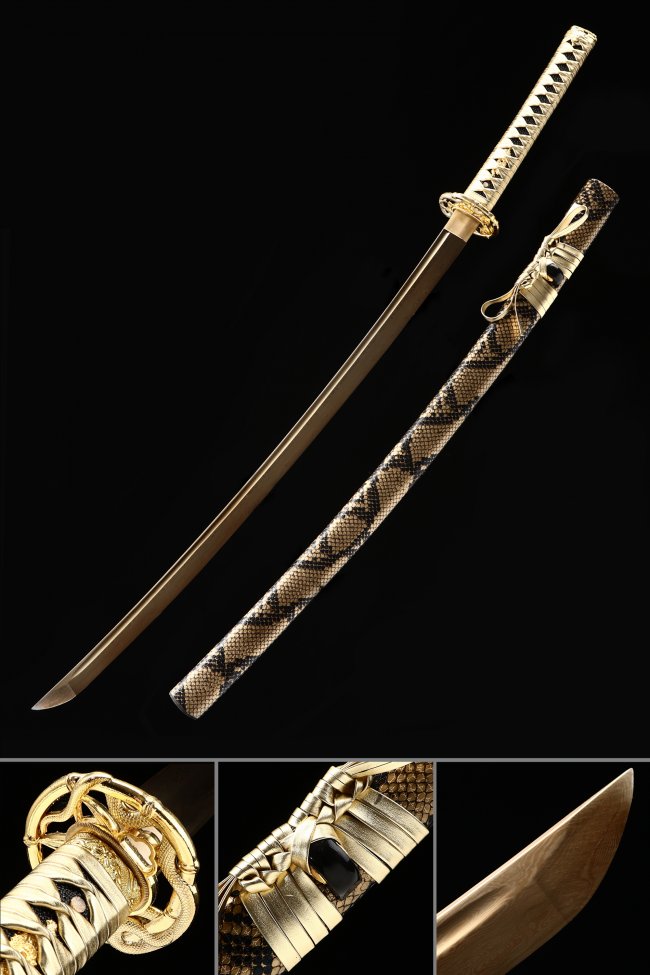
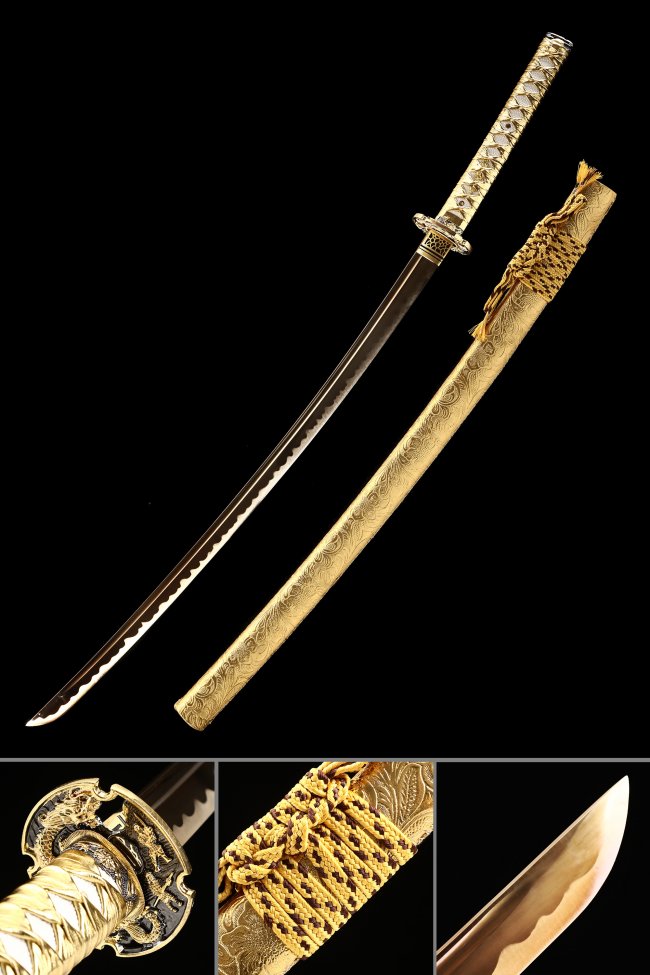
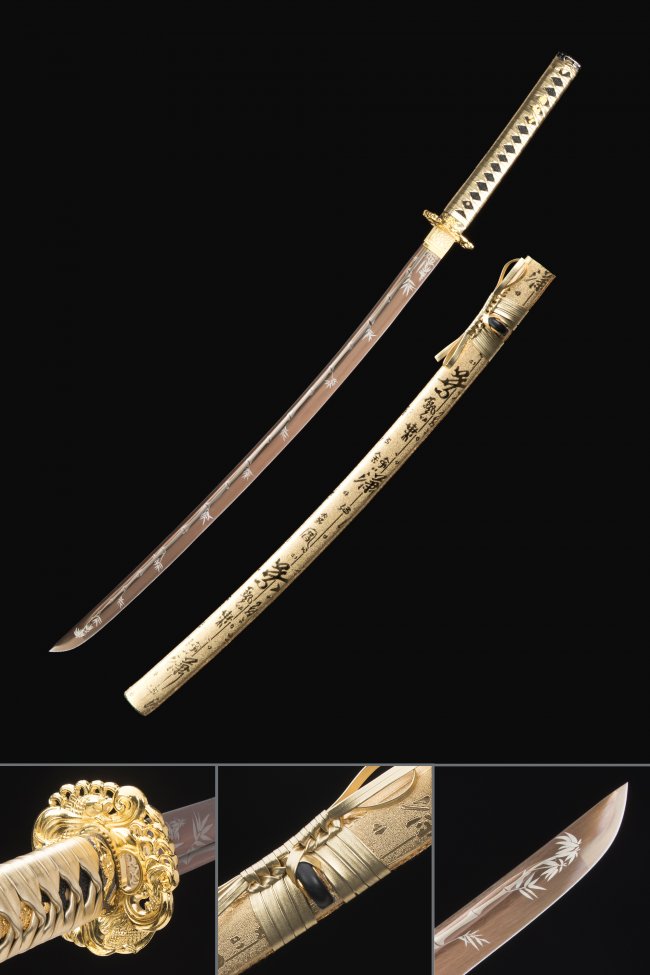
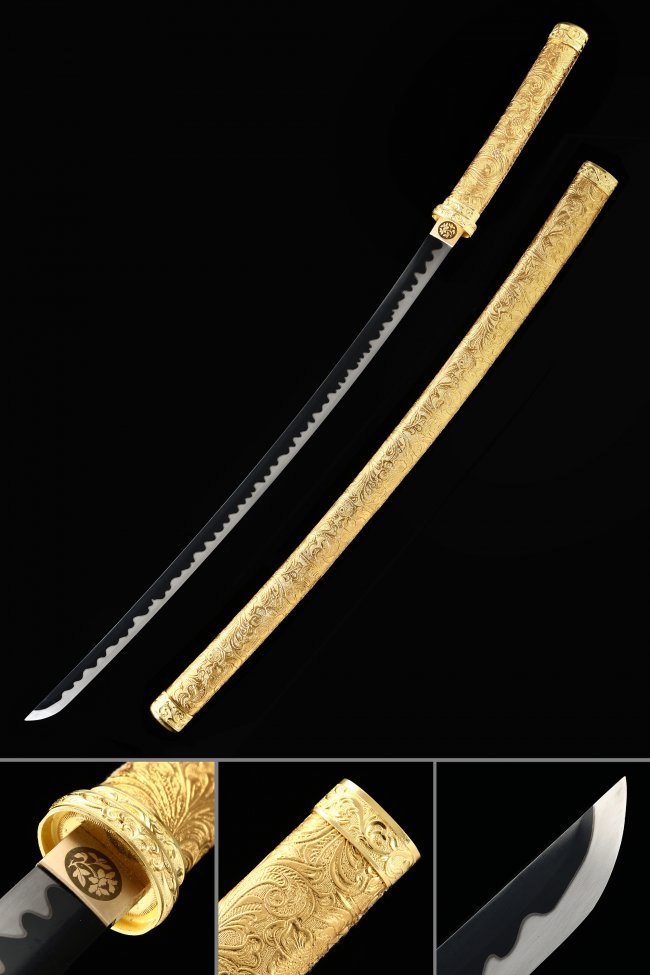
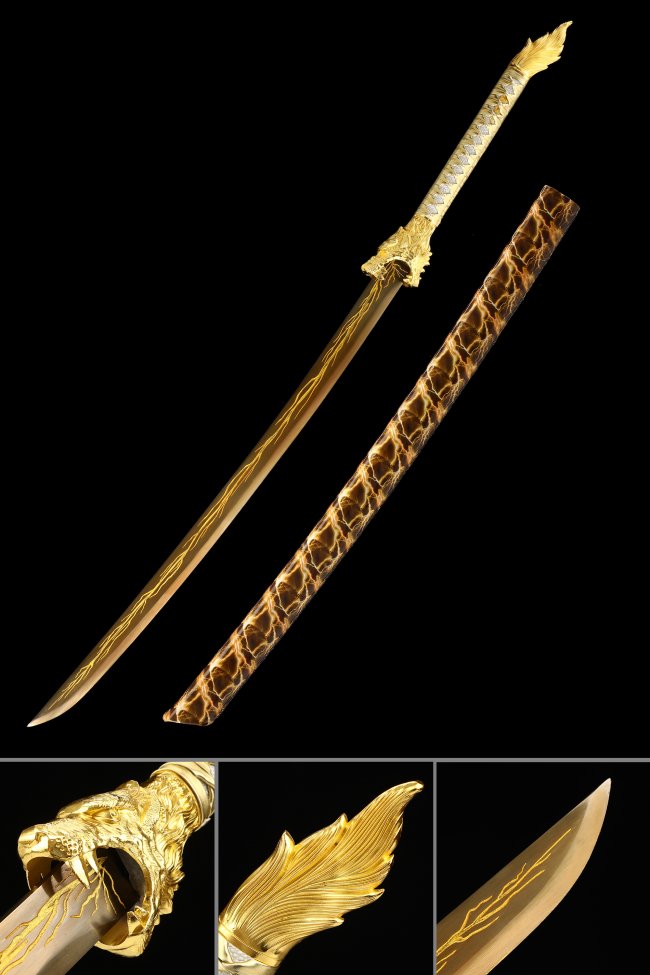
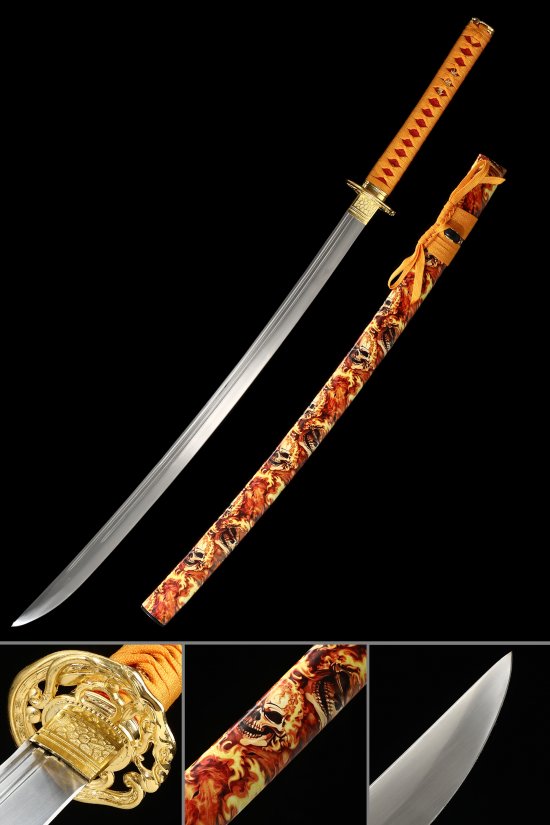
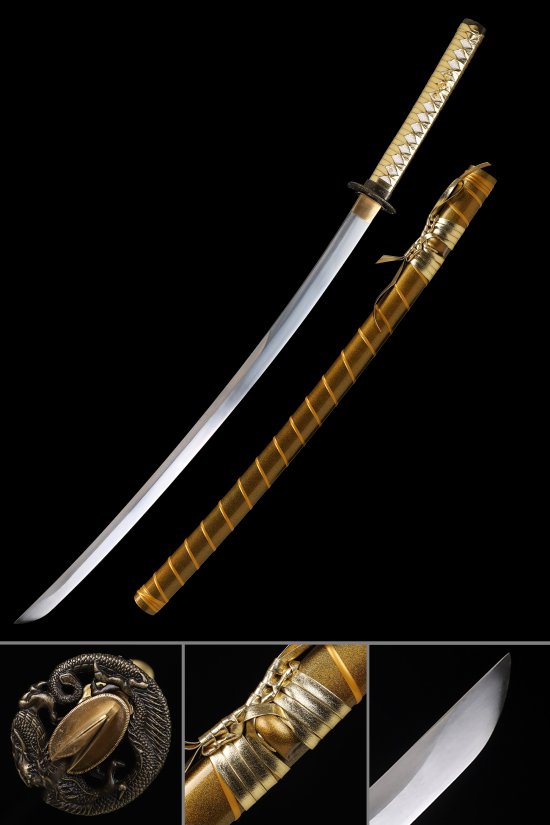
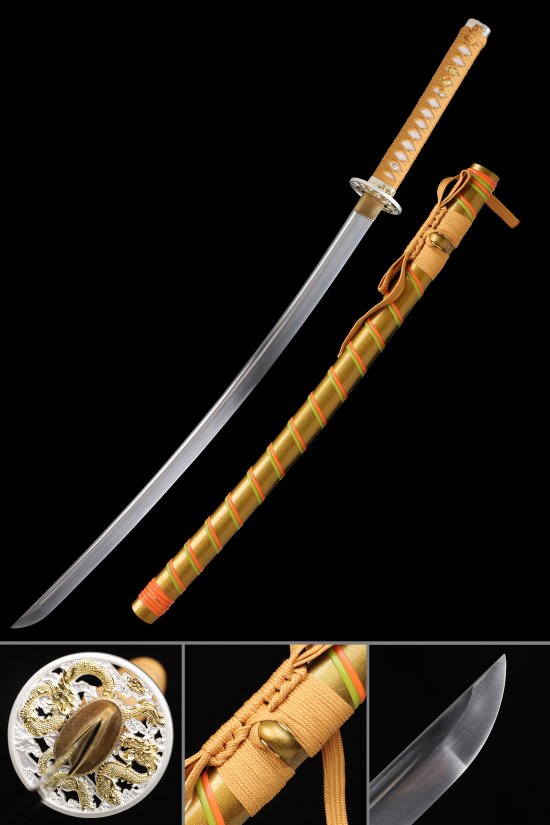
Gold tsuba katana pieces in this collection are defined by their hand-fitted guard work — cast in gold alloy or gilded brass, each tsuba features motifs ranging from coiling dragons and blooming sunflowers to cranes and bamboo, giving every sword a distinct decorative identity. Blades span 1045 carbon steel, high-carbon 1060, Damascus-folded steel, and clay-tempered T10 with authentic hamon, paired with lacquered saya in black, white, purple, and orange. Every piece is full-tang construction and crafted for serious display and collection. Enjoy free shipping and hassle-free returns on your order.

Showing 375 Products

Related Collections

Golden Tanto3 items


13 Reviews

Gold Ninjato2 items


3 Reviews

Gold Wakizashi6 items


72 Reviews

Gold Aikuchi4 items


7 Reviews

Frequently Asked Questions

What materials are used to make gold tsuba on these katana?
The tsuba on these katana are cast from gold alloy — typically a zinc-based or brass-based metal composite finished with a gold-tone coating or plating. This allows craftsmen to achieve sharp, high-relief detail work (dragon scales, petal edges, crane feathers) that would be cost-prohibitive in solid brass and impossible in stamped sheet metal. The result is a guard that holds its sculptural definition clearly, resists minor surface wear during handling, and presents a consistently warm gold tone under both natural and display lighting. It is distinct from historical iron or shakudo tsuba but is the standard material for decorative collectible-grade swords in this price range.
How does T10 clay-tempered steel differ from 1045 in this collection?
1045 carbon steel contains roughly 0.45% carbon and is heat-treated uniformly, producing a blade that is consistent in hardness from edge to spine — reliable, visually clean, and well-suited to display-focused collecting. T10 tool steel contains approximately 1.0% carbon and, more importantly, undergoes clay tempering: a layer of clay paste is applied to the spine before quenching, insulating it so that the spine cools slowly and stays relatively soft while the uncoated edge hardens rapidly. This differential hardening creates the hamon — a visible crystalline transition line unique to each blade. No two clay-tempered T10 blades produce the same hamon pattern, which is a primary reason collectors value them. For a gold tsuba katana, the T10 blade adds a second tier of artisanal detail that makes the overall piece significantly more distinctive.
Does Damascus steel in a collectible katana have functional differences?
In the context of a collectible display sword, Damascus (pattern-welded) steel is primarily a visual and craft distinction. The billet is formed by layering two or more steel alloys — often 1095 high-carbon and 15N20 nickel steel — then folding, drawing out, and etching the finished blade to reveal the flowing, layered pattern. This process does produce a blade with alternating hard and softer micro-layers across its cross-section, but for display purposes, the real value is visual: the Damascus grain creates a dramatic, organic texture that photographs exceptionally well and pairs with gold tsuba work to produce one of the most visually rich combinations available in collectible Japanese swords. Collectors who want maximum surface interest on both guard and blade typically find Damascus-plus-gold-tsuba pairings to be among the most display-worthy configurations.
How should I care for the gold tsuba and lacquered saya long-term?
Gold alloy tsuba should be handled with clean, dry hands or soft cotton gloves — skin oils and salts can dull the finish over time and, on lacquered surfaces, leave permanent marks. For the saya, piano lacquer is moisture-sensitive: store the sword horizontally in a low-humidity environment and avoid placing it near heating vents or exterior walls subject to condensation. The blade itself should receive a light coat of choji oil (traditional camellia oil) every two to three months; apply with a soft cloth, wipe off excess, and never allow oil to pool near the habaki or tsuba fitting, as it can seep into handle wrapping and soften adhesive under the ito. A simple wall mount or display stand that keeps the saya from resting directly on any surface prevents localized lacquer stress over long display periods.
Are these katana good gifts for Japanese sword enthusiasts?
Gold tsuba katana make particularly effective gifts for collectors because the visual impact is immediately legible — even someone unfamiliar with steel grades or tempering techniques can appreciate the craftsmanship of a sculpted dragon or floral guard in gold alloy. For more knowledgeable enthusiasts, the steel options (T10 clay-tempered with real hamon, Damascus pattern-welded, 1060 manganese) provide genuine talking points and collecting merit. A useful gifting strategy is to match the saya color to the recipient's existing display palette — black piano lacquer is the most versatile, while white or purple saya make a bolder statement. If the recipient already collects within a specific style, the Gold Copper Tsuba Katana collection offers complementary guard aesthetics that pair well on a shared display wall.

Customer Reviews

Richard Maverick Robinson Georgia, United States

The blade looks outstanding and it has a really good practical edge. I am a combat haso no kamae fencing instructor with kenjutsu/kendo roots. I used it for test cutting 1 1/2 inch bamboo and tameshigiri with no issues. The katana is mounted solidly and is a good buy for the price point and practicality. It arrived in a timely manner and was well packaged. Is recommend orchard from true katana if you're in the market for a strong, sharp and affordable sword. (Please note that if you want a razor sharp blade then it won't stand up to the stress. The reason is that to get it that sharp the metal has to be thinned.) If you can cut bamboo with it and no damage then it's a good blade. Keep in mind that bamboo is hard and of you damage your T-10 blade or any blade, then it is through no fault of True Katana. Knowing how to cut raises a lot of practice. Grandmaster Maverick- Grovetown, Ga.

T10 Steel Katana with Purple Blade in Red Lacquered Saya - Gold Chrysanthemum Tsuba T10 Steel Katana with Purple Blade in Red Lacquered Saya - Gold Chrysanthemum Tsuba