Bronze Tsuba Naginata
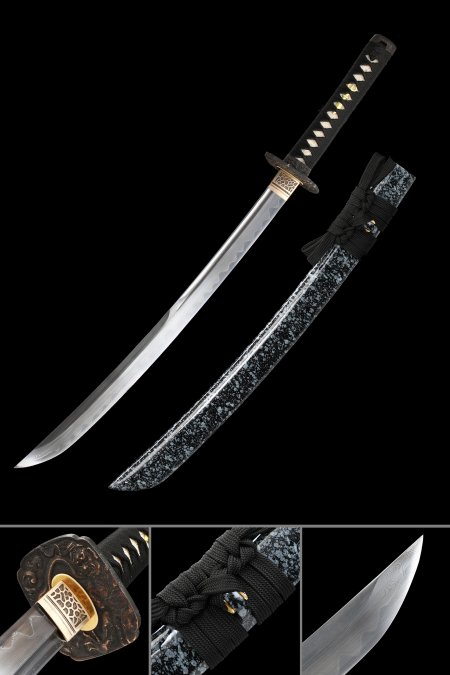
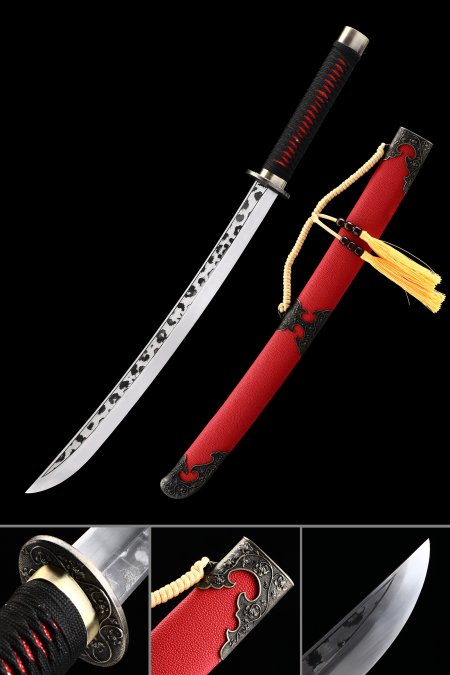
Bronze Tsuba Naginata combines the flowing lines of Japan's iconic pole blade with the warm, antique character of cast bronze fittings. Each piece in this collection is assembled with a full-tang construction and a hand-finished bronze tsuba that develops a natural patina over time — details that serious collectors genuinely appreciate. Enjoy free standard shipping on every order, backed by our hassle-free return policy.
Related Collections
Flame Blade Katana29 items
Teal Sageo Katana39 items
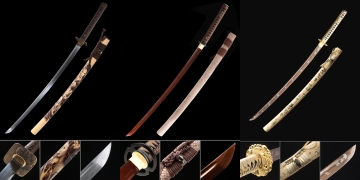
Beige Saya Katana32 items
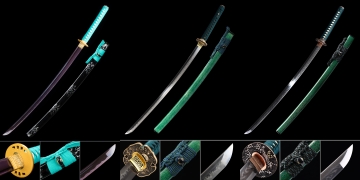
Teal Handle Katana37 items
Frequently Asked Questions
What makes bronze a notable choice for a naginata tsuba?
Bronze is an alloy of copper and tin that has been used in Japanese ceremonial and decorative metalwork for over a thousand years. Unlike iron tsuba, which require regular oiling to prevent rust, bronze develops a stable oxide layer that actually protects the surface over time. This patina deepens from a bright golden tone into rich amber and chocolate browns, giving the guard a living, aged quality that collectors prize. The casting process also allows finer surface relief — detailed flower petals, geometric mon, or openwork silhouettes — than many forged iron guards can achieve at a comparable price point. For display purposes, that combination of low maintenance and increasing visual character makes bronze an excellent long-term choice.
How does a naginata tsuba differ from a katana tsuba in design?
The functional geometry is similar — both are hand guards that sit between grip and blade — but the visual role differs significantly. On a katana hung vertically, the tsuba reads as a horizontal accent near the top of the display. On a naginata displayed diagonally or horizontally, the tsuba sits at the visual center of the entire piece, making it the natural focal point for the viewer's eye. For this reason, naginata tsuba are often designed with slightly bolder relief or more pronounced silhouettes to carry that central visual weight. When evaluating a naginata as a display collectible, the tsuba's proportionality to the overall length of the pole is worth examining closely — a guard that looks modest on a katana can appear delicate on a full-length naginata shaft.
What is a real hamon, and why does it matter on a collectible blade?
A hamon is the temper line that appears on a carbon steel blade after clay tempering — a process in which clay is applied to the spine before the final quench, causing the edge and spine to cool at different rates. The edge hardens into martensite, while the spine stays softer and tougher. Where these two zones meet, a visible boundary forms in the steel's grain structure. On a polished blade this boundary appears as a misty, undulating line ranging from subtle white clouds to bold, active patterns depending on the steel and the smith's technique. Critically, a real hamon cannot be faked with acid etching without close inspection revealing the difference — an authentic one shifts in appearance under different lighting angles. For collectors, a genuine hamon is evidence of real craft investment in the blade rather than purely cosmetic finishing.
How should I care for and store a bronze tsuba naginata long-term?
The blade and the bronze fittings each have different care needs. For the blade, apply a thin coat of choji oil (or a food-grade mineral oil substitute) every two to three months, spreading it evenly and wiping off any excess. This prevents surface oxidation on the carbon steel without attracting dust. For the bronze tsuba, the best approach is deliberate non-intervention — avoid metal polishes, which strip the patina, and simply wipe with a dry microfiber cloth if fingerprints accumulate. Store the naginata horizontally on a padded display rack, away from direct sunlight and humidity fluctuations, both of which can accelerate uneven patina development. Keep the saya on the blade when not displaying the bare piece to protect the polish.
Is a bronze tsuba naginata a good display centerpiece alongside a katana set?
Absolutely — the naginata's extended form creates a strong visual contrast to the shorter katana and wakizashi, making any multi-piece display immediately more dynamic. Mixing a bronze-fitted naginata with iron-tsuba katana actually works well because the warm tones of the bronze draw the eye first, then direct attention across the rest of the arrangement. Thematically, a naginata paired with a matching or complementary katana reflects historical Japanese aesthetics, where different blade forms were understood as parts of a complete martial and ceremonial tradition rather than isolated objects. For collectors building a wall or alcove display, positioning the naginata at the center or top tier with katana flanking it creates a balanced, gallery-quality presentation.