Dragonfly Tsuba Katana
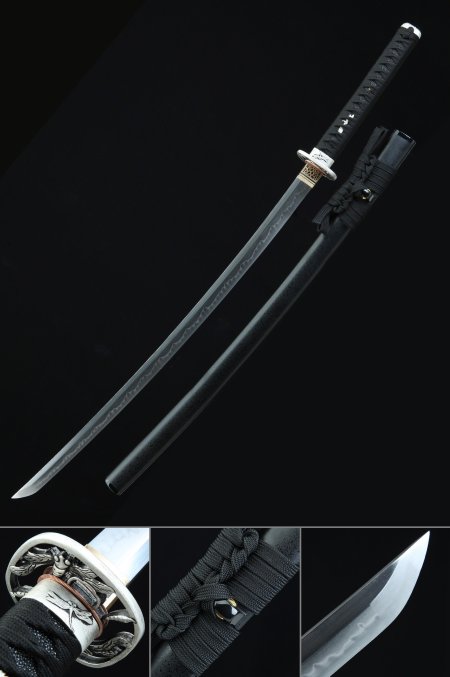
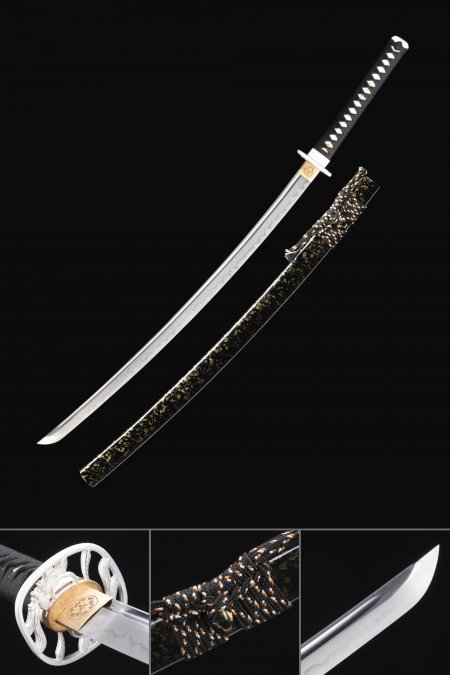
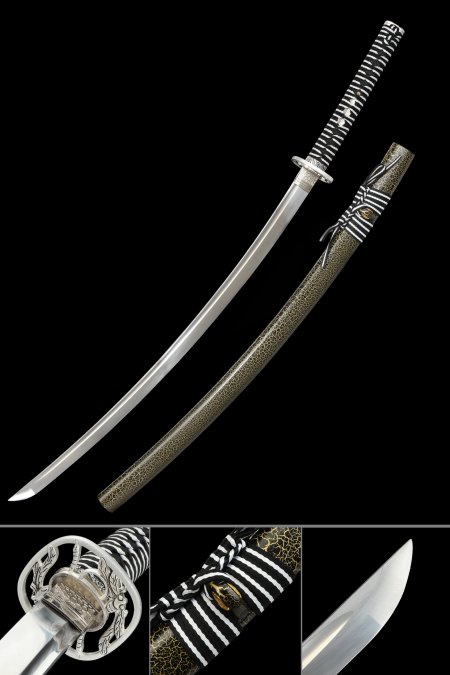
The Dragonfly Tsuba Katana collection brings together hand-forged blades and finely cast dragonfly guard fittings — a pairing rooted in the samurai tradition of wearing the dragonfly as a symbol of agility, precision, and forward momentum. Each piece features full-tang construction in either 1060 or T10 carbon steel, paired with hand-lacquered hardwood saya and wrapped tsuka in contrasting color combinations. These katana are crafted as collector-grade display pieces with the kind of material detail that serious enthusiasts appreciate. Enjoy free shipping and hassle-free returns on every order.
Related Collections
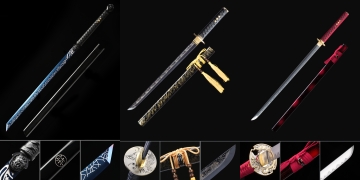
Dragon Tsuba Ninjato18 items
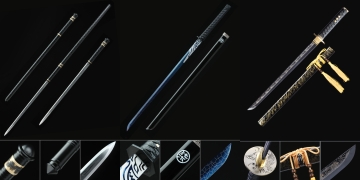
Wave Blade Ninjato19 items
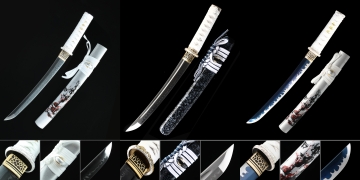
Geometric Tsuba Tanto22 items
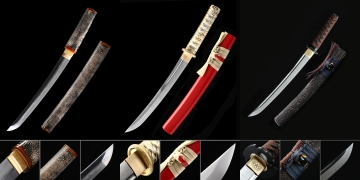
Plain Tsuba Tanto16 items
Frequently Asked Questions
What does the dragonfly symbolize on a katana tsuba?
In Japanese warrior tradition, the dragonfly — known as "tombo" — was associated with agility, decisiveness, and the ability to move forward without retreat. Samurai adopted it as a motif on armor and sword fittings because of these associations. A tsuba bearing the dragonfly image was not simply an ornament; it communicated something about the bearer's values. For collectors today, a dragonfly tsuba connects the piece to this layer of historical symbolism, giving it cultural depth that goes well beyond the aesthetic of the casting itself.
What is the difference between 1060 and T10 steel in these katana?
1060 carbon steel contains approximately 0.60% carbon, which puts it in a range that balances edge retention with resistance to stress fractures — a practical choice for forged display pieces that will be handled and inspected regularly. T10 tool steel carries a higher carbon content, closer to 1.0%, and also contains trace amounts of silicon that improve wear resistance. Crucially, T10 blades in this collection are clay-tempered, a differential hardening process that produces a visible hamon — the wavy crystalline line along the edge where hard martensite meets softer pearlite steel. Collectors specifically seek out pronounced hamon activity, and T10 tends to produce a more dramatic, detailed hamon than 1060 under comparable forging conditions.
How should I store a lacquered hardwood saya long-term?
Lacquered hardwood saya are sensitive to humidity fluctuations. Prolonged exposure to high humidity can cause the lacquer to bubble or crack, while very dry conditions may shrink the wood and loosen the fit. Ideal storage conditions are between 40–55% relative humidity at stable room temperature. Keep the saya away from direct sunlight, which degrades lacquer finish over time. If storing the katana assembled in its saya for extended periods, apply a light coat of camellia or choji oil to the blade before sheathing to prevent moisture contact with the steel. Avoid storing in airtight plastic cases without a desiccant, as condensation can form when temperature shifts occur.
Are dragonfly tsuba katana a good option for display gifting?
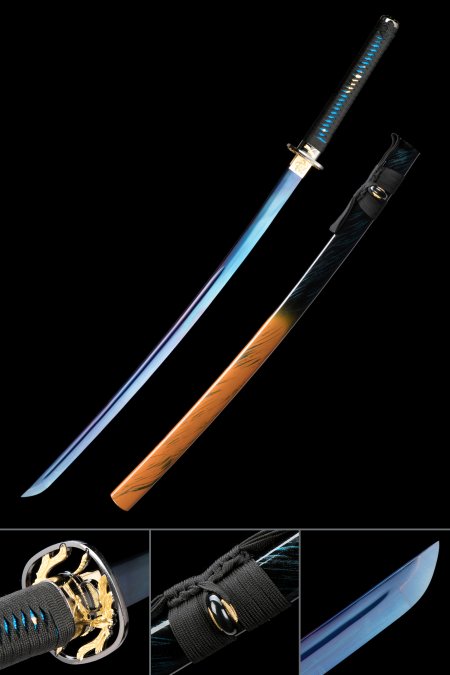
A dragonfly tsuba katana makes a distinctive gift for collectors who appreciate Japanese art history, martial arts heritage, or decorative metalwork. The dragonfly motif is specific enough to feel considered rather than generic, and the combination of a hand-lacquered saya with a cord-wrapped tsuka gives the piece visual impact on a wall mount or stand without requiring the recipient to have prior knowledge of sword collecting. Within this collection, the black-gold crackle saya variants and the blue-blade piece tend to be the most visually arresting for display contexts, while T10 clay-tempered options carry additional collector appeal for those who understand and value hamon quality.
What maintenance does a carbon steel display blade actually need?
Carbon steel — whether 1060 or T10 — will oxidize if left untreated, especially in humid environments. For a display piece, the minimum maintenance is a light application of camellia oil (traditional) or a light mineral oil every two to three months, or whenever the blade appears dry under inspection. Use a soft cotton cloth to apply a thin, even coat, then wipe away the excess. Fingerprints are a common source of localized rust spots because skin oils contain moisture and salts, so handle the blade with clean cotton gloves or wipe down after any direct contact. The blue-blade variant in this collection has a heat-treated oxide layer that offers some additional surface protection, but it still benefits from periodic oiling.