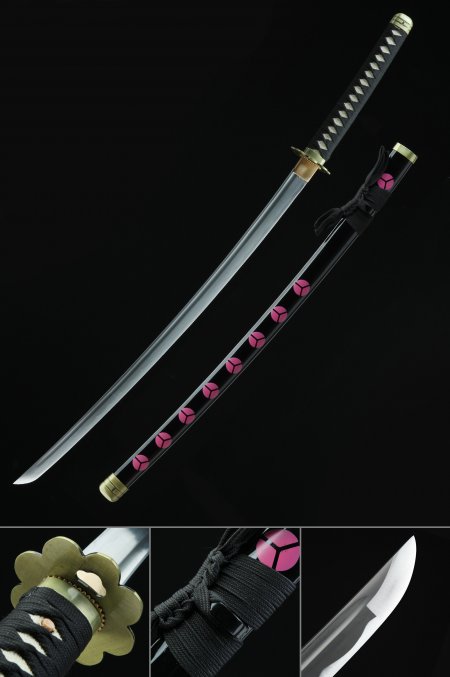
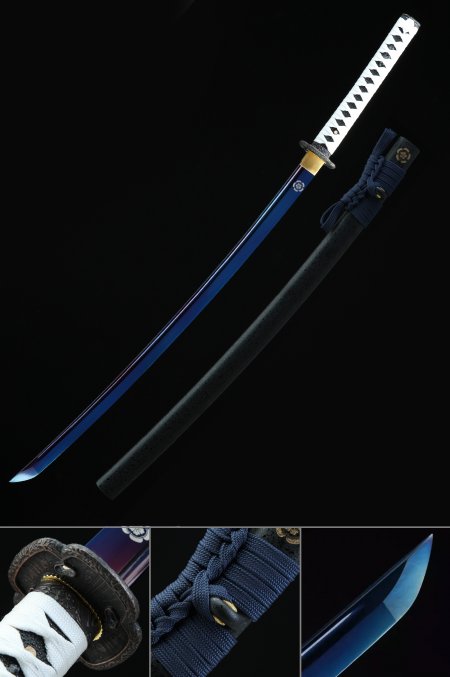
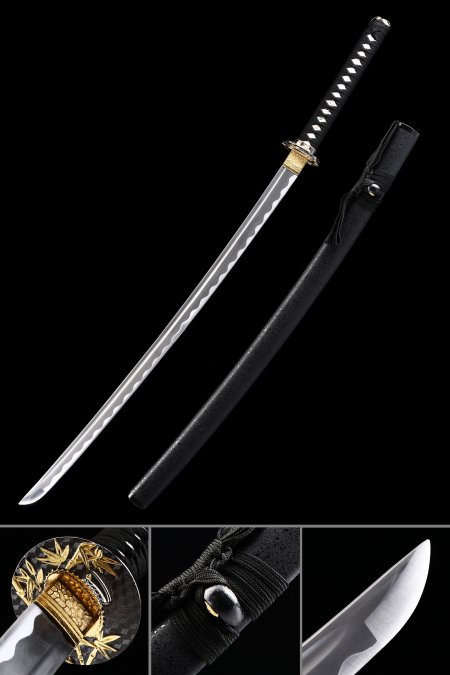
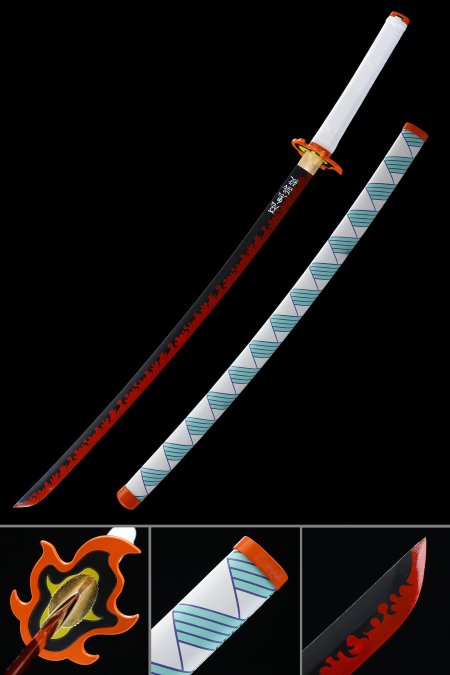
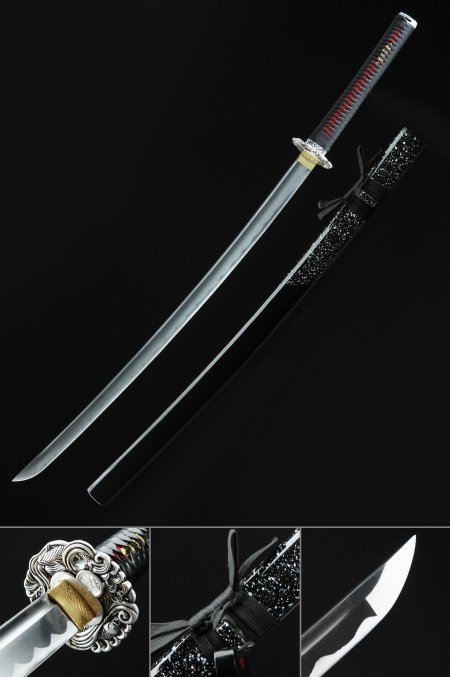
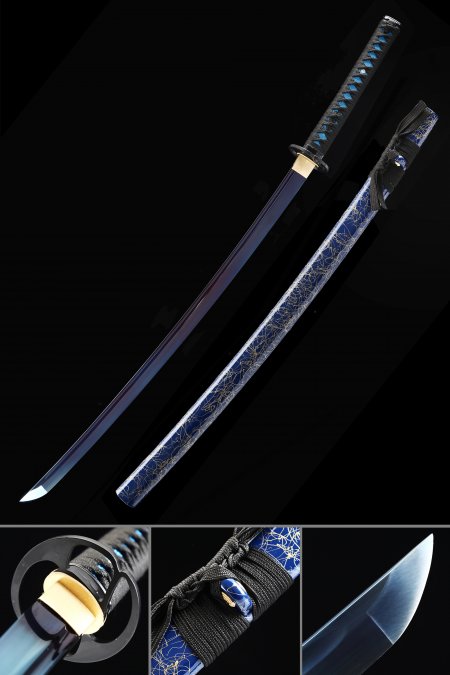
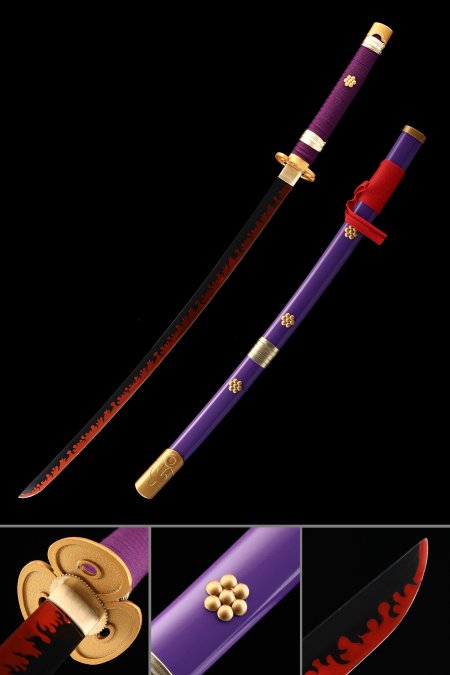
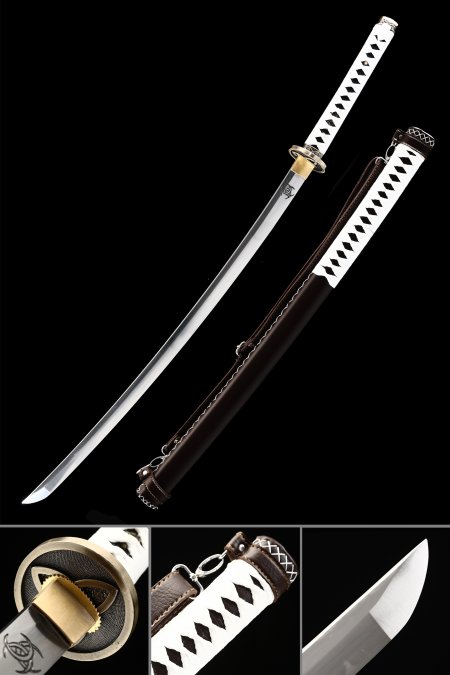
The tachi predates the katana by roughly three to four centuries and was the standard long sword of the mounted samurai during the Heian through Muromachi periods. The most immediate structural difference is curvature: a tachi typically carries a deeper sori (arc) measured from the base of the blade, which suited the geometry of drawing from horseback. Equally important is how each sword was worn — the tachi was suspended edge-downward (ha-sage) from the obi using cords called ashi, while the later katana was thrust through the belt edge-upward (ha-mune). Blade length also trends longer on the tachi, commonly exceeding 70 cm. On a correctly made tachi, the mei (smith's signature on the tang) is placed so it faces outward when the sword is worn in the traditional ha-sage position, which is a reliable authentication detail collectors use to distinguish a true tachi configuration from a re-purposed katana blank.