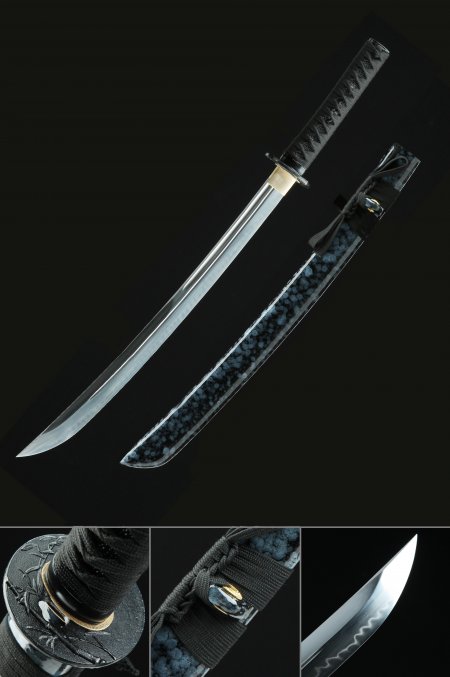
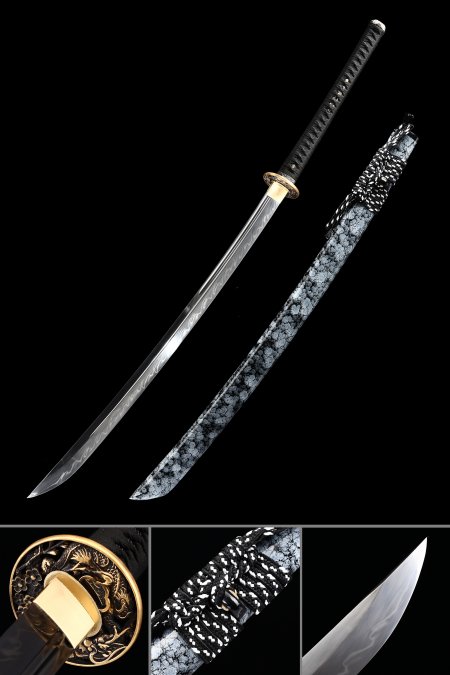
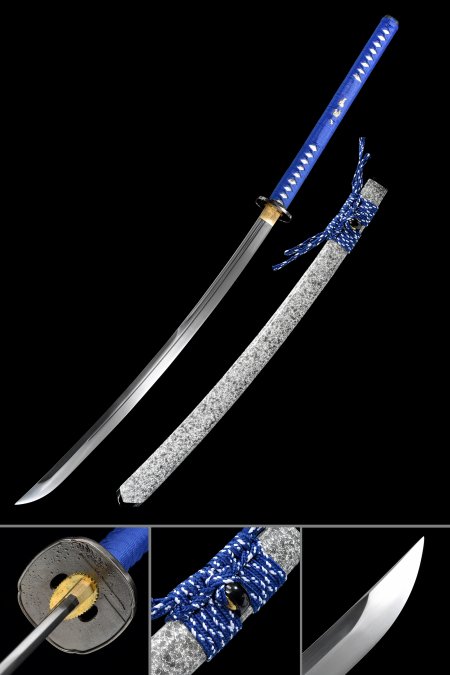
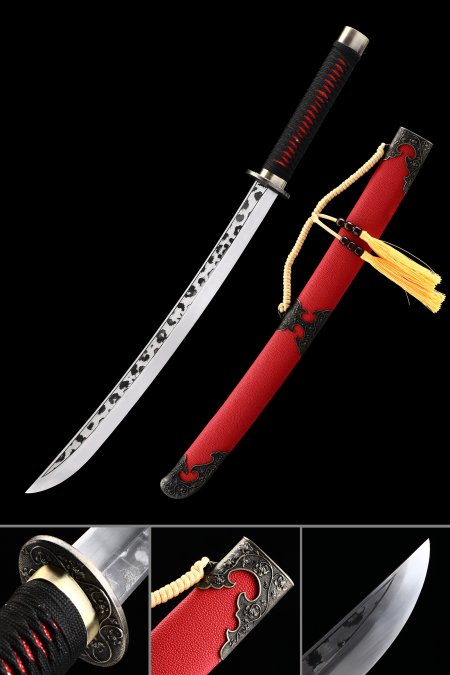
How does clay tempering create a real hamon on a naginata?
Updated Feb 2026
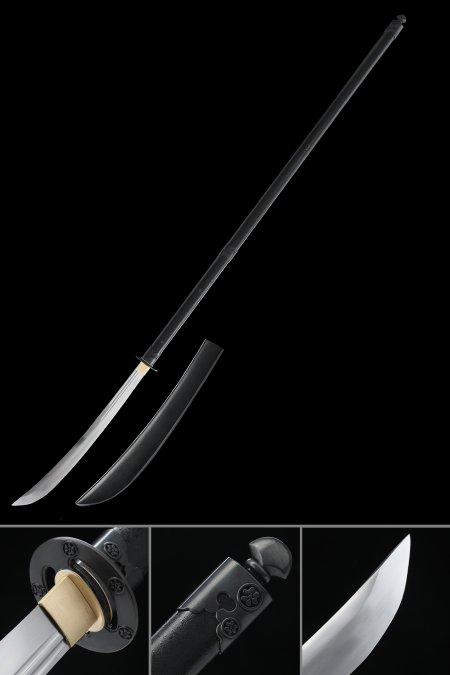
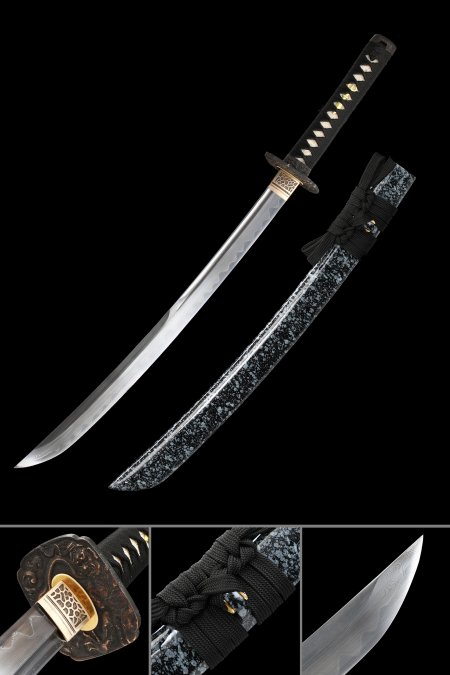
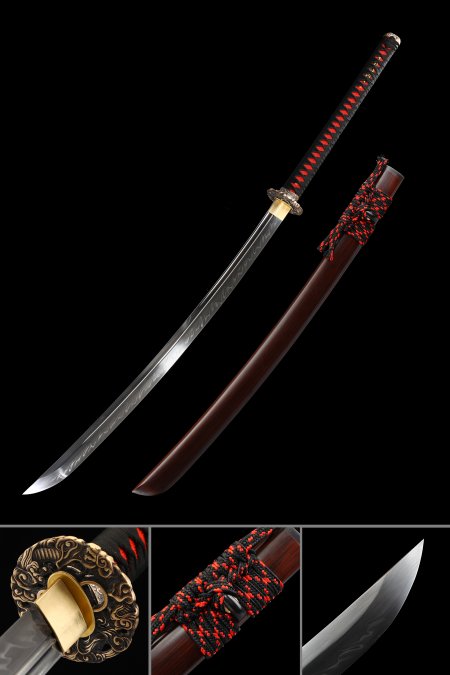
Clay tempering, known in Japanese as tsuchioki, involves coating the blade spine and flat with an insulating clay mixture while leaving the edge area exposed or thinly coated. When the heated blade is quenched in water, the exposed edge cools rapidly and forms hard martensite, while the clay-insulated spine cools slowly and retains a softer, more flexible pearlite structure. The boundary between these two crystalline zones appears as a natural hamon — a wavy or cloudy line visible on the polished steel. Unlike etched or cosmetic hamon, this genuine differential hardline is a structural feature baked into the steel itself, making it a hallmark of authentic Japanese forging tradition that collectors specifically seek out.