What makes Damascus steel visually unique on a ninjato?
Updated Feb 2026
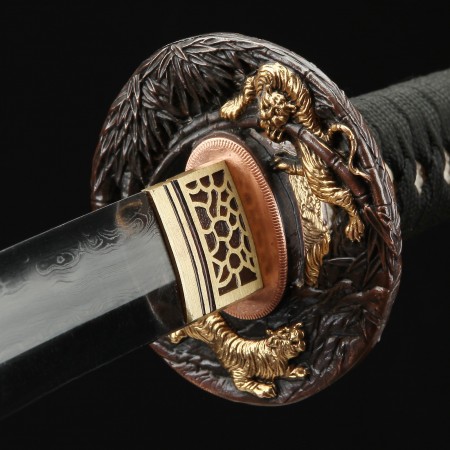
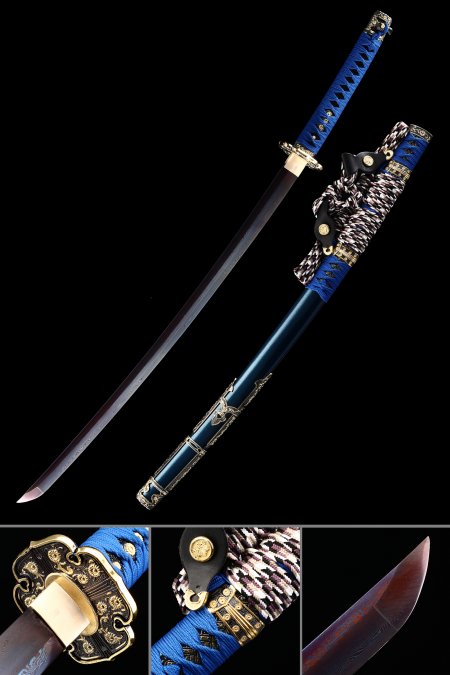
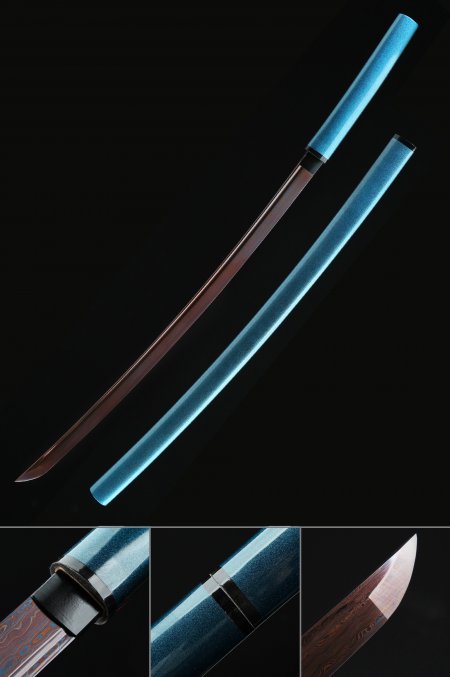
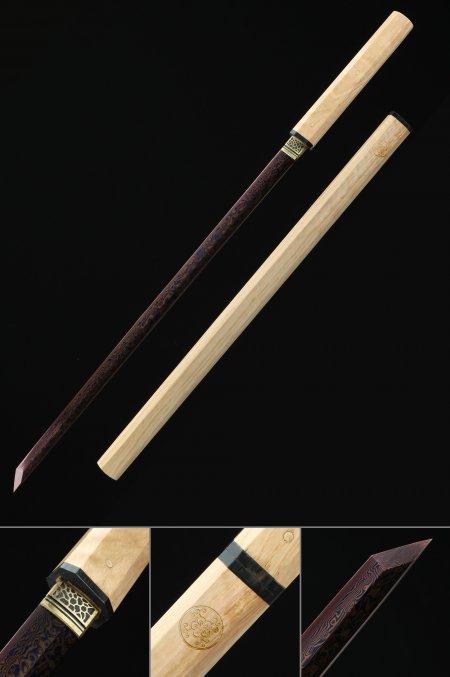
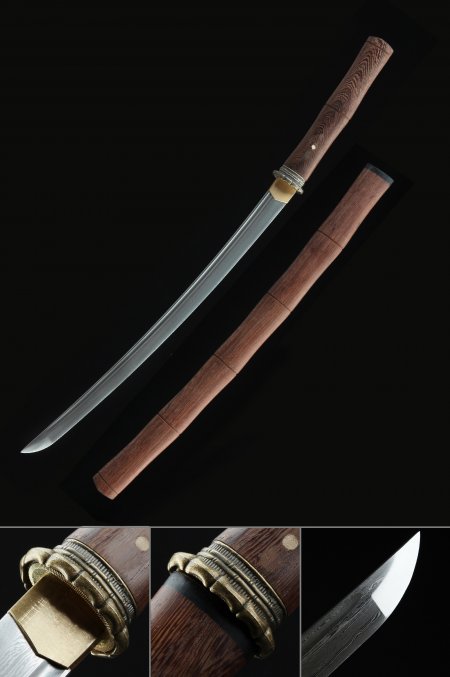
Damascus steel gets its signature appearance from a process of layering and forge-welding multiple steel billets - typically alternating high-carbon and low-carbon varieties - then repeatedly folding them under controlled heat. As the layers multiply, the differential carbon content creates banded, watered, or flowing surface patterns that emerge during grinding and acid etching. Because the pattern develops organically from the folding process, no two Damascus blades are ever identical. On a ninjato's straight blade profile, this patterning runs uninterrupted from tip to habaki, making the full visual texture easier to appreciate than on a curved blade. Collectors specifically seek Damascus pieces because that one-of-a-kind surface quality means their display piece is inherently exclusive.