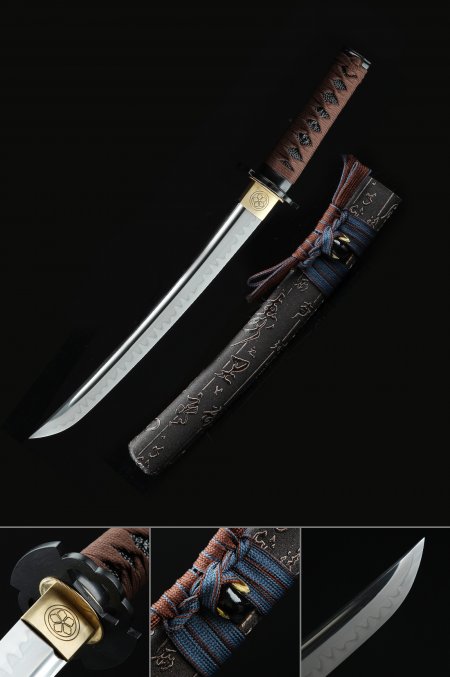
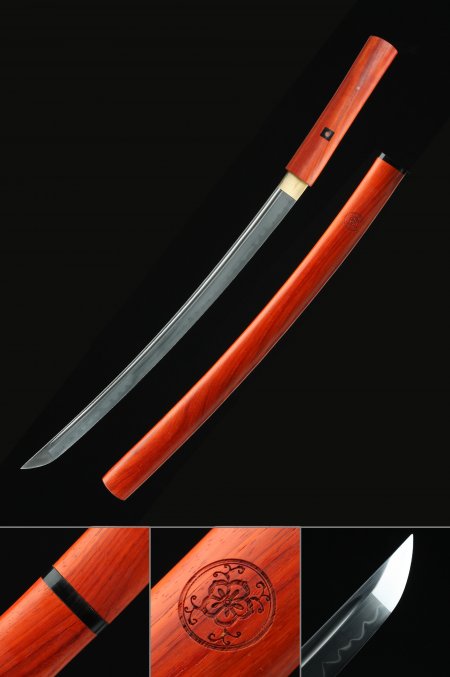
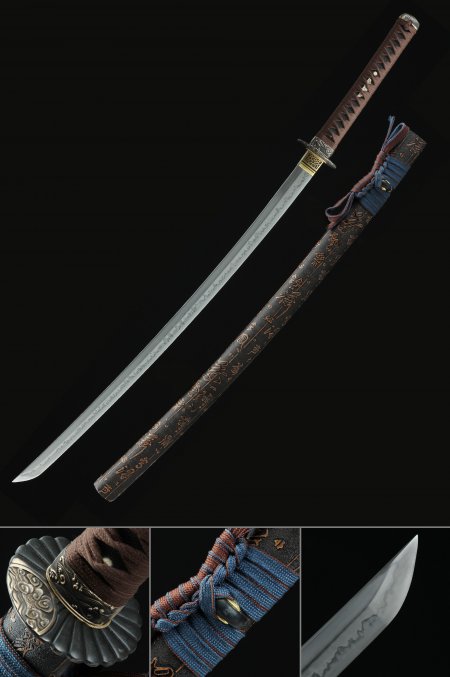
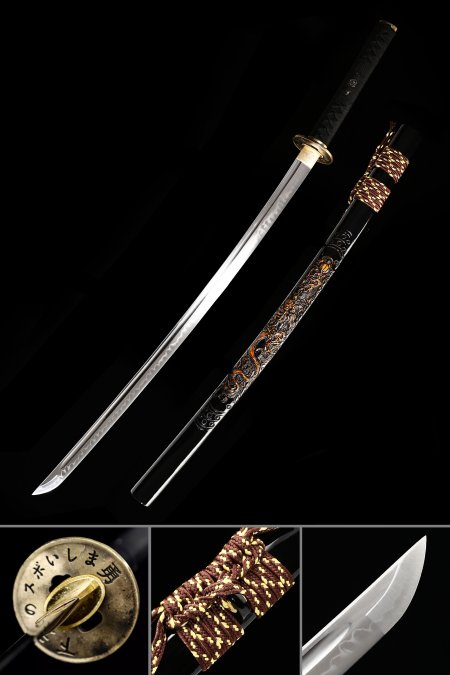
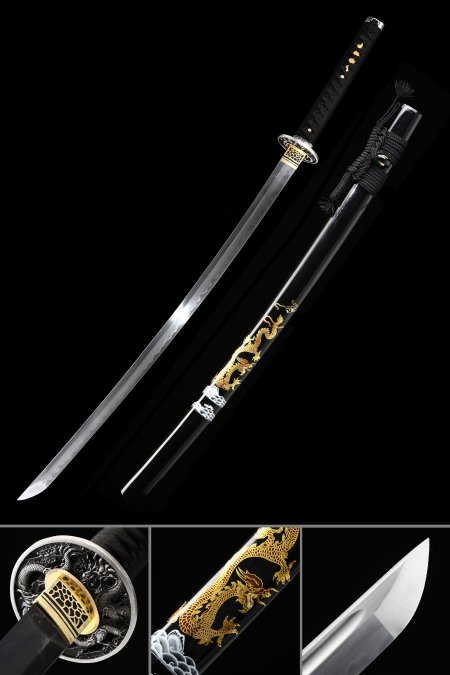
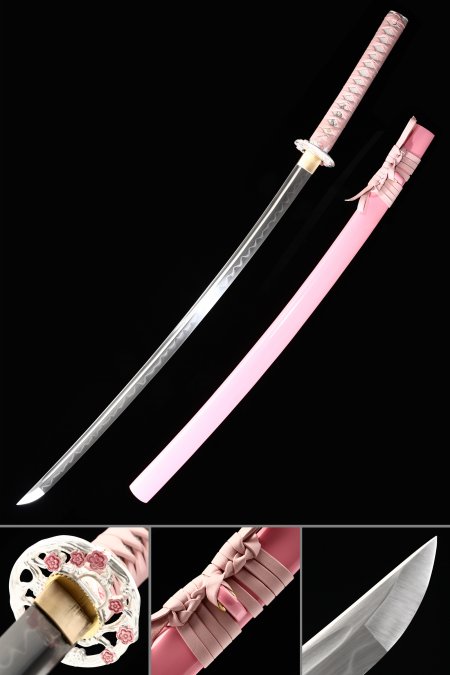
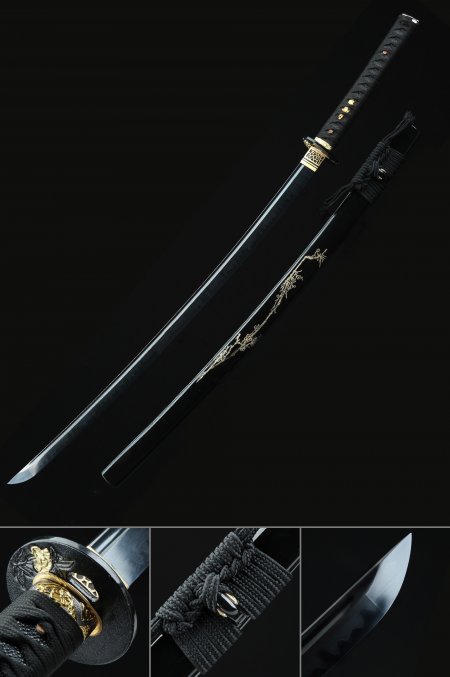
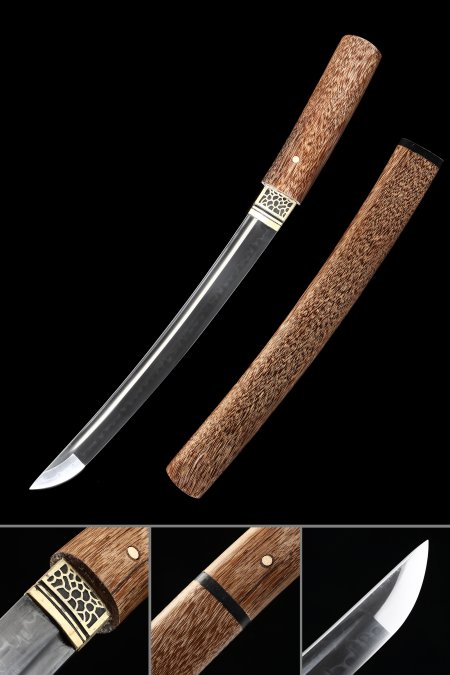
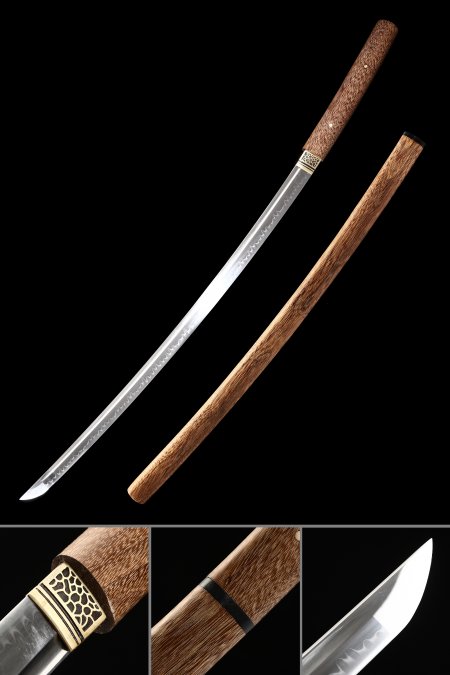
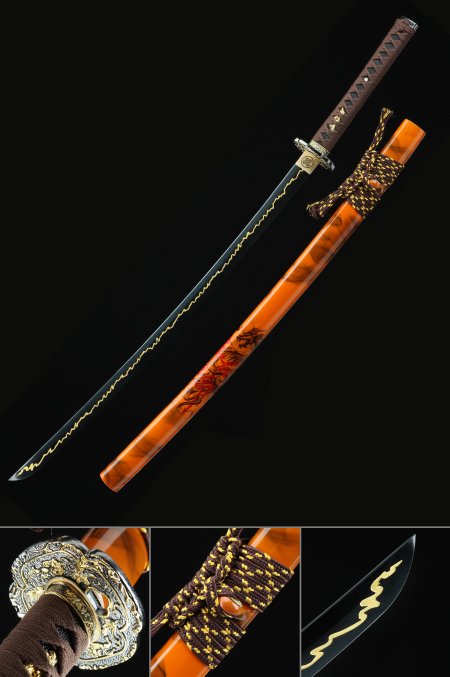
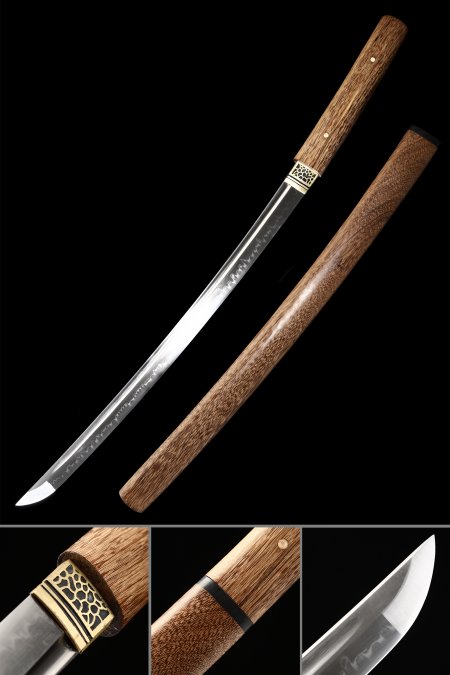
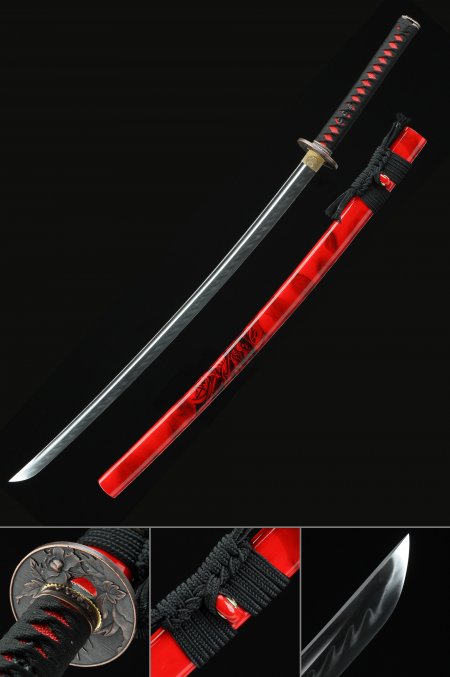
A real hamon is produced through clay tempering - a process where the spine of the blade is coated with clay before quenching, causing the edge to cool faster and form a harder martensitic crystalline structure. The visible boundary between hardened edge and softer spine creates the activity-rich line collectors call hamon, which under light shows features like nie (coarse crystalline sparkle) and nioi (a misty transition zone). A decorative hamon, by contrast, is acid-etched or wire-brushed onto the surface after heat treatment as a cosmetic effect. T10 tool steel katana in this collection are noted for carrying genuine hamon produced through clay tempering, making them particularly appealing to collectors who study metallurgical details as part of their appreciation.