What does "clay tempered" mean on a handmade katana?
Updated Mar 2026
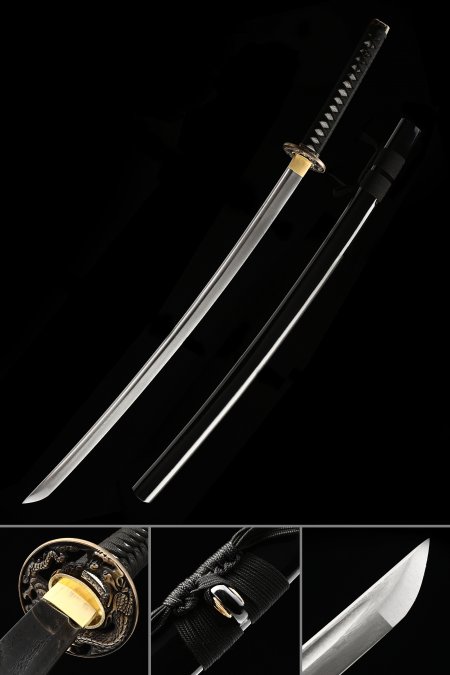
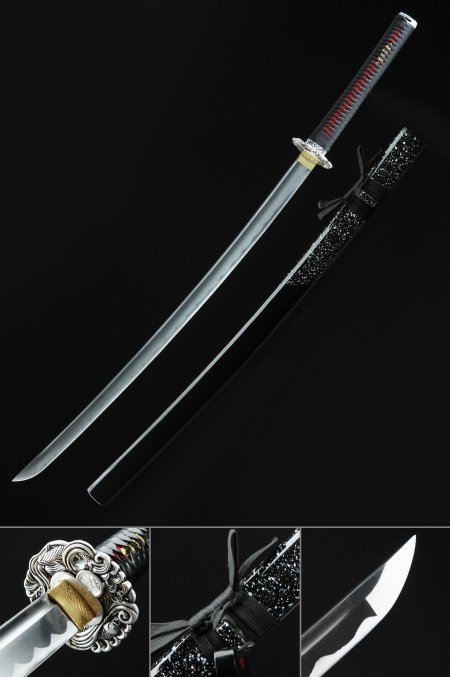
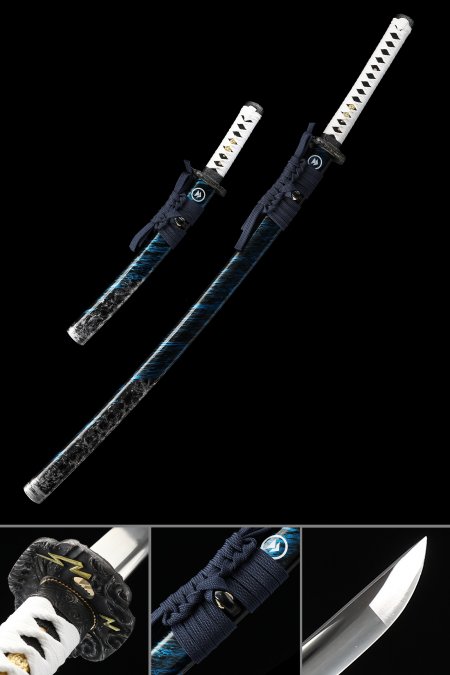
Clay tempering is a traditional Japanese heat-treatment process in which a layer of clay is applied to the blade before it is heated and quenched in water. Thicker clay is applied along the spine and thinner - or no - clay along the cutting edge. During quenching, the edge cools rapidly and becomes harder, while the spine cools more slowly and retains flexibility. The boundary between these two zones produces the hamon, the visible temper line that runs along the blade. This is a structural feature, not a cosmetic one, and it directly affects how the steel behaves along different parts of the blade. A genuine clay-tempered blade will show hamon activity under light - areas of nie (fine crystalline particles) or nioi (a misty glow) that form naturally during the process. This is one of the key markers collectors use to distinguish hand-forged collectibles from decorative replicas.