Is a Damascus steel blade on a display katana purely decorative?
Updated Mar 2026
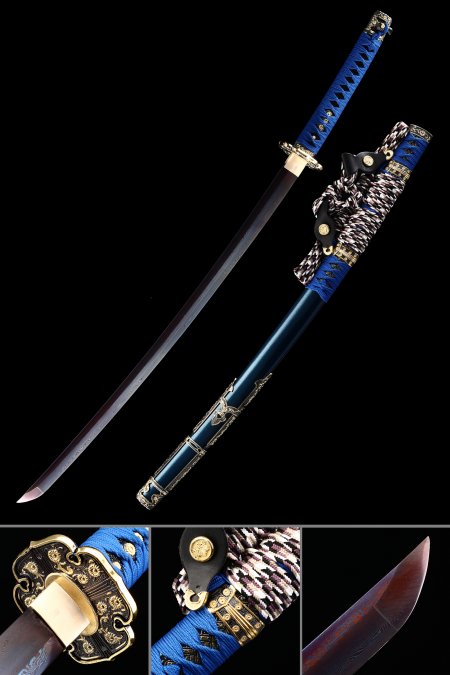
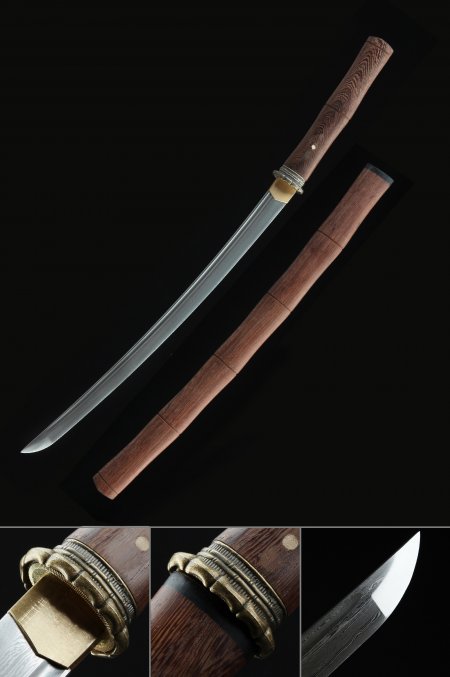
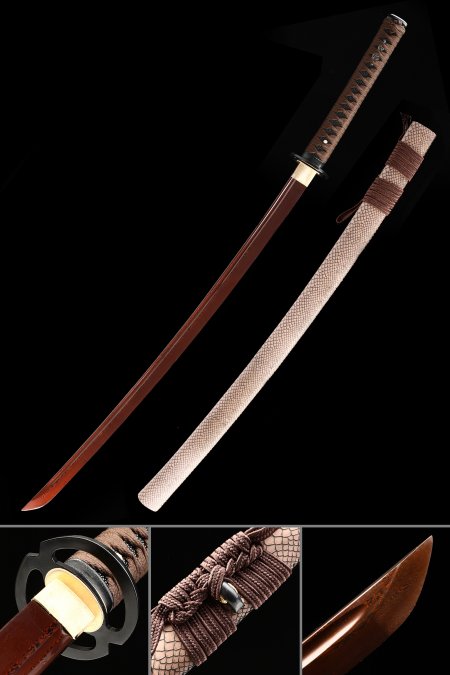
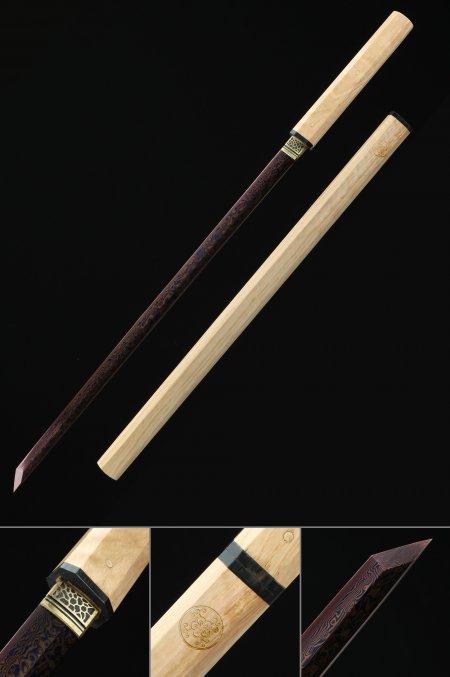
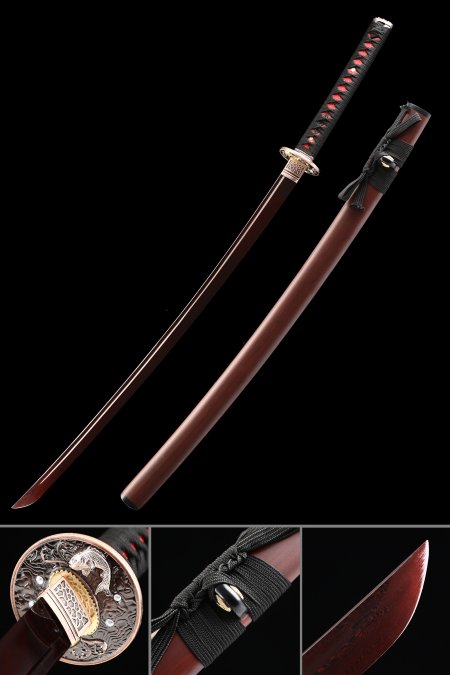
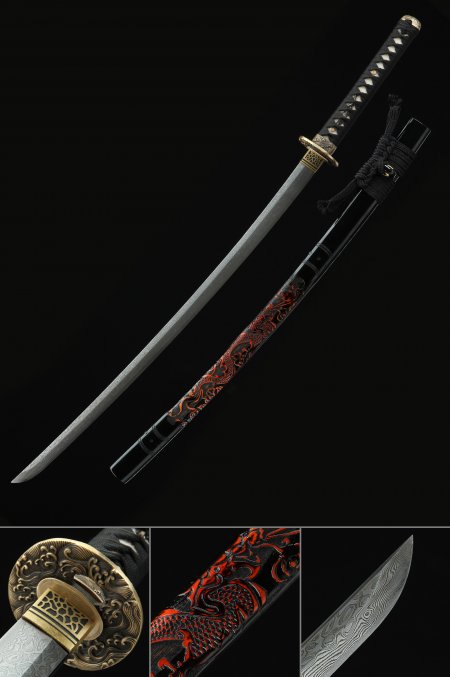
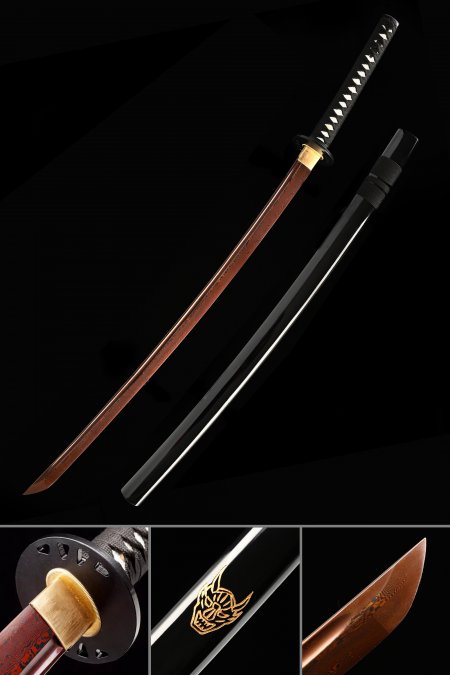
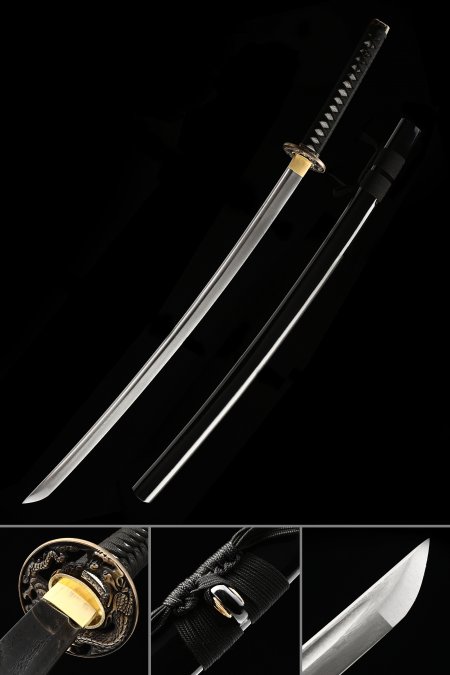
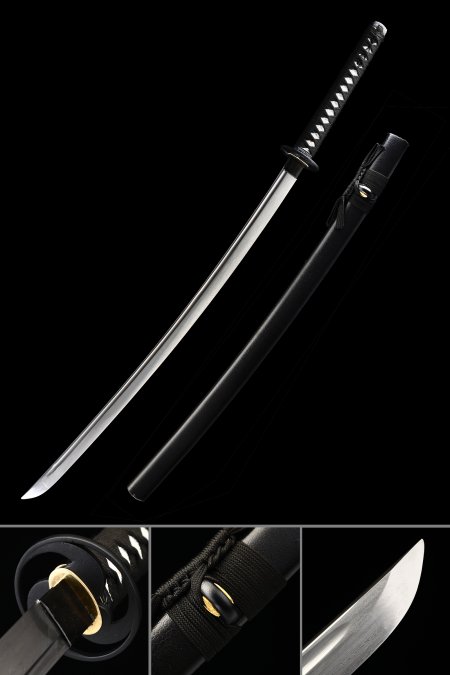
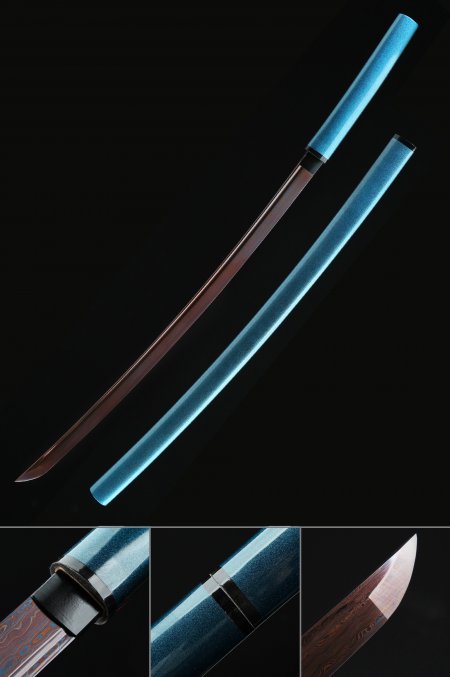
Not entirely, though the visual appeal is a primary reason collectors choose it. Damascus steel in this context is created by forge-welding layers of high and low carbon steel, folding the billet repeatedly to distribute the layers evenly, then etching the finished blade with acid to reveal the contrasting grain pattern. The result is a functional, hand-forged blade with real structural integrity. For display and collection purposes, the layered grain — sometimes called a woodgrain or ladder pattern depending on the folding technique — gives each blade a unique visual fingerprint. No two Damascus blades look identical, which adds to their collectibility. The dark red saya provides a rich tonal contrast that makes Damascus grain patterns particularly striking when the sword is displayed on a stand.