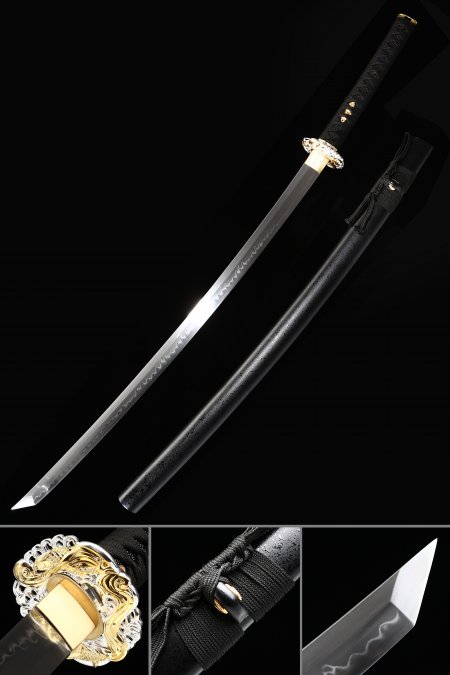
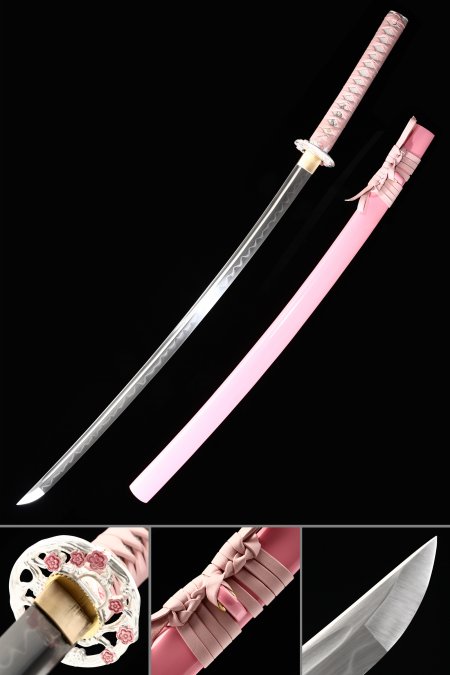
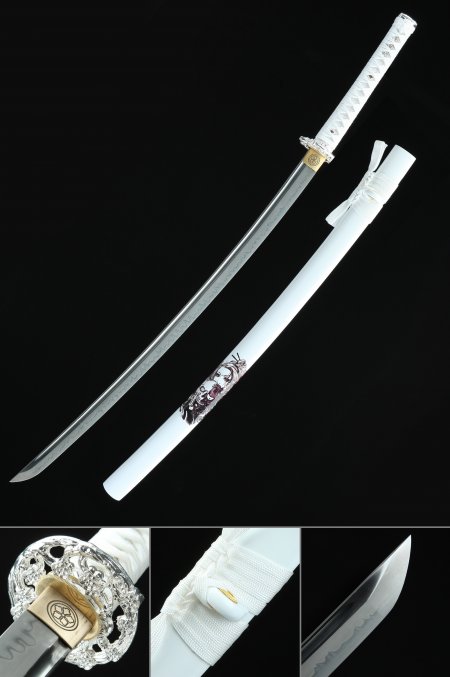
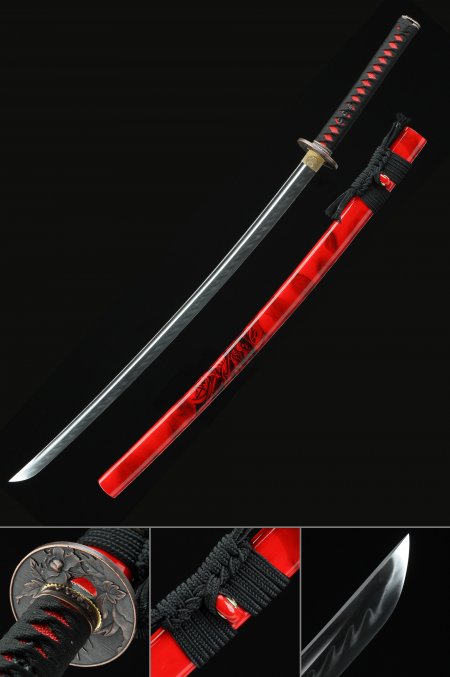
How does T10 steel differ from 1045 carbon steel in these swords?
Updated Mar 2026
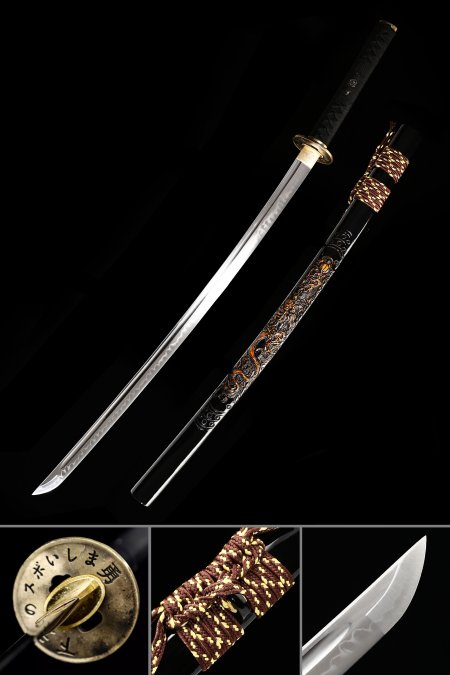
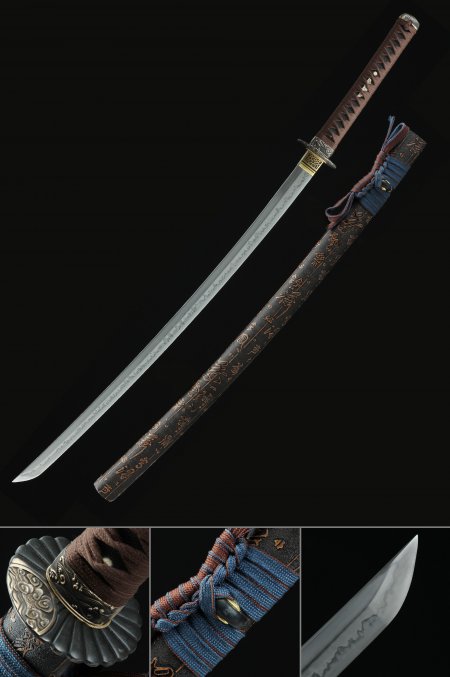
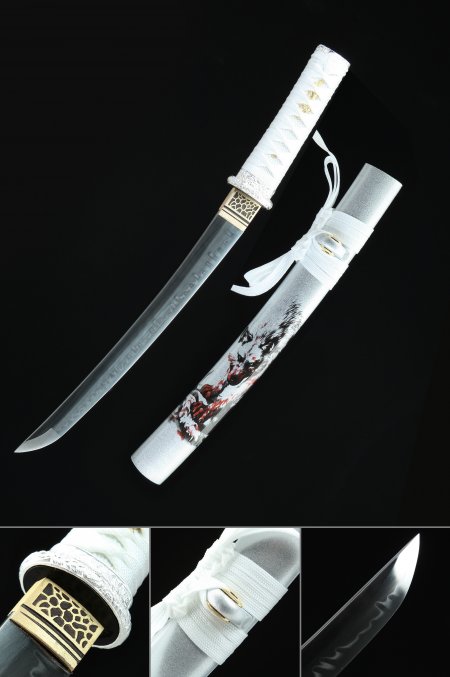
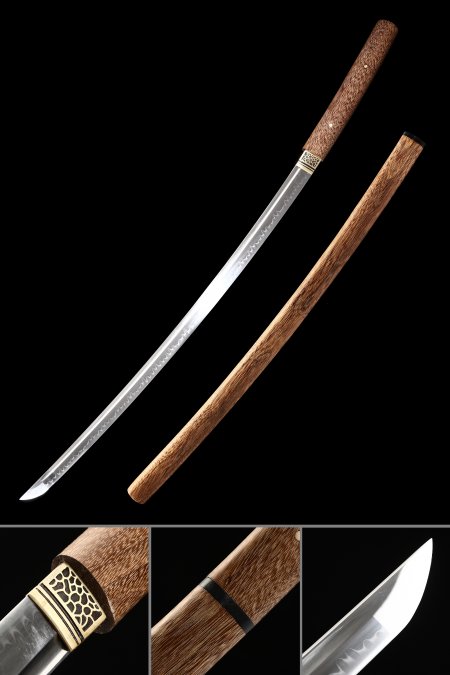
T10 tool steel contains roughly 1.0% carbon plus a small amount of tungsten, giving it higher edge retention and better wear resistance than the 0.45% carbon found in 1045 steel. More importantly, T10 is well-suited to clay tempering - a process where a layer of clay is applied to the spine before quenching, causing the edge zone to cool faster and harden more than the spine. The result is a visible hamon (temper line) and a blade with differentiated hardness zones, closely replicating classical Japanese differential-hardening technique. For display collectors, clay-tempered T10 pieces offer both a superior surface detail story and a metallurgically authentic construction method that 1045 steel - which is typically through-hardened - does not replicate.