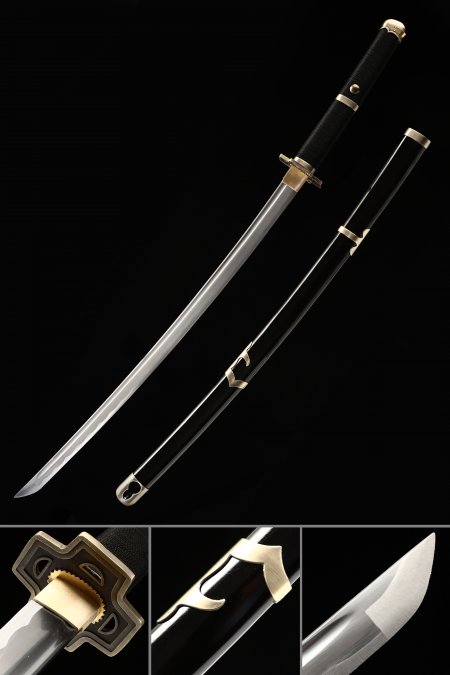
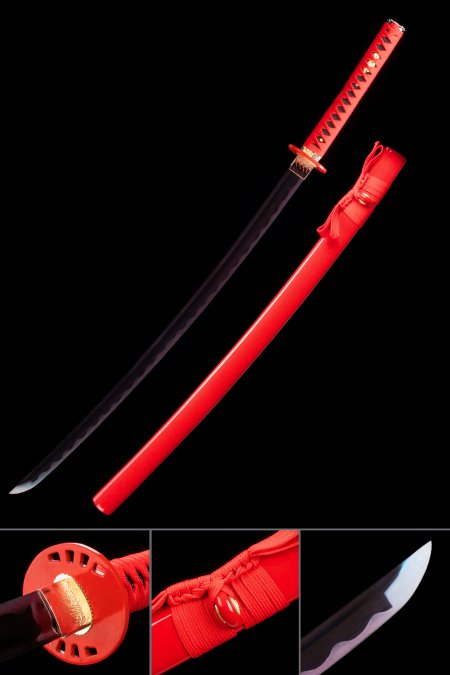
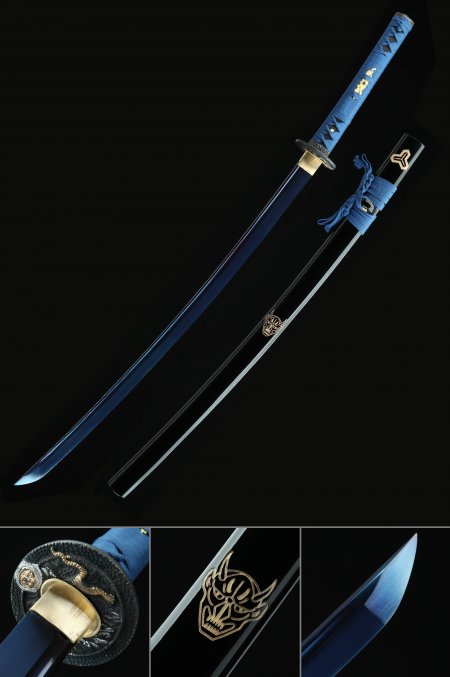
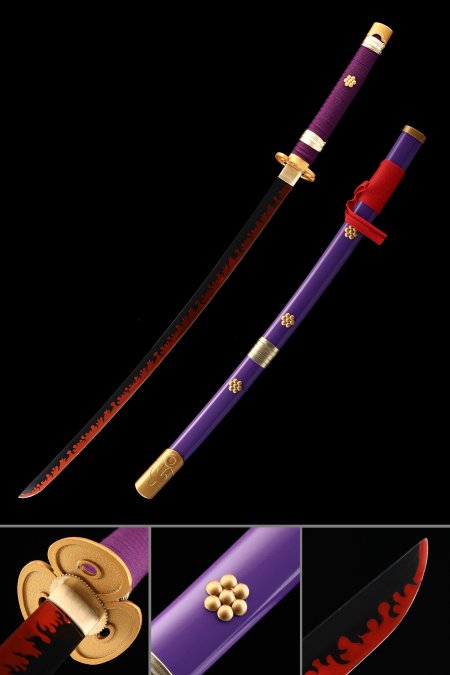
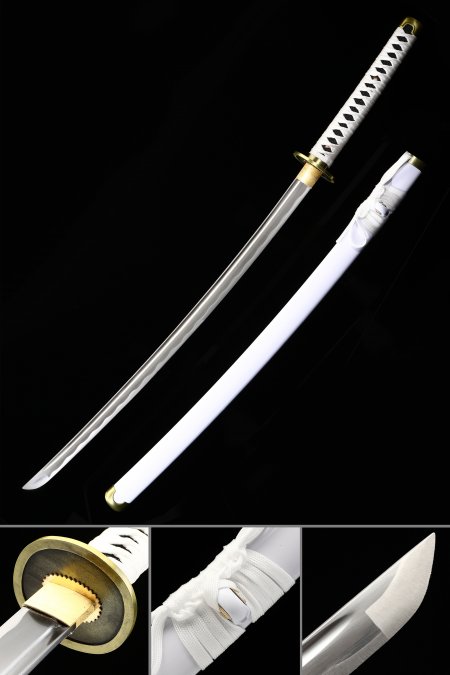
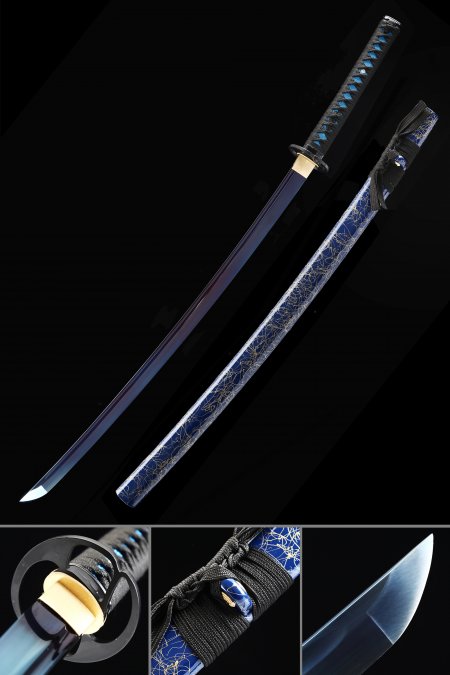
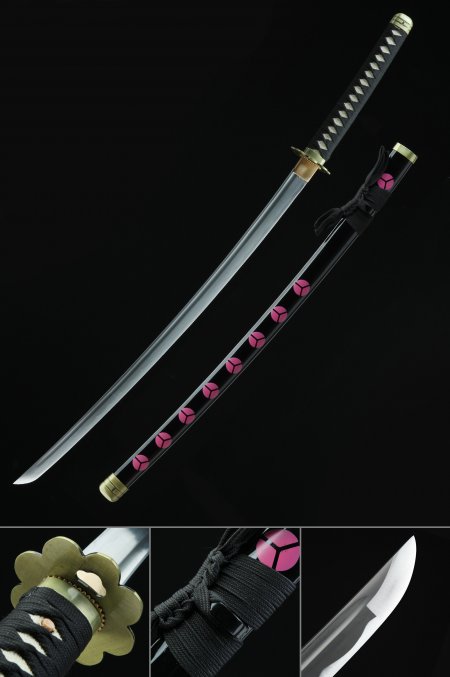
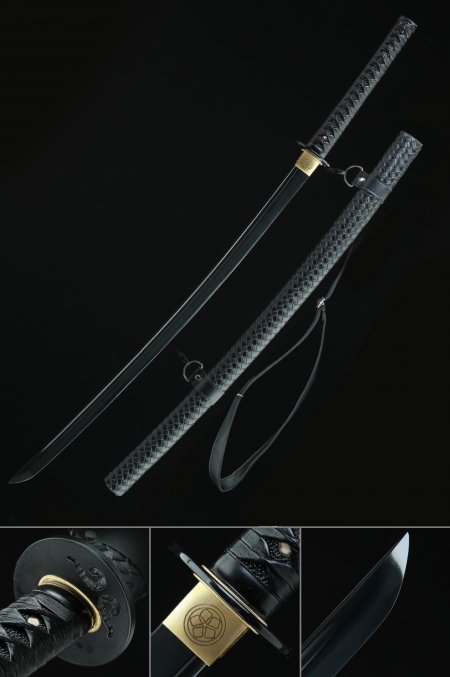
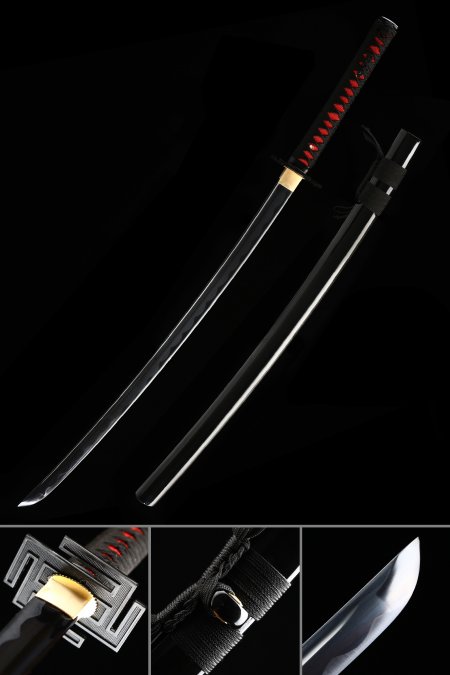
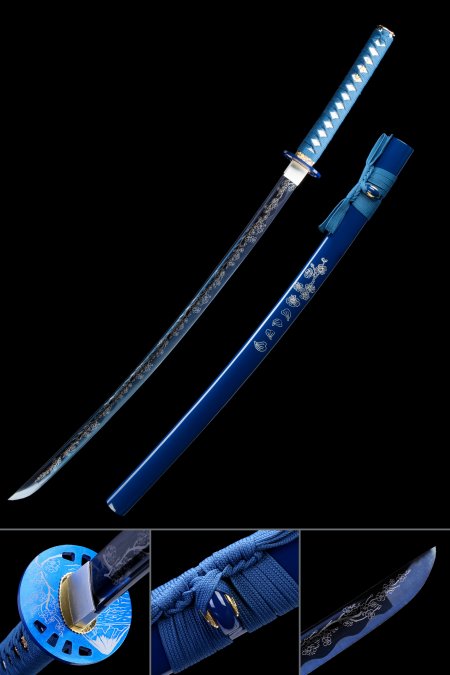
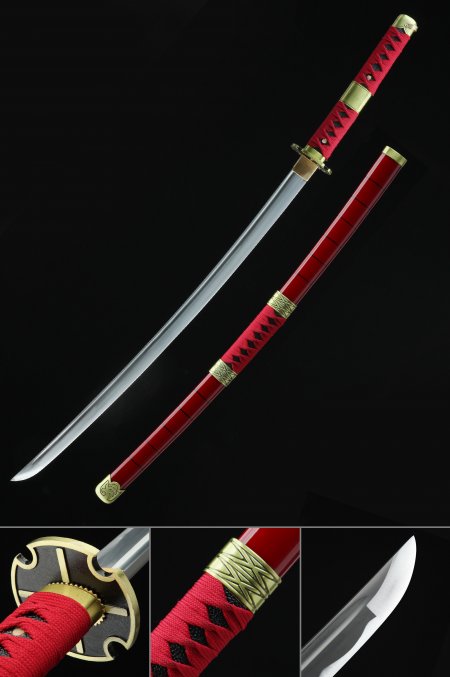
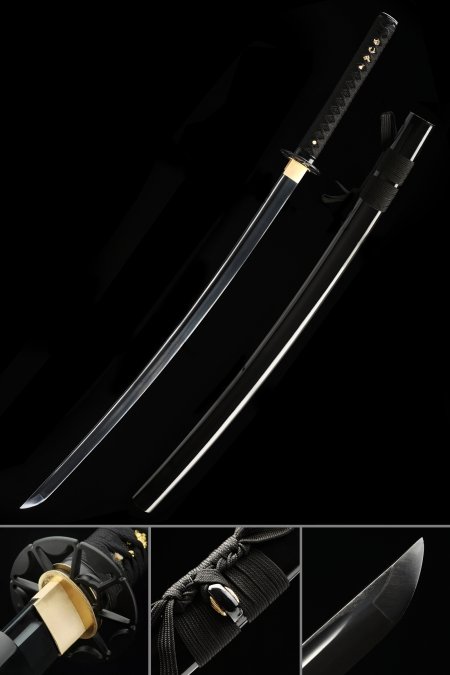
A geometric tsuba features symmetrical, mathematically structured motifs — think angular cutouts, radial star patterns, lattice grids, or snowflake forms — rather than organic imagery like flora or animals. Historically, geometric designs were favored by samurai who preferred restrained visual language, and by craftsmen who could demonstrate technical mastery through precise negative-space ironwork. On modern collectible katana, geometric tsuba are typically cast or stamped from iron alloy or copper alloy, then finished with patina or polish to highlight the structural detail. The visual effect is bold and modern while remaining firmly grounded in authentic Japanese sword aesthetics.