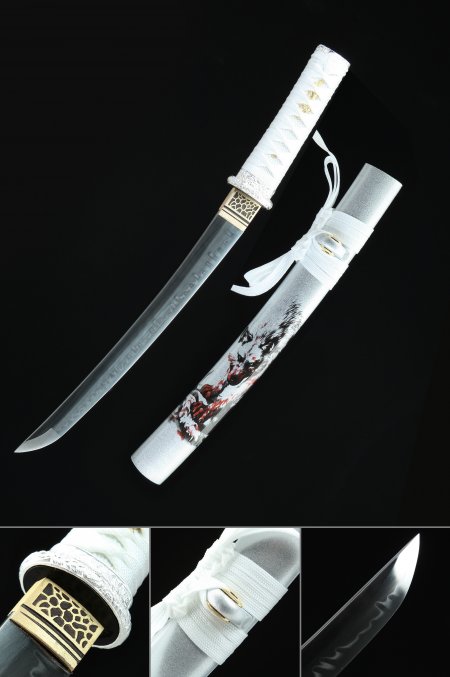
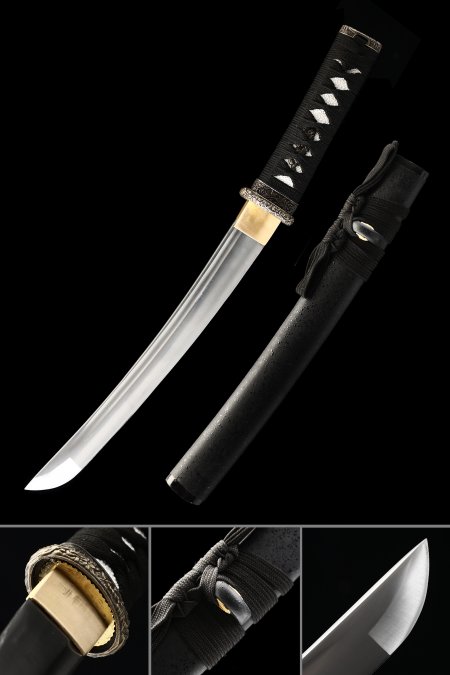
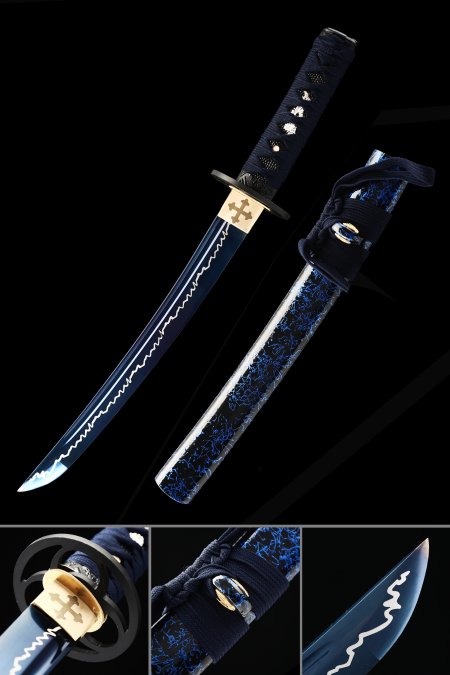
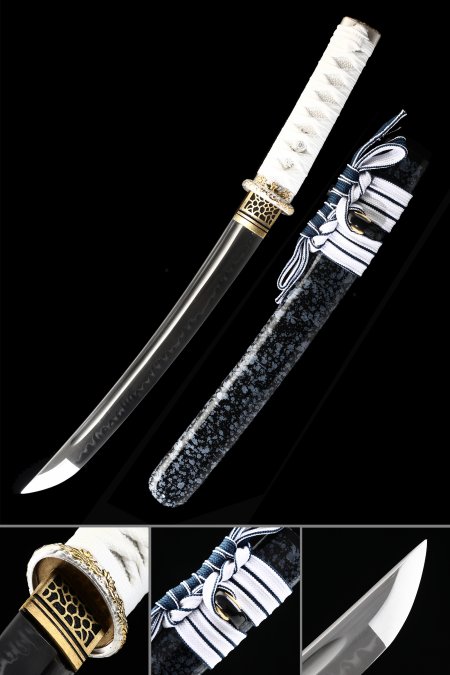
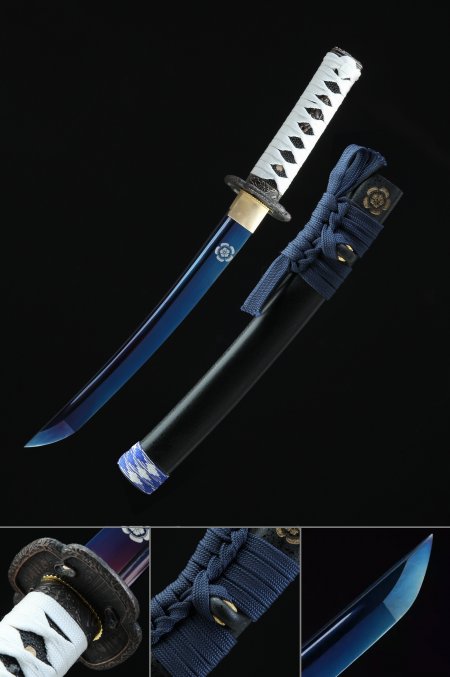
What makes a wave tsuba different from other tsuba styles?
Updated Mar 2026
A wave tsuba is distinguished by its organically curved outer profile, which departs from the more common round (maru) or square (kaku) guard shapes. The undulating silhouette is derived from the Japanese visual tradition of expressing natural forces — particularly ocean waves — through abstracted form. In practical display terms, the asymmetrical outline means the guard casts an interesting shadow and reads differently from each viewing angle, giving a mounted tanto on a stand an almost sculptural presence. Historically, tsuba with nature motifs were favored by collectors during the Edo period as objects of aesthetic contemplation in their own right, separate from the blades they adorned.