Wave Tsuba Tanto

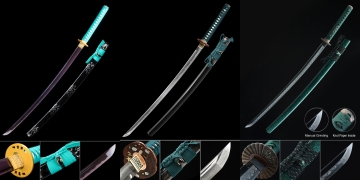
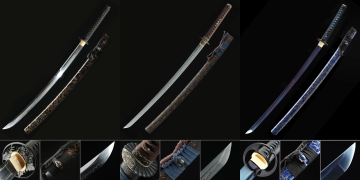
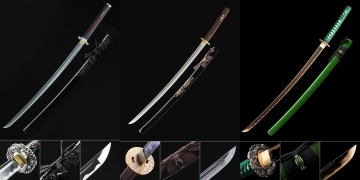
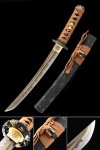
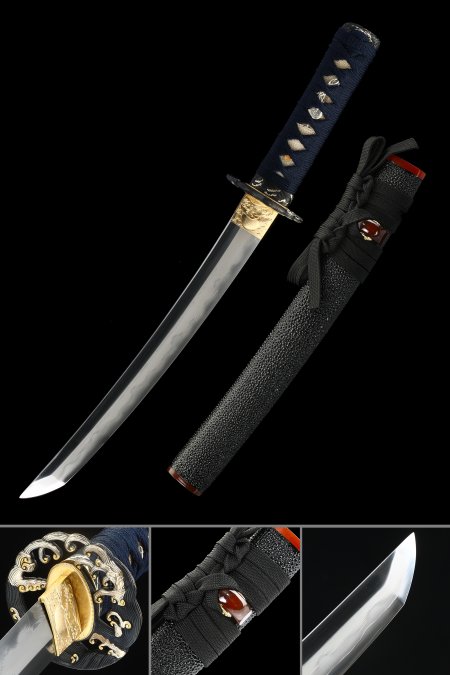
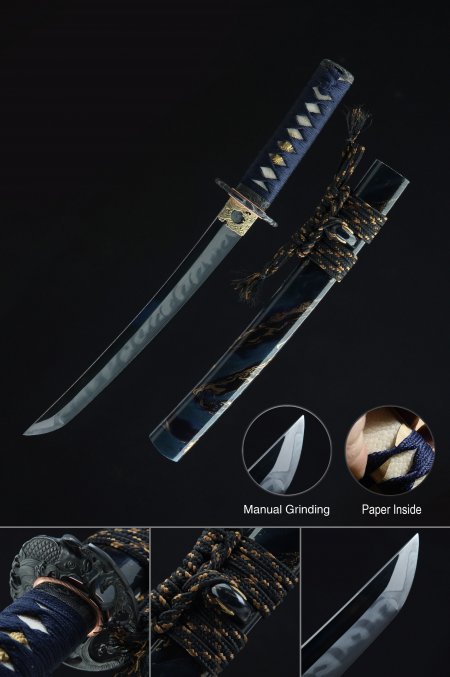
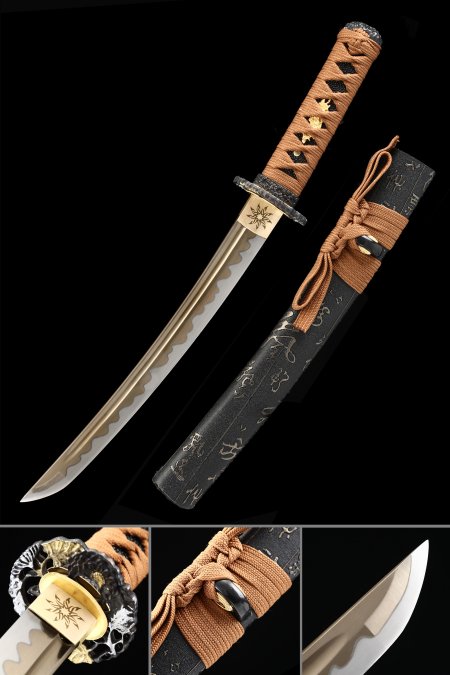
Wave Tsuba Tanto brings together the fluid artistry of wave-shaped hand-forged guards and the refined proportions of the traditional Japanese short blade. Each piece in this collection features a distinctively contoured tsuba that reflects the aesthetic sensibility of classical Japanese metalwork, paired with premium steel construction and carefully matched saya and ito details. These tanto are crafted as display-grade collectibles, making them an inspired choice for the discerning enthusiast. Enjoy free standard shipping on your order, backed by our hassle-free return policy.
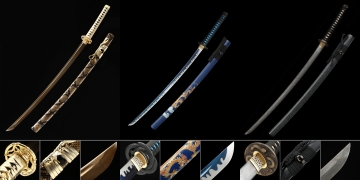
Showing 3 Products

Frequently Asked Questions

What makes a wave tsuba different from other tsuba styles?
A wave tsuba is distinguished by its organically curved outer profile, which departs from the more common round (maru) or square (kaku) guard shapes. The undulating silhouette is derived from the Japanese visual tradition of expressing natural forces — particularly ocean waves — through abstracted form. In practical display terms, the asymmetrical outline means the guard casts an interesting shadow and reads differently from each viewing angle, giving a mounted tanto on a stand an almost sculptural presence. Historically, tsuba with nature motifs were favored by collectors during the Edo period as objects of aesthetic contemplation in their own right, separate from the blades they adorned.
What is Sanmai construction and why does it matter for a tanto?
Sanmai refers to a three-layer laminated blade construction in which a high-carbon steel core — typically a hard steel like T10 — is clad on both flat sides by softer, more flexible steel. The result is a blade that combines the edge-holding potential of hard steel with the structural resilience of the outer layers, which absorb stress along the spine and flats. For a tanto, whose proportions concentrate all mechanical load into a shorter, thicker cross-section, Sanmai is particularly well-suited. Collectors value Sanmai pieces for the subtle visual transition visible at the shinogi (ridge line), where the boundary between core and cladding steel can sometimes be seen as a faint line, adding another layer of craft evidence to the finished blade.
How can I tell if the hamon on a tanto is genuine clay tempering?
A genuine hamon produced by clay tempering has an organic, slightly irregular boundary line — it flows naturally along the edge and may show activity (small cloud-like formations called nie or nioi) within the transition zone when examined under focused light at an oblique angle. In contrast, an acid-etched or simulated hamon typically presents as a sharper, more uniform line with less visible grain structure in the transition area. On T10 clay-tempered tanto in this collection, the hamon is formed during differential quenching: clay applied thickly to the spine slows the cooling rate there, leaving the spine softer, while the exposed edge hardens rapidly. This metallurgical boundary is permanently embedded in the steel's microstructure — not a surface treatment.
How should I store a tanto to keep it in display condition?
Proper storage significantly extends the life of both the blade and its fittings. Store the tanto horizontally in its saya (scabbard) with the edge facing upward — the traditional orientation that minimizes pressure on the ha (edge). Keep it in a low-humidity environment; a wooden sword cabinet or a lined display case with silica gel packets works well. Before storing, apply a very light coat of mineral oil or choji oil (a traditional clove-scented blade oil) to the bare steel using a clean cotton cloth, then wipe away any excess. Avoid storing blades in leather-lined cases for extended periods, as leather can retain moisture. Handle the blade minimally with bare hands, since skin acids accelerate surface oxidation — cotton gloves are recommended when rotating display pieces.
Is a tanto a good choice as a collectible gift for a Japanese blade enthusiast?
A tanto is often considered one of the most approachable entry points for collectors new to Japanese blade furniture, and equally rewarding for seasoned enthusiasts. Its compact proportions make it easy to display in smaller spaces — a single tanto on a two-tier stand makes an elegant desk or shelf piece without requiring the wall space a longer blade demands. The Wave Tsuba variants in this collection add an additional conversation point through the distinctive guard design, making them memorable as presentation gifts. For enthusiasts already collecting longer formats, a tanto with complementary saya coloring and ito wrap style can be paired thematically to create a visually cohesive display grouping.

Customer Reviews

Richard Dale Parsons Texas, United States

I’m no sword smith, but I am a satisfied customer. The Tanto is very nice and I did choose the T10 steel for its strength and edge retention capabilities. The hamon line is nice with nice graying. Shipping and delivery was fast. I waited for the Tanto to decide whether or not to order a Wakizashi and I did. If it’s appearance and quality is what I’m expecting I’ll be ordering a Katana.

Clay Tempered T10 Steel Tanto with Real Hamon in Dark Blue Dragon Saya - Gold Alloy Wave Tsuba Clay Tempered T10 Steel Tanto with Real Hamon in Dark Blue Dragon Saya - Gold Alloy Wave Tsuba