What makes a wave tsuba different from other tsuba designs?
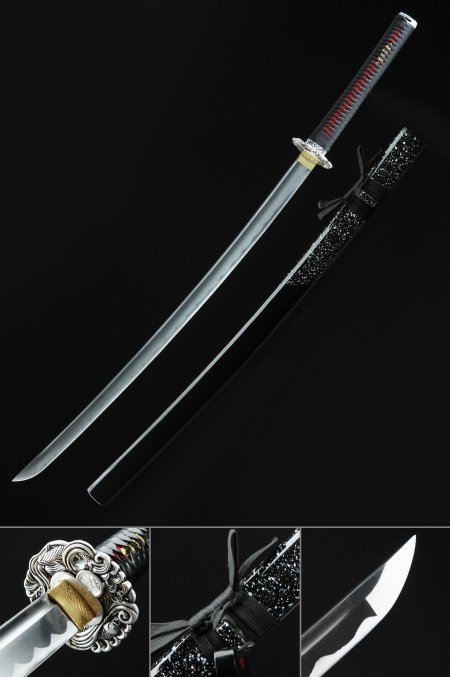
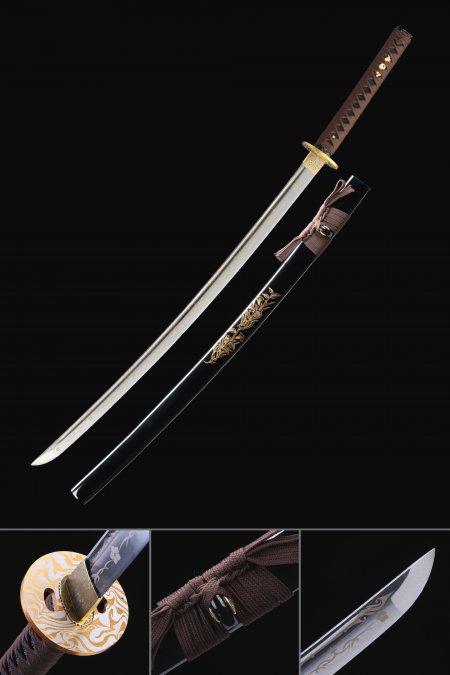
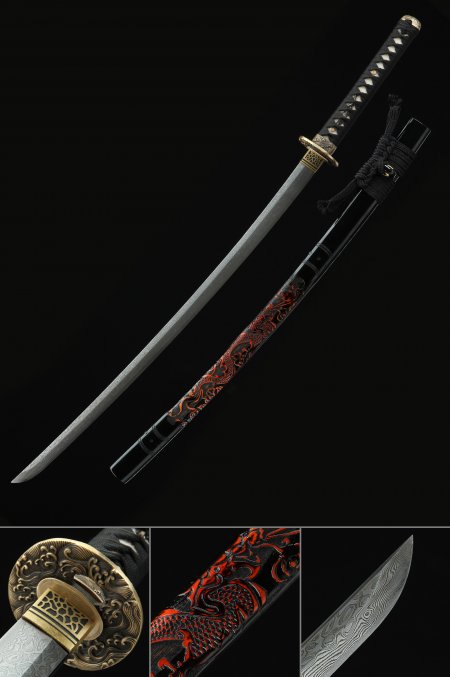
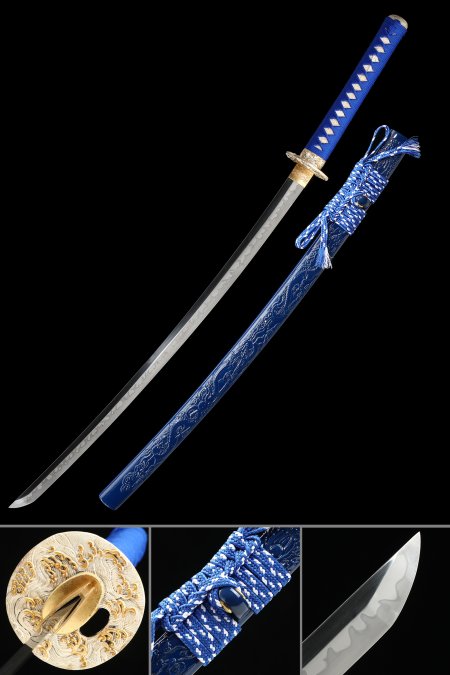
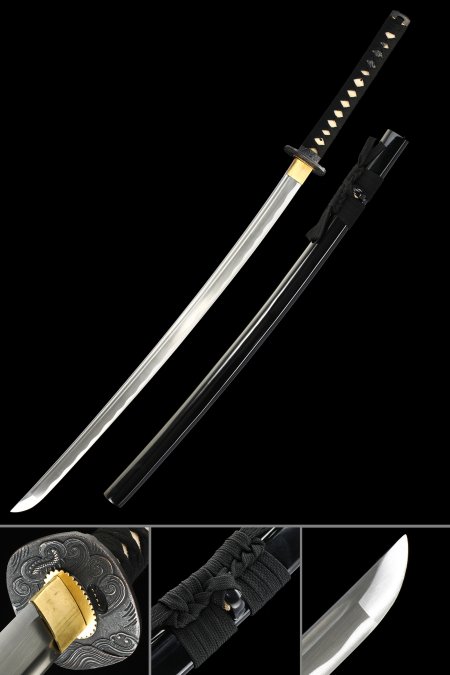
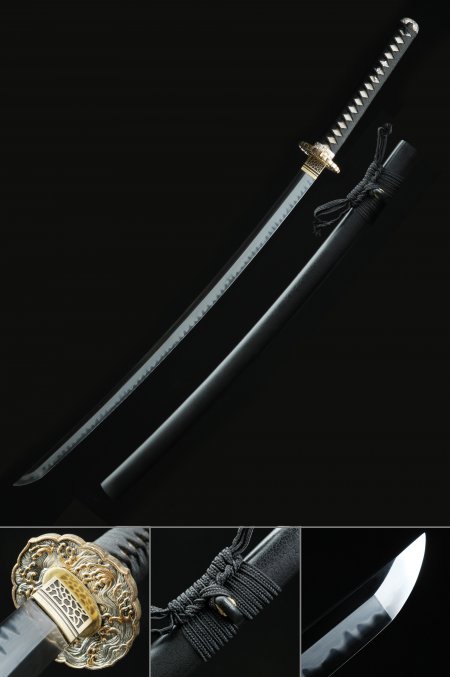
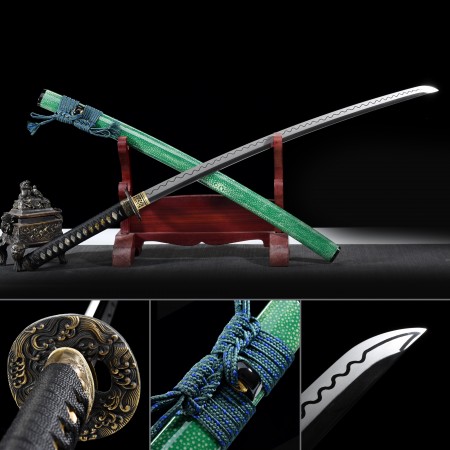
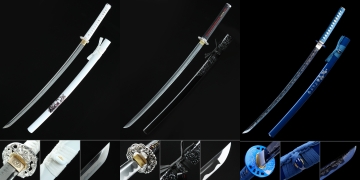
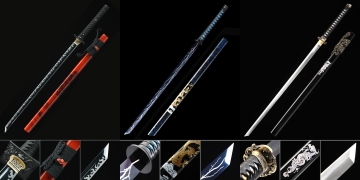
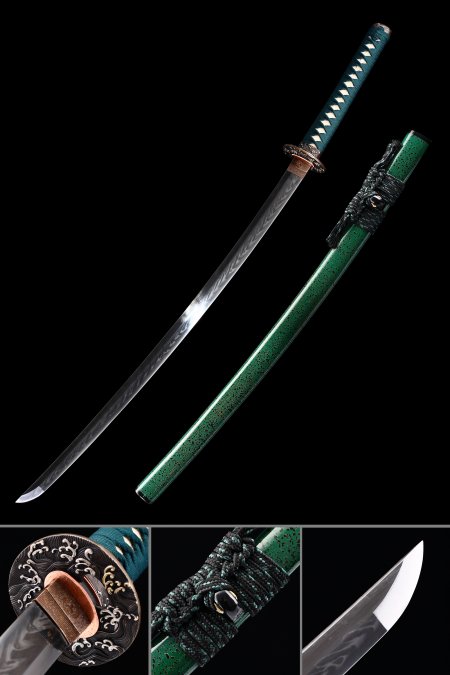
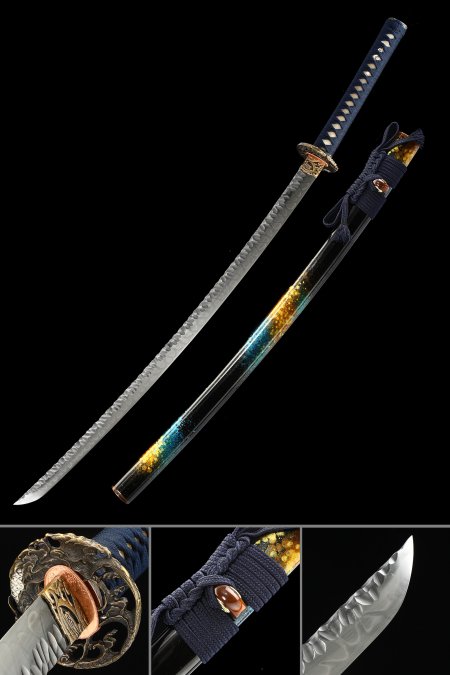
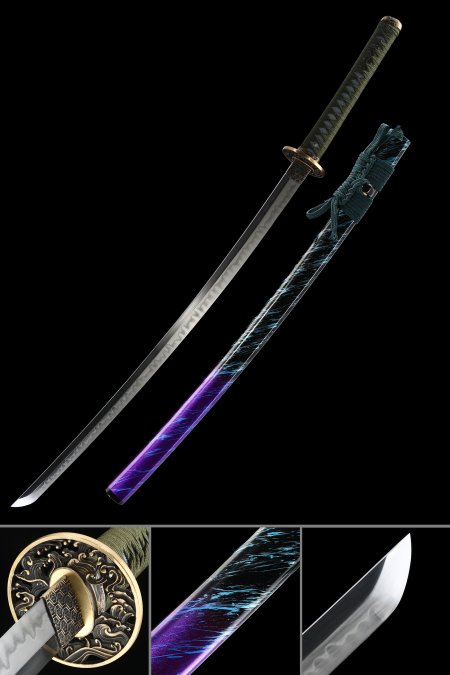
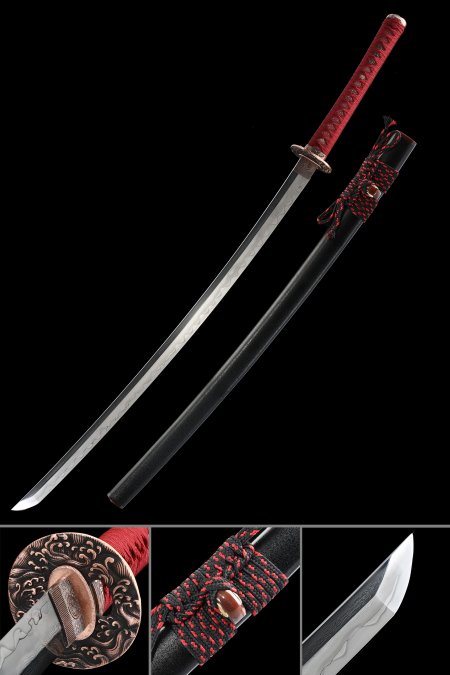
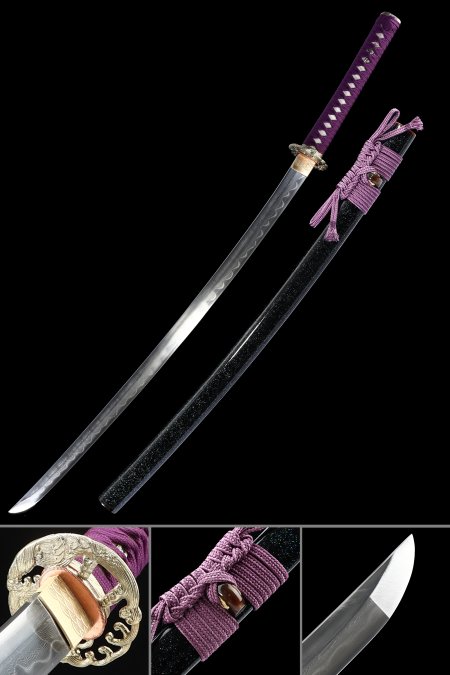
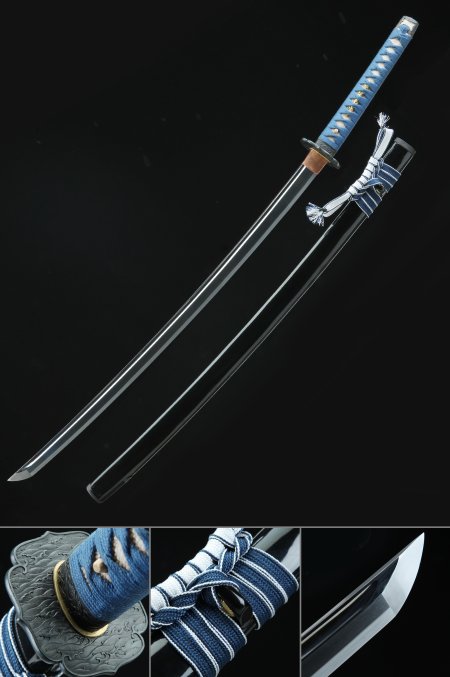
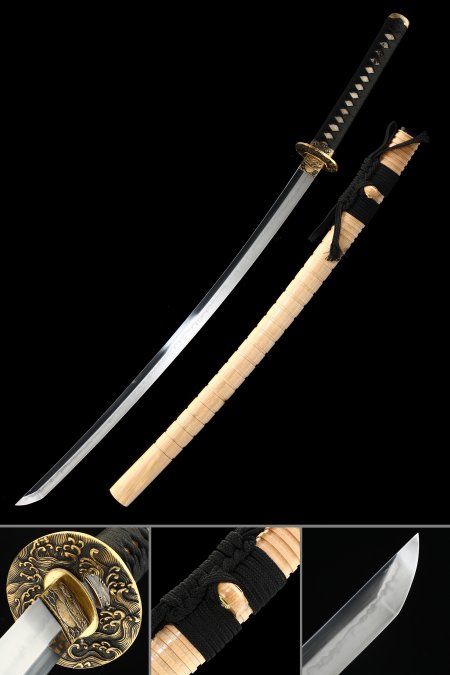
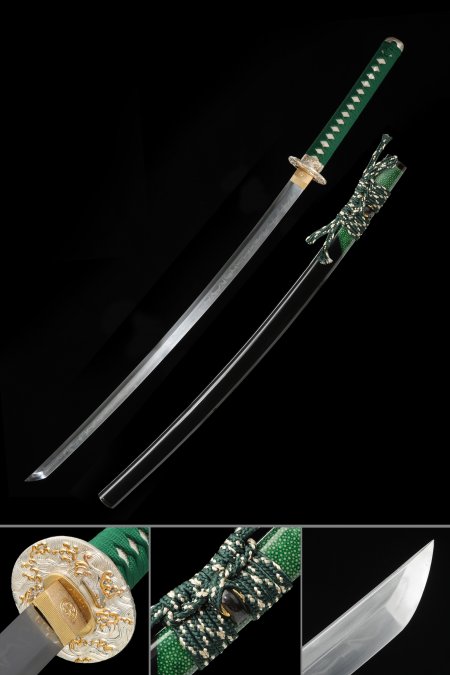
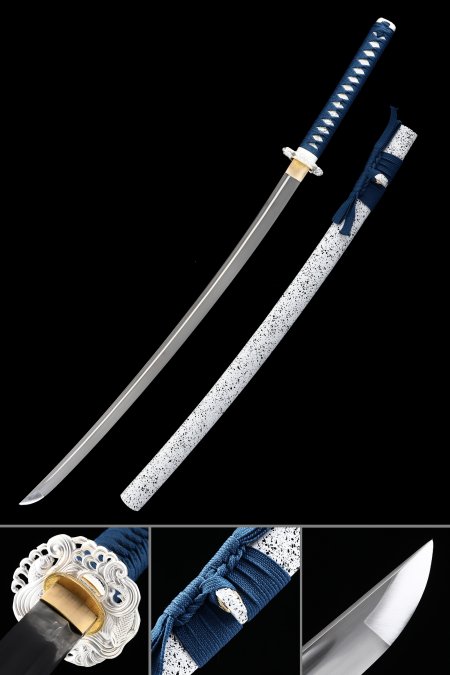
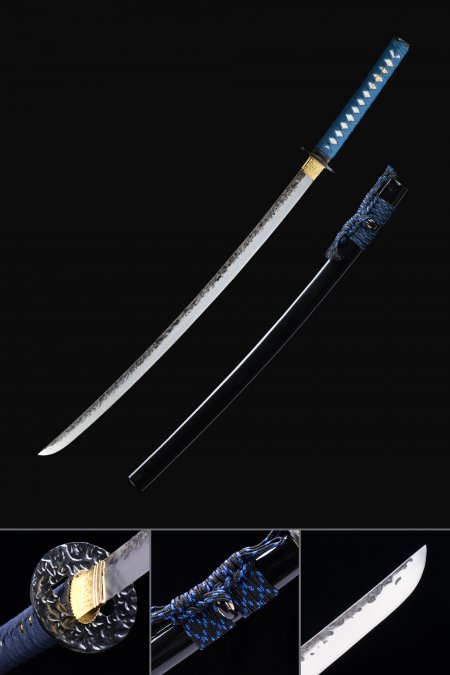
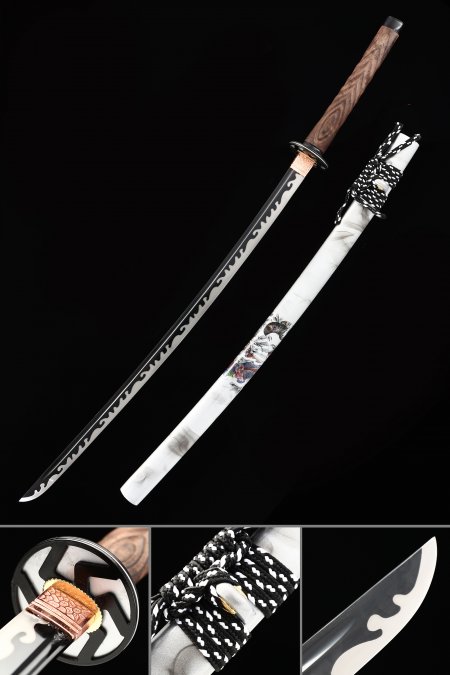
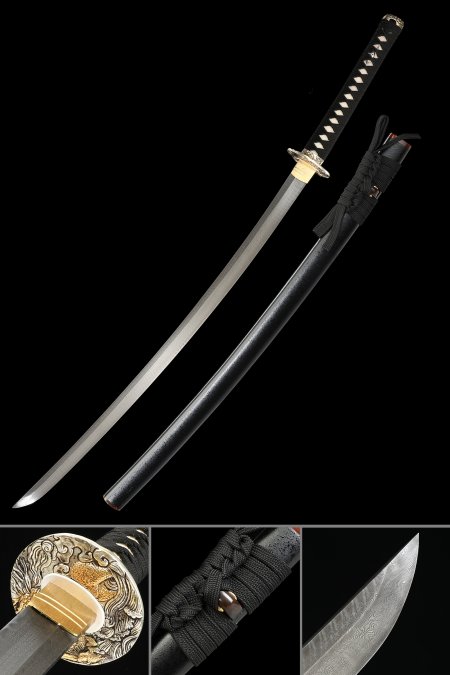
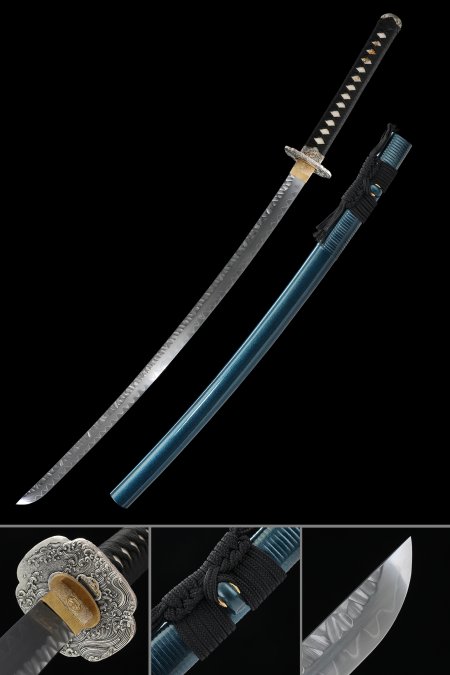
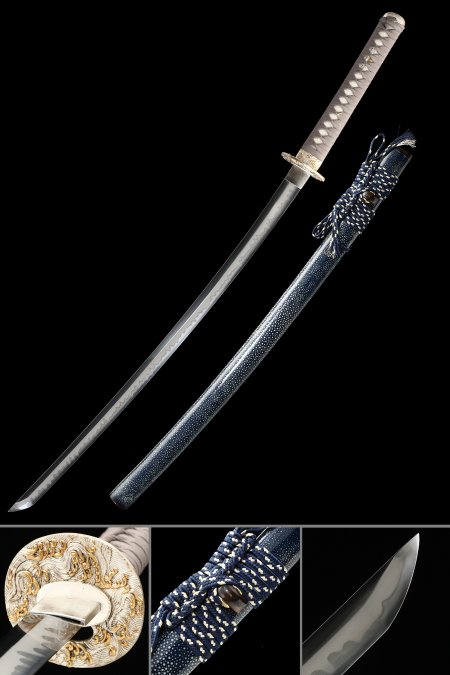
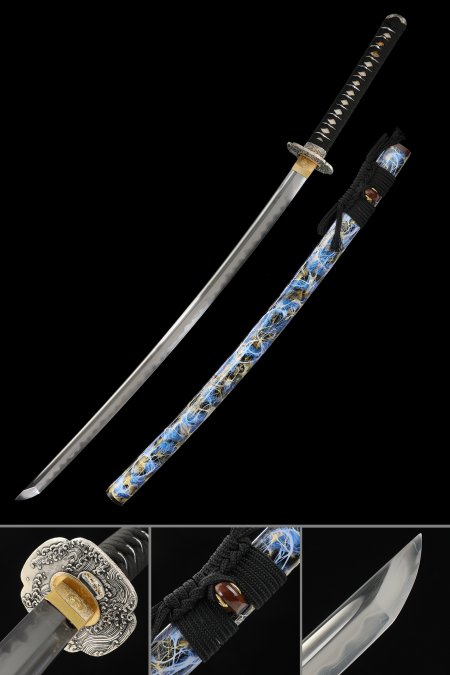
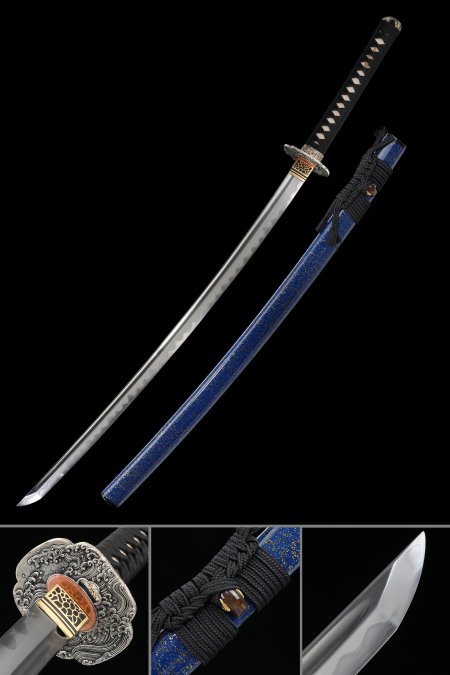
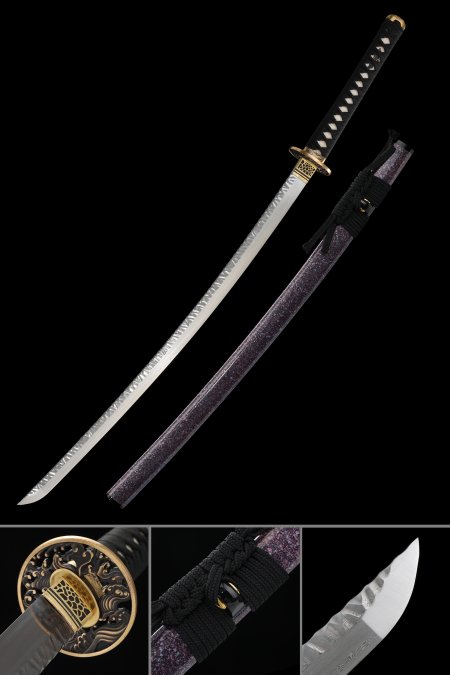
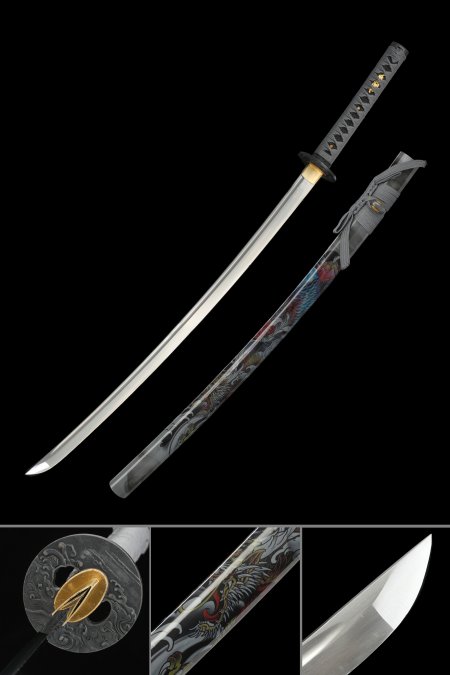
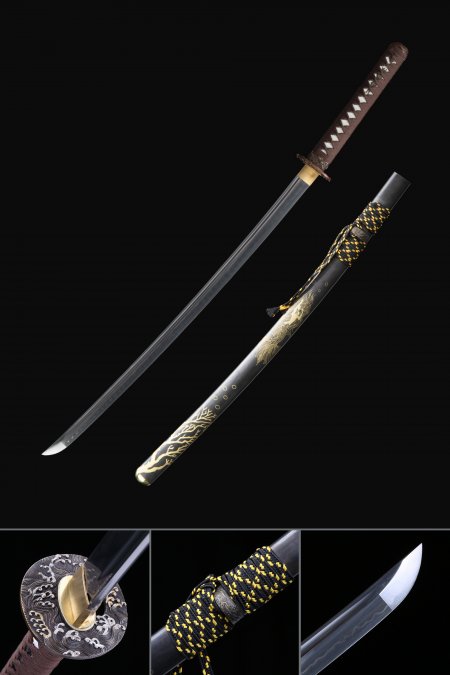
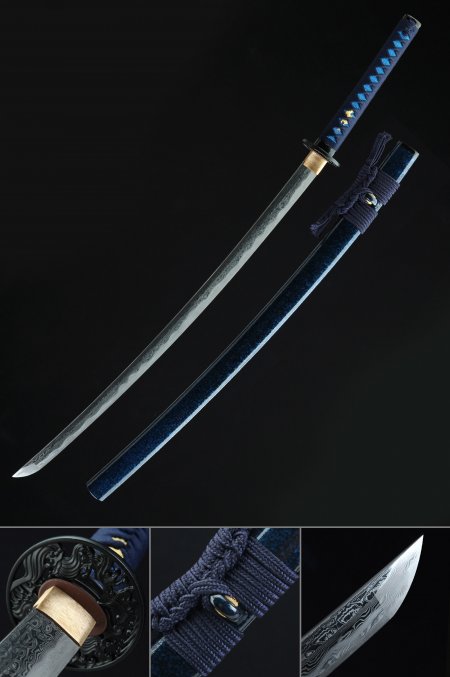
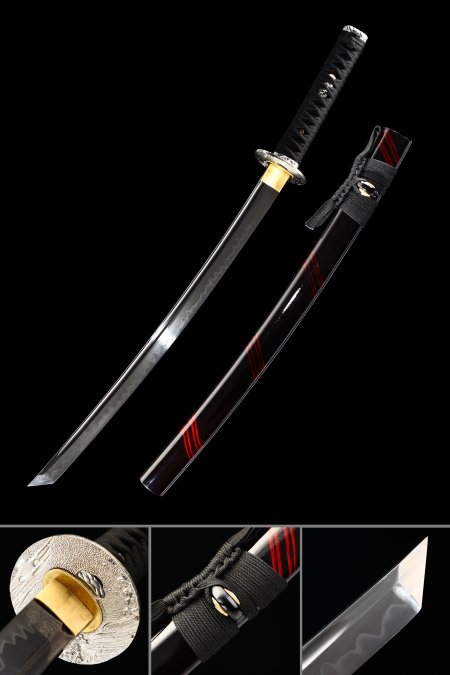
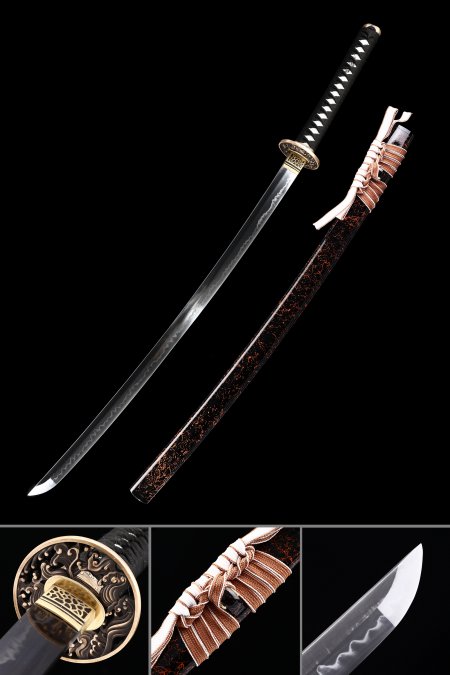
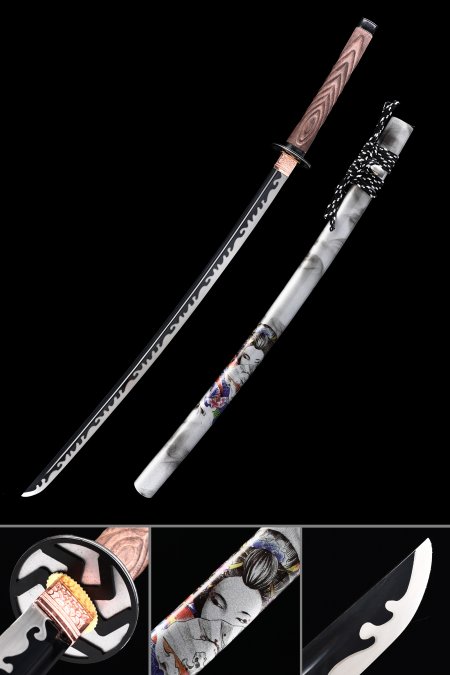
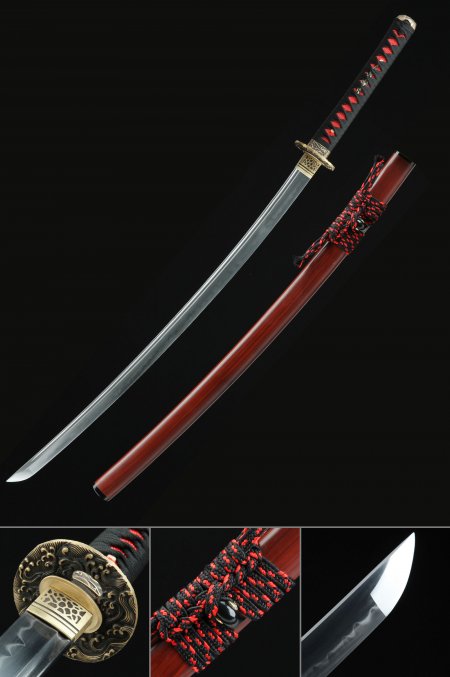
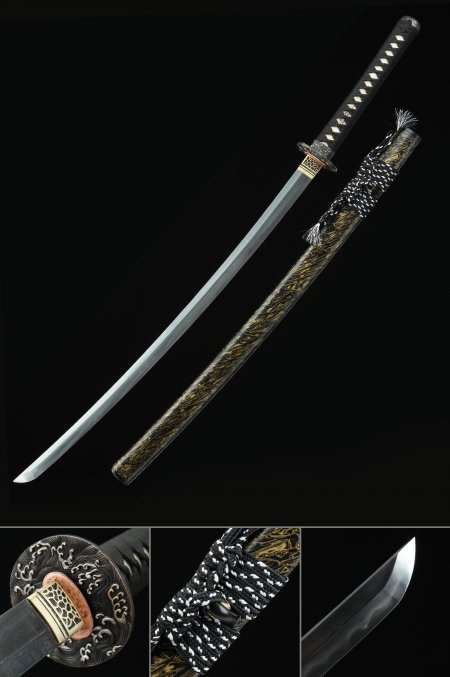
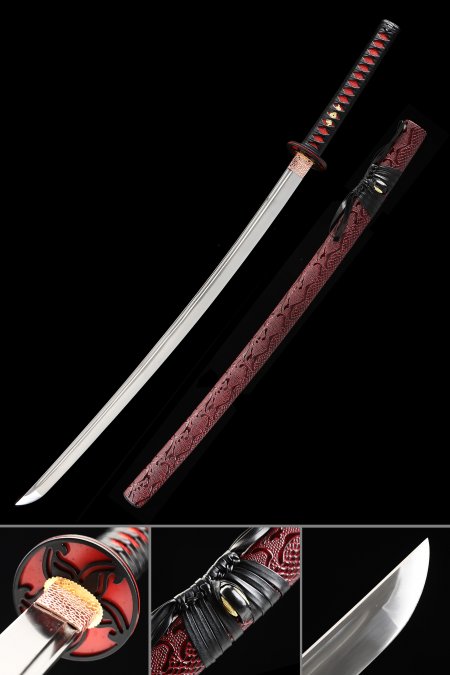
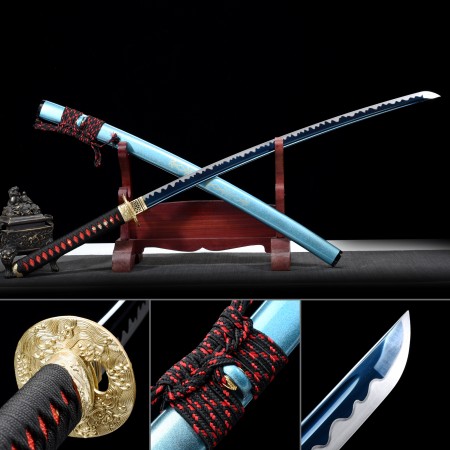
The wave tsuba - known in Japanese craft tradition as nami-tsuba - draws its form from the imagery of ocean waves and flowing water, motifs that held deep symbolic meaning in Japanese art, representing both power and impermanence. Unlike geometric or floral guard designs, the wave pattern features fluid, asymmetric curves that vary significantly depending on the metalworker's interpretation. In this collection, wave tsuba are produced in cast iron, hammered copper, bronze alloy, and gold-tone finishes, each giving a distinct visual weight and surface texture. Iron tsuba tend to have a more austere, antique appearance, while copper and gold-tone variants introduce warmth and brilliance that contrast beautifully against dark lacquered saya. The design is historically associated with samurai families with coastal or maritime connections and remains one of the most sought-after guard styles among decorative collectors today.
How does T10 clay-tempered steel compare to Damascus in these katana?
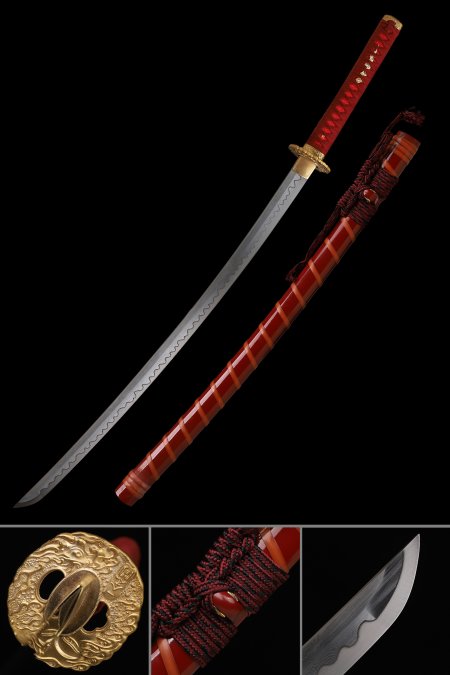
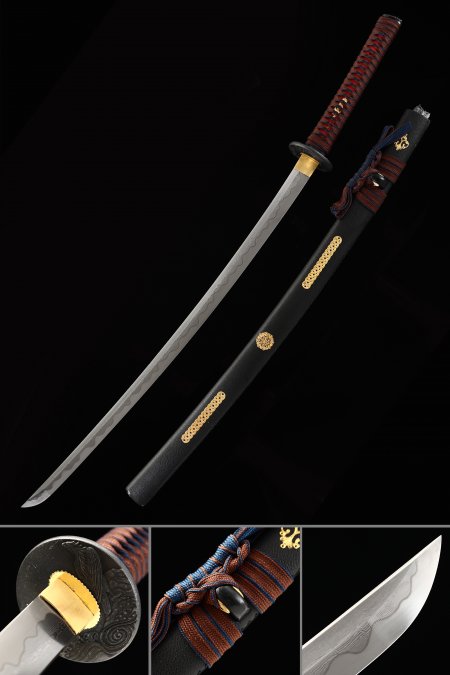
T10 tool steel and Damascus steel represent two distinct approaches to blade character, and both appear prominently in this collection. T10 is a high-carbon steel valued for its fine grain structure and edge retention; when clay-tempered, a thin layer of clay is applied along the spine before quenching, causing the edge and spine to cool at different rates. This differential hardening produces a visible hamon - the misty, undulating temper line - that is one of the most admired features in traditional Japanese blade aesthetics and a hallmark of authentic hand-forging technique. Damascus steel, by contrast, is created by layering and folding two or more steel types together, producing distinctive flowing grain patterns across the blade surface. Every Damascus blade is visually unique, making it especially appealing for collectors who prioritize one-of-a-kind display pieces. T10 clay-tempered katana are prized for their hamon authenticity; Damascus katana are prized for their surface artistry.
What saya finishes are available in this wave tsuba collection?
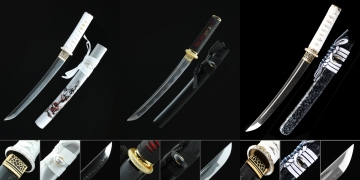
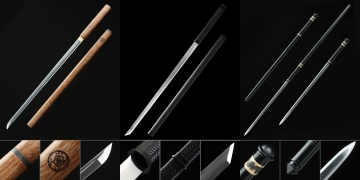
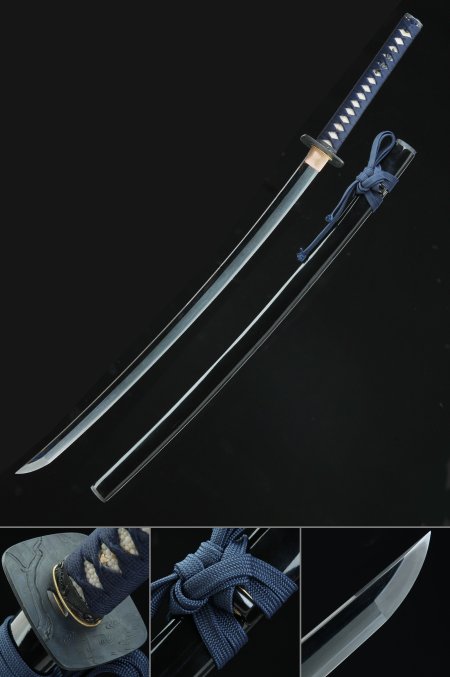
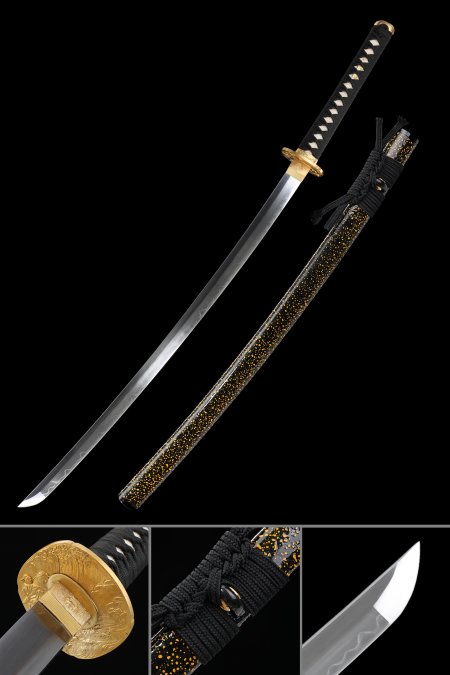
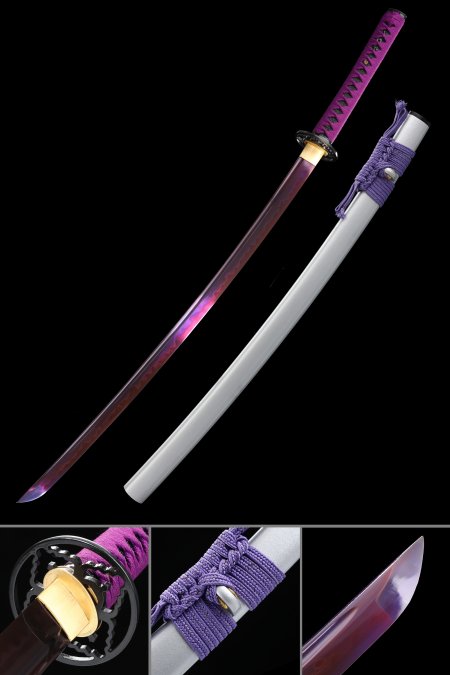
The scabbard selection in this collection is deliberately varied to support different display aesthetics. Options include classic jet-black lacquered hardwood, black piano-lacquer saya with red lightning stripe inlays, deep green saya with speckled surface treatments, hand-painted pearlescent finishes in blue tones, and black hardwood with understated matte surfaces. Each saya is paired to complement the corresponding tsuba finish - for example, a copper wave tsuba is often matched with green or dark lacquer saya to create contrast, while gold-tone tsuba are paired with black or speckled finishes to let the guard stand out as a focal point. The lacquer coating also serves a practical purpose for display longevity, providing a protective layer against humidity and surface abrasion when the piece is stored or mounted.
How should I care for a decorative katana kept on display?
For long-term display preservation, the most important routine is periodic light oiling of the blade surface. A few drops of traditional choji oil or a neutral mineral oil applied with a soft cloth every two to three months will prevent surface oxidation, especially in humid environments. When wiping the blade, always move from the base toward the tip with a smooth, controlled motion to avoid uneven pressure. The saya should be stored in a low-humidity environment; excessive moisture can cause lacquer to bubble or crack over time. If your display area receives direct sunlight, consider repositioning the mount, as prolonged UV exposure can fade ito handle wraps and affect lacquer depth. For long-term storage rather than active display, wrapping the blade in a soft uchiko cloth before sheathing adds an additional protective buffer. Avoid touching the blade surface directly with bare hands, as skin oils accelerate oxidation on high-carbon steel.
Are wave tsuba katana a good choice as collector gifts?
Wave tsuba katana make a particularly strong gift choice for collectors because the design carries immediate visual impact without requiring deep technical knowledge to appreciate. The wave motif is universally recognized as both elegant and symbolically rich, making it accessible to newer collectors while still being respected by experienced ones. For a more considered gift, pairing a T10 clay-tempered blade - which displays a visible hamon - with a distinctive saya finish creates a piece that tells a clear story about traditional forging craft. Damascus options are excellent for collectors who already own high-carbon steel pieces and are looking to diversify their display with a blade that has unique surface patterning. If the recipient is building a themed display, the wave tsuba pairs especially well with maritime or nature-inspired decor arrangements. Each katana in this collection ships fully assembled, making presentation straightforward without additional setup required.