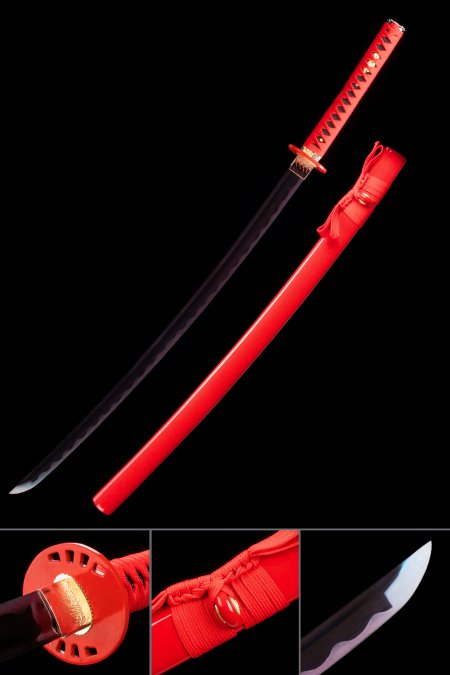
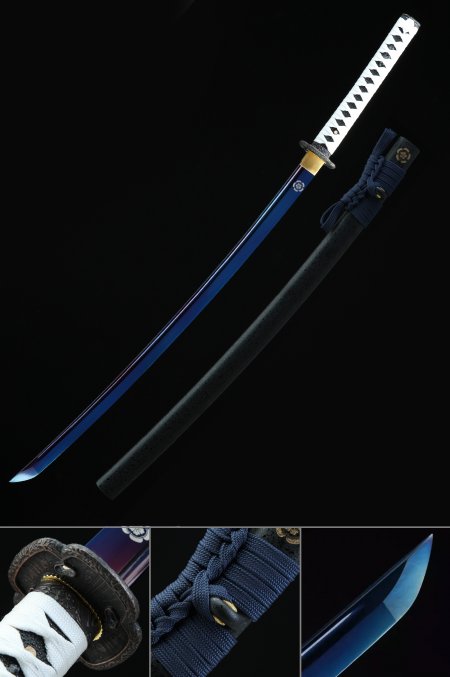
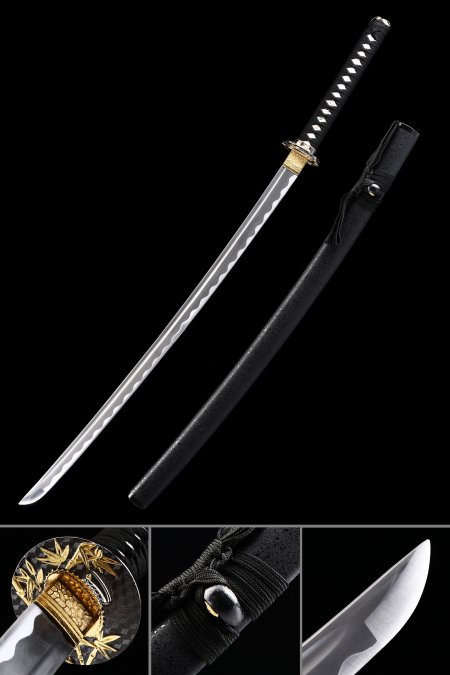
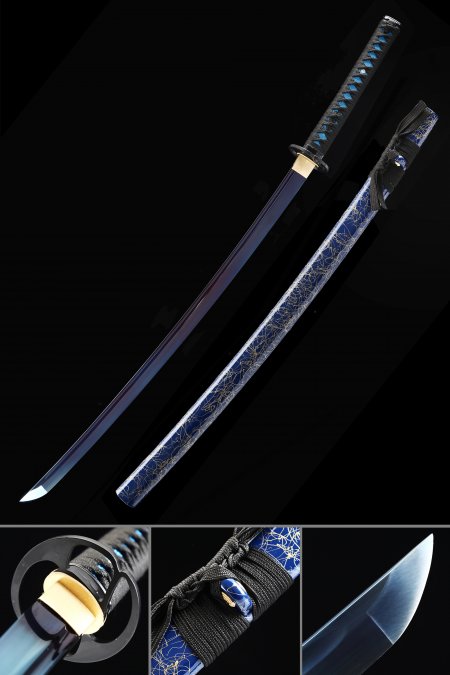
What makes a real hamon different from an etched one?
Updated Mar 2026
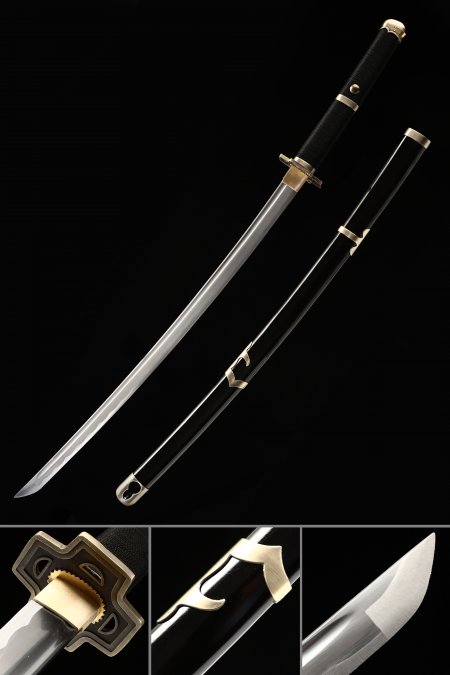
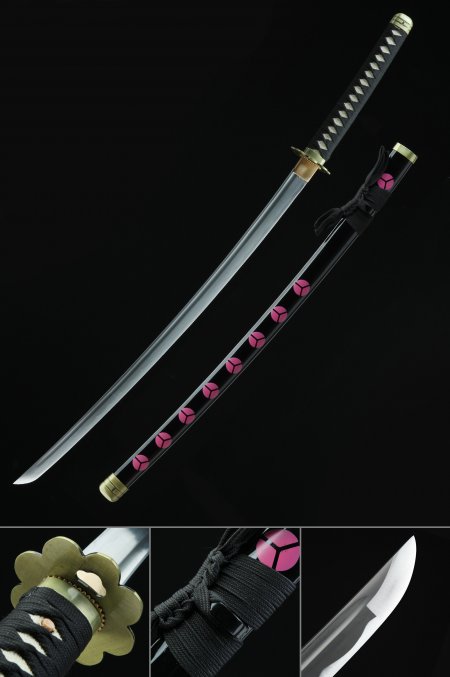
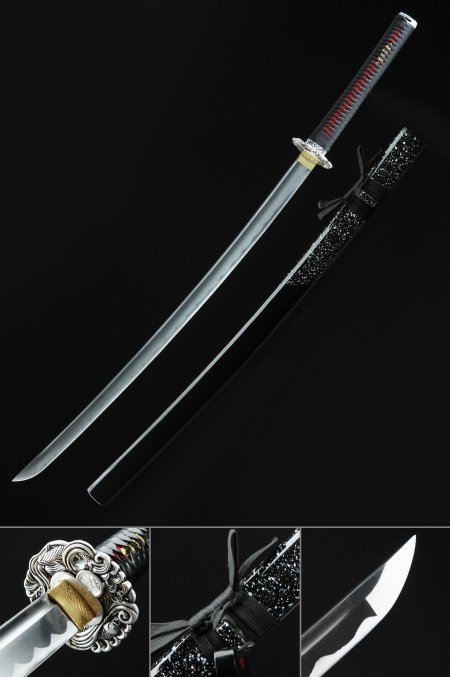
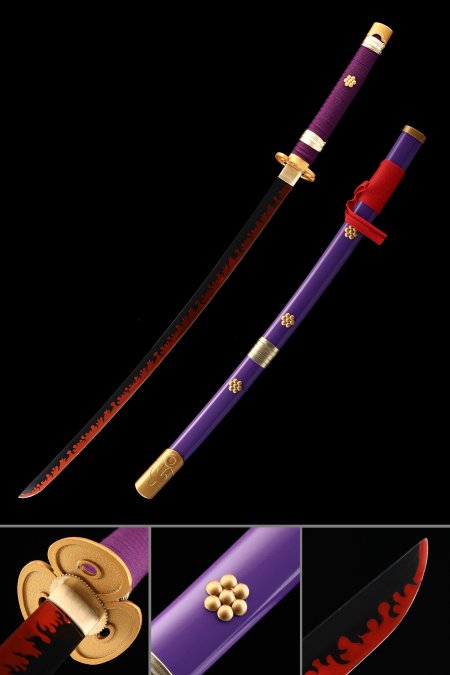
A real hamon forms during the clay tempering process, where the smith applies a clay mixture along the blade's spine before the final quench. The differential cooling between the coated spine and exposed edge produces a genuine crystalline boundary — the hamon — visible as a misty, undulating line unique to each blade. An etched or acid-simulated hamon, by contrast, is applied after forging as a surface treatment and lacks the depth, variation, and micro-texture of a true temper line. Under close inspection or angled light, an authentic hamon reveals tobiyaki (isolated hardened islands), nie (coarse martensite crystals), and nioi (fine martensite mist) — details absent from simulated versions. For collectors, the real hamon is both a quality indicator and an irrepeatable aesthetic signature.