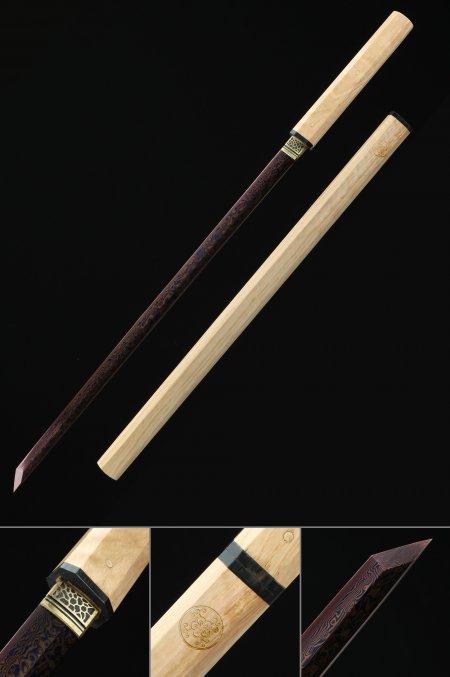
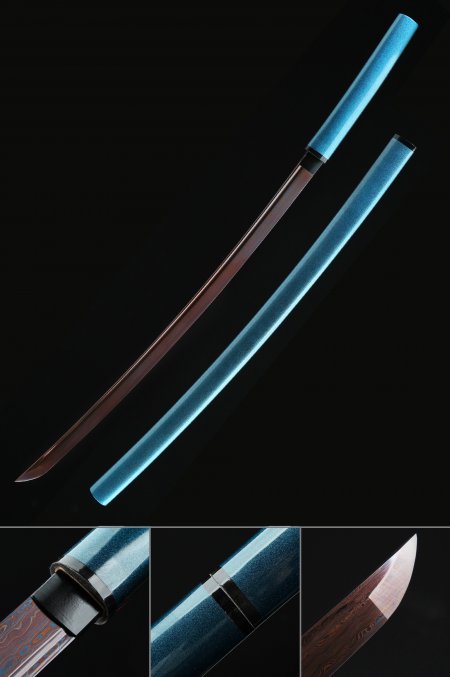
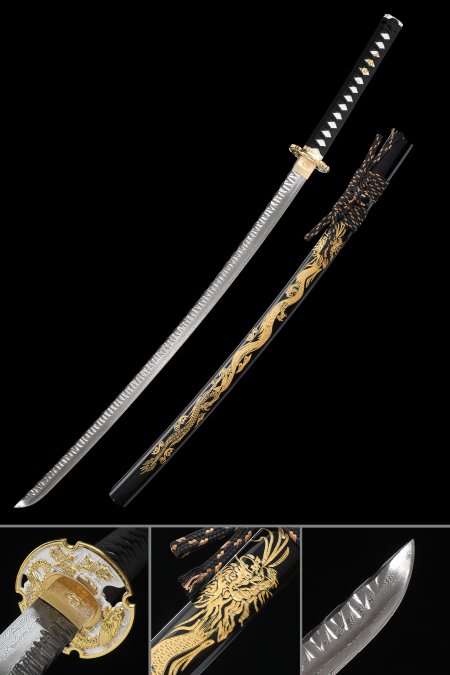
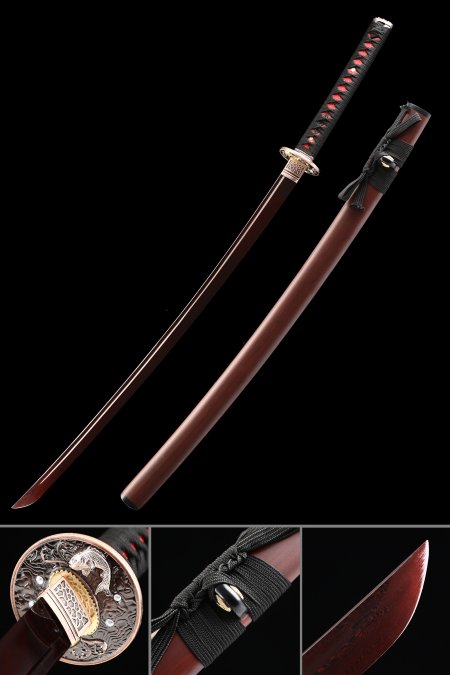
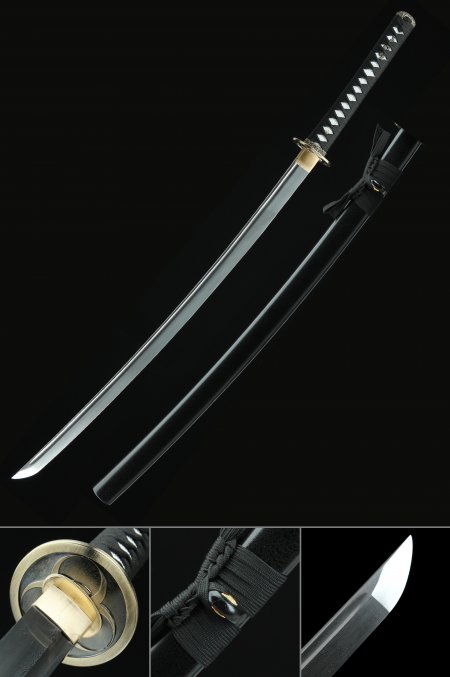
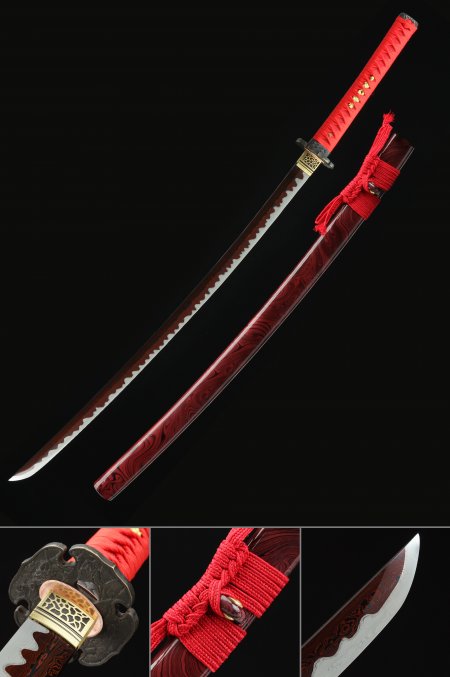
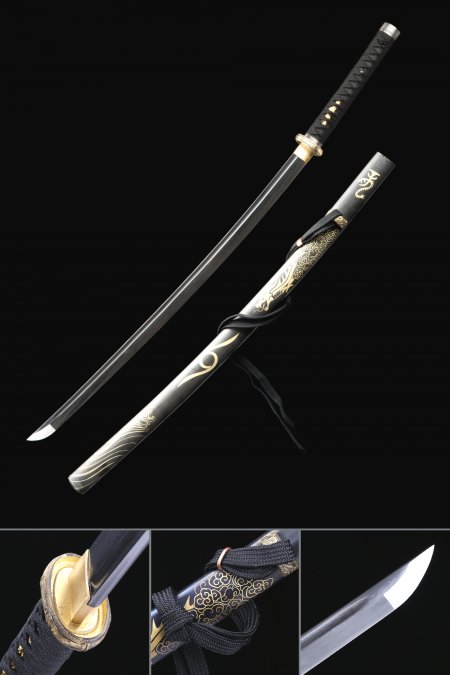
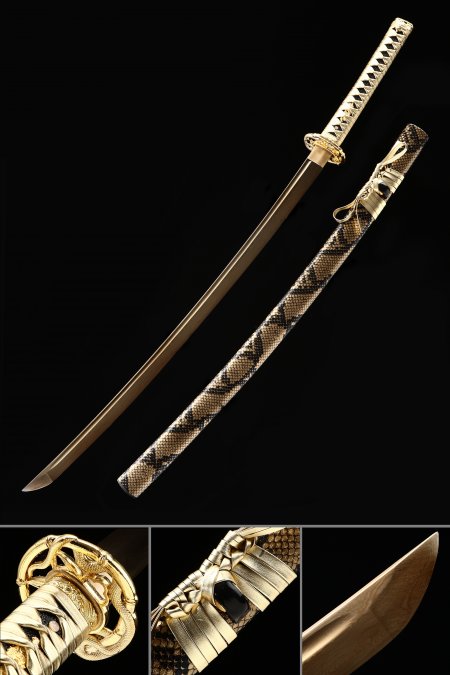
How does clay-tempered T10 steel differ from Damascus in these katanas?
Updated Mar 2026
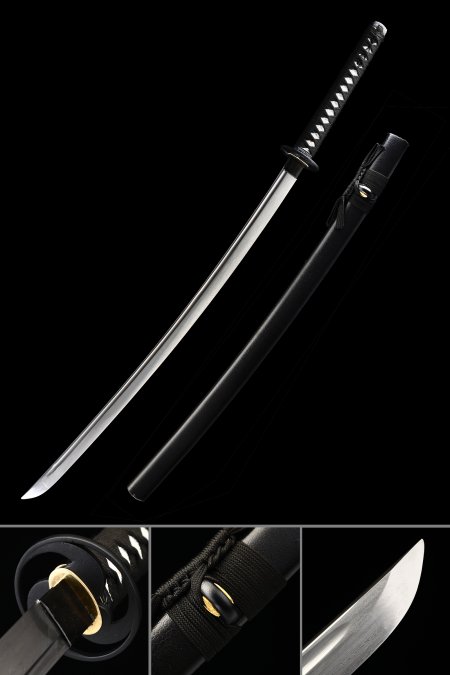
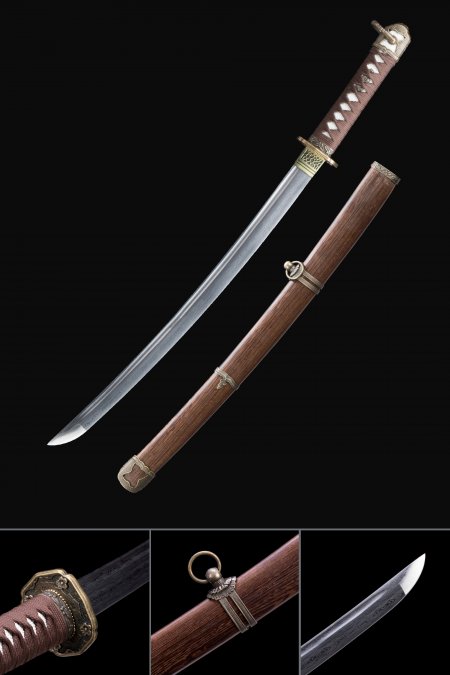
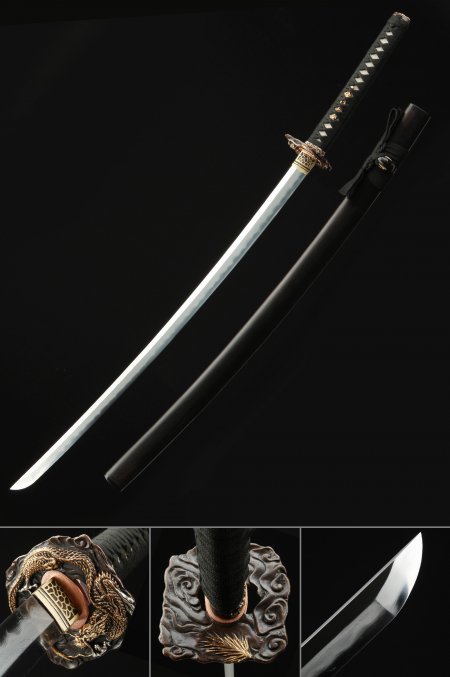
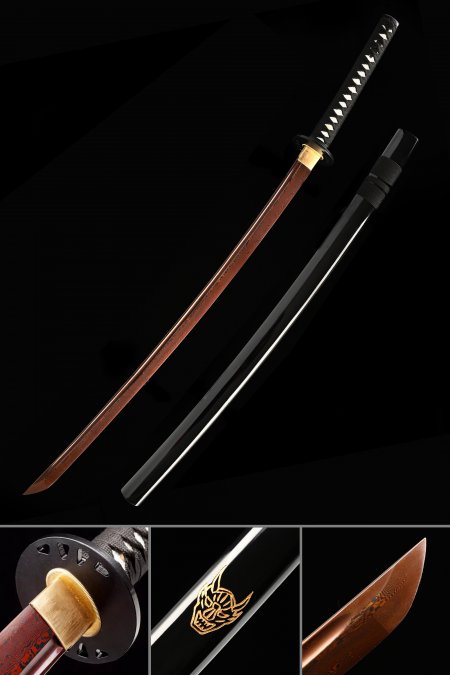
T10 is a high-carbon tool steel valued for its carbon content (approximately 1.0%) and the addition of a small amount of silicon, which contributes to edge retention and a clean polish. When clay-tempered, a thick coat of refractory clay is applied to the spine before quenching, creating a controlled temperature differential that produces a visible hamon—the wavy temper line along the edge. Damascus steel, by contrast, is fabricated by folding and forge-welding alternating layers of different steel alloys. The surface patterning that emerges—often described as flowing woodgrain—is a direct visual record of that layering process. T10 tends to offer a more precisely controlled hamon, while Damascus delivers unique surface aesthetics that vary piece to piece. Both are legitimate choices for display collectors; the decision usually comes down to whether you prioritize the temper-line artistry of a hamon or the layered patterning of folded steel.