Phoenix Saya Katana

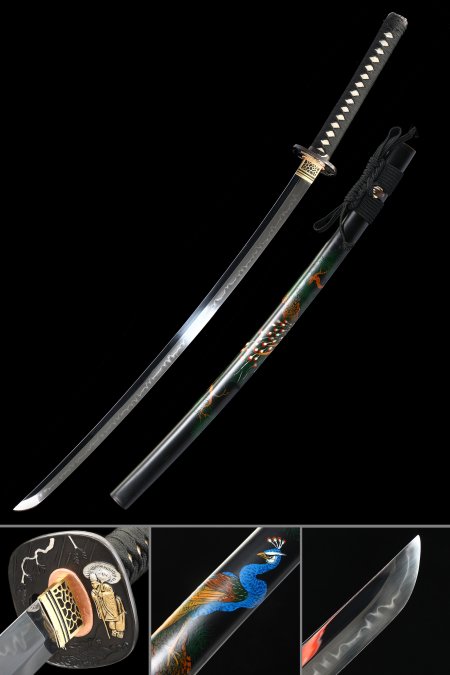
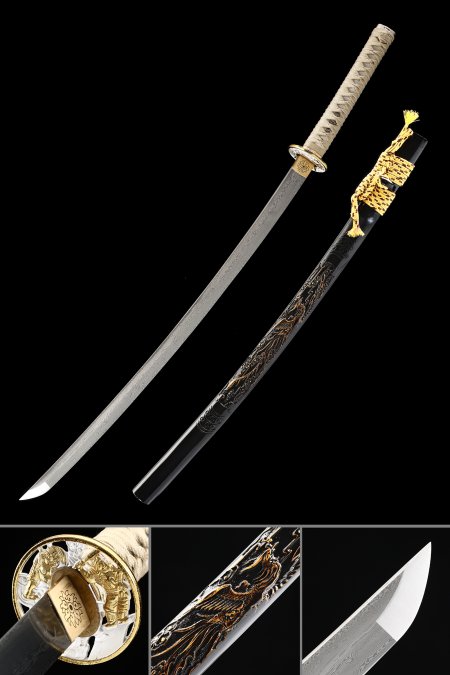
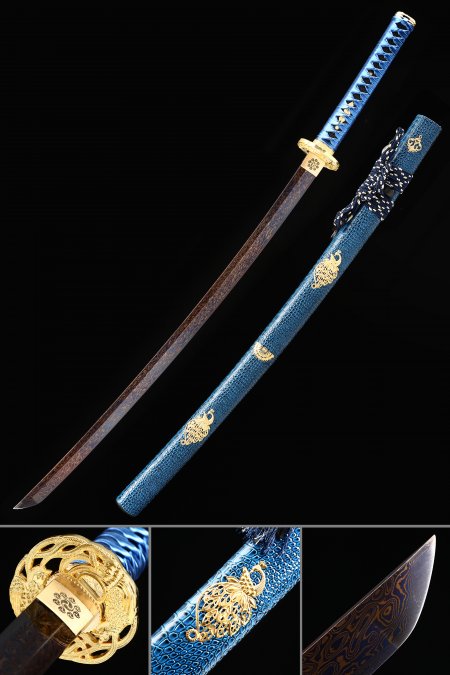
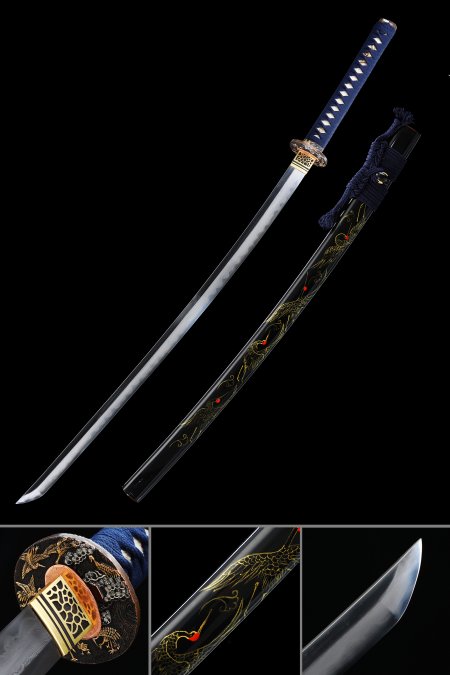
The Phoenix Saya Katana collection unites masterful blade-smithing with ornate lacquerwork scabbards, each saya hand-painted or embossed with the mythic phoenix motif. From Damascus-layered billets to clay-tempered T10 carbon steel, every piece in this series is crafted for serious collectors who prize both metallurgical authenticity and visual drama. Enjoy free standard shipping on all orders, plus hassle-free returns for complete peace of mind.
Showing 7 Products

Frequently Asked Questions

What makes a phoenix saya different from a standard katana scabbard?
A standard katana saya is typically finished in a single matte or gloss lacquer coat with minimal surface decoration. A phoenix saya, by contrast, is treated as a canvas in its own right. Craftsmen apply multiple lacquer layers—sometimes over a painted or embossed ground—to build up the phoenix imagery with depth and dimension. Copper or gold-toned hardware on the koiguchi (mouth fitting) and kurikata (cord knob) are often cast specifically to echo the bird motif rather than being generic fittings. The result is a scabbard that reads as an independent decorative object, not merely a blade housing. For collectors, this means the display value of the complete piece is significantly higher than the sum of its parts.
How does clay-tempered T10 steel differ from Damascus in these katanas?
T10 is a high-carbon tool steel valued for its carbon content (approximately 1.0%) and the addition of a small amount of silicon, which contributes to edge retention and a clean polish. When clay-tempered, a thick coat of refractory clay is applied to the spine before quenching, creating a controlled temperature differential that produces a visible hamon—the wavy temper line along the edge. Damascus steel, by contrast, is fabricated by folding and forge-welding alternating layers of different steel alloys. The surface patterning that emerges—often described as flowing woodgrain—is a direct visual record of that layering process. T10 tends to offer a more precisely controlled hamon, while Damascus delivers unique surface aesthetics that vary piece to piece. Both are legitimate choices for display collectors; the decision usually comes down to whether you prioritize the temper-line artistry of a hamon or the layered patterning of folded steel.
Are phoenix saya katanas suitable as collector gifts?
Yes, and they tend to perform exceptionally well as gifts precisely because the visual impact is immediate—even recipients unfamiliar with Japanese sword collecting respond to the lacquered saya artwork before knowing anything about the steel or fittings. For gifting purposes, pieces with a complete coordinated set—matching tsuba color to saya finish, and ito wrap to both—tend to feel more intentional and considered than mixing styles. A Damascus blade with a gold-accented phoenix saya and a complementary gold tsuba, for example, presents as a cohesive display object. Including a display stand and a brief card explaining the phoenix motif's cultural significance can elevate the presentation further. These pieces are appropriate for milestone occasions where a lasting, display-quality object is more meaningful than a consumable gift.
How should I clean and maintain a lacquered phoenix saya?
Lacquered sayas require gentle, consistent care rather than intensive periodic treatment. For routine maintenance, a soft dry microfiber cloth is all you need—wipe lightly to remove dust and fingerprint oils without applying pressure to embossed or painted areas. Avoid any solvent-based cleaners, furniture polishes, or silicone sprays, as these can soften or lift the lacquer surface over time. Humidity is the primary long-term risk: too dry (below 35% RH) causes the underlying wood to contract and potentially crack the lacquer; too humid (above 65% RH) promotes mold and can cause the lacquer to bubble or peel. A stable indoor environment between 40–60% relative humidity is ideal. If storing rather than displaying, wrap the saya loosely in acid-free tissue—never plastic, which traps moisture. The blade inside should be lightly oiled before storage to prevent oxidation from affecting the wood interior of the saya over extended periods.
What tsuba styles pair best with a phoenix saya design?
Tsuba selection matters more than most collectors initially realize—it functions as the visual bridge between blade and scabbard, and a mismatch in material or finish can fragment an otherwise cohesive piece. For phoenix sayas finished in black lacquer with gold accents, a gold-washed or gilt-tone tsuba—whether cast with dragon, floral, or geometric motifs—creates continuity across the fittings. Navy or deep blue saya schemes tend to pair cleanly with copper or bronze tsuba, where the warm metal reads as a deliberate complement rather than a match. Avoid pairing an elaborately detailed phoenix saya with an equally busy tsuba, as the two will compete visually. Many collectors prefer a cleaner, more geometric tsuba design when the saya itself carries the primary decorative weight, letting the scabbard artwork remain the focal point of the display.

Customer Reviews

Wayne Herod Ontario, Canada

Another beautiful sword! The reason I chose the Phoenix theme is because in the middle of May 2040CE The Mandate of Heaven will occur. This is caused by the Phoenix weapon. The 6th seal of Revelation, the sun will darken, worldwide volcanism & earthquakes, oceans slip basins, red rain red mud will fall from the sky. And the return of the Vapor Canopy. Cheers!
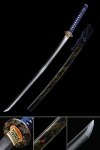
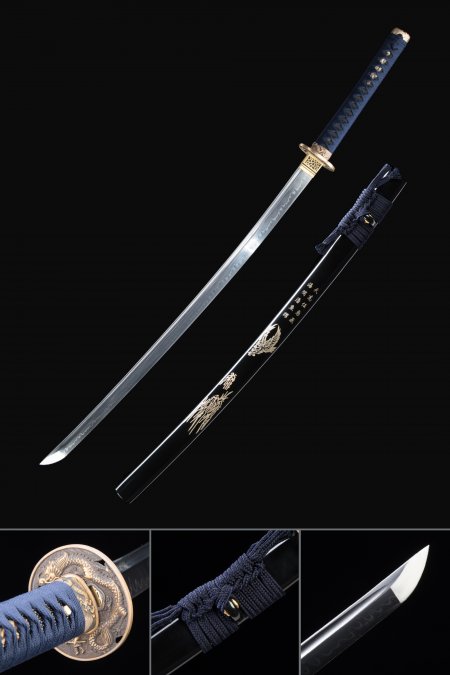
Clay-Tempered 1000-Layer Folded Steel Katana with Crane and Pine Copper Tsuba in Navy Blue Clay-Tempered 1000-Layer Folded Steel Katana with Crane and Pine Copper Tsuba in Navy Blue
Brandon Flonta Michigan, United States

The sword is amazing just have a little crack in the Saya im not mad about it due the the fact on display you can’t see it.
But when shipped it just came in styrofoam not in a box , where another order of mine had a box and styrofoam.
Sword was well put together and greatly designed other than the crack I’m extremely happy on it.
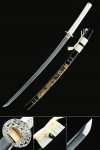
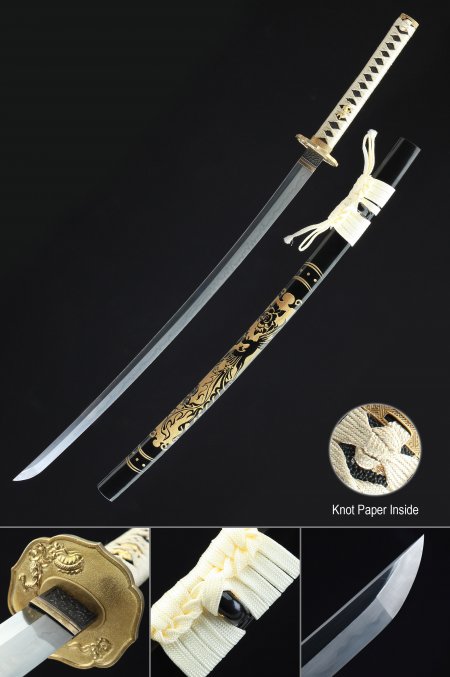
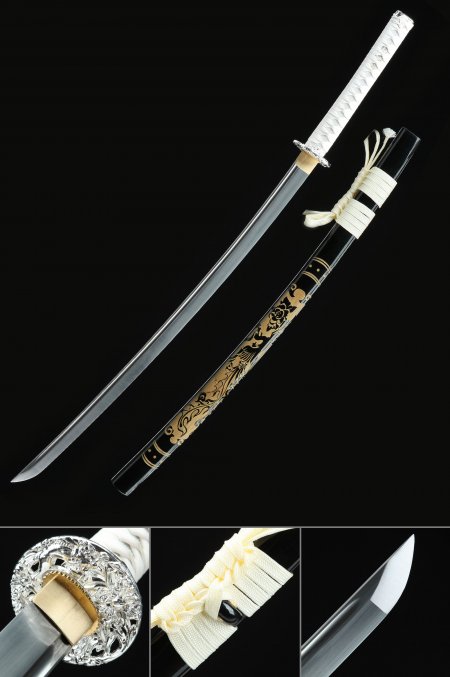
Manganese Steel Katana with Black-Gold Phoenix Saya and White Ito Handle - 41 in. Replica Manganese Steel Katana with Black-Gold Phoenix Saya and White Ito Handle - 41 in. Replica