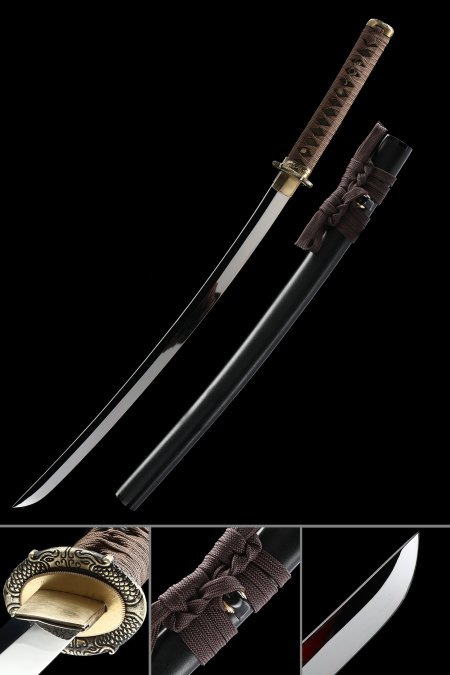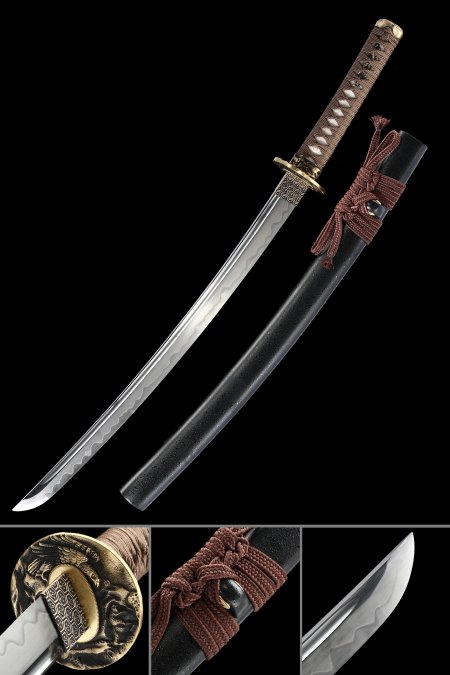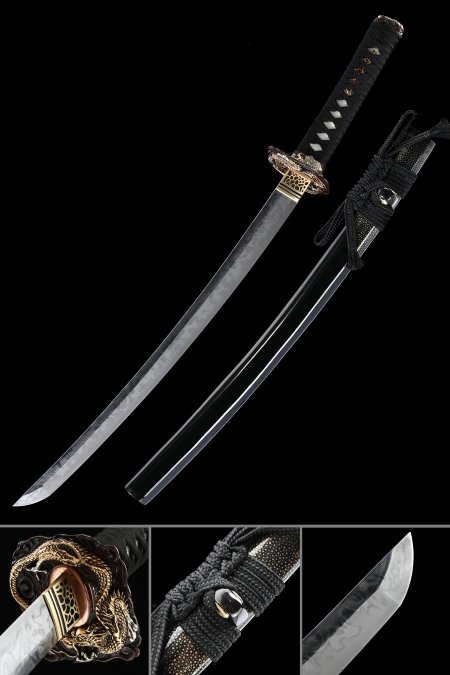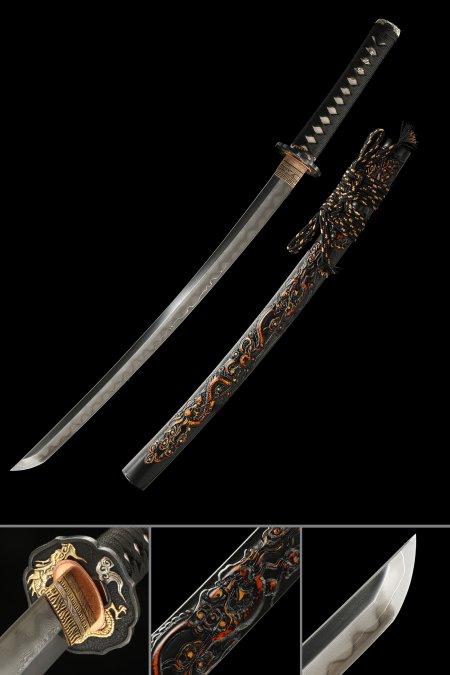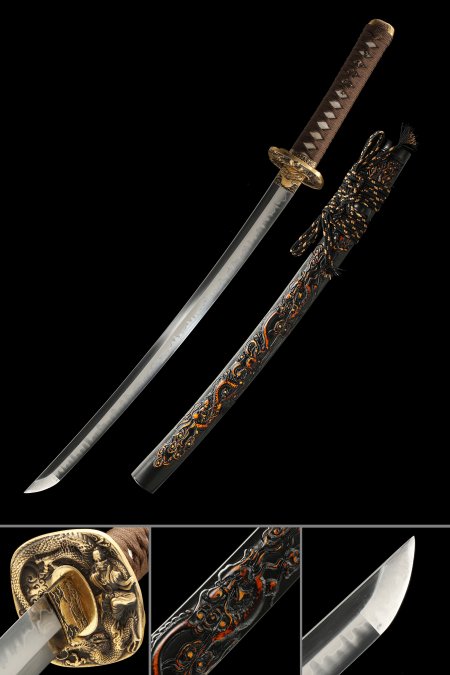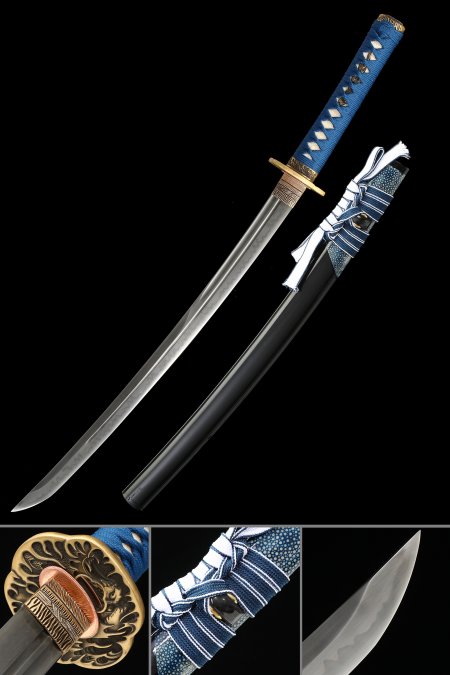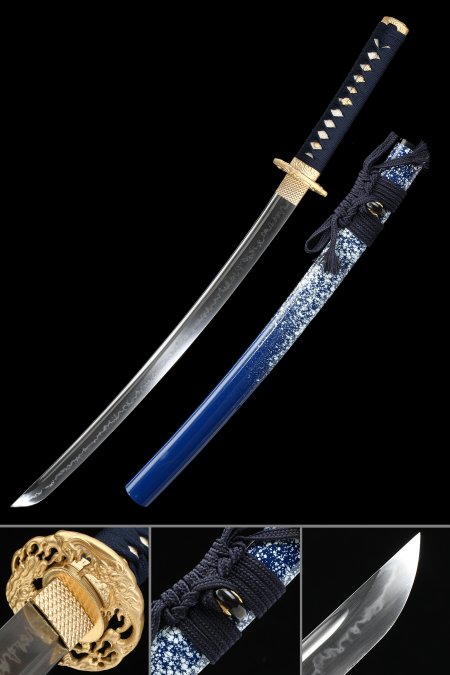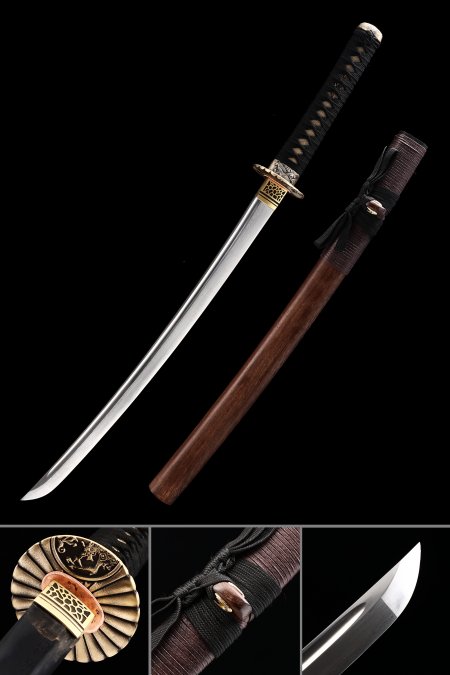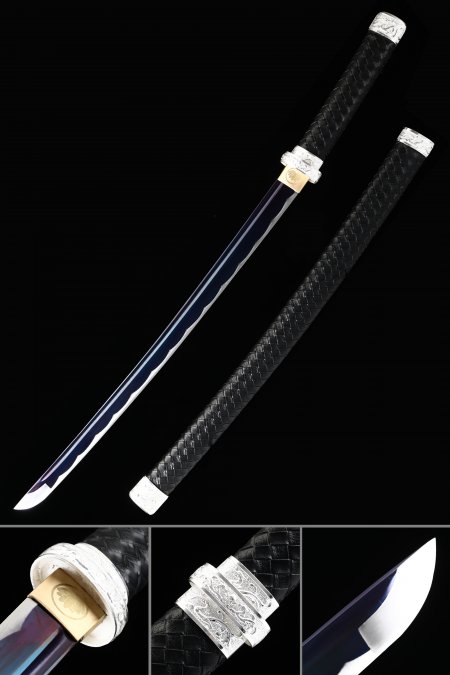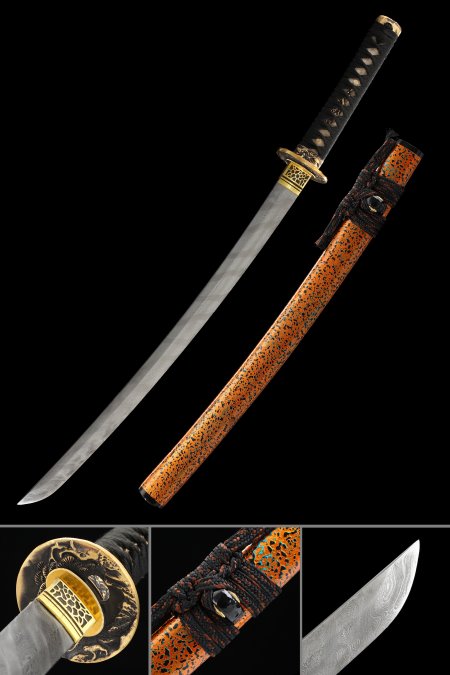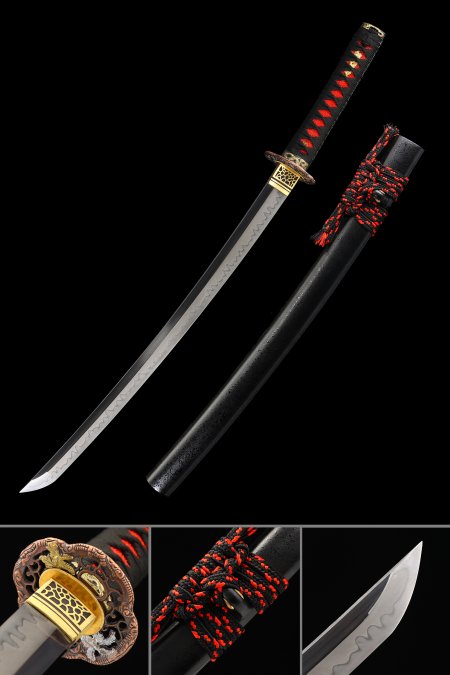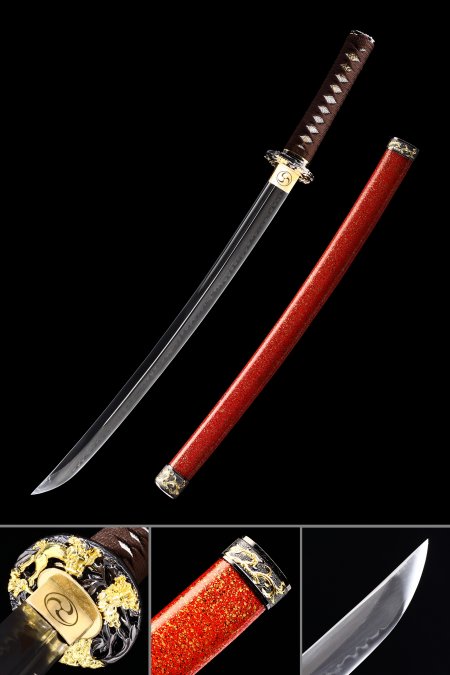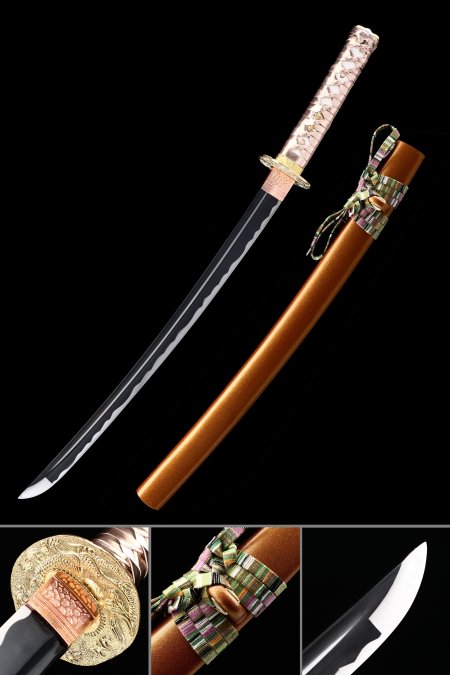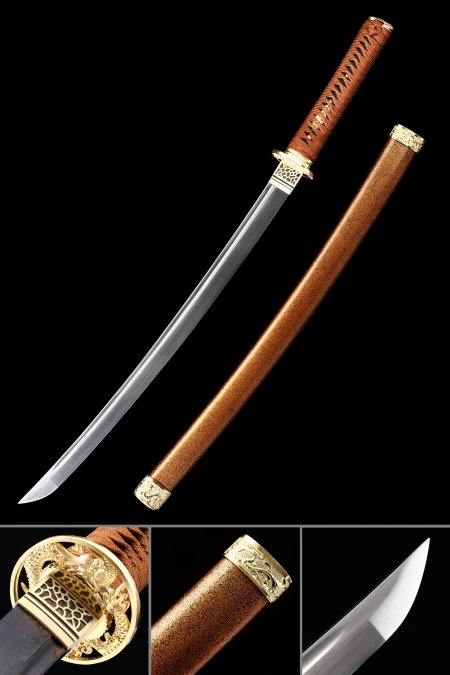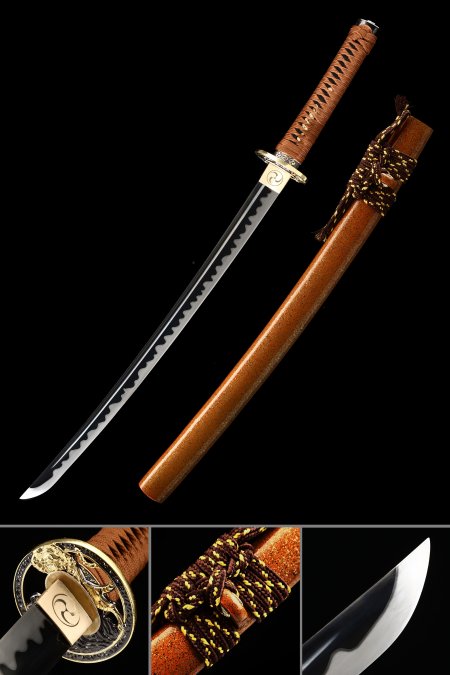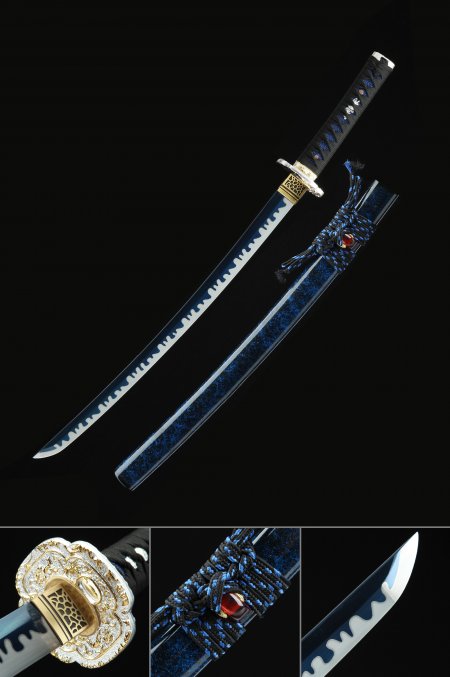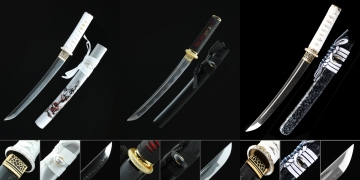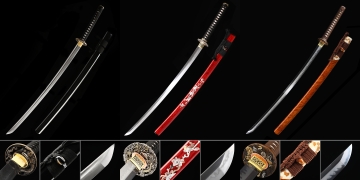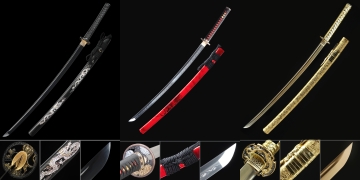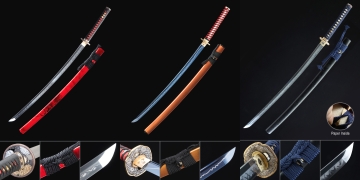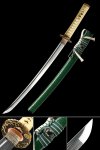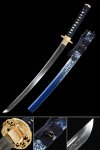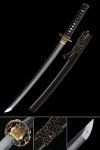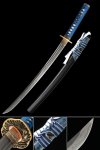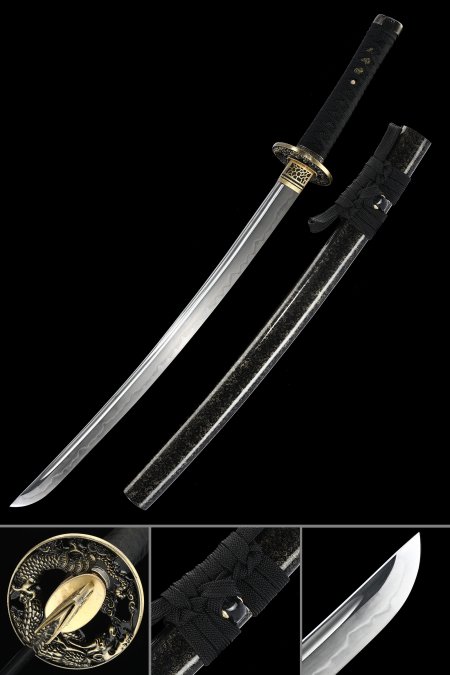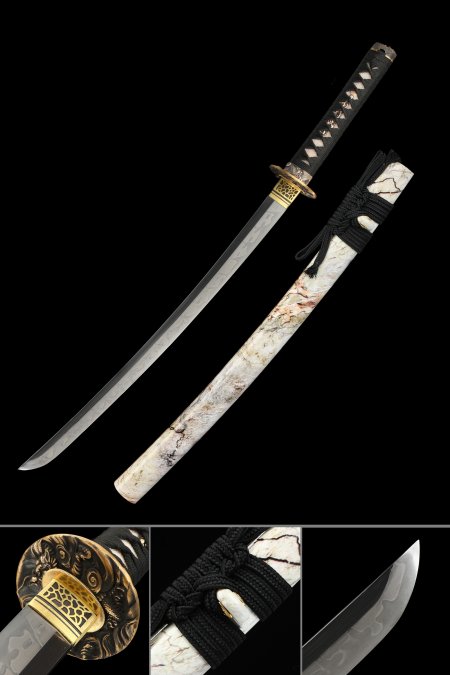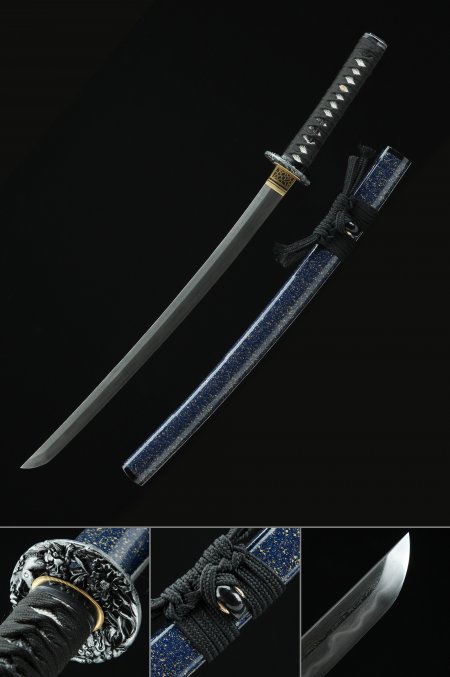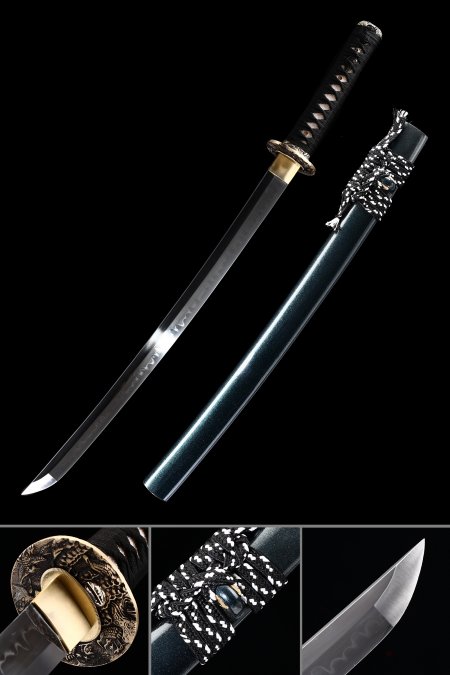
Dragon Tsuba Wakizashi

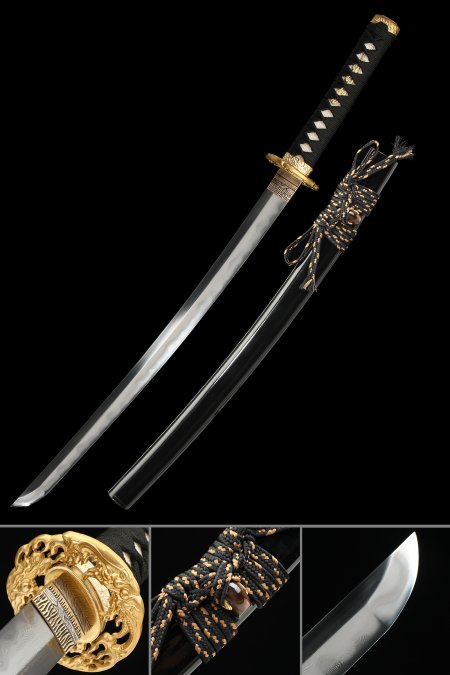
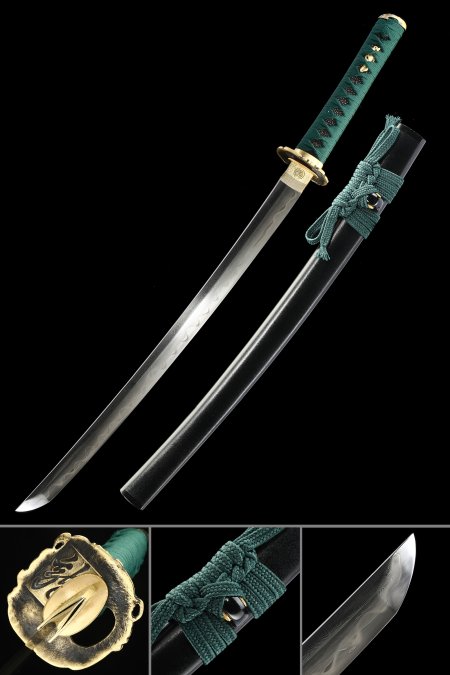
Dragon Tsuba Wakizashi from TrueKatana are handcrafted collectibles built for discerning enthusiasts who appreciate both visual artistry and authentic construction. Each piece features an intricately cast dragon tsuba, hand-selected steel — from layered Damascus to clay-tempered T10 — and a lacquered saya finished to museum-display standards. Free shipping is available on all orders, backed by our hassle-free return policy.
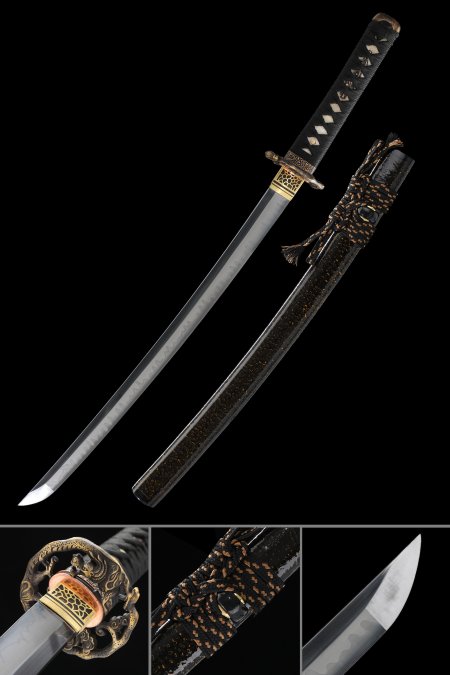
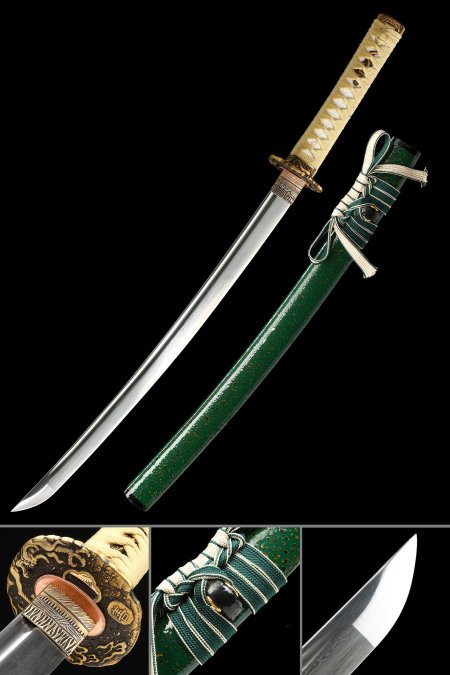
Showing 24 Products

Related Collections

Tanto Blade79 items


382 Reviews

Dragon Tsuba Katana358 items


1135 Reviews

Dragon Saya Katana198 items


544 Reviews

Chrysanthemum Tsuba Katana167 items


406 Reviews

Frequently Asked Questions

What makes a dragon tsuba different from a standard tsuba?
A standard tsuba is often a plain iron or copper disk whose primary role is functional separation between blade and handle. A dragon tsuba is a purpose-designed artistic fitting — typically cast or hand-carved in copper, shakudo, or alloy — featuring raised or pierced dragon imagery drawn from Chinese and Japanese mythological tradition. The level of detail varies by maker: higher-end pieces show individual scales, curling tails, and cloud motifs in relief, while more accessible collector grades use clean cast profiles that still carry strong visual presence. On a wakizashi, where the tsuba is proportionally larger relative to blade length than on a katana, the dragon design becomes an even more prominent focal point of the overall composition.
How does clay-tempered T10 differ from standard T10 in a wakizashi?
Both are high-carbon T10 steel, but clay tempering adds a critical step: a layer of clay slurry is applied along the spine before quenching, insulating that area and causing it to cool slowly. The edge, exposed to rapid quenching, hardens into martensite while the spine remains relatively softer and more resilient. The visible result is the hamon — a naturalistic boundary line running the length of the blade that is unique to each individual piece. In a non-clay-tempered T10 wakizashi, the steel is uniformly hardened and the surface appears consistent throughout. Collectors specifically seek clay-tempered pieces for the hamon, which is considered one of the defining aesthetic and technical signatures of authentic Japanese-style blade craft.
Is Damascus steel on a wakizashi purely decorative or structural?
The patterned surface on a Damascus steel wakizashi is the direct result of the construction method: multiple steel billets are forge-welded, folded, and drawn out repeatedly, creating distinct grain lines that become visible after acid etching. This process is genuinely structural — the folding distributes carbon more evenly and refines the grain of the steel — though on a display-grade collectible, the visual impact is often the primary reason collectors choose it. The flowing, watered-silk patterns mean no two blades are identical, which is a significant consideration for collectors who value uniqueness. Paired with a dragon tsuba, the layered surface of a Damascus blade creates a visually cohesive piece where organic patterning in the steel complements the mythological scale motifs in the guard.
How should I store and maintain a lacquered saya wakizashi long-term?
Lacquered sayas are more sensitive to humidity fluctuation than plain wood, so stable storage conditions matter. Aim for relative humidity between 45–60% and avoid placing the sword near heating vents, exterior walls, or direct sunlight, which can cause the lacquer to crack or fade over time. For the blade itself, apply a thin coat of choji oil or a neutral mineral oil every few months using a soft, lint-free cloth — wipe away any excess to prevent pooling near the habaki (blade collar), which can trap moisture. Never store the sword in the saya for extended periods without periodic removal and re-oiling, as residual humidity inside the saya can cause surface oxidation on the steel. A horizontal display stand keeps stress off the saya’s lacquer finish and is generally preferred over vertical storage for long-term preservation.
Can a dragon tsuba wakizashi make a meaningful gift for a collector?
A dragon tsuba wakizashi is among the more thoughtful gifts available in the Japanese sword collectible category, particularly for someone who already owns a katana or has an interest in Japanese history and mythology. The wakizashi’s shorter blade length — typically 16 to 21 inches — makes it easier to display in tighter spaces like bookshelves or desk stands, and the dragon tsuba gives it immediate visual identity that a plain-fitted blade lacks. For gift-giving purposes, matching the saya color to the recipient’s existing display palette — or deliberately contrasting it — adds a personal dimension to the selection. If the recipient collects both long and short blades, pairing this with a piece from the Full Tang Katana collection creates a daisho-inspired set that carries substantial display and symbolic weight.

Customer Reviews

Joseph Evans Virginia, United States

The wakizashi that I received was absolutely gorgeous! The blade, handle, scabbard, and every detail was second to none…oh and it’s sharp as heck too, so don’t go fooling around or you’ll be admiring one of these beautiful weapons from the emergency room. This is my second time ordering from TrueKatana and both times it has been a home run! Love it!
Damascus Steel Wakizashi with Rosewood Saya - Dragon Copper Tsuba, Black Ito, 21.25 Damascus Steel Wakizashi with Rosewood Saya - Dragon Copper Tsuba, Black Ito, 21.25" Blade
Cart 0 Items

Your cart is empty