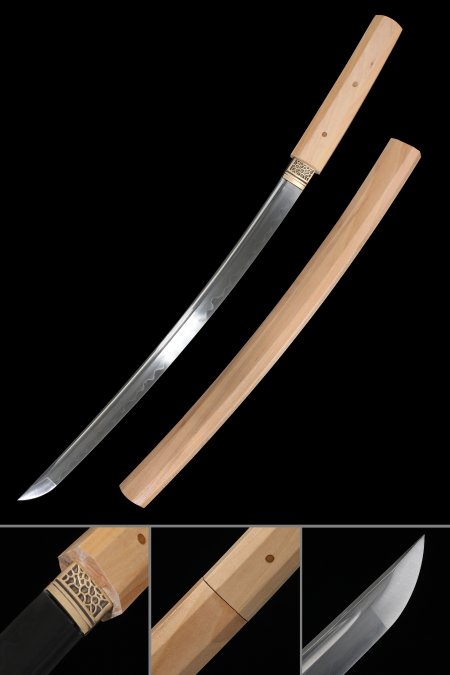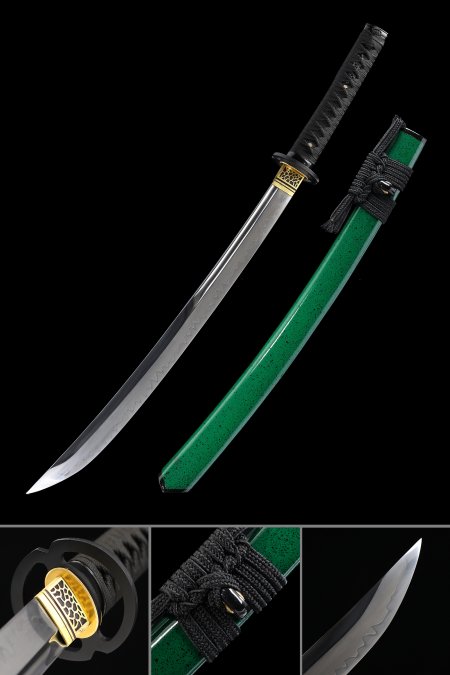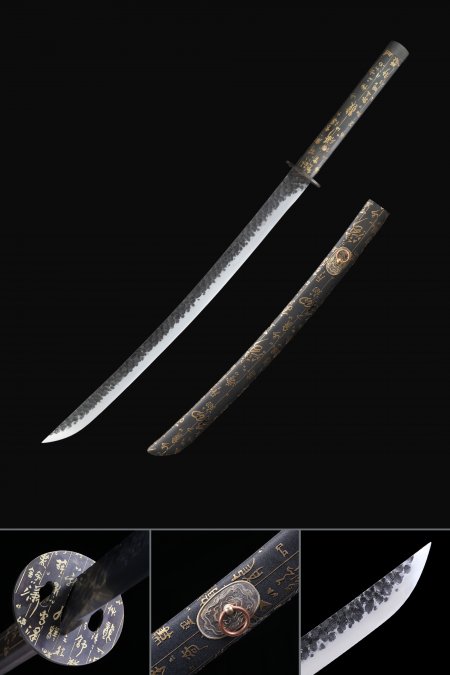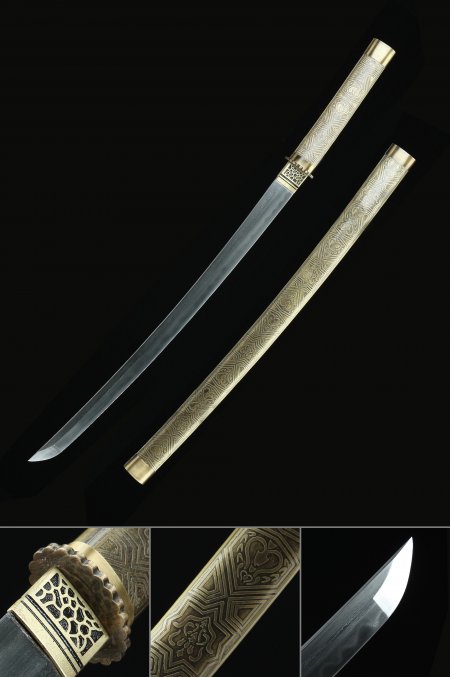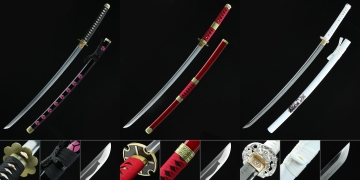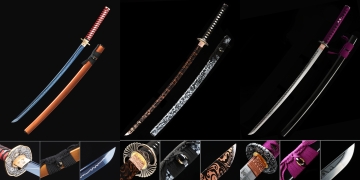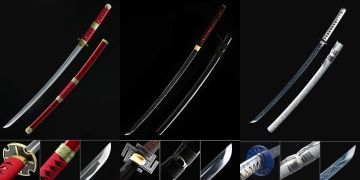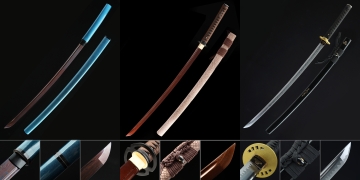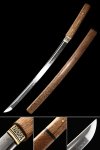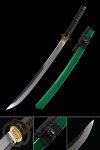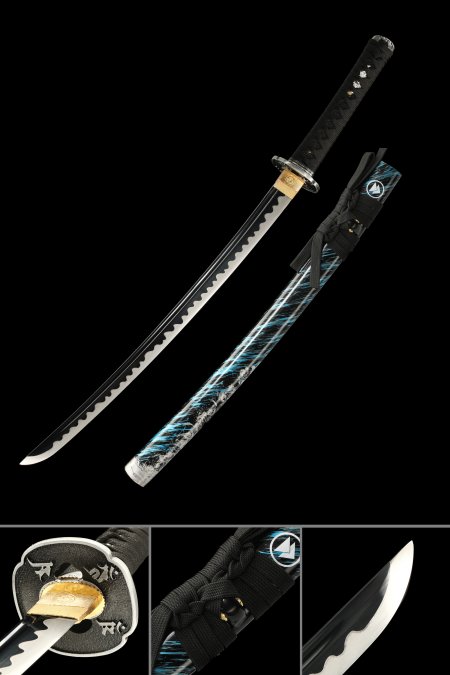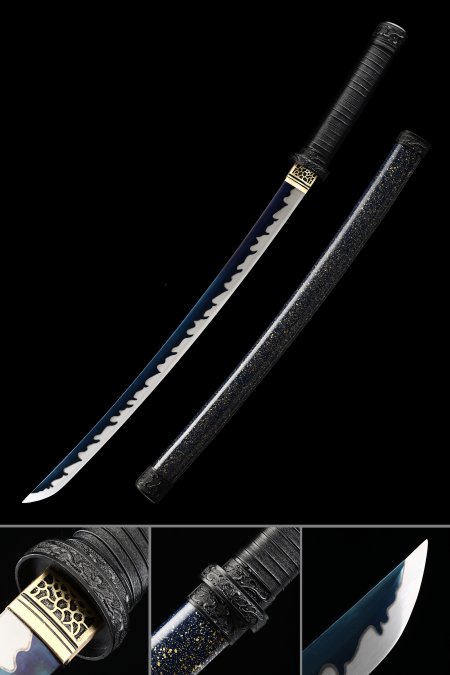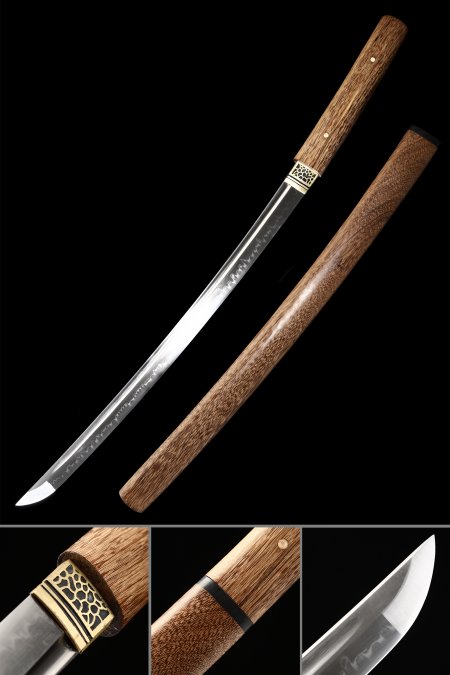
Geometric Tsuba Wakizashi

Geometric Tsuba Wakizashi brings together the compact elegance of the traditional companion blade with boldly crafted guard designs - from angular gold lattices to star-flecked copper motifs. Each piece is hand-forged from high-carbon or Damascus steel, fitted with authentic ray-skin handles, lacquered hardwood saya, and precisely shaped tsuba that elevate the overall aesthetic. Enjoy free standard shipping on every order, backed by our hassle-free return policy.
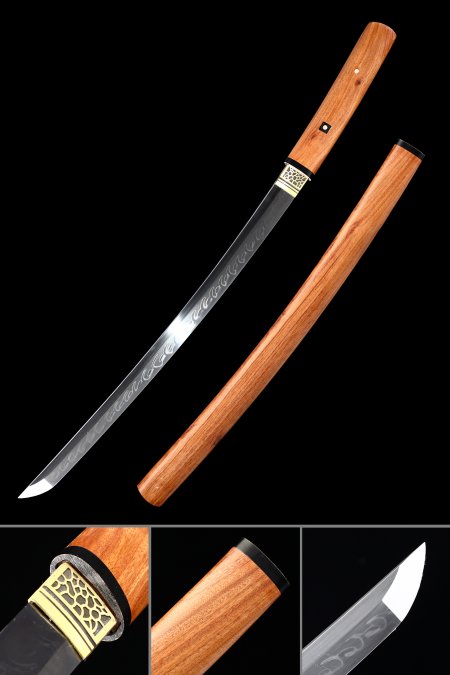
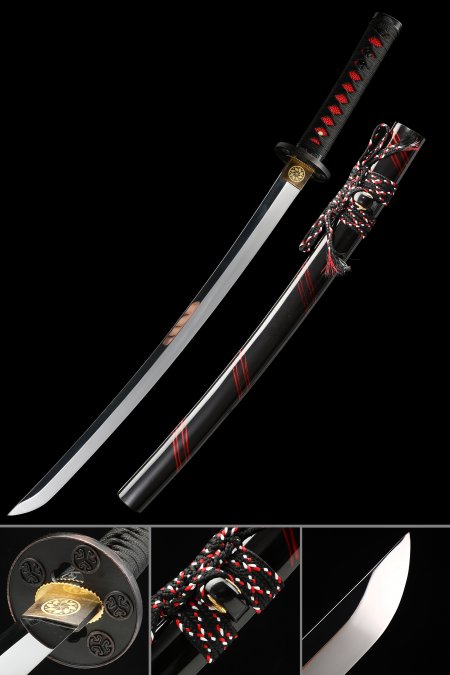
Showing 9 Products

Related Collections

Flower Saya Katana88 items


540 Reviews

Wave Blade Katana83 items


138 Reviews

Geometric Tsuba Katana103 items


954 Reviews

Plain Tsuba Katana89 items


323 Reviews

Frequently Asked Questions

What makes geometric tsuba different from other tsuba styles?
Geometric tsuba follow a design philosophy rooted in structured symmetry and repeating mathematical forms - grids, radial patterns, interlocking diamonds, and angular lattices - rather than the organic motifs like dragons, flora, or landscapes found on naturalistic guards. Historically, geometric designs were associated with restraint and precision, and they were often produced by metalworkers who specialized in architectural and decorative metalwork. On a collectible wakizashi, a geometric tsuba tends to create a strong visual anchor point between handle and blade, making the piece legible and compelling even when displayed at a distance. The style also pairs well with both ornate lacquer saya and minimalist hardwood mountings, giving collectors flexibility in how they build a display.
How does T10 steel differ from Damascus steel in a wakizashi?
T10 is a high-carbon tool steel with a small tungsten addition that refines grain size, making it well-suited for the clay-tempering process that produces a visible hamon - the wavy temper line along the blade edge. A T10 wakizashi will typically show a clean, distinct hamon and a polished surface that highlights the steel's uniform structure. Damascus steel, by contrast, is produced by folding and forge-welding two or more steel alloys together repeatedly, creating a layered pattern visible across the entire blade surface. This pattern is intrinsic to the material rather than applied. Both are legitimate choices for high-quality display collectibles; T10 prioritizes the traditional hamon aesthetic, while Damascus adds a full-blade visual complexity that makes each piece unique at the material level.
Is a shirasaya wakizashi different from a standard mounted one?
Yes, in a meaningful way. A shirasaya mounting consists of a plain, unadorned hardwood saya and handle - traditionally used for long-term storage rather than everyday carry - with no tsuka-ito wrapping, menuki, or decorative fittings. The result is a clean, sculptural silhouette that emphasizes the blade and the natural wood grain. A standard koshirae-style mounting, by contrast, includes a wrapped handle, a tsuba, and a lacquered saya, offering far more decorative surface area. Some pieces in this collection combine elements of both styles, featuring a shirasaya-style wood saya paired with a geometric tsuba as an accent fitting, producing a hybrid aesthetic that bridges minimalism and ornamentation. For display purposes, both styles present well, though shirasaya pieces tend to suit contemporary or Japanese-minimalist interior settings more naturally.
How should I store a lacquered saya wakizashi long-term?
Lacquered saya require stable environmental conditions to maintain their finish over time. Ideal storage sits between 40-60% relative humidity; levels that drop too low can cause the lacquer to crack, while excessive moisture encourages mold and can loosen the wood underneath the lacquer shell. Store the piece horizontally on padded brackets or in a lined sword bag, with the cutting edge facing upward if on a stand. Avoid placing the saya near heat sources, air conditioning vents, or exterior walls prone to temperature swings. For the blade, a thin coat of choji oil - a traditional Japanese mineral oil blend - applied every two to three months and wiped down to a very light film is sufficient to prevent surface oxidation without attracting dust or degrading the habaki fit.
Can a geometric tsuba wakizashi be displayed alongside a katana?
Absolutely - pairing a wakizashi with a katana in a daisho-style display is one of the most historically resonant ways to present Japanese swords as collectibles. The daisho combination, meaning 'big-small,' was the paired set worn by samurai and carries strong cultural associations with status and martial identity. For a visually cohesive display, look for shared design elements between both pieces: matching tsuba finishes (such as gold geometric on both), complementary saya lacquer colors, or the same cord-wrap color on the handles. If the two pieces use different steel types or tsuba styles, the contrast can itself be intentional and interesting. A two-tiered horizontal stand places the katana on the upper rack and the wakizashi below, mirroring the traditional wearing configuration.

Customer Reviews

Cart 0 Items

Your cart is empty