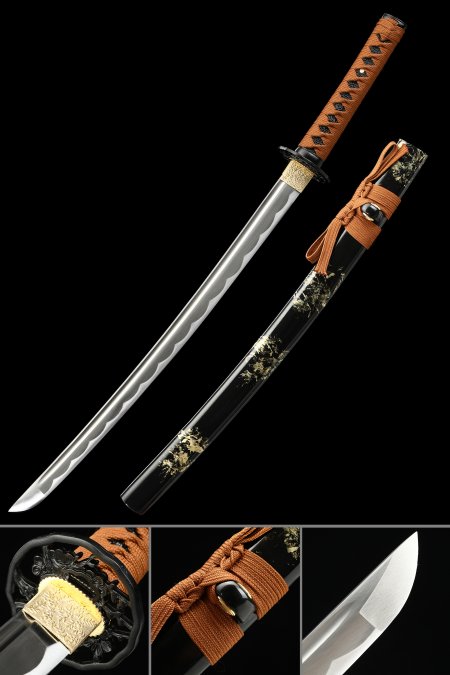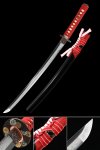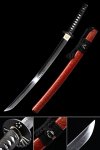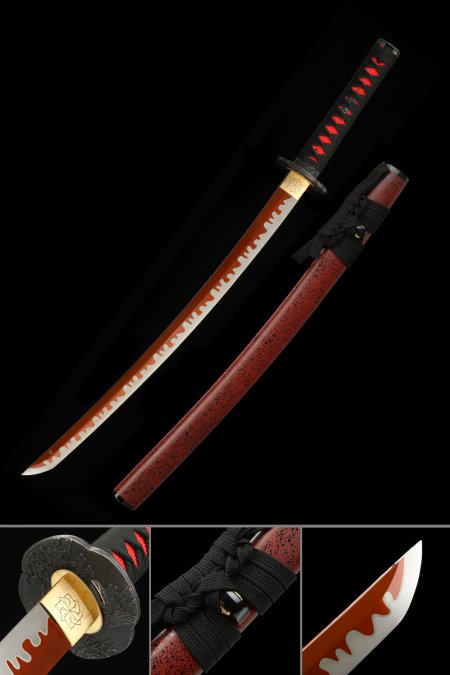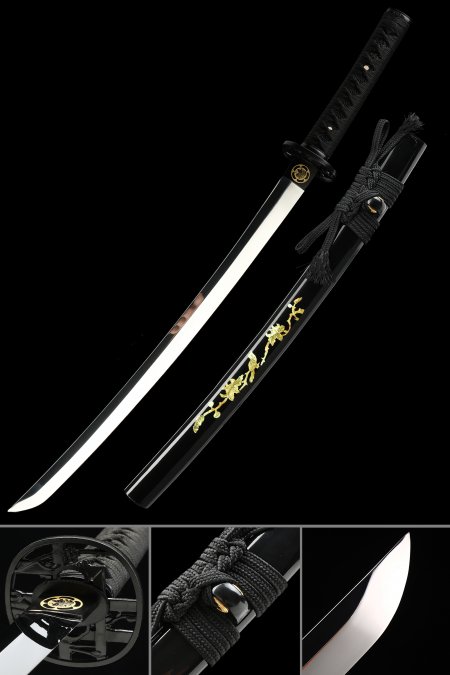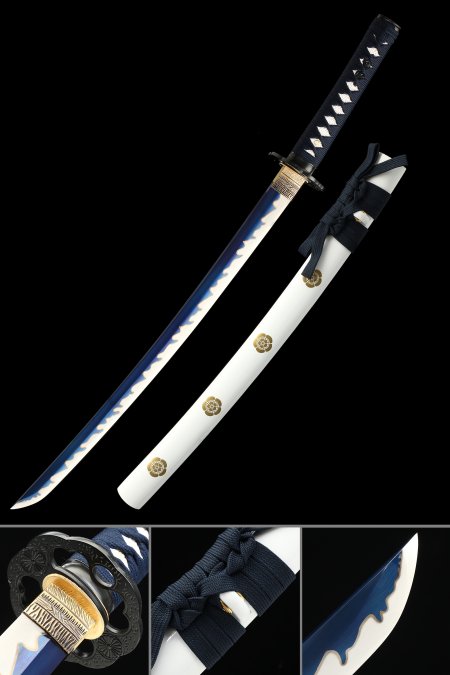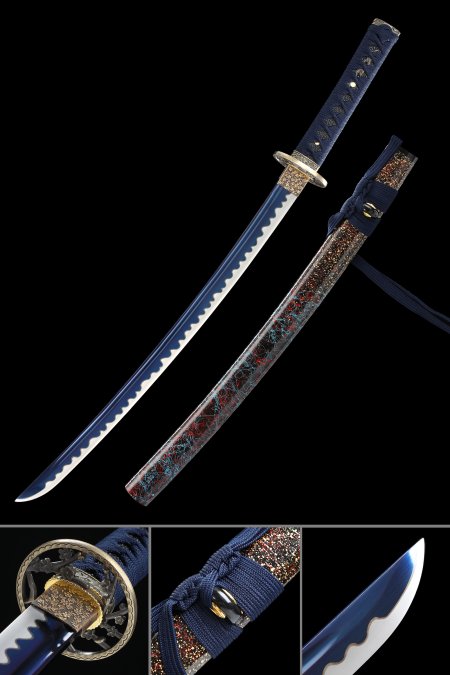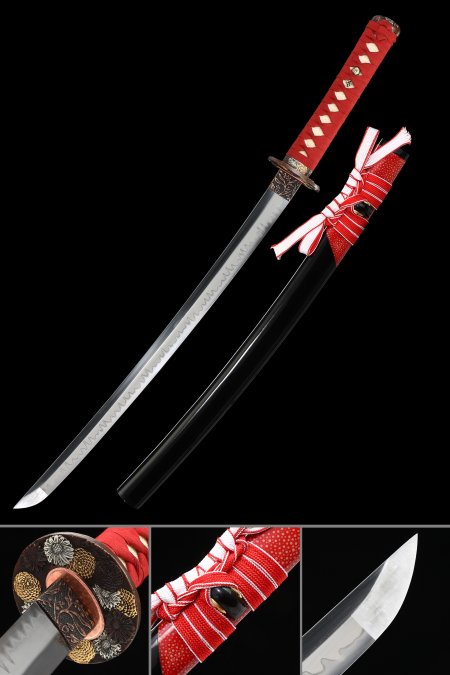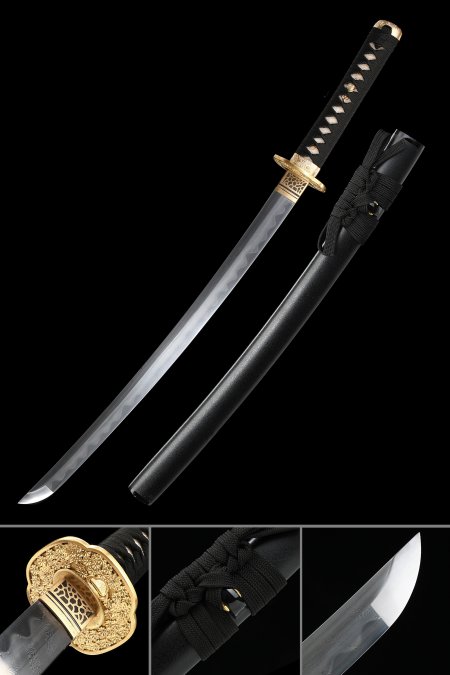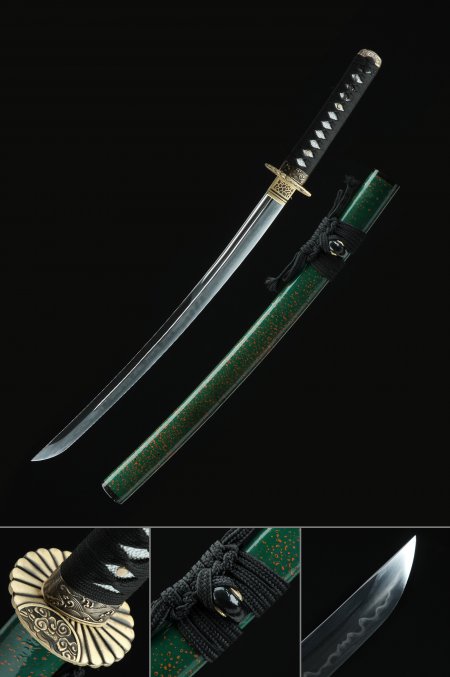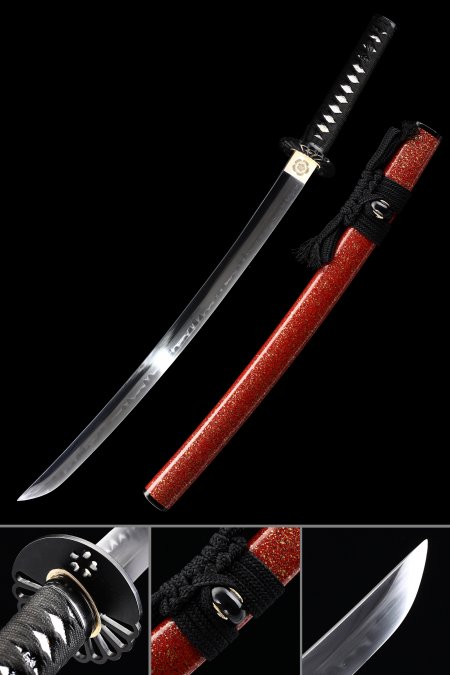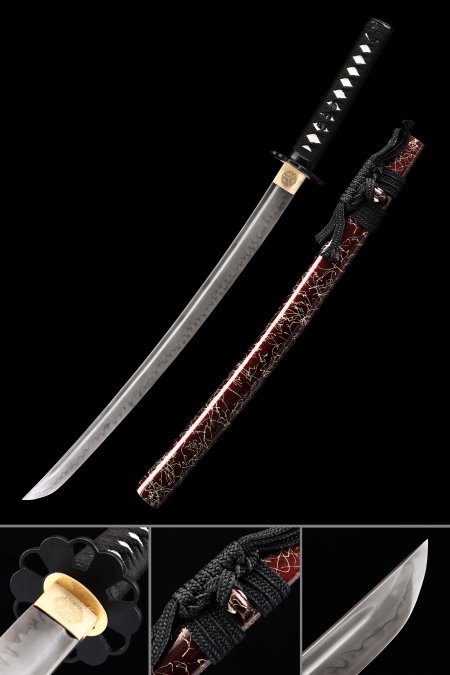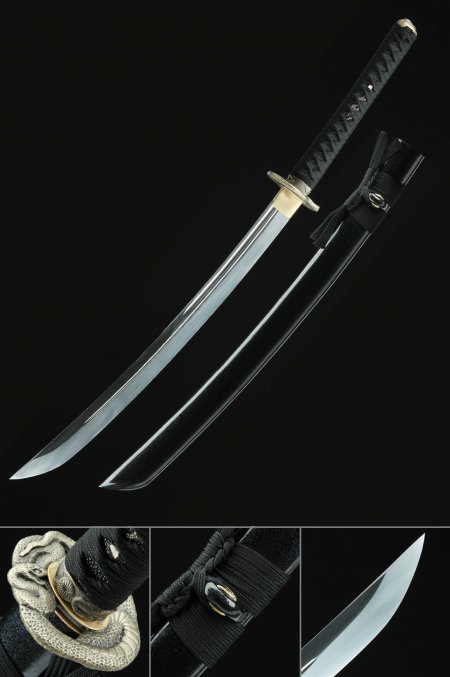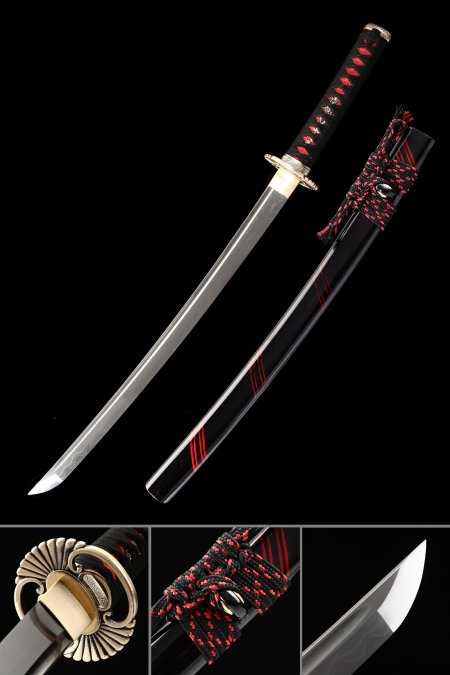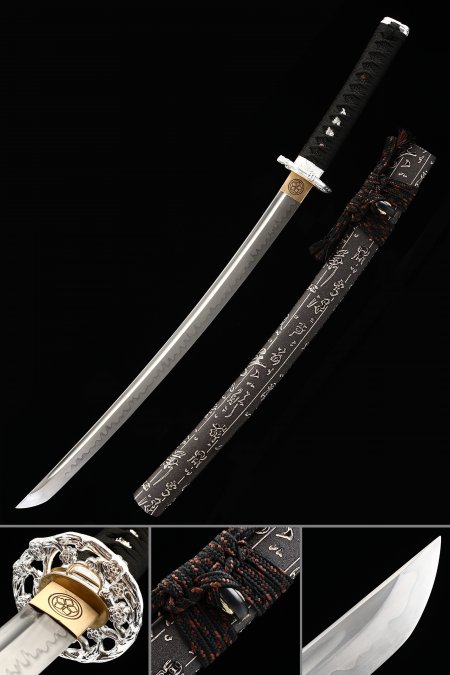
Chrysanthemum Tsuba Wakizashi

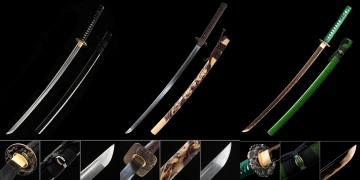
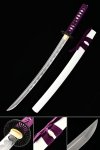
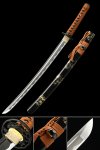
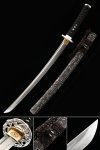
Chrysanthemum tsuba wakizashi bring together two of Japanese sword culture's most enduring symbols — the compact elegance of the wakizashi and the imperial chrysanthemum motif that has adorned samurai fittings for centuries. Each piece in this collection features hand-fitted koshirae with gold-cast chrysanthemum tsuba, lacquered hardwood saya, and carbon or folded steel blades finished to collector-grade standards. Enjoy free shipping on every order, backed by our hassle-free return policy.
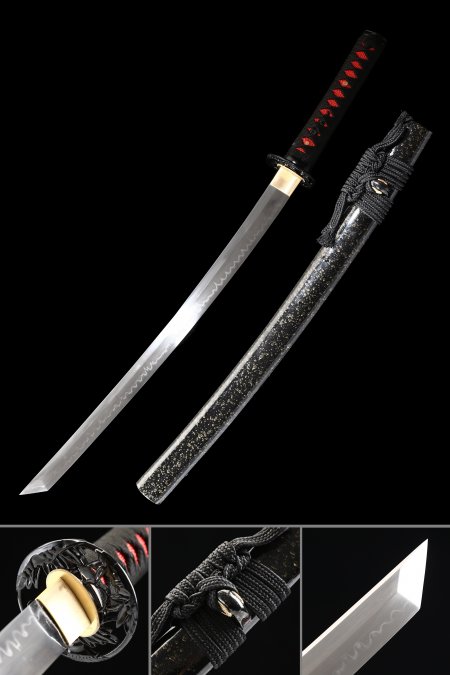
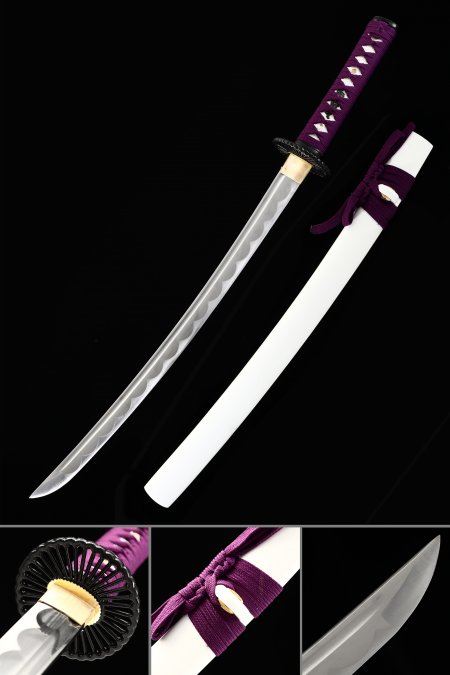
Showing 15 Products

Frequently Asked Questions

What does the chrysanthemum tsuba symbolize?
The chrysanthemum — kiku in Japanese — became the official emblem of Japan's Imperial family during the Meiji era, but its use on samurai fittings predates that formalization by centuries. On a tsuba, the sixteen-petal chrysanthemum motif signals prestige, refinement, and a deep connection to Japanese court aesthetics. For collectors, a chrysanthemum tsuba isn't purely decorative — it places the entire sword within a recognized visual language that connoisseurs of Japanese material culture immediately recognize. The motif also carries seasonal symbolism: the chrysanthemum blooms in autumn, a season associated in Japanese poetry with meditative beauty and transience, themes that resonated strongly with samurai philosophical traditions.
How does T10 clay-tempered steel differ from 1045 or 1060 carbon steel in a wakizashi?
T10 is a high-carbon tool steel with a finer grain structure than 1045 or 1060, and it responds exceptionally well to the clay-tempering process — known as tsuchioki — that creates a visible hamon along the blade's edge. The hamon is the crystalline activity line formed when clay is applied to the spine before quenching, causing the edge to cool faster and harden differently than the body of the blade. On a T10 piece, this line typically shows rich nie and nioi activity under direct light, making it a primary collector focal point. By contrast, 1045 and 1060 blades may display a simulated or faint hamon, but lack the metallurgical depth of a true clay-tempered finish. For display collectors who prioritize visual authenticity over price point alone, T10 clay-tempered wakizashi represent a meaningful upgrade.
What koshirae color combinations work best for display?
Koshirae — the full mounting assembly including saya, tsuka, ito, and tsuba — is where personal collecting taste becomes most visible. Gold chrysanthemum tsuba pair naturally with dark saya finishes: piano-lacquer black creates maximum contrast and gives the gilded guard the most visual impact. Deep green or dark red lacquer saya soften the contrast slightly, lending the piece a more period-appropriate warmth. For collectors who prefer a more dramatic aesthetic, black-and-red ito wrapping against a gold tsuba creates strong tonal tension. Purple tsuka wrap signals historical associations with nobility in Japanese court dress, making it an interesting choice for collectors drawn to the courtly dimension of samurai culture. Ultimately, cohesion between saya color, ito hue, and tsuba finish is the standard a knowledgeable collector applies.
How should I store and maintain a lacquered saya wakizashi?
Lacquered hardwood saya require stable humidity and temperature to prevent the lacquer from cracking or the wood beneath from warping. Store the piece horizontally on a dedicated stand or in a padded case, away from direct sunlight and heating vents. Avoid inserting or withdrawing the blade repeatedly without purpose, as repeated contact wears the interior wood lining over time. The blade itself — whether carbon or folded steel — should be lightly coated with a neutral sword oil (choji oil is traditional) every few months, or more frequently in humid climates. When applying oil, use a soft cotton cloth and wipe in the direction of the edge bevel. Never store the blade inside a closed saya for extended periods without occasional airing, as trapped moisture accelerates surface oxidation. A clean, dry microfiber cloth for the saya exterior is sufficient for routine care.
Is a chrysanthemum tsuba wakizashi appropriate as a display gift?
Yes — and it's one of the more considered gift choices in the Japanese-collectible category precisely because of the layered meaning the chrysanthemum motif carries. Unlike a purely generic sword display piece, a chrysanthemum tsuba wakizashi communicates that the giver understands something about Japanese aesthetic tradition. The wakizashi format is also practical as a gift: its shorter overall length makes it easier to display in a home or office setting than a full-length katana, and the gold tsuba provides immediate visual appeal even to recipients unfamiliar with the finer points of blade appreciation. For enthusiasts who already own a katana, a matching chrysanthemum tsuba wakizashi creates a natural daisho pairing that elevates both pieces as a unified display ensemble.

Customer Reviews

Tucker D Thein Arizona, United States

I received this is perfect condition. Super sharp and you can tell it’s just well built, I liked this specifically cause it’s hard to find the slanted tip on the blade and I think it looks super cool, It’s also hard to find swords that aren’t only decorative, my purpose for buying is decorative but I also want it to be solid and sharp because I don’t want to show off a knock off fake sword, I want to show off something that is legit and this is.
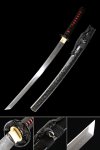
T10 Folded Clay Tempered Wakizashi Sword with Real Hamon in Black Gold-Flecked Saya and Red Samegawa T10 Folded Clay Tempered Wakizashi Sword with Real Hamon in Black Gold-Flecked Saya and Red Samegawa