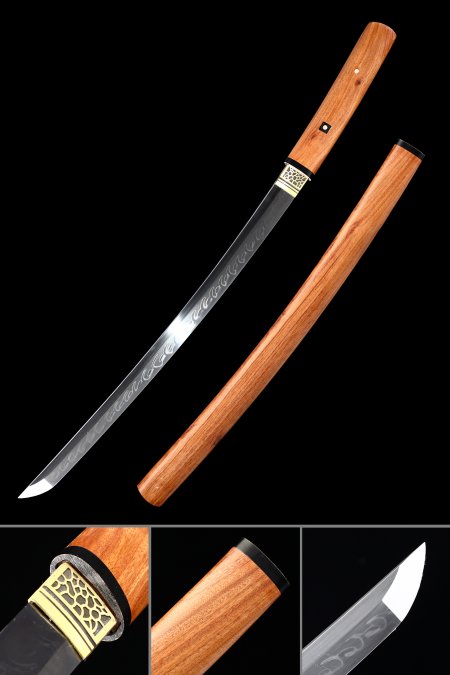
Natural Wood Saya Wakizashi

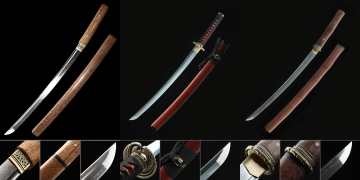
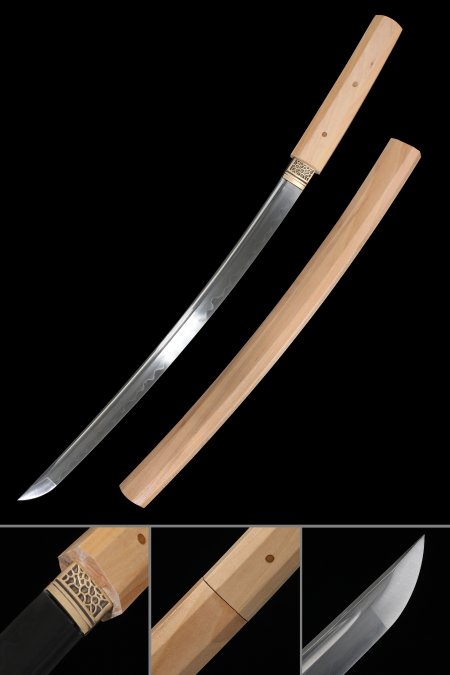
Natural Wood Saya Wakizashi at TrueKatana bridges the timeless aesthetic of traditional Japanese short swords with the authenticity serious collectors demand. Each piece is hand-forged from quality high-carbon steel, fitted with a naturally grained hardwood saya that showcases the beauty of the wood without lacquer or artificial finish. From shirasaya configurations to full-tang builds with engraved blades and real hamon, every detail reflects genuine craftsmanship. Enjoy free shipping on your order and hassle-free returns - because finding the right addition to your collection should be effortless.
Showing 3 Products

Related Collections

High Quality Wakizashi29 items


38 Reviews

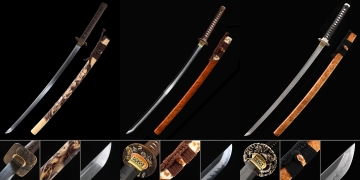
Natural Katana102 items


291 Reviews

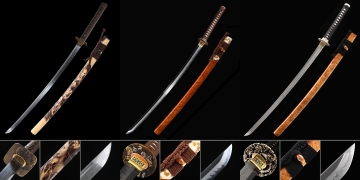
Natural Sageo Katana102 items


291 Reviews

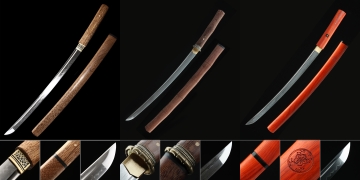
Natural Wood Wakizashi6 items


100 Reviews

Frequently Asked Questions

What makes a shirasaya wakizashi different from a standard one?
A shirasaya wakizashi uses a plain, unfinished wooden handle and scabbard with no tsuba (hand guard), no wrapping, and no decorative fittings. This minimalist format was historically used for long-term blade storage because it reduces moisture-trapping materials around the steel. For collectors, the shirasaya style is valued precisely for what it removes - without ornamental distraction, the blade's geometry, grain structure, and hamon become the sole focus. It is considered the purest format for appreciating a well-forged blade, and its clean silhouette makes it one of the most visually striking display orientations available.
What is a real hamon and how is it formed on these blades?
A real hamon is the visible temper line that appears along the edge of a differentially heat-treated blade. During production, a clay mixture is applied to the spine of the blade before quenching, insulating that area and allowing it to cool slowly. The edge, unprotected by clay, cools rapidly and forms a hard martensitic structure, while the spine remains softer and more flexible. The boundary between these two zones appears as the hamon - a flowing, cloud-like line unique to each blade. On T10 steel blades, the fine carbide structure of the steel produces especially pronounced and detailed hamon activity. This is distinct from an acid-etched hamon, which is a surface simulation with no functional or structural difference in the steel beneath it.
How does T10 steel compare to pattern-welded steel for a wakizashi?
T10 tool steel is a high-carbon monosteel valued for its consistency, fine grain, and excellent response to differential heat treatment, which is why it produces some of the most defined hamon lines in production sword-making. Pattern-welded steel - sometimes called Damascus - is formed by forge-welding multiple layers of steel with differing carbon content, then manipulating the billet to create flowing surface patterns visible after etching. T10 excels for collectors who prioritize hamon clarity and blade performance, while pattern-welded blades appeal to those drawn to surface visual complexity and the craftsmanship story embedded in layered construction. Both are legitimate choices; the decision ultimately comes down to which aesthetic speaks to you as a collector.
How should I store and maintain a natural wood saya wakizashi?
Natural hardwood saya require stable humidity and temperature conditions to prevent warping or cracking over time. Store your wakizashi horizontally, away from direct sunlight and heat sources, in a breathable sword bag or a display case that allows some airflow. Avoid sealing the piece in an airtight container, as trapped humidity can accelerate rust on the blade. For the blade itself, apply a thin layer of choji oil or food-grade mineral oil every two to three months using a soft cloth, wiping from the spine toward the edge. Before sheathing, ensure the blade is dry and lightly oiled. The natural wood will develop a gentle patina over years of careful handling - this aging is considered desirable among collectors and adds to the piece's character.
Is a natural wood saya wakizashi a good collector's gift?
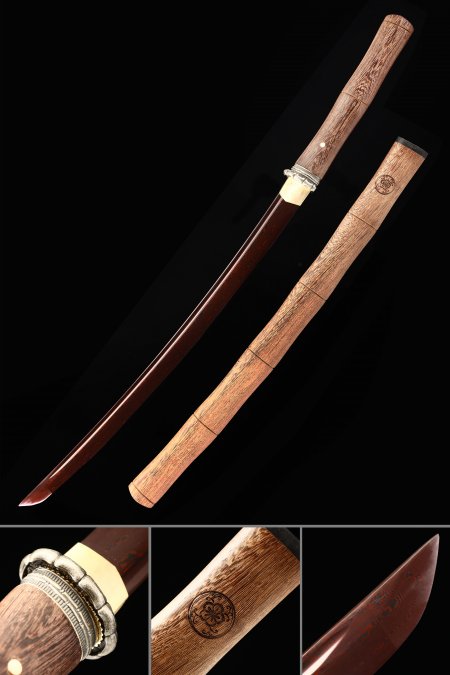
A natural wood saya wakizashi makes a compelling gift for anyone with an interest in Japanese history, sword craftsmanship, or East Asian art and culture. The shirasaya format in particular has a visual restraint that appeals even to people who are not dedicated sword collectors - it reads as an elegant sculptural object as much as a historical artifact. For a more personalized selection, consider whether the recipient would appreciate the understated tone of a plain hardwood finish, the dramatic grain of a wenge saya, or the added visual detail of an engraved blade. A wakizashi displayed on a wooden stand becomes an immediate conversation piece in any room, and its historical context as part of the samurai daisho tradition adds depth to its value as a meaningful collectible.

Customer Reviews

Joseph Eatherly Tennessee, United States

First, I was surprised at how fast it came, less than a week. The wood is rich in color, very smooth, excellent quality. The steel is a little thicker than some of my katanas, but its excellent steel, forged very well with an obvious harmon, very sharp. An excellent wakizashi, especially at this price point.
T10 Steel Shirasaya Wakizashi in Natural Hardwood with Wave-Engraved Blade and Real Hamon T10 Steel Shirasaya Wakizashi in Natural Hardwood with Wave-Engraved Blade and Real Hamon