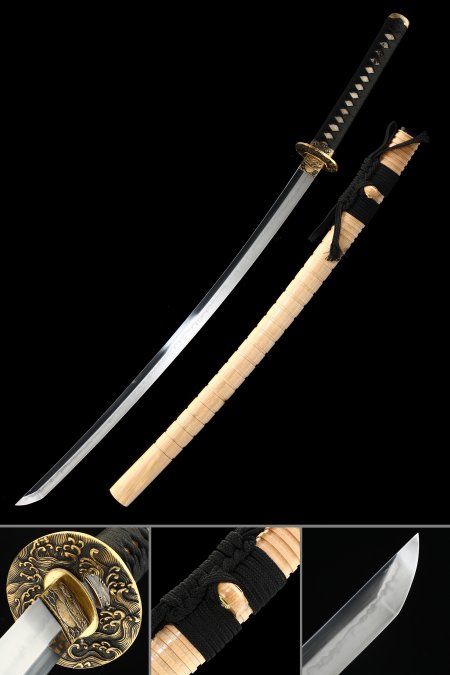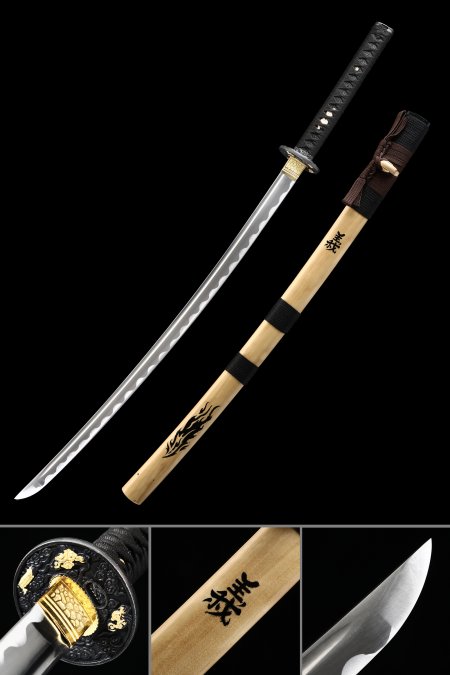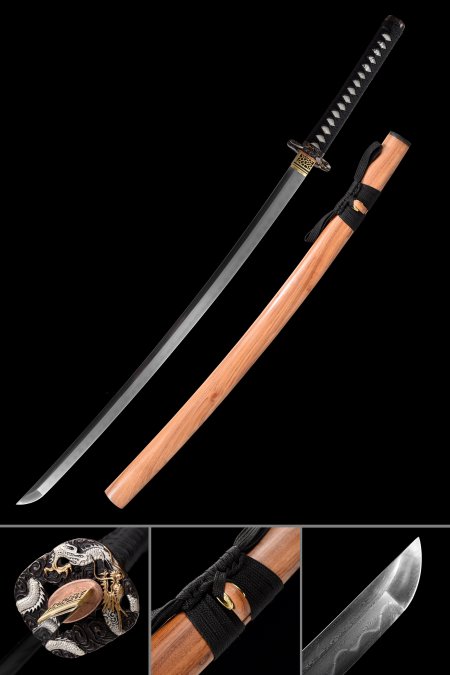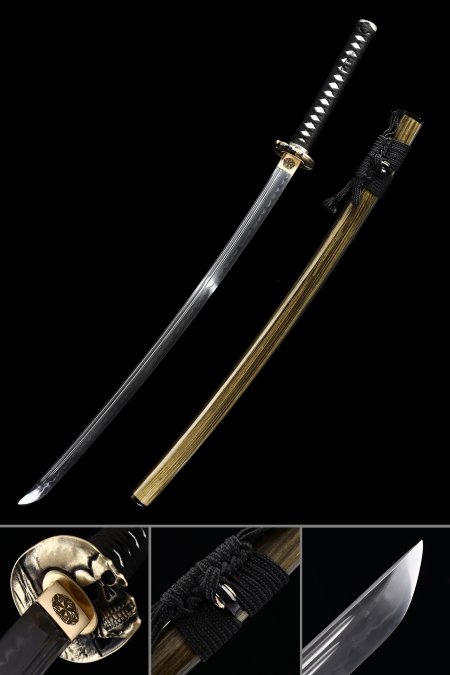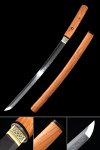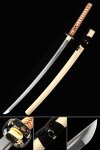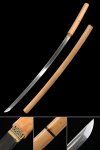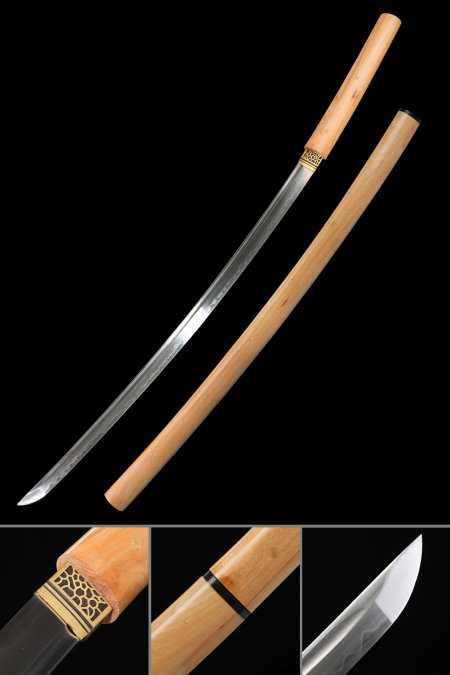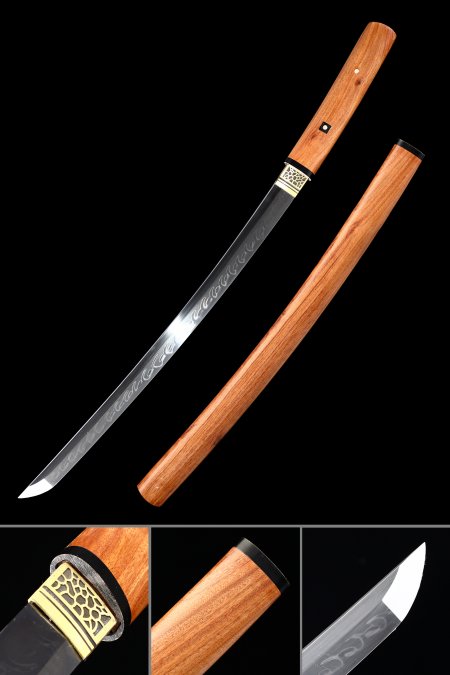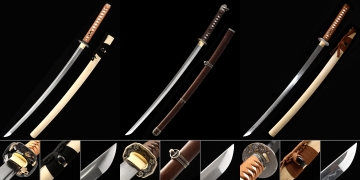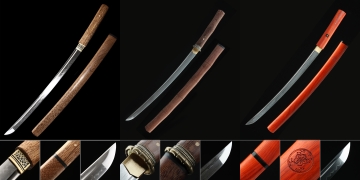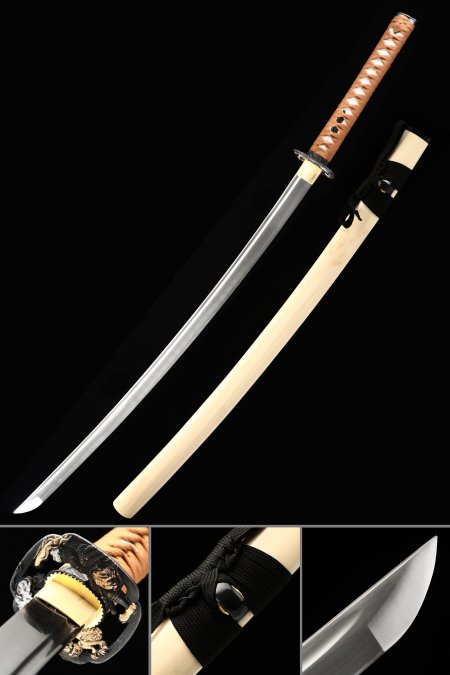
Natural Wood Saya Katana

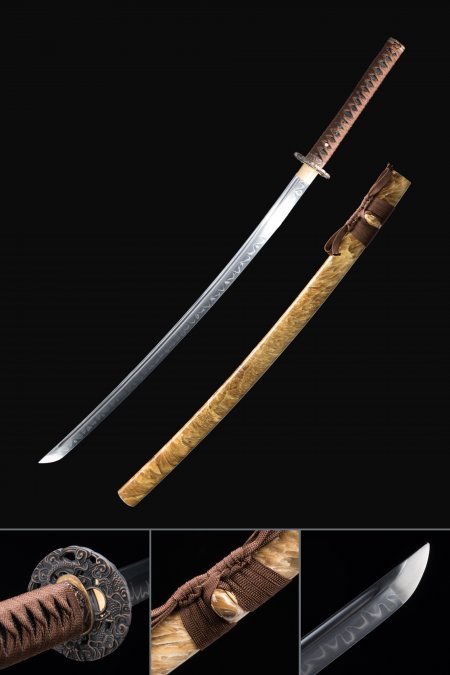
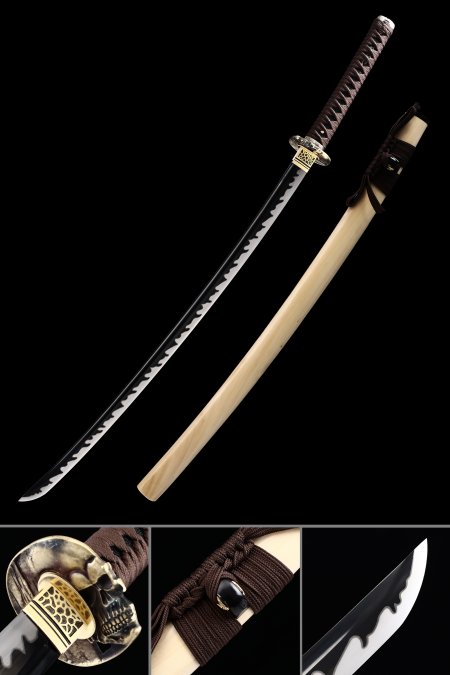
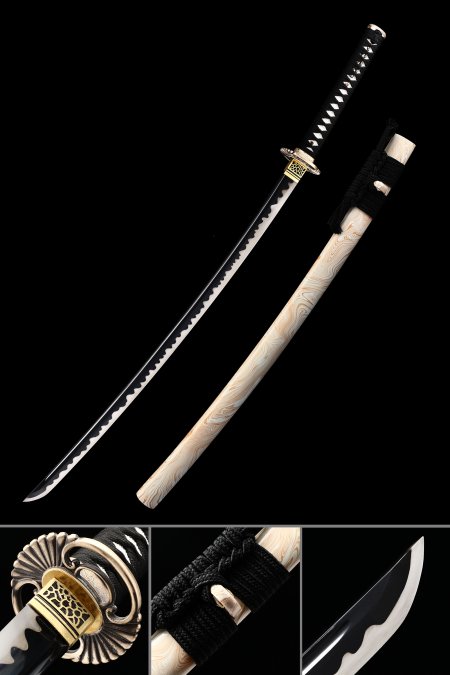
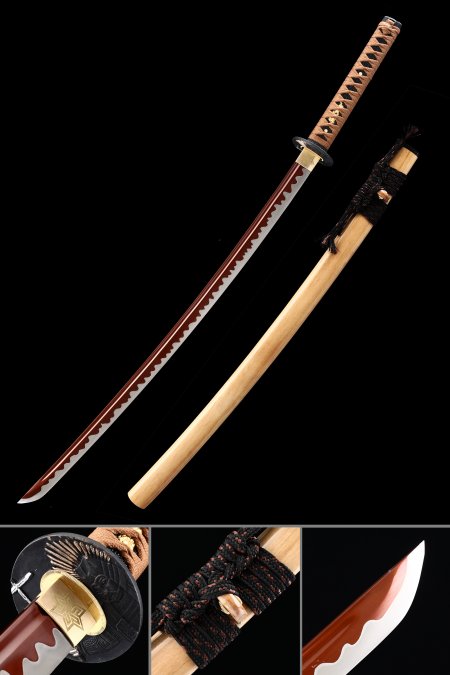
Natural Wood Saya Katana — where traditional Japanese craftsmanship meets the enduring beauty of unfinished hardwood. Each piece in this collection pairs a hand-forged blade with a naturally grained saya, showcasing the honest character of the wood rather than concealing it beneath lacquer. From clay-tempered 1065 carbon steel to layered Damascus, every sword is crafted as a serious collectible worthy of display or careful study. Enjoy free standard shipping on your order, backed by our hassle-free return policy.
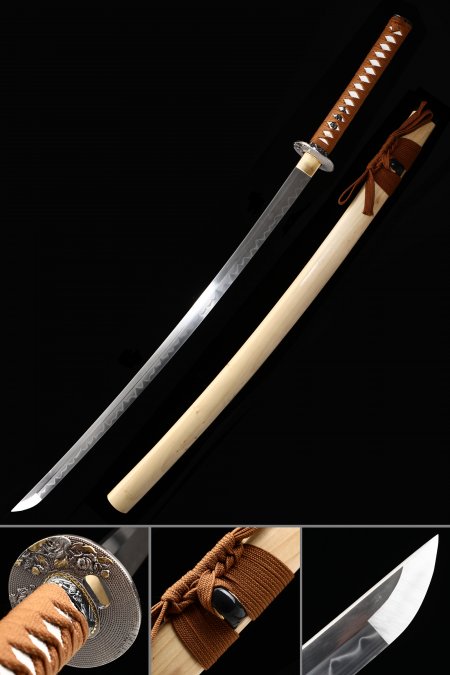
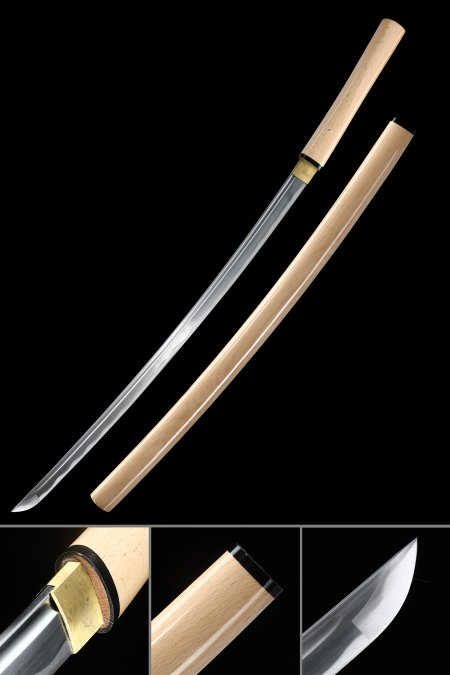
Showing 15 Products

Related Collections

Natural Tachi Swords41 items


87 Reviews

Natural Wood Wakizashi6 items


100 Reviews

Frequently Asked Questions

What makes a natural wood saya different from a lacquered one?
A lacquered saya is finished with multiple coats of urushi or synthetic lacquer, sealing the wood beneath a uniform color — typically black, red, or brown — and creating a smooth, moisture-resistant surface. A natural wood saya, by contrast, retains the raw grain, color variation, and texture of the timber itself, usually sealed only with a thin oil or light finish. This means each scabbard is visually unique; the figuring, knots, and tonal shifts in the wood are part of the aesthetic rather than hidden beneath pigment. From a collector's perspective, natural wood sayas tend to pair especially well with blades that have visible surface activity — such as a genuine hamon or Damascus patterning — because the understated scabbard lets the blade command attention.
How does clay tempering affect the hamon on these katana?
Clay tempering is a differential heat-treatment process in which a layer of clay is applied along the spine of the blade before quenching. The clay insulates the spine, allowing it to cool more slowly and remain relatively soft and tough, while the exposed edge cools rapidly and hardens to a higher Rockwell rating. The boundary between these two zones is the hamon — a visible crystalline activity line that runs the length of the blade. Because the clay is applied by hand, no two hamon are identical; each shows a distinct pattern of nie (fine martensitic crystals) and nioi (misty crystalline activity). On 1065 and T10 carbon steel blades, this process produces the most pronounced and collectible hamon, and is one of the primary quality markers collectors use to assess a sword's authenticity and craftsmanship.
Is Damascus steel in a katana purely decorative or functional?
Damascus steel katana in this collection are both visually striking and structurally sound as display and collector pieces. The folded and drawn billet creates the characteristic banded or flowing surface pattern that makes each blade visually unique. Functionally, the folding process refines the grain structure of the steel and distributes carbon more evenly, which historically was a practical benefit before modern metallurgy made homogenous steel widely available. For collectors, the appeal lies primarily in the aesthetics: the pattern is revealed through etching, and no two Damascus blades share an identical design. Paired with a natural hardwood saya, the contrast between the organic grain of the wood and the complex patterning of the blade surface is one of the most visually compelling combinations in Japanese-style sword collecting.
How should I store and maintain a natural wood saya katana?
Natural wood sayas require a little more attention than lacquered ones because the unfinished or lightly finished surface is more responsive to changes in humidity. Store the katana horizontally on a display stand in a stable indoor environment, ideally between 40–60% relative humidity. Avoid placing it near heating vents, air conditioners, or windows with direct sunlight, as temperature swings can cause the wood to expand, contract, or crack over time. The blade itself should be lightly coated with a thin layer of choji oil or a neutral mineral oil every few months — or after handling, since skin oils accelerate oxidation. Use a soft lint-free cloth for application and wipe away any excess. Never store the sword in a leather-lined case for extended periods, as leather retains moisture and can promote rust on carbon steel blades.
What fittings pair best with a natural wood saya for display?
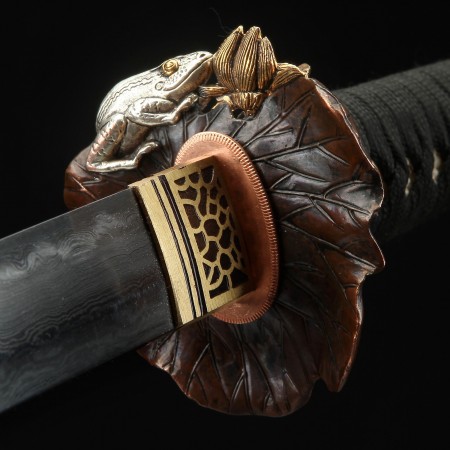
The natural, unfinished tone of a hardwood saya works as a neutral backdrop, which gives collectors flexibility in choosing tsuba and ito combinations. For a cohesive traditional aesthetic, copper or bronze hardware — such as lotus motif tsuba — complements the warm amber or honey tones of the wood without overwhelming it. Brown ito wraps in a diamond binding over rayskin extend the warm palette from handle to scabbard, creating visual continuity. If you prefer stronger contrast, black ito against pale natural wood is a classic pairing, and bold tsuba designs such as gold skull or dragon motifs become focal points rather than accents. Shirasaya-style mounts, which use no wrapping or separate guard, let the wood itself carry the entire aesthetic — the most minimalist and arguably the most elegant presentation style for a natural hardwood scabbard.

Customer Reviews