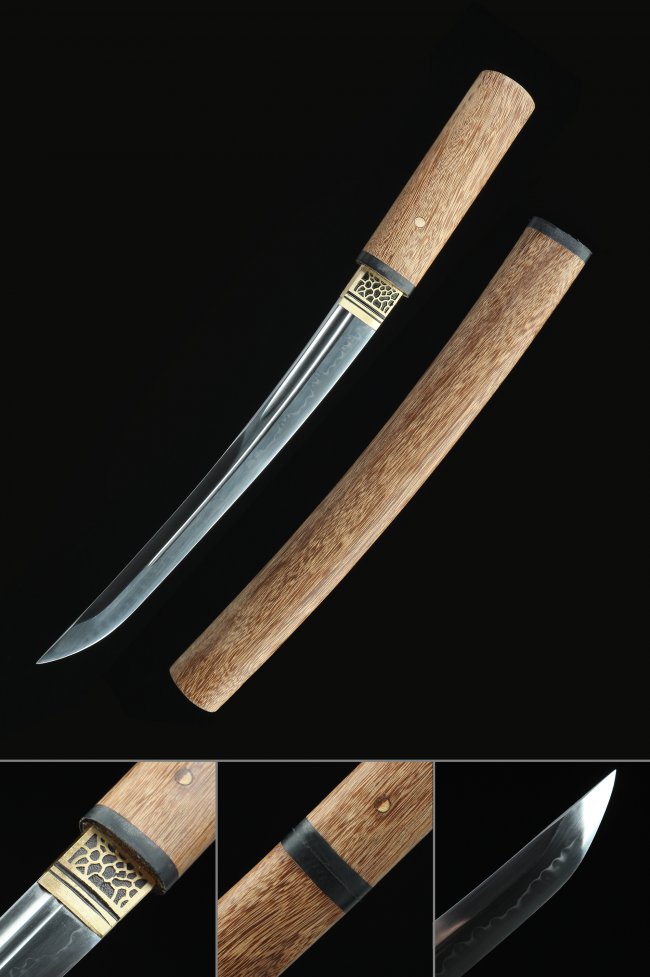
Natural Wood Tanto
Natural wood on a tanto handle and saya changes the whole character of the piece — warmer, more organic, the kind of finish that ages in a way synthetic materials don't. It's closer to how these pieces were actually made, and that matters to collectors who care about the overall presentation as much as the blade itself. Every natural wood tanto in this collection is fitted with real wood that's finished properly and paired with a forged blade worth mounting that way. The grain is real, the fit is solid. Whether you're drawn to the traditional aesthetic or just want a tanto that feels complete — take a look at what we have below.
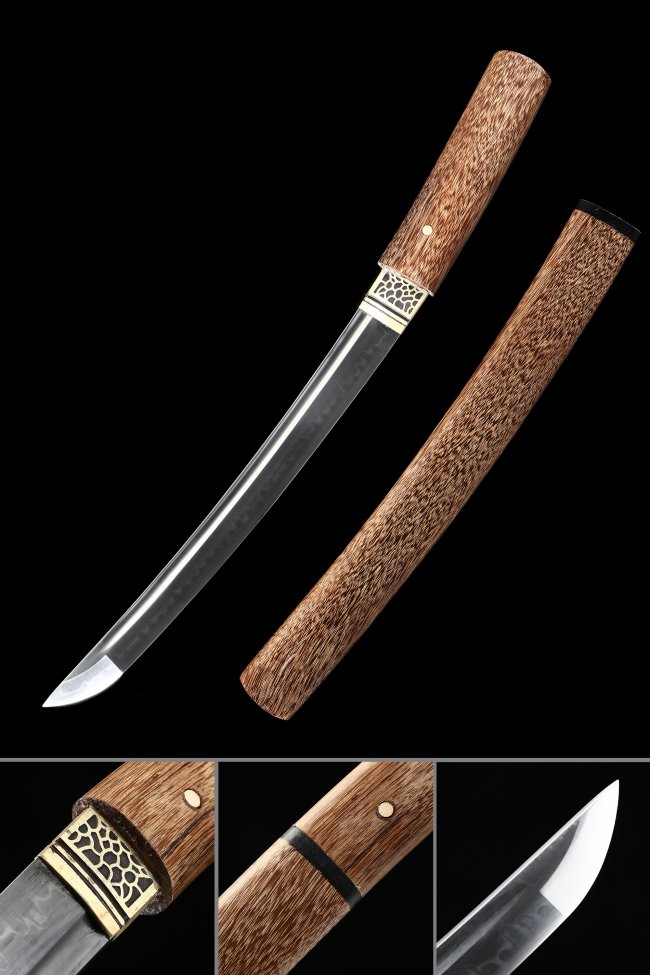
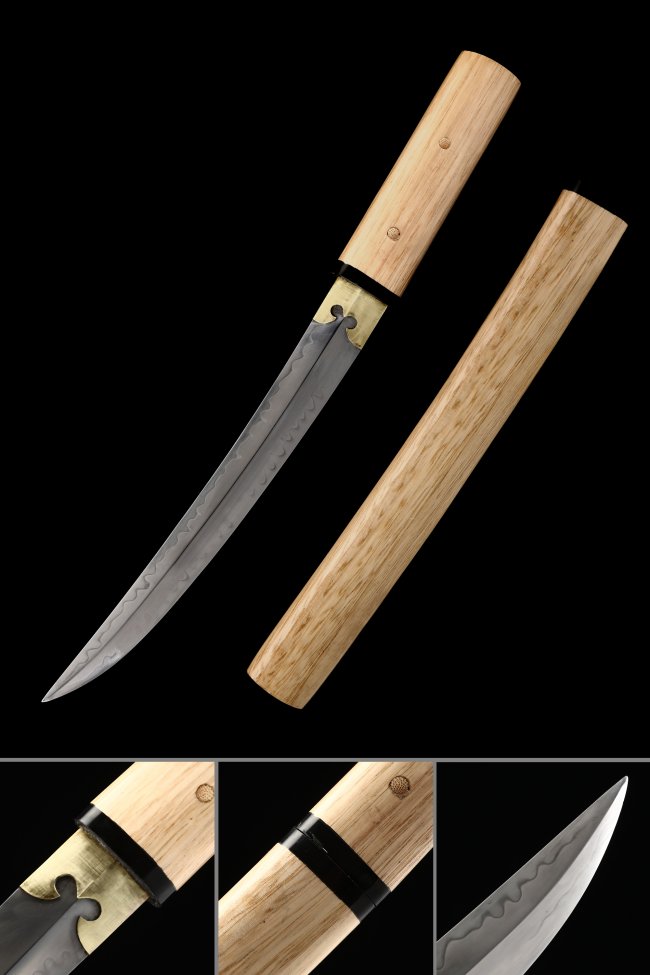
Full Tang 1045 Carbon Steel Tanto, Brown Saya, Brown Tsuka & Natural Wood Finish
17 Reviews
ON SALE 20% OFF
$139.00
$169.00
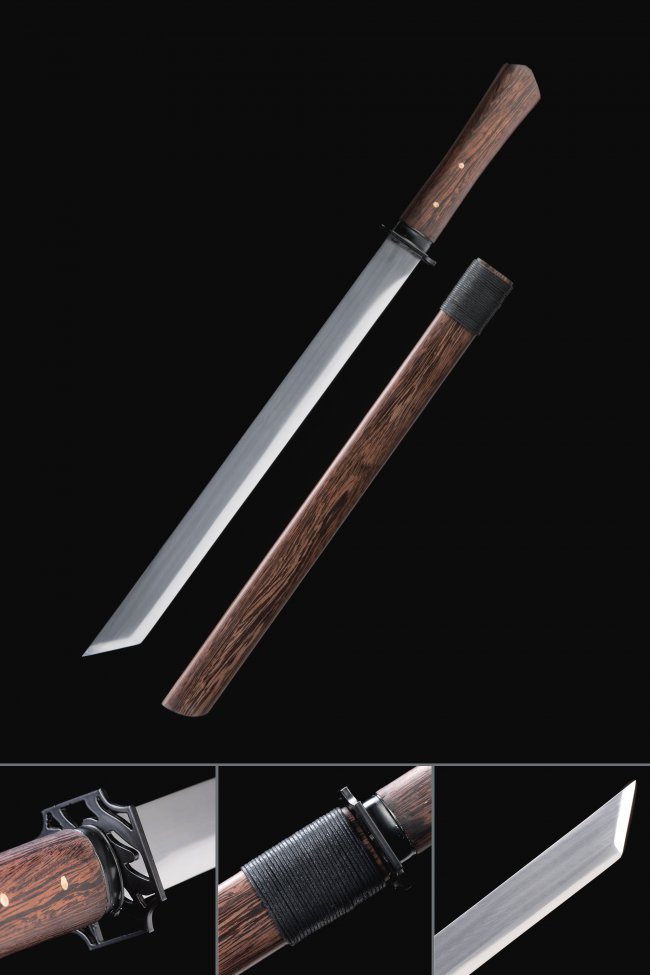
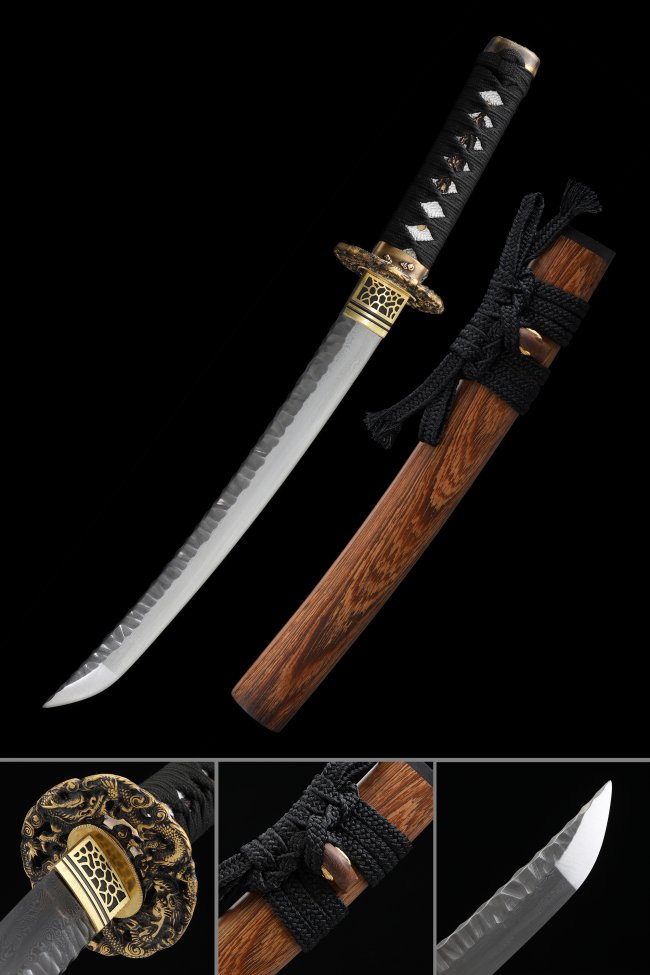
Ornate Scroll Tsuba Manganese Steel Tanto, Full Tang, Brown Saya & Brown Tsuka
3 Reviews
ON SALE 15% OFF
$139.00
$169.00
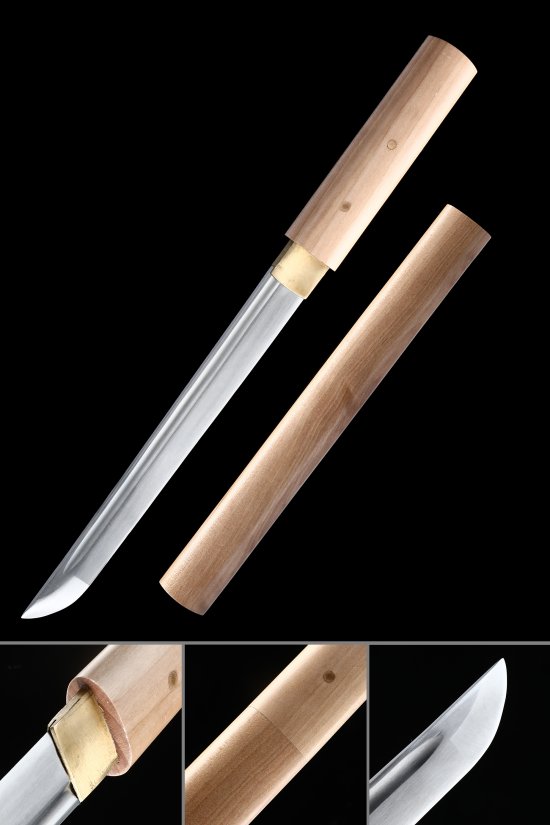
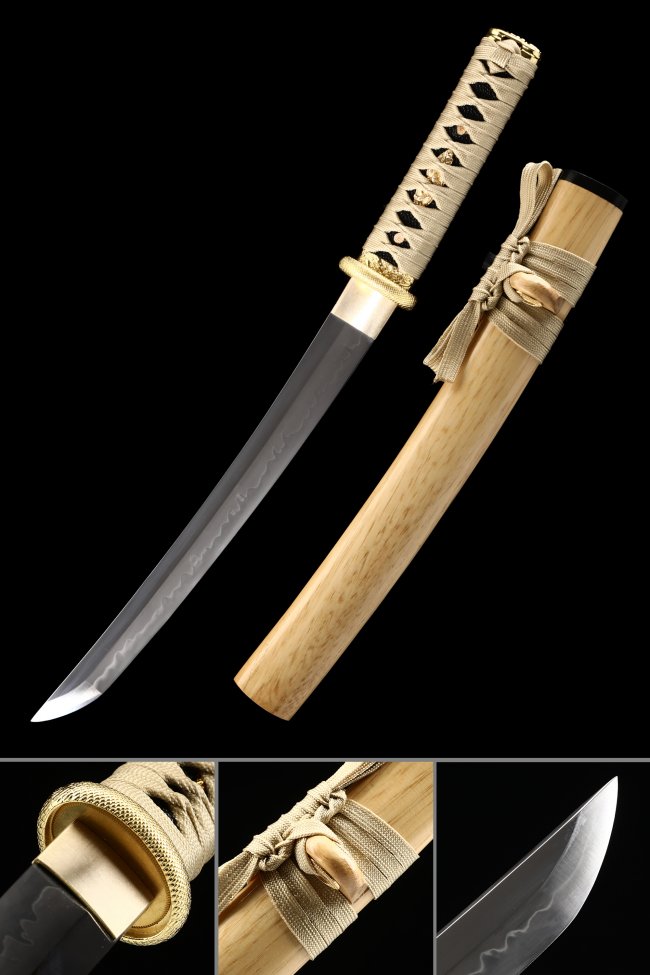
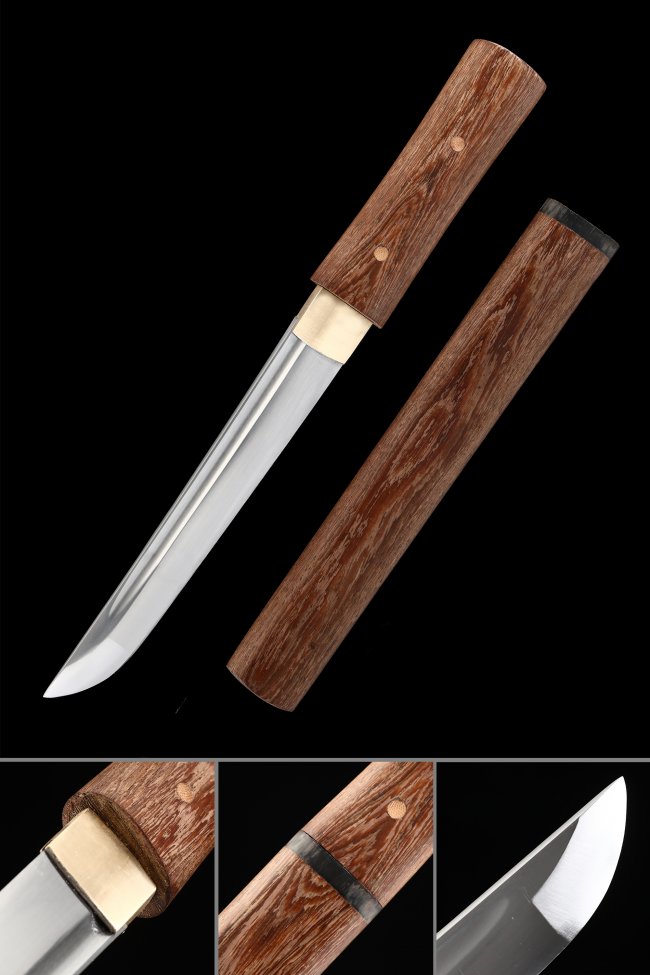
T10 Clay Tempered Tanto With Real Hamon - Natural Hardwood Saya In Gold Fittings Collectible Japanese Short Sword
2 Reviews
ON SALE 15% OFF
$169.00
$199.00
Related Collections
Customer Reviews
Exceeded expectations, quality materials and workmanship
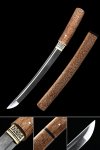 Shirasaya Tanto T10 Folded Clay Tempered Steel with Real Hamon in Natural Rosewood Saya
Verified Purchase
Shirasaya Tanto T10 Folded Clay Tempered Steel with Real Hamon in Natural Rosewood Saya
Verified Purchase
My second blade bought from True Katana and I am very happy with both. Sharp and beautiful to look at.r
Highly recommend
Shirasaya Tanto T10 Folded Clay Tempered Steel with Real Hamon in Natural Rosewood Saya
Verified Purchase
its my first one, not the only one. i love good for decoration
Shirasaya Tanto T10 Folded Clay Tempered Steel with Real Hamon in Natural Rosewood Saya
Verified Purchase
Heavy, balanced and display worthy. An awesome piece.
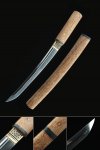 T10 Clay Tempered Shirasaya Tanto with Real Hamon in Natural Rosewood Saya - Aikuchi Collectible
Verified Purchase
T10 Clay Tempered Shirasaya Tanto with Real Hamon in Natural Rosewood Saya - Aikuchi Collectible
Verified Purchase
The wooden sheath & handle of high quality. The blade is also of high quality. I love it.
T10 Clay Tempered Shirasaya Tanto with Real Hamon in Natural Rosewood Saya - Aikuchi Collectible
Verified Purchase
I’m excited about my shirasaya tanto! It is small enough to go with me, discreet enough to go unnoticed, and sharp enough to matter. Well done! The safety warning card was good for a load of laughs.
T10 Clay Tempered Shirasaya Tanto with Real Hamon in Natural Rosewood Saya - Aikuchi Collectible
Verified Purchase
I have several swords in my collection from your company, I am very impressed
T10 Clay Tempered Shirasaya Tanto with Real Hamon in Natural Rosewood Saya - Aikuchi Collectible
Verified Purchase
Thank you awesome company fast shipping will buy again.
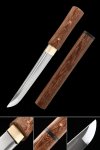 Full Tang 1045 Carbon Steel Tanto, Brown Saya, Brown Tsuka & Natural Wood Finish
Verified Purchase
Full Tang 1045 Carbon Steel Tanto, Brown Saya, Brown Tsuka & Natural Wood Finish
Verified Purchase
So this is review on this tanto shipping took about ten days the tanto was packed good wicked blade nothing to gripe about nicely made a word to the wise if you get a shirasay style or any sword for that matter and it's extremely tight to get out of the scabbard for goodness sake please don't ask for a shipping label to send it back take the sword out and file out the opening in tiny incremental steps until it's good take the initiative to work on your sword or tanto to adjust things before freaking out and demanding a refund these things sometimes have to be done even on very expensive swords remember humidity plays a role in how snug things are as well better to have it tight and adjust then to receive it loose then it's harder to make it snug I see many silly complaints on reviews here that the item wasn't perfect in every way remember these are hand made by not just blade smiths but woodworkers and others so a lot goes into making a decent sword weather you realize it or not learn to work on your sword for simple or minor issues bond with it it's supposed to have a soul remember samurai and ancient warriors in Asia had to work on repair and maintain their swords and edged weapons they didn't just order a new one and if your sword has some tiny issue who cares it gives it character live with it if you can't work it out nothing in life is flawless so far I've ordered three items and there all pretty damn cool so please quit nitpicking if it's really bad ok send it back otherwise quit whining so far I love true katana and there designs and so far my customer service experience has been good it can be challenging as answered to e mail take a day or so and you may not get the answer your always looking for but be patient there's always going to be a few disgruntled people that sadly had a bad experience here but most reviews seem to be good so I have nothing but good things to say at this point Buddha bless
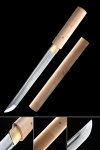 1095 Carbon Steel Tanto with Natural Wood Saya - Full Tang Shirasaya-Style Replica
Verified Purchase
1095 Carbon Steel Tanto with Natural Wood Saya - Full Tang Shirasaya-Style Replica
Verified Purchase
i have never used truekatana before and i am quite satisfied with 2 tanto purchases i made from there. first off, was packed well and was protected coming to this country. the shirasaya tanto is beautiful and is very sharp-cant wait to test cut with it. As a true gamble i ordered a higher end more ornamental tanto and was in disbelief as i saw that the blade is probably the sharpest of any blade i have. I cant wait to test. i have no doubt both tantos are properly pegged, functional, and will perform! if i have one complaint its that everything should come with its respective swordbag. I will order from truekatana again for sure.
Full Tang 1045 Carbon Steel Tanto, Brown Saya, Brown Tsuka & Natural Wood Finish
Verified Purchase
The tanto was beautiful exotic wood grain looks and feels great was a little loose in the scabard but used the old samurai wax trick and now it's good I'm not sure what the wood is maybe tiger wood but is super attractive and with a couple of coats of oil it is amazing blade is razor sharp I've already ordered some other pieces from true katana as there selection and unique designs are very cool and the pricing is good something for everyone at different price points I'm glad I stumbled onto true katana as for shipping this item took about a week
Full Tang 1045 Carbon Steel Tanto, Brown Saya, Brown Tsuka & Natural Wood Finish
Verified Purchase
They are Christmas gifts and are not open yet so I cannot rate the katana. I did enjoy the fast shipping.
T10 Clay Tempered Shirasaya Tanto with Real Hamon in Natural Rosewood Saya - Aikuchi Collectible
Verified Purchase
Love the tanto, it is well made and looks great. It is not super razor sharp, but it definitely is sharp, which is great. Well packed and shipped and in good time, and with the discount was a good price. Thank you!
T10 Clay Tempered Shirasaya Tanto with Real Hamon in Natural Rosewood Saya - Aikuchi Collectible
Verified Purchase
Beautiful Katana and the craftsmanship is stupendous! I am really enjoying my gift!
T10 Clay Tempered Shirasaya Tanto with Real Hamon in Natural Rosewood Saya - Aikuchi Collectible
Verified Purchase
Magnificent piece of work and true quality craftsmanship
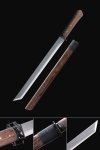 Ornate Scroll Tsuba Manganese Steel Tanto, Full Tang, Brown Saya & Brown Tsuka
Verified Purchase
Ornate Scroll Tsuba Manganese Steel Tanto, Full Tang, Brown Saya & Brown Tsuka
Verified Purchase
Loading more reviews...