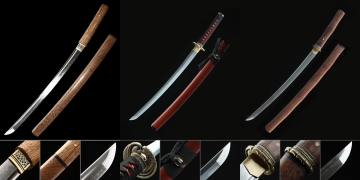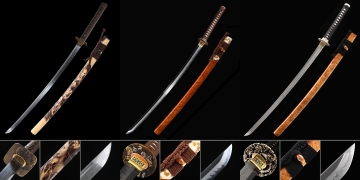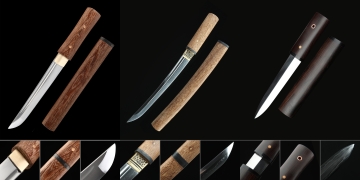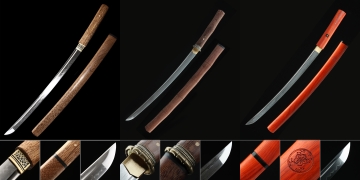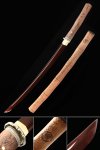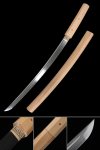
Natural Wood Handle Wakizashi

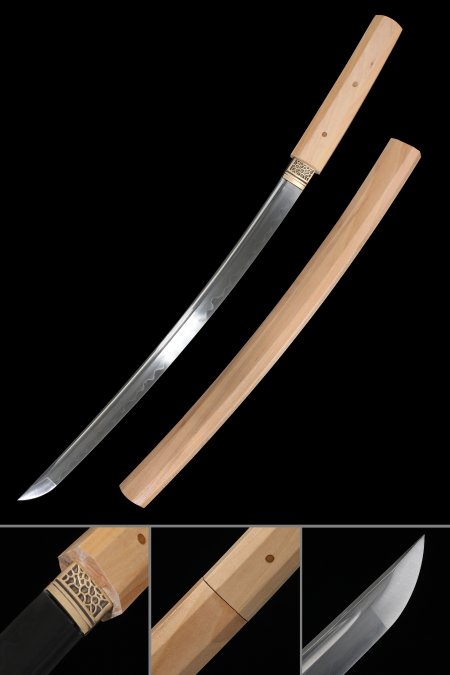
Natural wood handle wakizashi occupy a distinct space in Japanese sword collecting — where raw material beauty meets centuries-old craft tradition. Each piece in this collection features a hand-fitted hardwood handle and saya, paired with high-carbon or pattern-welded blades that carry a genuine hamon and full-tang construction. These are collector-grade pieces built for display, appreciation, and discerning enthusiasts who value authenticity over ornament. Enjoy free shipping on your order, and shop with confidence backed by our hassle-free return policy.
Showing 3 Products

Related Collections

Aikuchi Wakizashi128 items


480 Reviews

Natural Katana102 items


291 Reviews

Natural Aikuchi5 items


70 Reviews

Natural Wood Wakizashi6 items


100 Reviews

Frequently Asked Questions

What makes a shirasaya wakizashi different from a standard one?
A shirasaya configuration replaces the traditional wrapped tsuka and fitted tsuba with a single piece of plain, unadorned hardwood for both the handle and scabbard. The two halves peg together precisely and are designed to cradle the blade snugly without ornamentation. In Japanese sword tradition, shirasaya served as a storage mount — a way to house a blade safely between uses while allowing the steel to be inspected and maintained without the complexity of a full koshirae mounting. For collectors today, this style is appealing precisely because it strips the presentation down to its essentials: the grain of the wood, the geometry of the blade, and the hamon line along the edge. It is a format that rewards close inspection rather than distance display, and it pairs naturally with minimalist wall mounts or horizontal stands.
How does T10 steel compare to pattern-welded in a wakizashi?
T10 is a high-carbon tool steel with a carbon content around 1.0%, which makes it well-suited for differential hardening. When a blade is clay-coated before quenching, the covered spine cools slowly and stays relatively soft, while the exposed edge hardens more rapidly. The boundary between these two zones becomes the hamon — visible as a misty or crystalline line running along the length of the blade. T10 is prized for producing a sharp, well-defined hamon with good contrast. Pattern-welded steel, by contrast, is made by folding and forge-welding multiple steel layers, then etching the finished blade to reveal the layered surface patterns. Each pattern-welded wakizashi is visually unique due to the unrepeatable nature of the fold patterns. In terms of collecting value, T10 appeals to those focused on hamon quality and traditional heat-treatment craft, while pattern-welded pieces attract collectors drawn to surface artistry and the visual complexity of the steel itself.
Is wenge wood a good choice for a wakizashi saya?
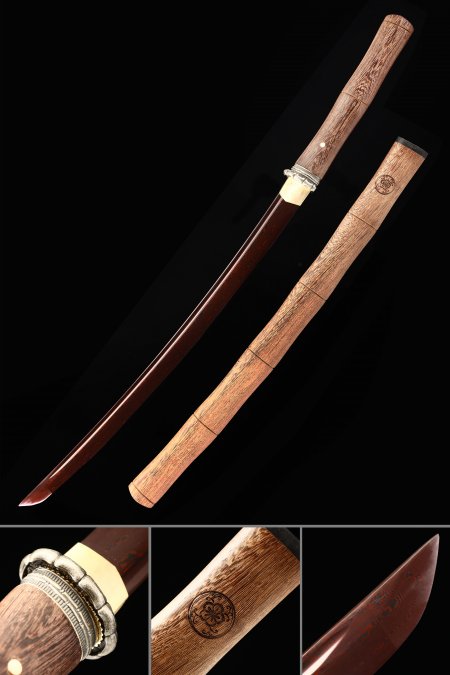
Wenge is a dense, open-grained hardwood native to central Africa that has been adopted by craftspeople working in Japanese blade traditions for its distinctive dark brown color and bold grain lines. It is harder and heavier than many domestically available woods, which gives it good resistance to minor impacts and a satisfying weight when the saya is drawn. The open grain does mean it benefits from occasional conditioning with a light wood oil to prevent drying or minor surface checking in low-humidity environments. Aesthetically, wenge saya pair well with dark iron or bronzed fittings and with blades that have a deep, contrasting hamon. For collectors who prefer a more understated palette than lacquered red or black saya, wenge offers a natural material story that complements rather than competes with the blade.
How should I maintain and store a natural wood handle wakizashi?
Natural hardwood handles and saya are sensitive to significant swings in humidity and temperature, so stable storage conditions matter more than with synthetic alternatives. Aim for a display or storage environment between 40–60% relative humidity. For the blade itself, apply a thin coat of choji oil every few months using a soft cloth or rice paper, wiping away any excess — over-oiling can attract dust and cause spotting on the hamon. When sheathing the blade, guide it in gently along the spine rather than letting the edge contact the saya walls. Store or display the piece horizontally, or edge-upward in the traditional katana manner, to reduce stress on the peg joints over time. Avoid direct sunlight on the hardwood, as UV exposure will fade grain contrast and may dry out the surface over years of display.
Can a natural wood handle wakizashi work as a display gift for collectors?
A natural wood handle wakizashi makes a particularly thoughtful gift for someone already familiar with Japanese sword culture, precisely because it signals an understanding of what serious collectors appreciate: material authenticity, visible craftsmanship, and restraint in ornamentation. The combination of a genuine hamon, hand-fitted hardwood handle, and full-tang blade construction communicates quality in ways that an experienced recipient will recognize immediately. For presentation purposes, these pieces typically arrive in a fitted box suitable for gifting. If the recipient collects across multiple blade lengths, pairing a natural wood wakizashi with a matching natural wood katana from the same maker creates a cohesive daisho-inspired display grouping — a detail that will resonate with anyone who appreciates the historical context of the pairing.

Customer Reviews

Joseph Eatherly Tennessee, United States

First, I was surprised at how fast it came, less than a week. The wood is rich in color, very smooth, excellent quality. The steel is a little thicker than some of my katanas, but its excellent steel, forged very well with an obvious harmon, very sharp. An excellent wakizashi, especially at this price point.
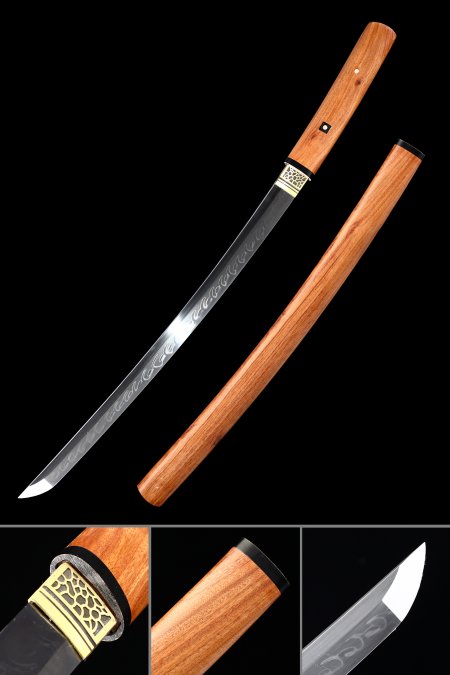
T10 Steel Shirasaya Wakizashi in Natural Hardwood with Wave-Engraved Blade and Real Hamon T10 Steel Shirasaya Wakizashi in Natural Hardwood with Wave-Engraved Blade and Real Hamon