What makes Damascus steel visually distinct from other blade types?
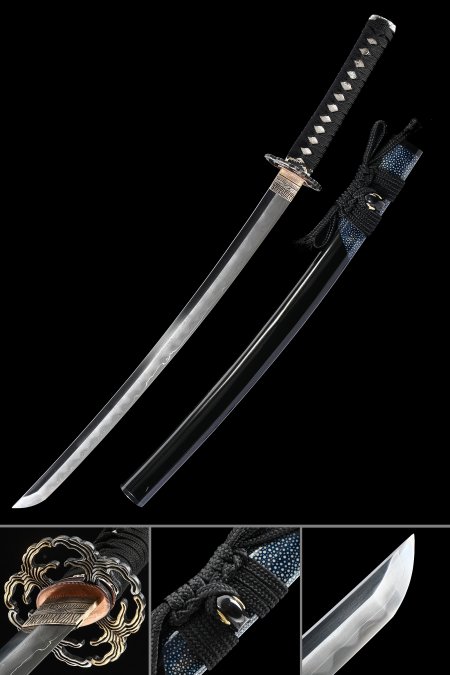
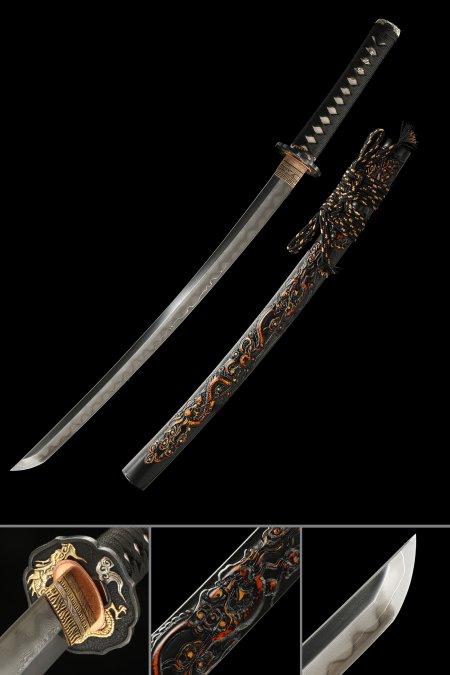
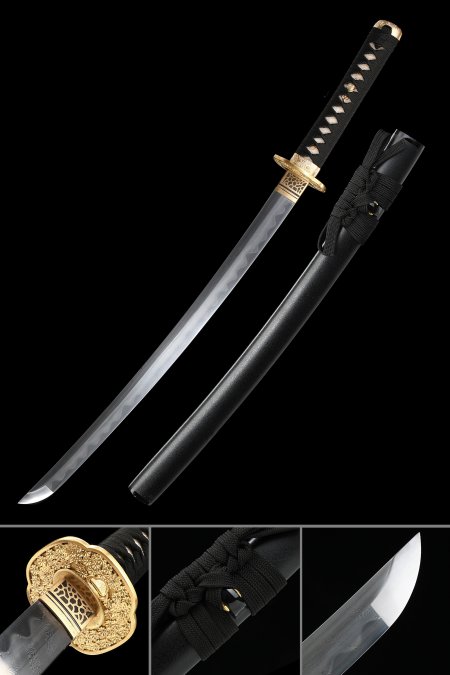
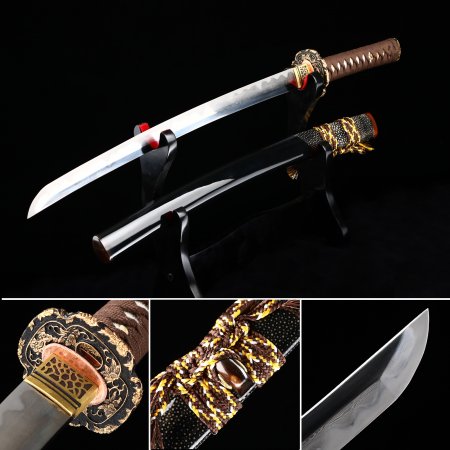
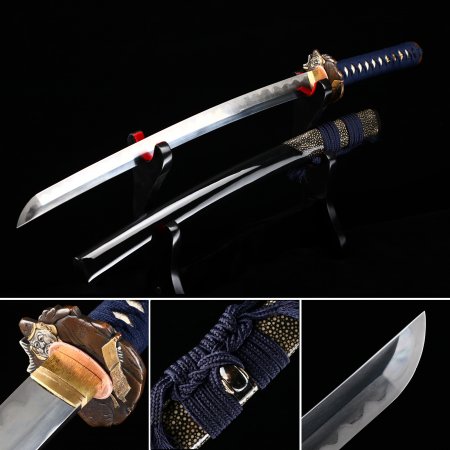
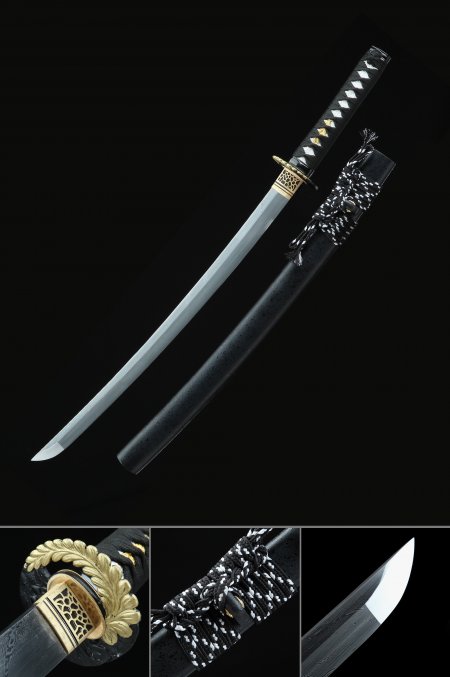
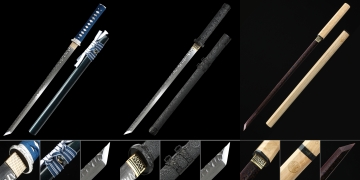
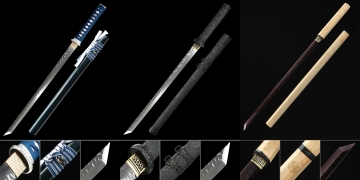
Damascus — or pattern-welded — steel is produced by forge-welding multiple layers of steel together, then repeatedly folding and drawing out the billet. The varying carbon content between layers creates micro-structural differences that, after acid etching, appear on the blade surface as flowing, wavy grain patterns. No two blades produce an identical pattern, which is the central appeal for collectors. On black-finish Damascus wakizashi specifically, the etching is deepened and the surface sometimes treated with controlled oxidation, creating higher contrast between light and dark bands. Under directional lighting, the grain appears to shift and move — a quality that makes these blades particularly suited to lit display cases.
What is a hamon, and how does it appear on a Damascus blade?
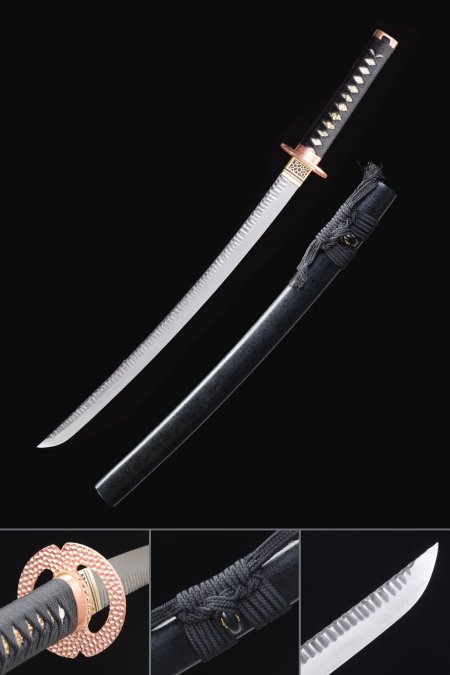
A hamon is the visible temper line that forms when a blade undergoes differential hardening — clay is applied to the spine before quenching, causing the edge zone and spine to cool at different rates. The boundary between these zones appears as a misty, irregular line running along the blade. On a standard monosteel blade the hamon is the primary surface feature of interest. On a Damascus substrate, the hamon overlays the existing grain pattern, creating a secondary layer of visual information. Collectors examining a Damascus wakizashi with a real hamon are essentially reading two distinct metallurgical stories on the same blade surface — the folding history of the billet and the heat-treatment signature of the smith.
How does a wakizashi differ from a tanto in a display collection?
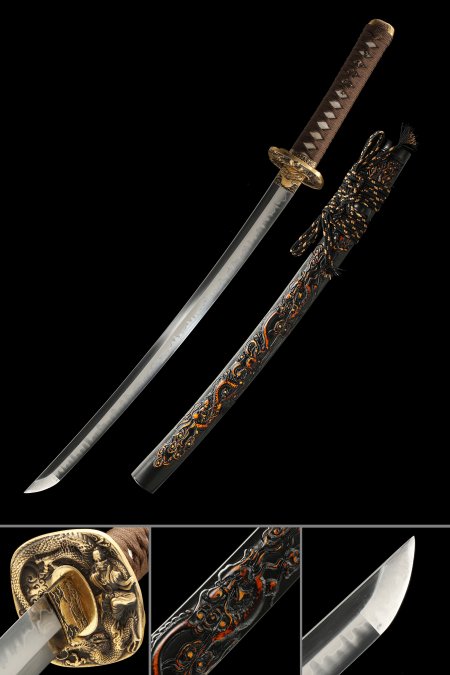
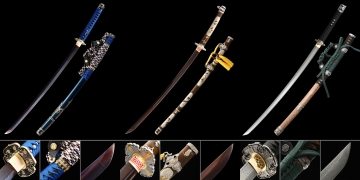
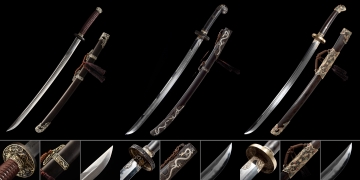
Both are short Japanese blades, but they occupy different size and design categories. A tanto typically measures under 12 inches in blade length and often features a flat, angular geometry with minimal curvature. A wakizashi falls in the 12-to-24-inch range and generally carries a gentle curve similar in profile to a katana, making it a more visually dynamic display piece at closer range. For collectors, the wakizashi reads as the middle voice in the katana-wakizashi-tanto spectrum — substantial enough to show off elaborate koshirae fittings like a full tsuba, tsuka-ito wrap, and full-length saya, while compact enough to display in spaces where a full katana would be impractical.
How should I store and maintain a black Damascus wakizashi?
Pattern-welded steel with a dark etched finish requires consistent care to preserve both the visual surface and the underlying metal. Store the blade in its saya when not on display, and ensure the saya interior is dry — trapped moisture accelerates surface oxidation in ways that can be difficult to reverse on an etched finish. Apply a thin coat of blade oil (choji or mineral oil) every few months, or more frequently in humid climates. When wiping the blade, use a soft, lint-free cloth and move from spine to edge — never across the grain of the steel. Avoid fingerprint contact on the blade surface, as skin oils initiate corrosion on high-carbon steel faster than most collectors expect. For wall-mounted display, keep the piece away from direct sunlight and heat sources, which can dry out the saya lacquer and cause checking over time.
Is a black Damascus wakizashi a good choice as a collector's gift?
It is one of the more considered gifts in the Japanese sword collectible category precisely because it occupies a practical middle ground. It is visually striking enough to serve as a statement piece — the dark koshirae, ornate tsuba, and patterned blade surface all read as deliberate and refined rather than generic — yet compact enough to display on a standard desk or shelf stand without requiring dedicated wall space. For recipients already collecting katana, a matching black Damascus wakizashi creates a thematic daisho pairing without requiring a second full-length sword. The range of koshirae styles available — from gold chrysanthemum to dragon-carved saya — also makes it straightforward to select a piece that reflects the recipient's specific aesthetic preferences.