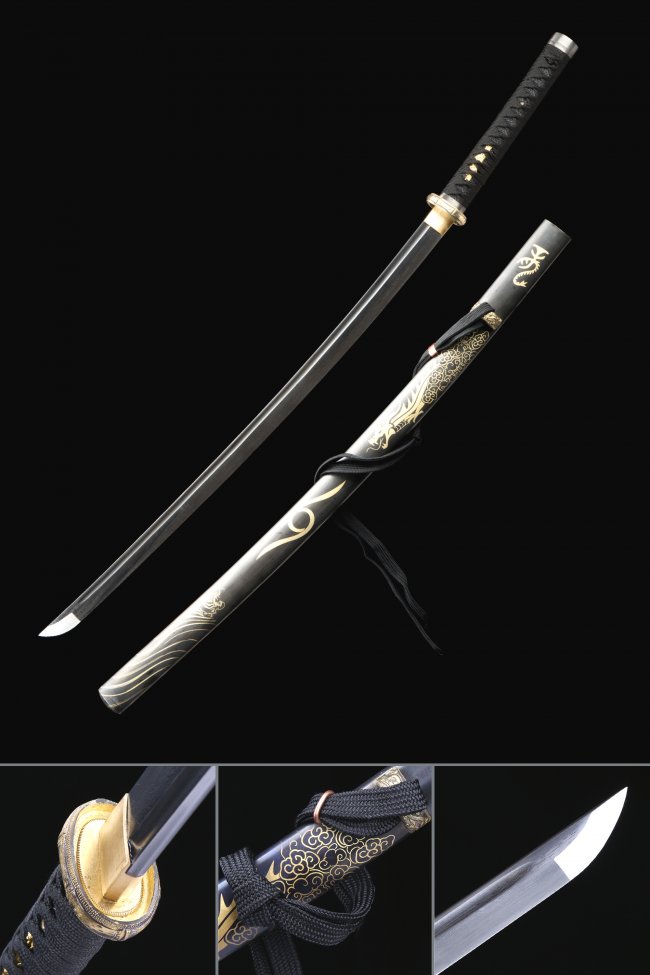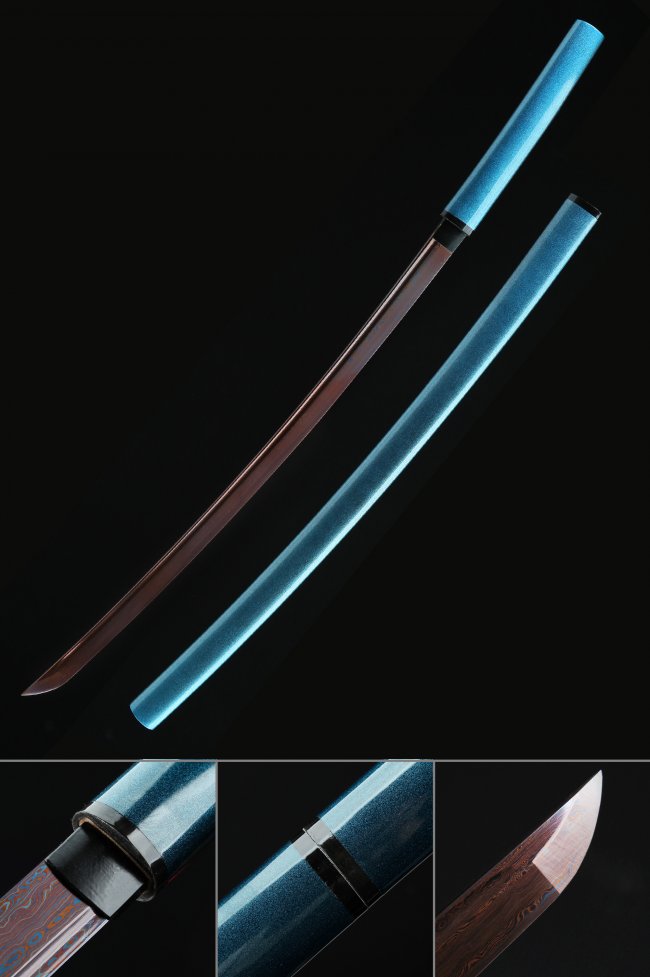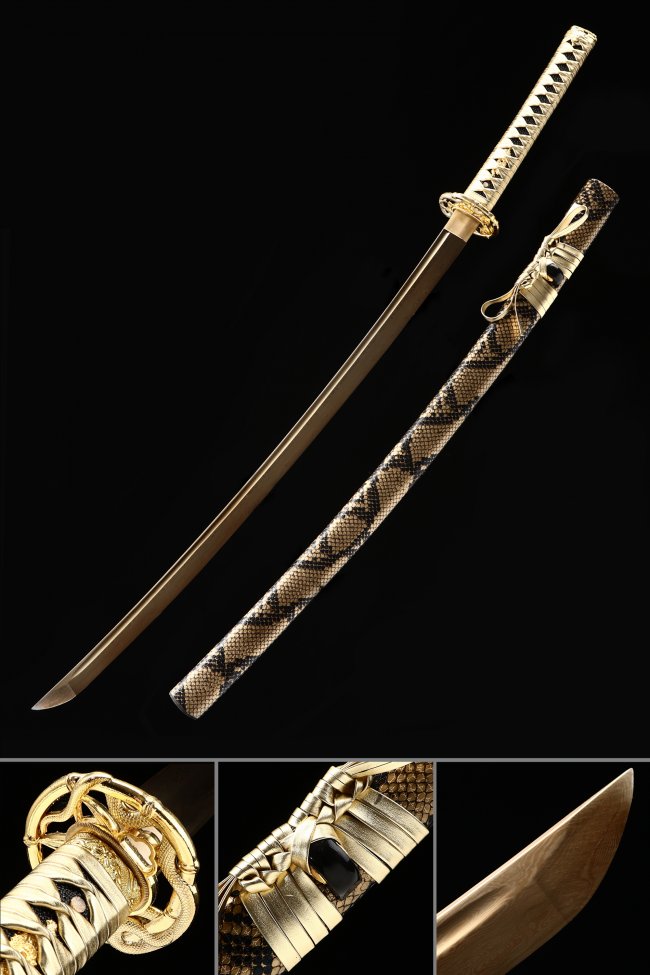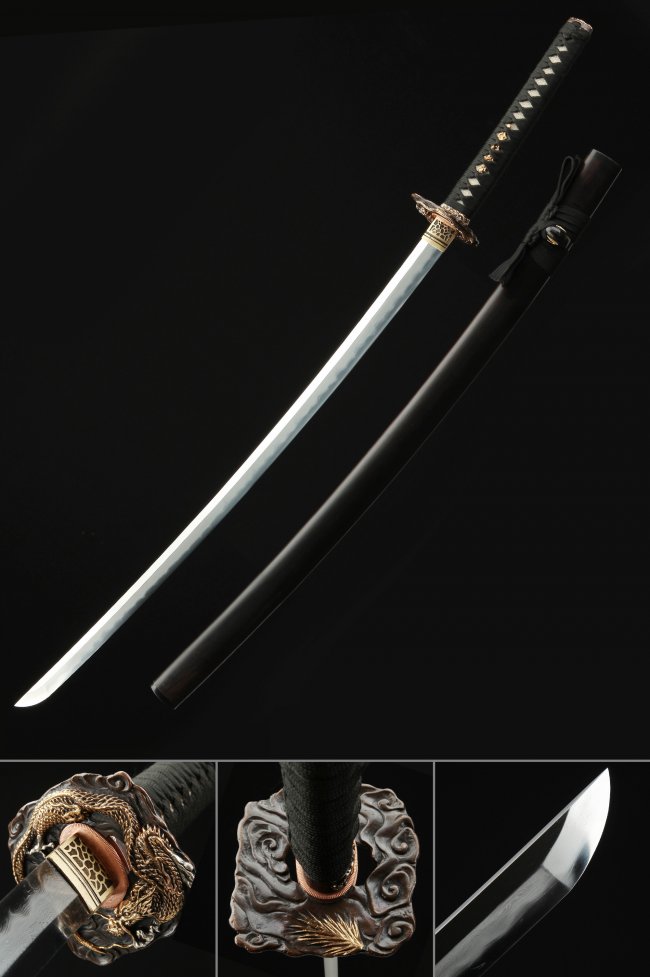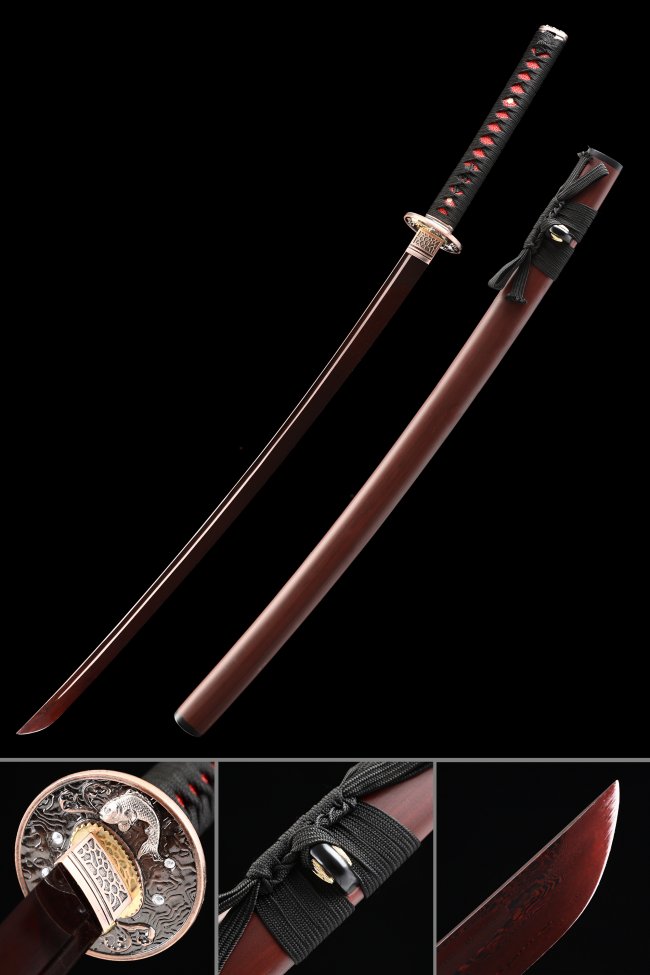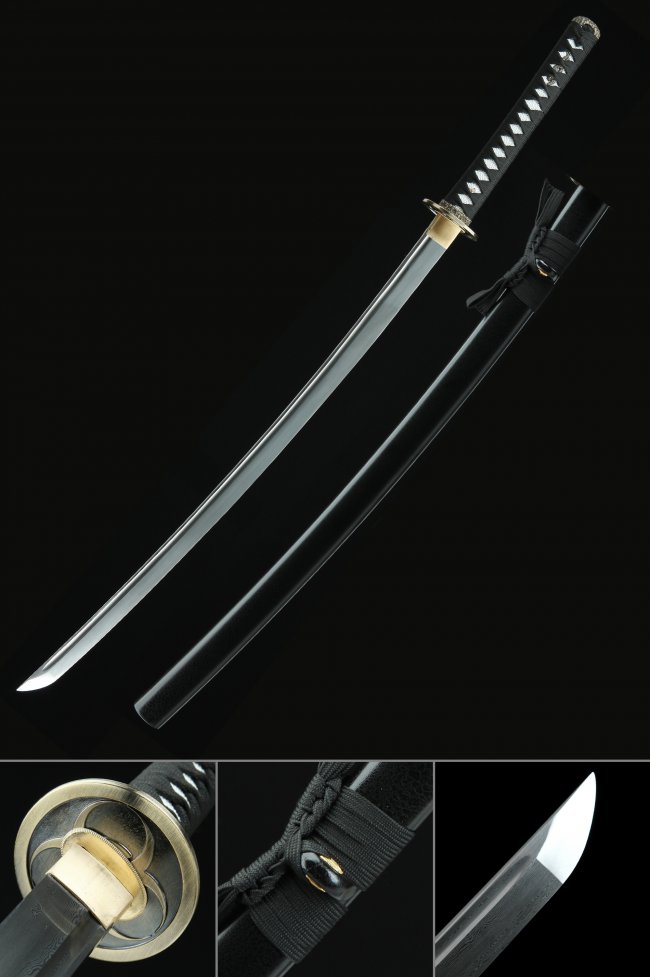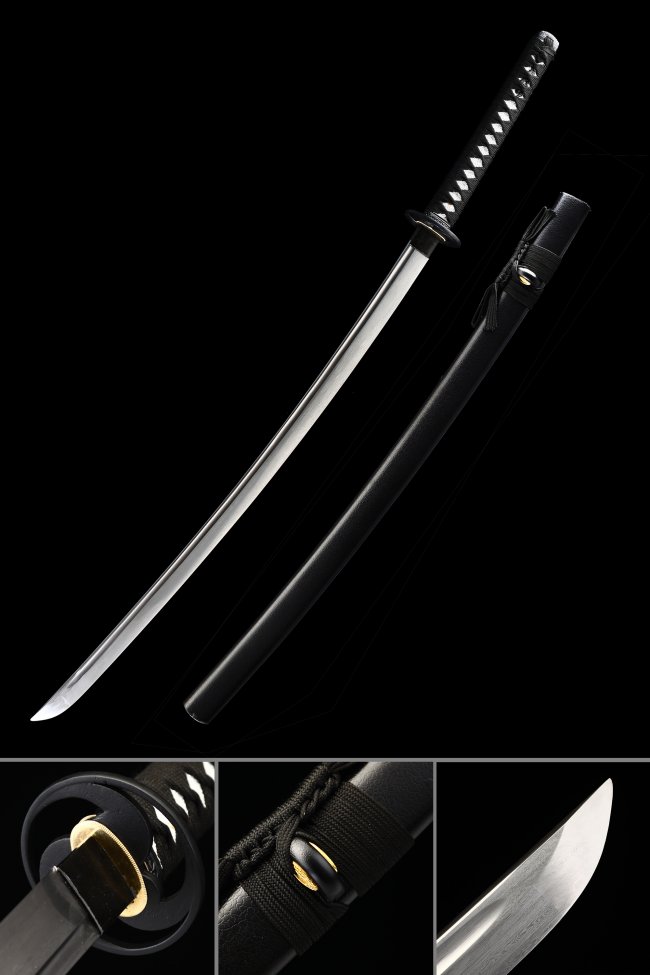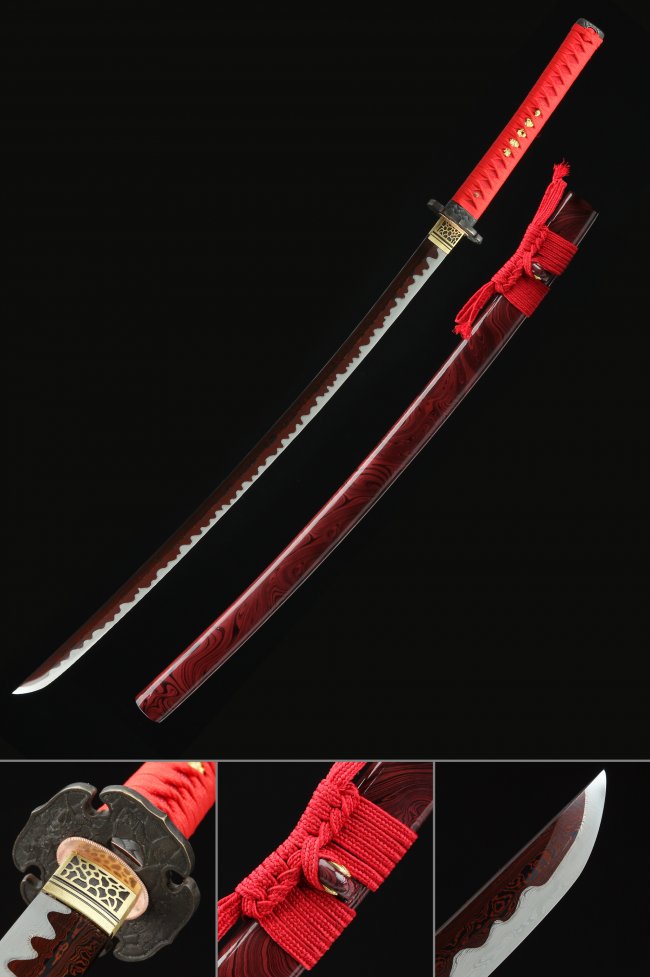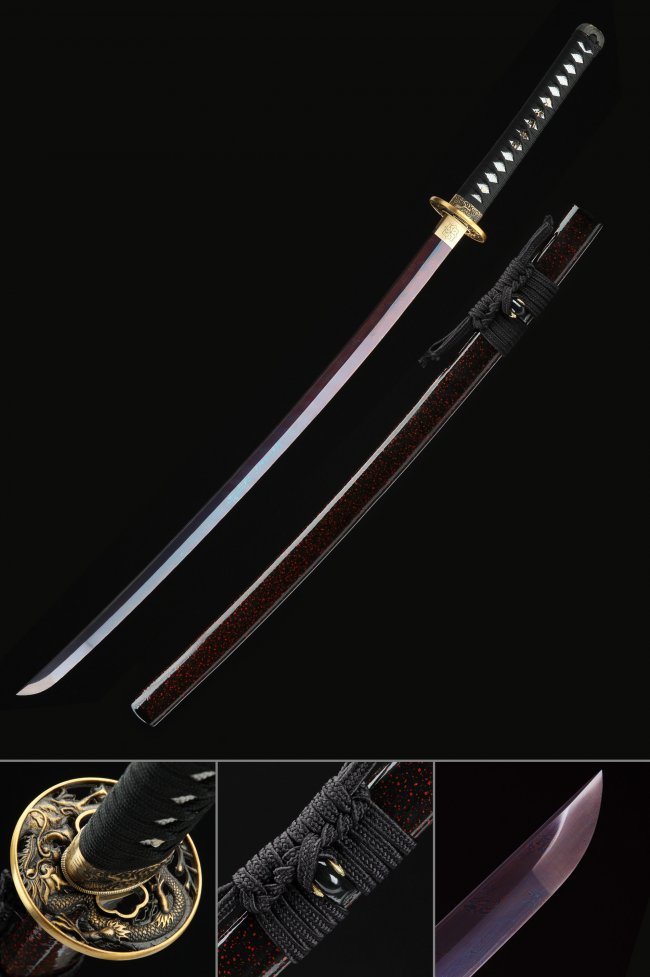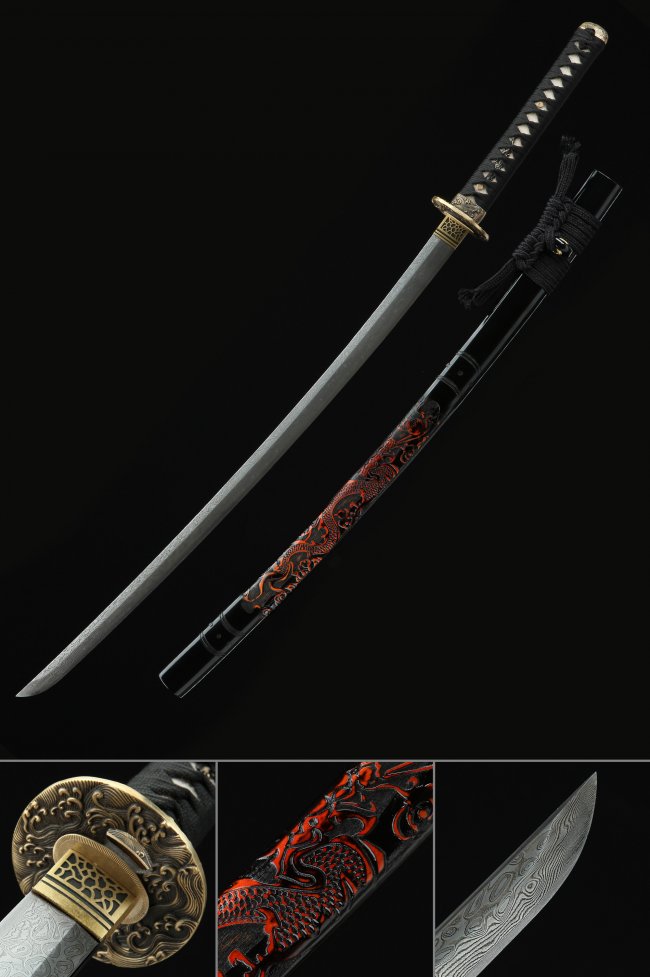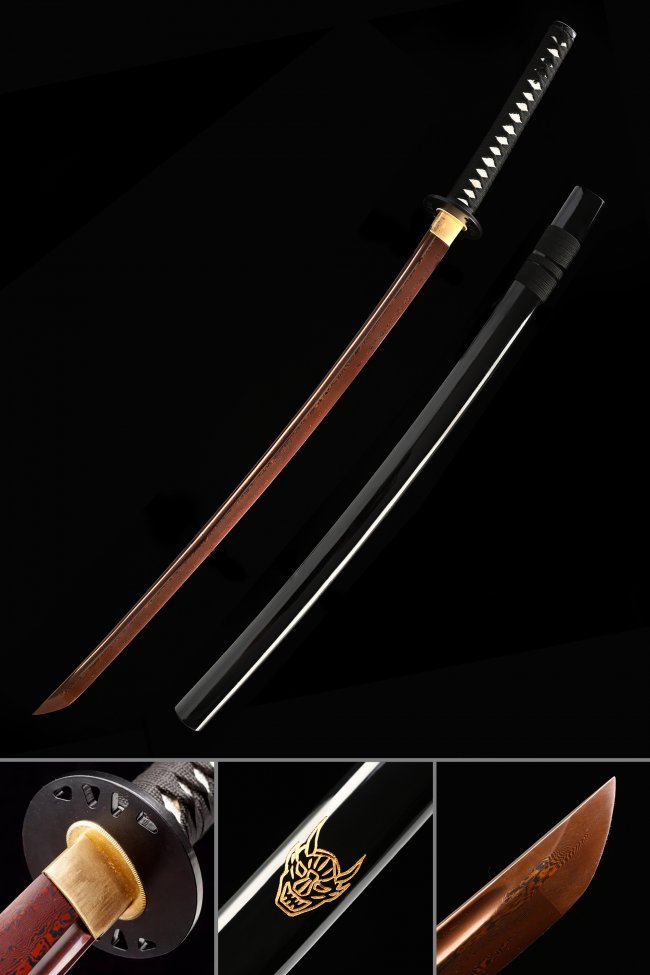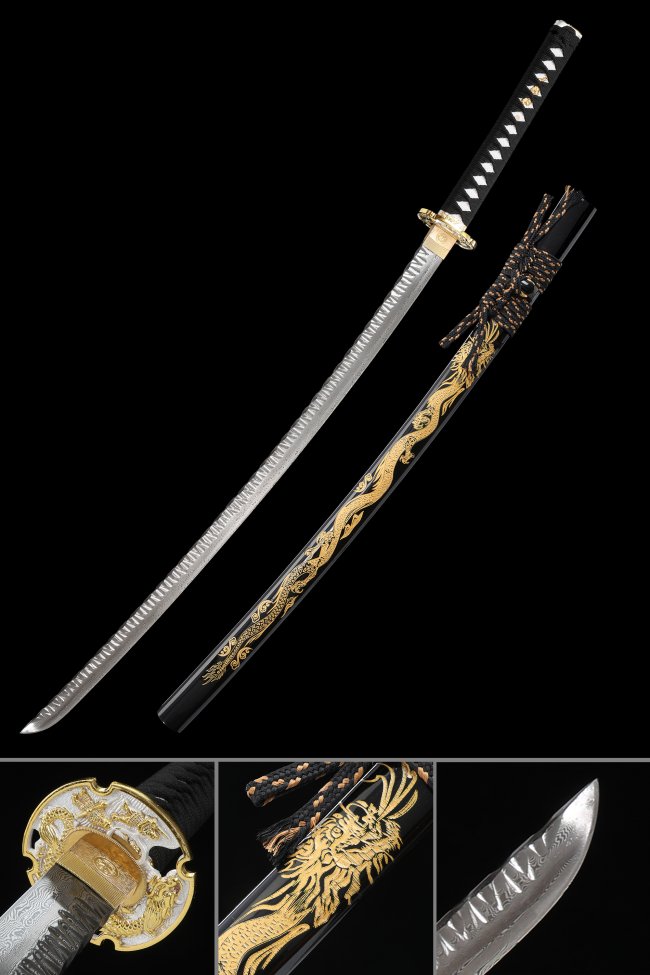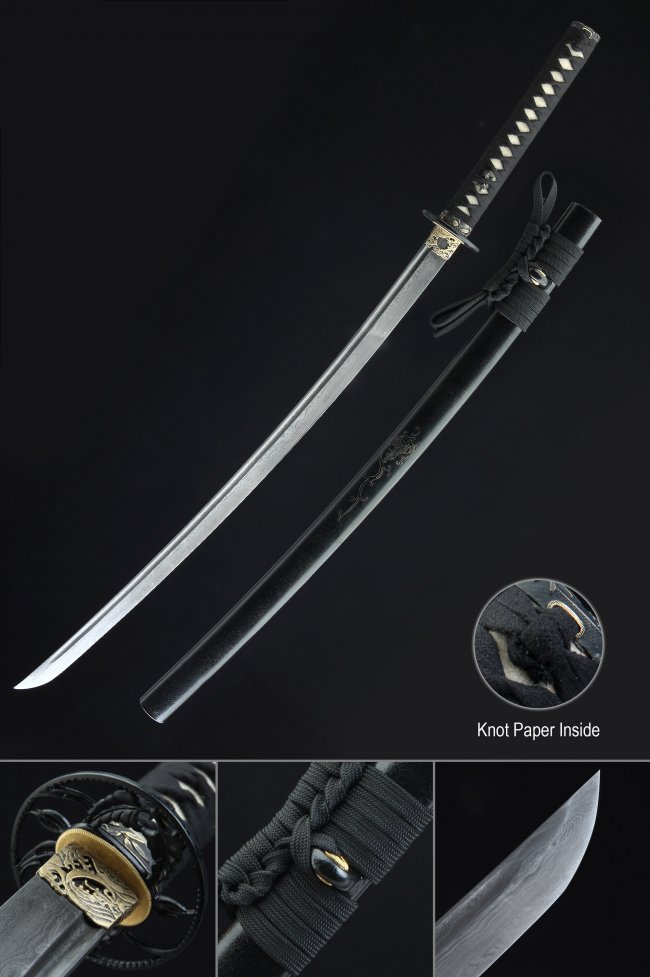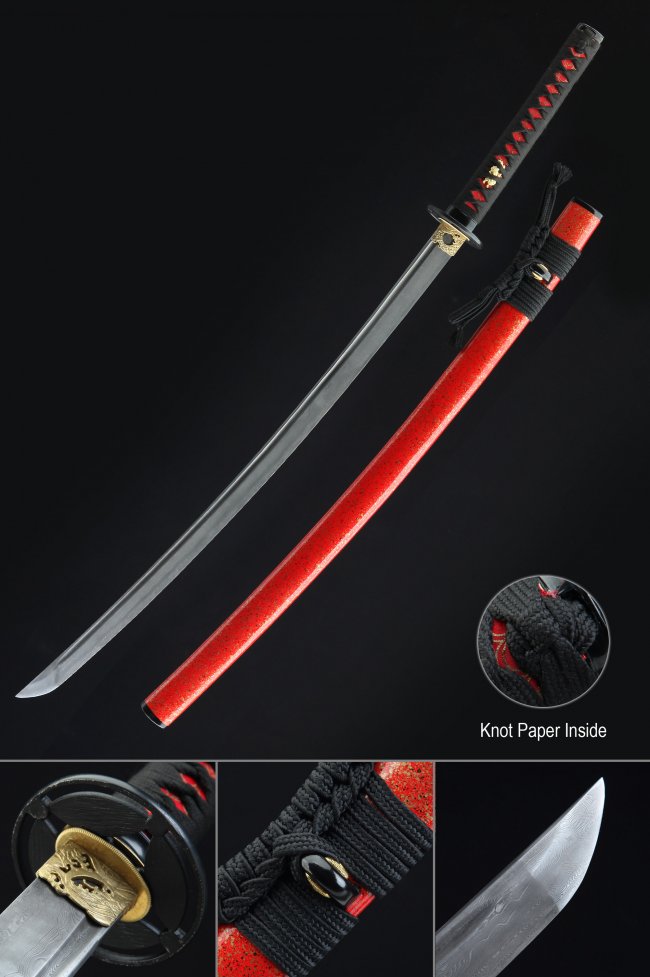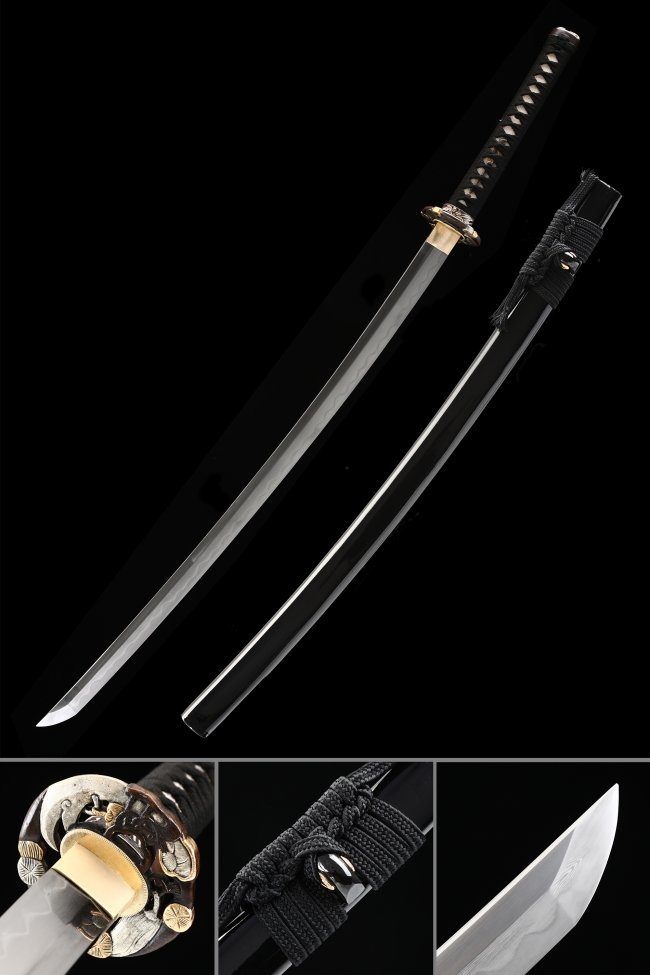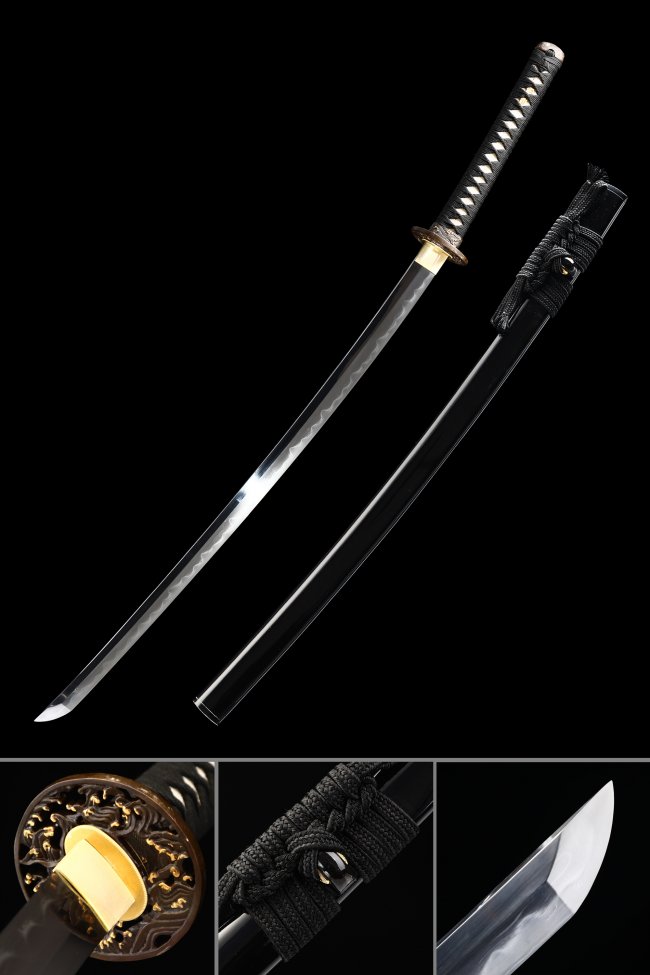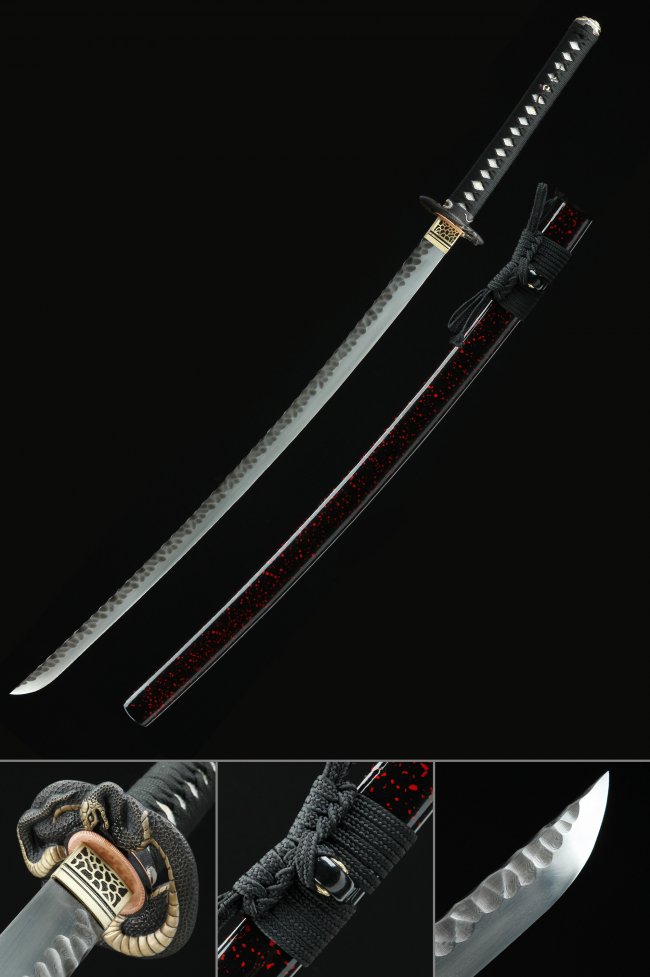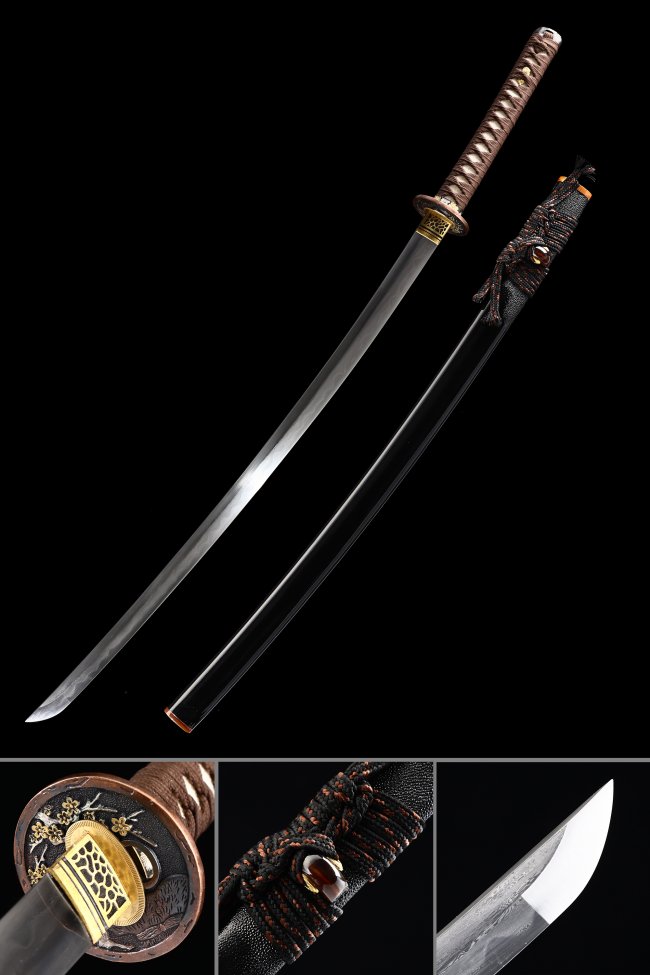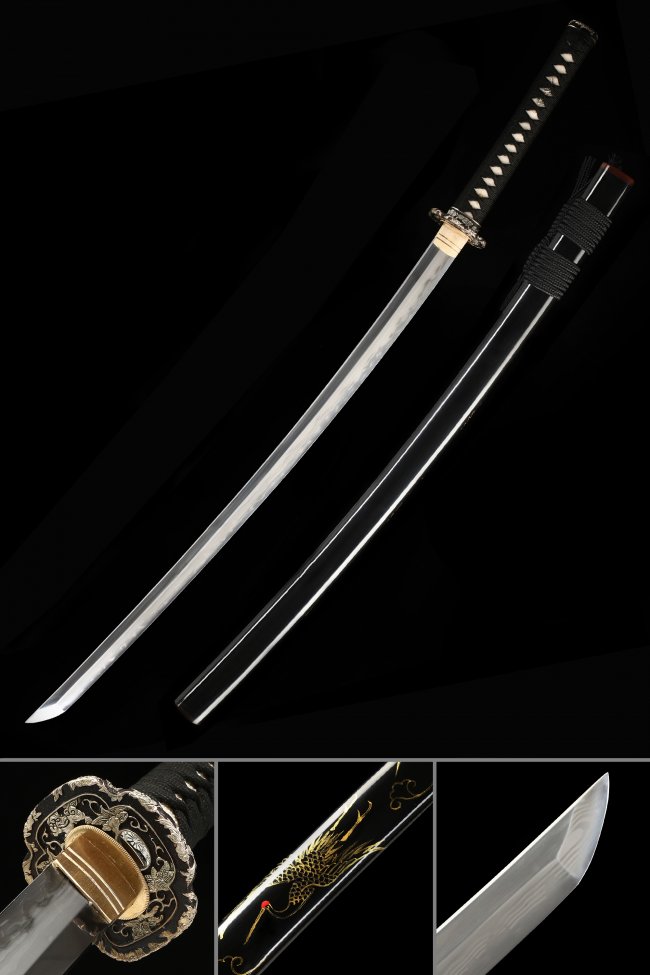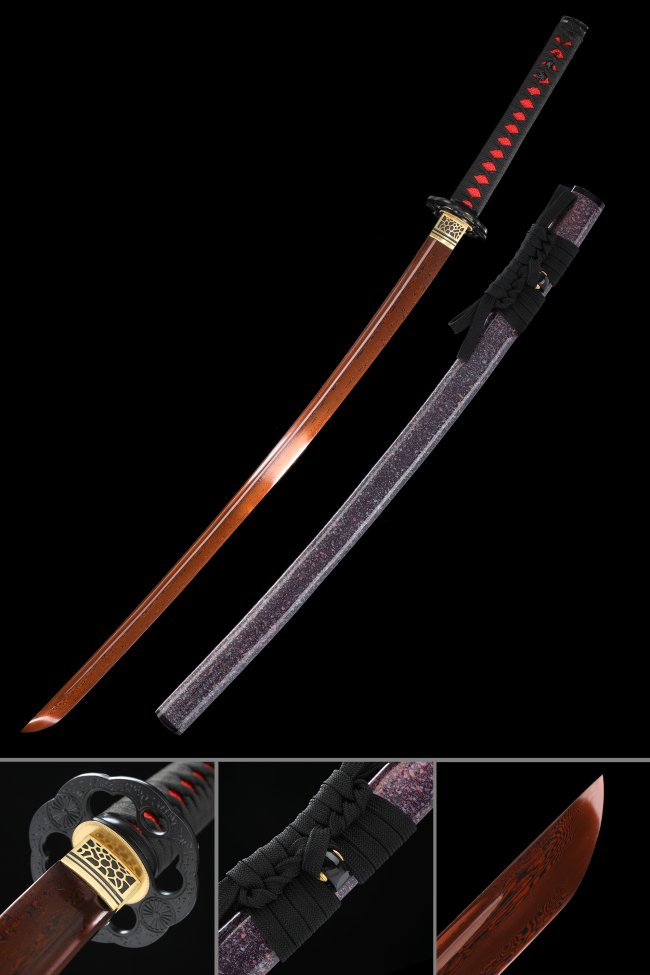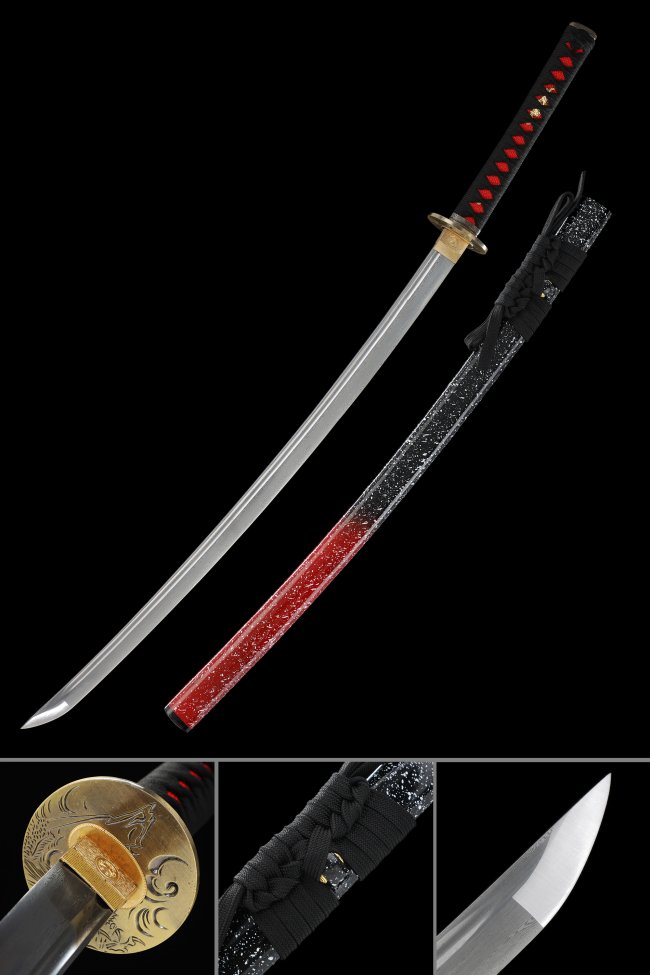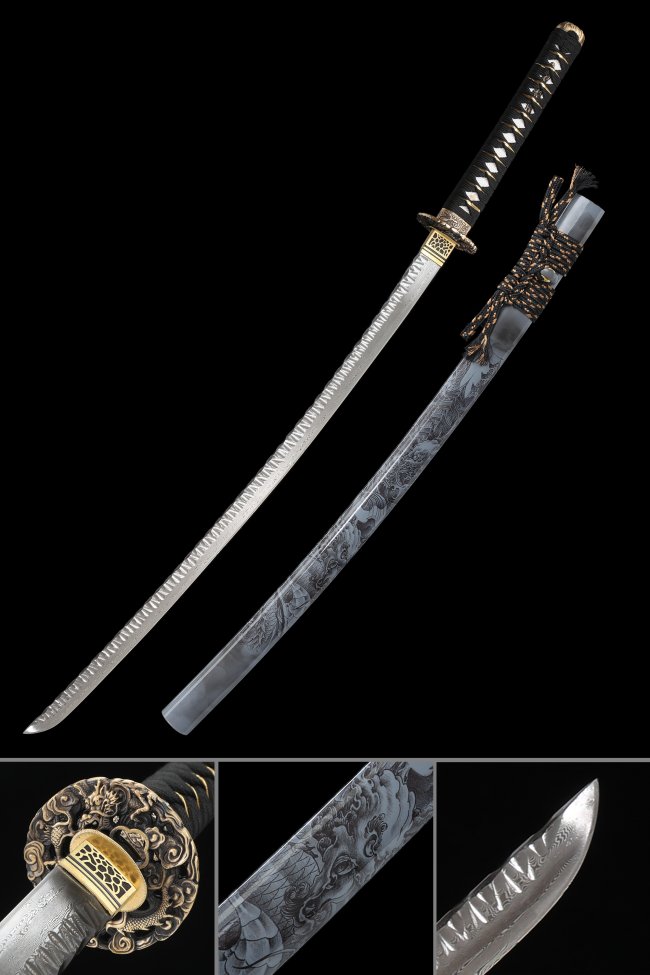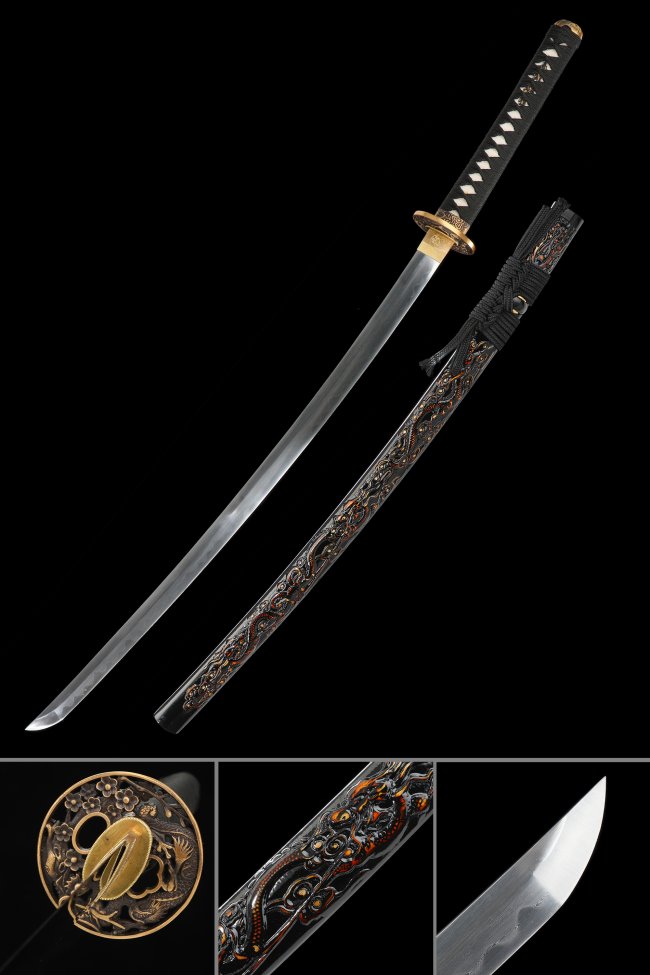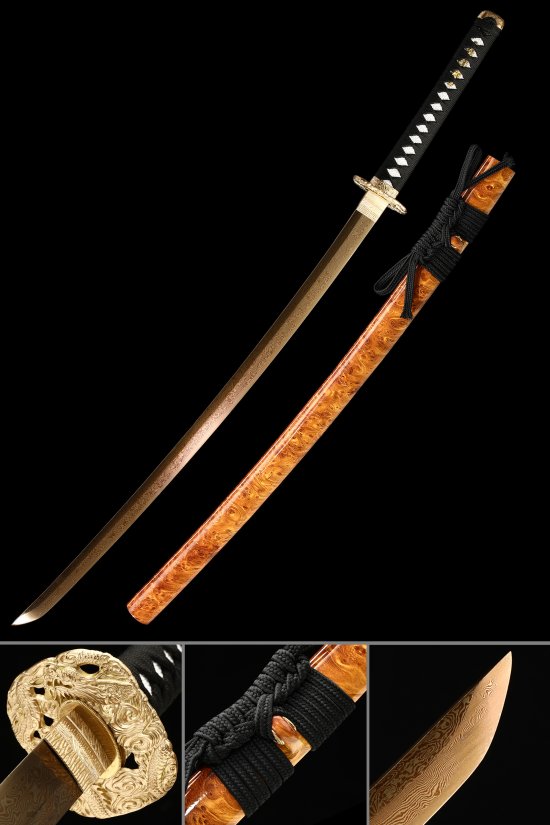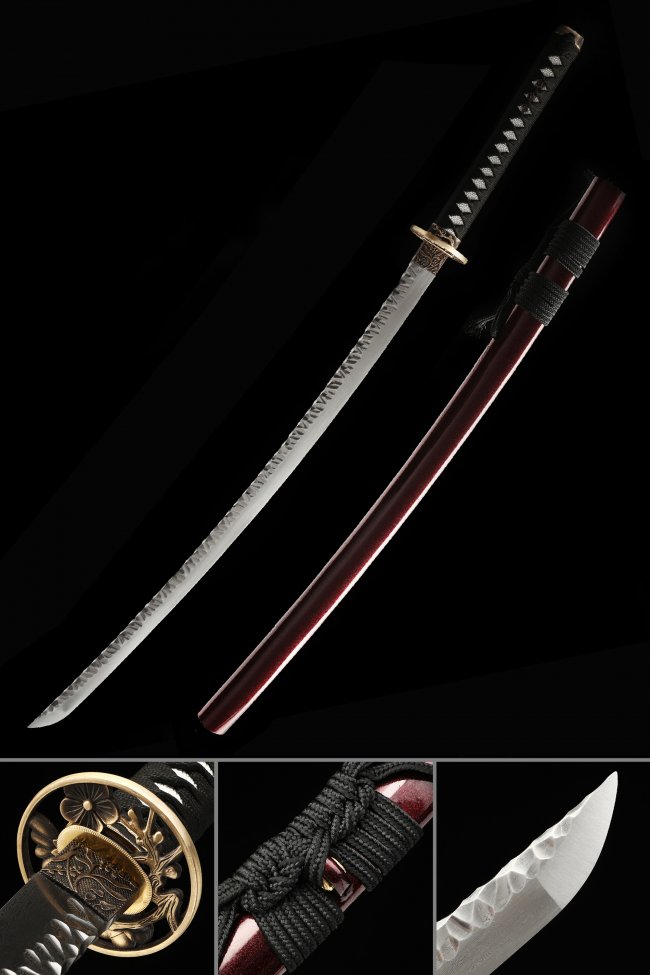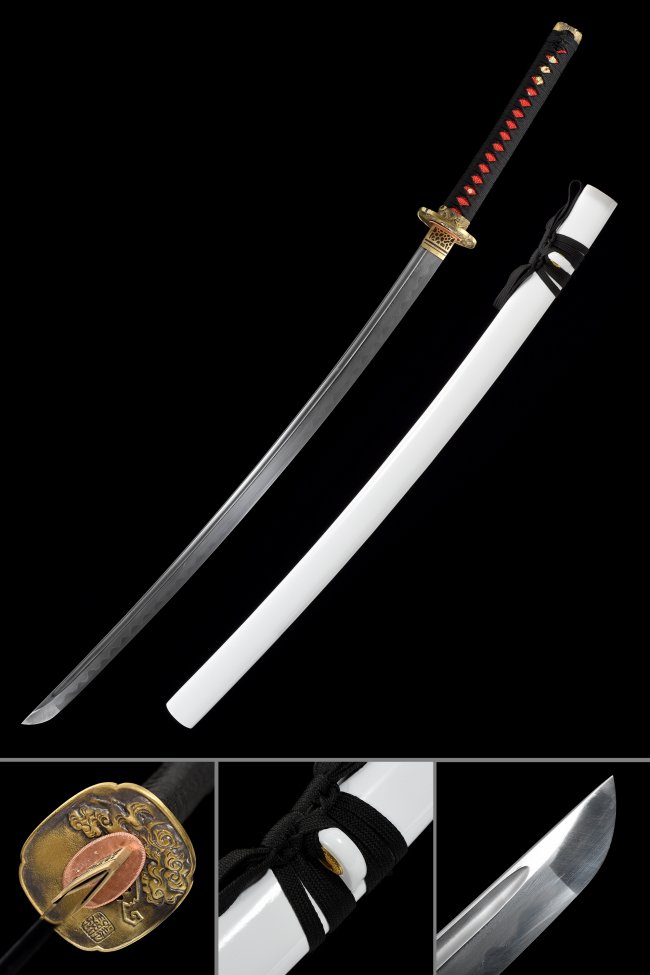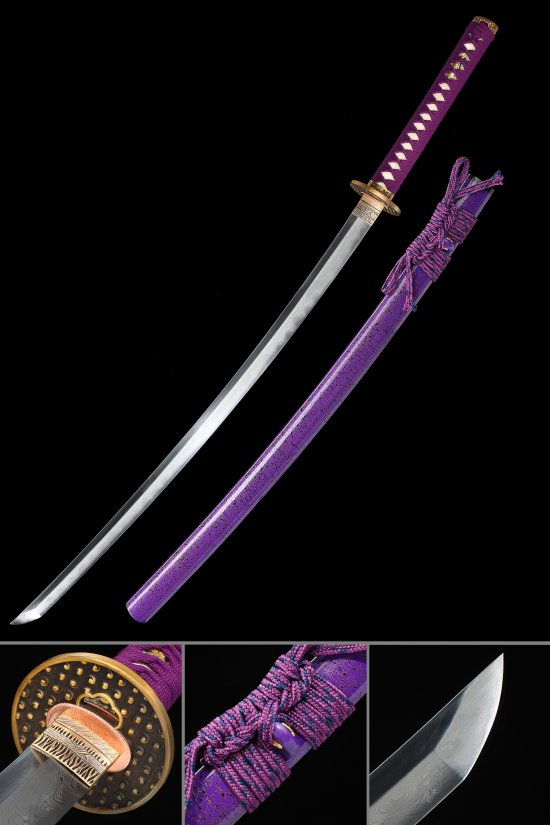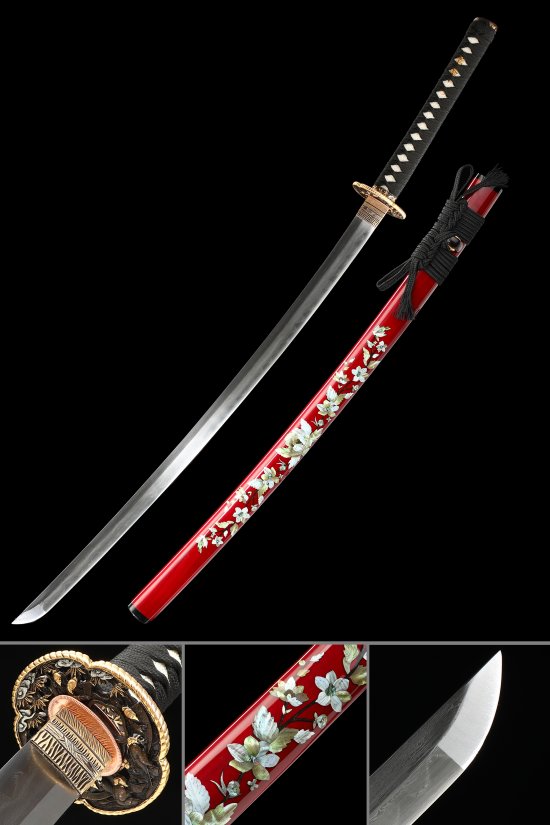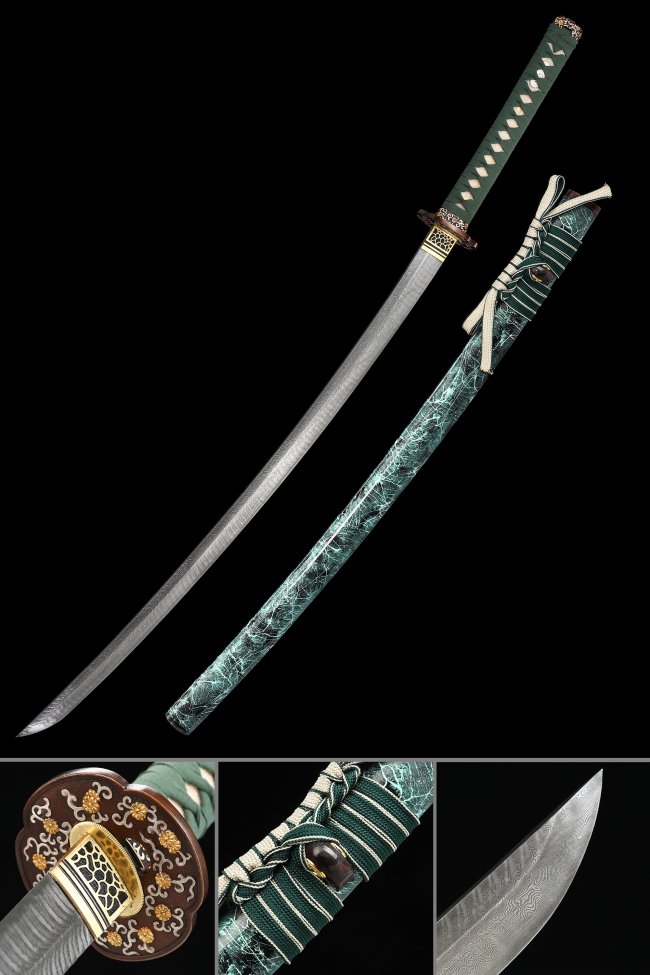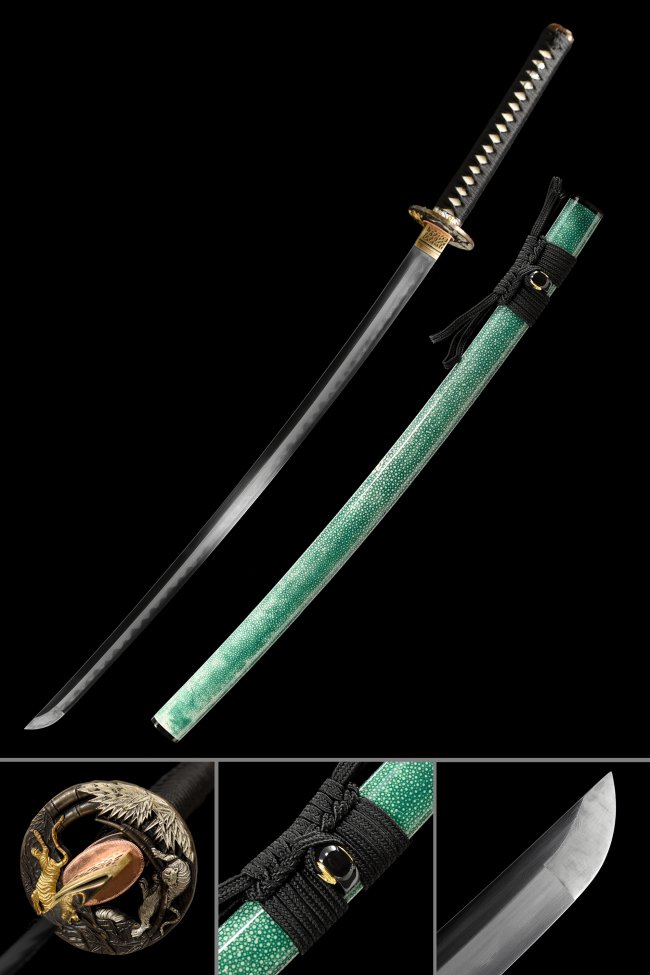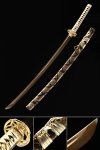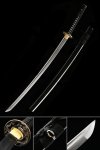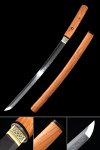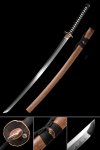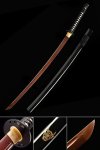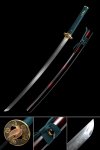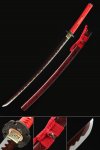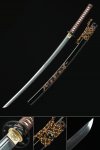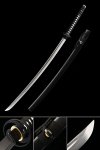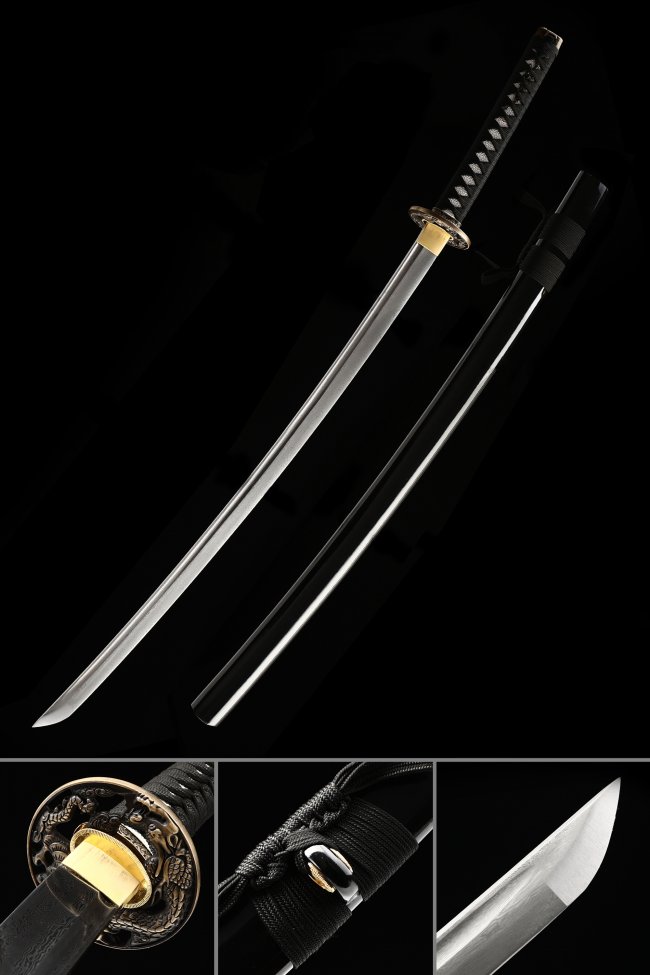
Black Damascus Steel Katana

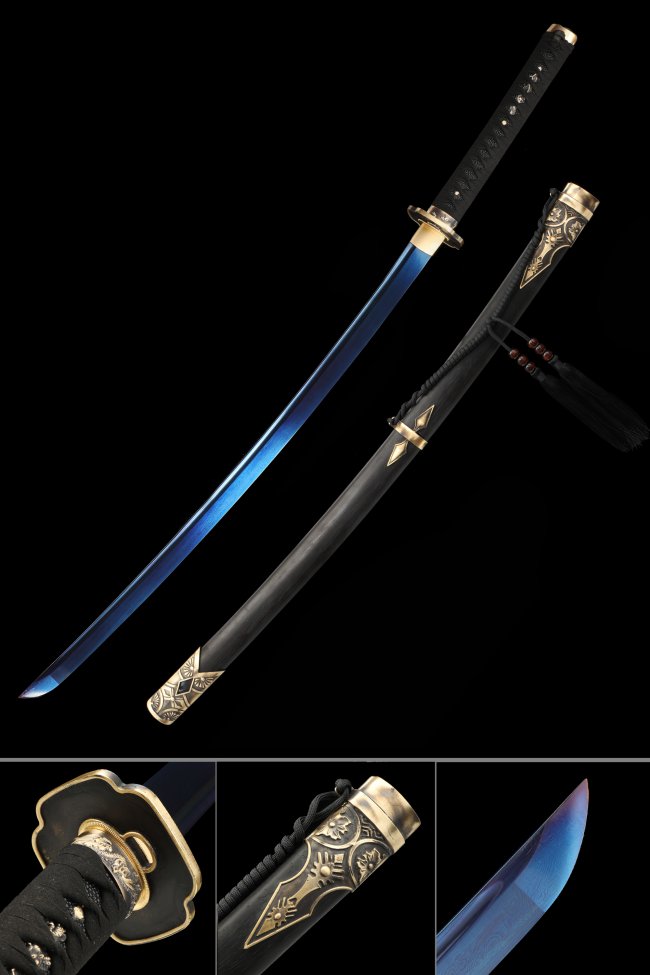
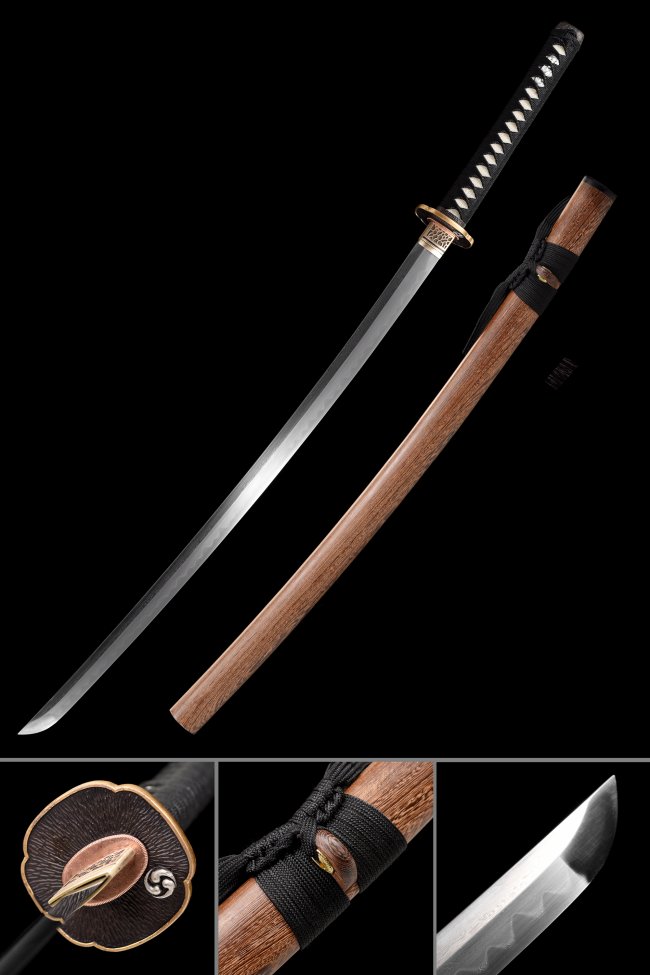
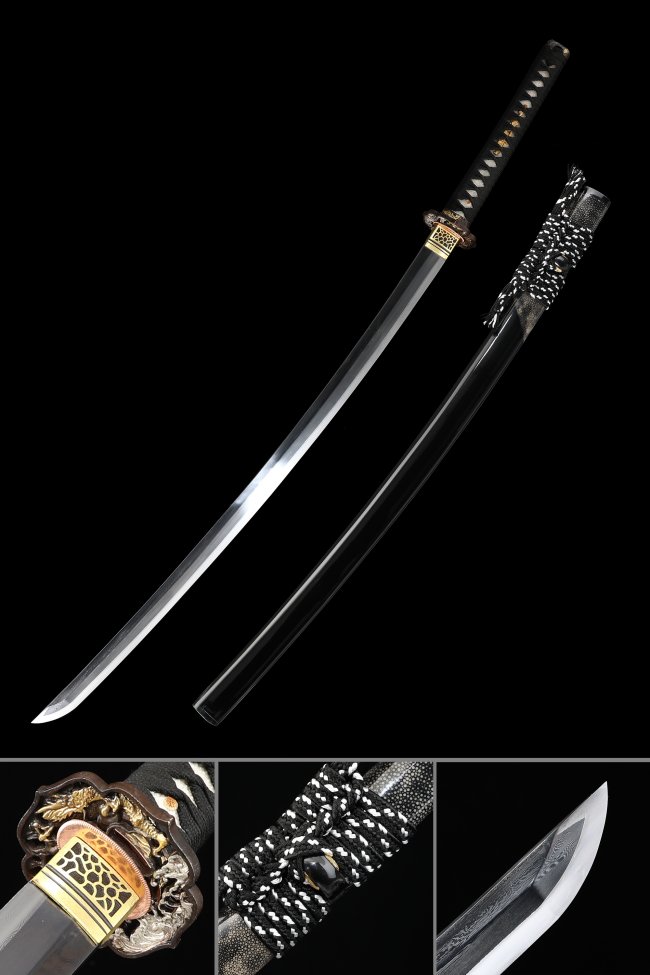
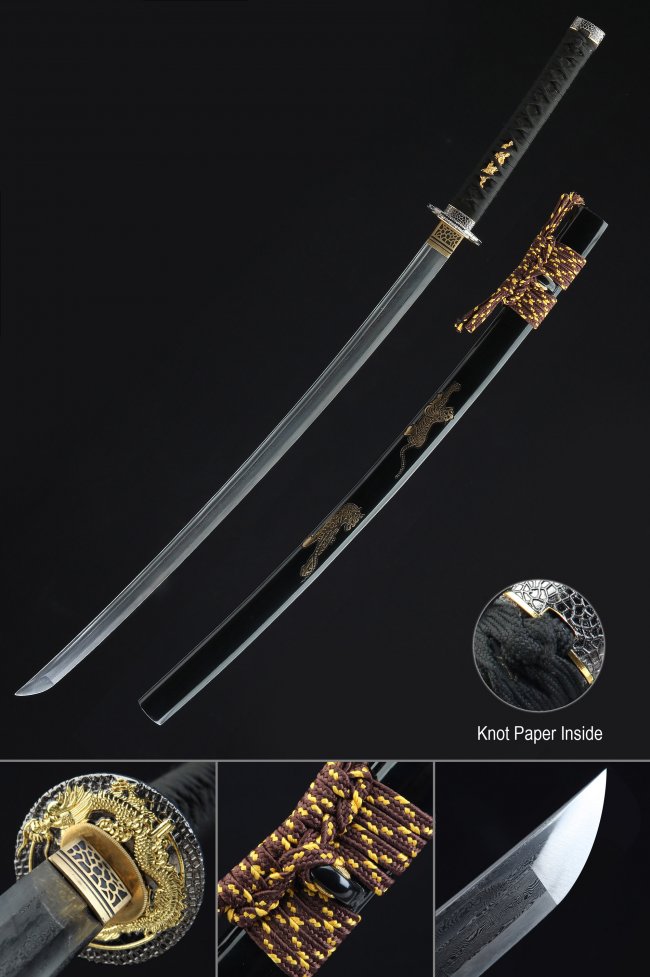
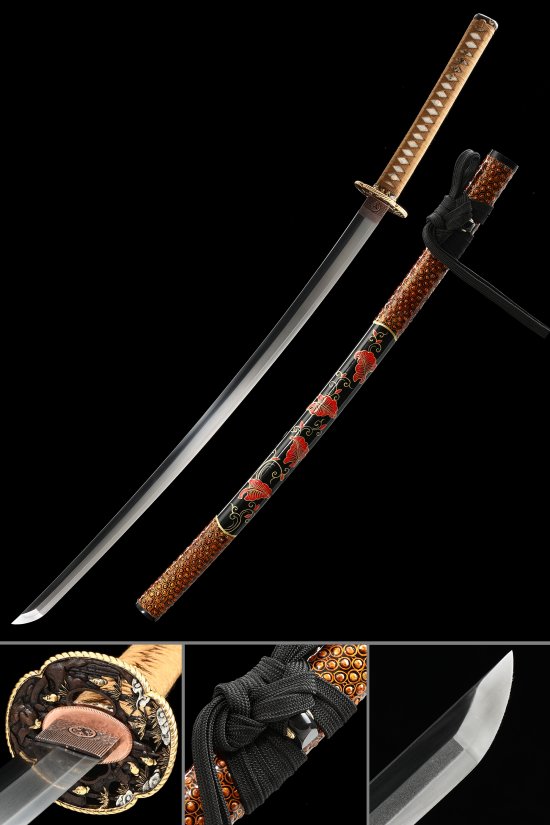
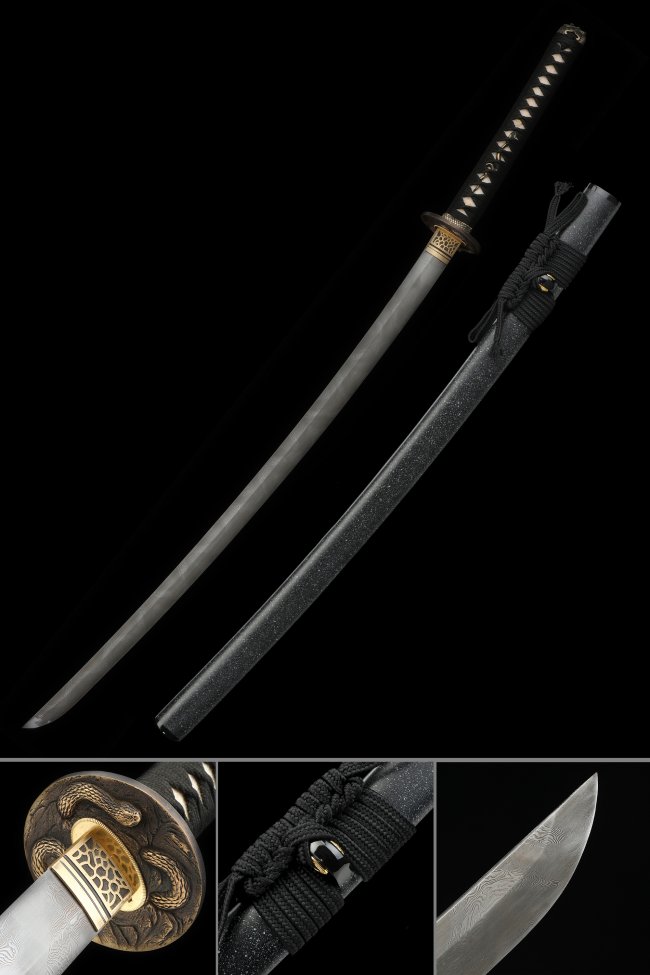
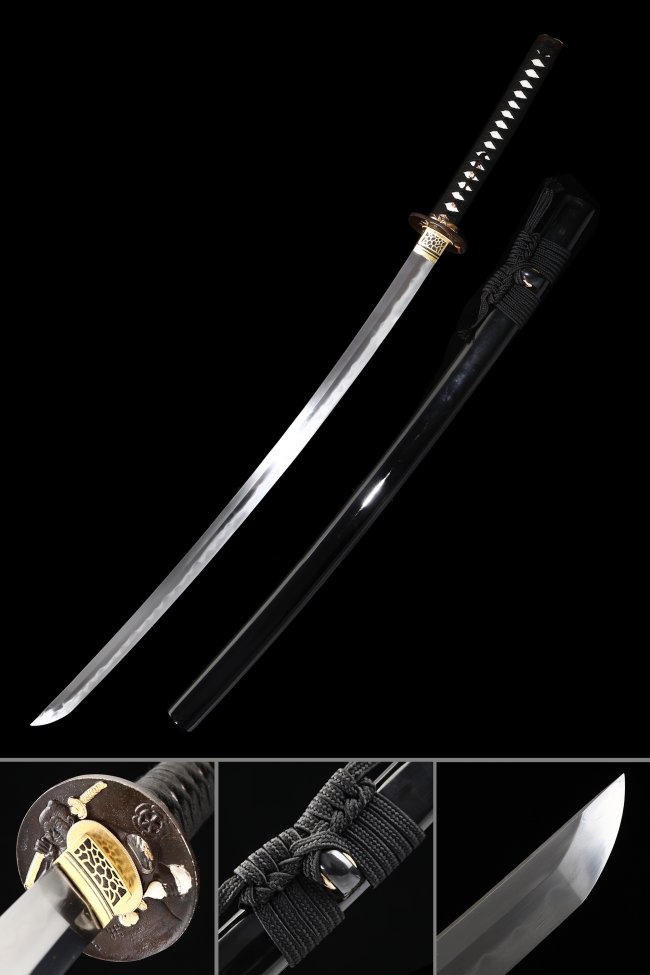
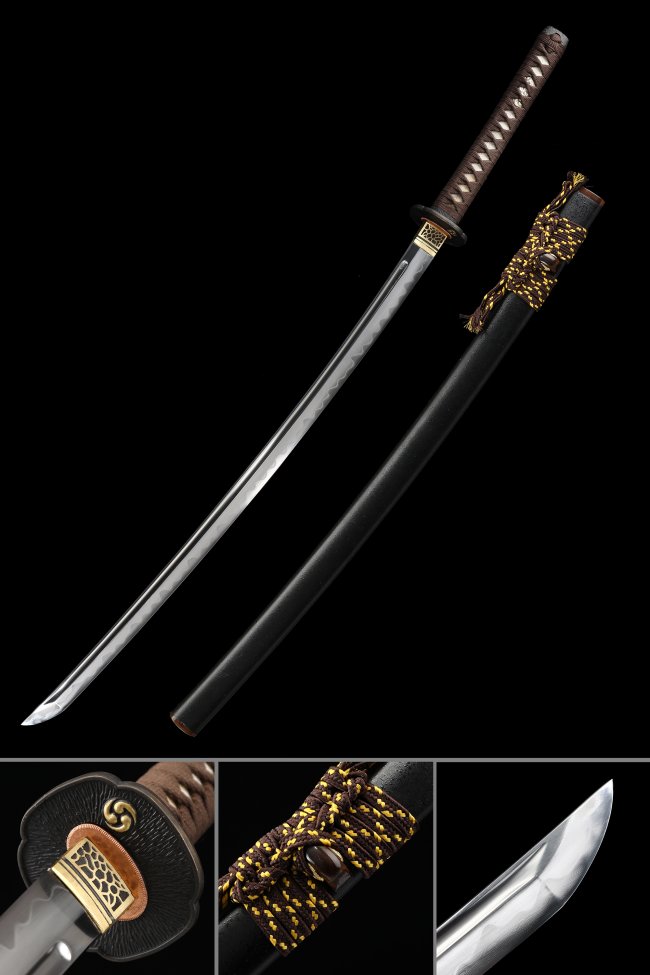
Black Damascus Steel Katanas bring together the hypnotic layered patterns of folded steel and a commanding dark aesthetic that sets them apart from any conventional blade. Each piece in this collection features a full-tang construction, hand-forged Damascus steel with genuine hamon, and fittings that range from ornate dragon tsuba to delicate lotus motifs - details that reward close inspection on any display stand. Explore a curated selection of collector-grade katanas, each shipped free with easy returns.

Showing 81 Products

Related Collections

Damascus Odachi13 items


21 Reviews

Damascus Ninjato19 items


19 Reviews

Damascus Chokuto19 items


19 Reviews

Damascus Broadsword7 items


1 Reviews

Frequently Asked Questions

What gives black Damascus steel its distinctive dark appearance?
The dark surface on a black Damascus steel katana is not simply a painted or coated finish. It typically results from one of three methods: controlled acid etching that differentially darkens the high-carbon layers and reveals the fold pattern simultaneously, heat patination applied by hand after the blade geometry is finalized, or a combination of both. Because Damascus steel is itself a composite of alternating high- and low-carbon layers, the etching process reacts unevenly across the surface - softer iron-rich layers etch lighter, harder carbon-rich layers go darker - which means the dark finish and the visible grain pattern are produced by the same process. This makes the coloration a structural feature rather than a cosmetic one, and it will not chip or peel the way a sprayed coating would.
How does Damascus steel differ from standard high-carbon steel in a katana?
A standard high-carbon katana blade, such as one forged from 1075 or 1095 steel, is made from a single alloy composition ground and heat-treated to shape. Damascus steel, by contrast, is produced by forge-welding two or more steel types together repeatedly - commonly a high-carbon steel paired with a more ductile iron-rich alloy - then folding, drawing out, and re-welding the billet until the layers number in the dozens or hundreds. The practical outcome is a blade that exhibits micro-variations in hardness across its cross-section, which can improve overall toughness compared to a mono-steel blade of similar carbon content. The visual outcome is the flowing surface pattern that Damascus is recognized for. For collectors, the layer count, the fold pattern style, and the steel pairing used in the billet are all meaningful specifications that affect both appearance and character.
What should I use to maintain a Damascus steel blade in storage?
Damascus steel, particularly when acid-etched to a dark finish, requires light but consistent maintenance to preserve both the surface pattern and the underlying steel. Apply a thin coat of camellia oil or Renaissance Wax every two to three months, working along the grain direction rather than across it. Avoid petroleum-based oils, which can interact with the etched surface over time and cause uneven discoloration. Store the blade in its saya with a light oil coat, in a horizontal or angled position away from direct humidity sources - a wall-mounted rack is preferable to a sealed case, which can trap condensation. If any rust spotting appears, address it immediately with a very fine polishing cloth and re-oil; surface rust on an etched blade can obscure the Damascus pattern if left untreated.
Are these katanas suitable as display centerpieces alongside other blade types?
Black Damascus katanas pair exceptionally well in multi-piece display arrangements. Their dark finish creates visual contrast against lighter wood tones, natural linen wall backgrounds, or adjacent blades in polished steel. For a traditional Japanese-themed display, pairing a katana with a matching black Damascus wakizashi creates a daisho - the paired long-and-short sword set historically associated with samurai status. For a broader wall arrangement, combining pieces with varied tsuba metals - bronze, copper, and gold alloy - introduces tonal variety without disrupting the overall dark aesthetic. The key consideration for multi-piece display is consistent saya finish: mixing piano lacquer and matte hardwood within the same arrangement can look intentional if the blade count is three or more, but tends to look mismatched in a two-piece pairing.
What does full-tang construction mean for a collectible katana?
Full-tang means the steel of the blade extends as a single uninterrupted piece through the entire length of the handle, all the way to the pommel end. In a properly assembled full-tang katana, the tang is secured through the tsuka - the handle - and held in place by a mekugi, a small bamboo or brass pin passing through aligned holes in the tang and handle core. This construction method distributes mass along the full length of the piece, which affects the balance point and the way the katana feels when held horizontally for display inspection. For a collectible, full-tang construction is the standard of authenticity - it is the same structural approach used in historically produced Japanese swords - and it is the detail that distinguishes a properly assembled display piece from a decorative wall hanger with a welded or epoxied handle attachment.

Customer Reviews

Austin Veith California, United States

At first I had an issue where I ordered 5 swords but received 1. I contacted customer service and they were very responsive and helpful. They shipped the other 4 and I am very happy with the product. I bought these swords for me and my groomsmen and I just know they're going to love it. I will definitely be a return customer! Love these swords and the quality is amazing. Thanks again TrueKatana!!

Damascus Steel Katana Sword with Black Piano Lacquer Saya and Dragon Tsuba - Full Tang Collectible Damascus Steel Katana Sword with Black Piano Lacquer Saya and Dragon Tsuba - Full Tang Collectible