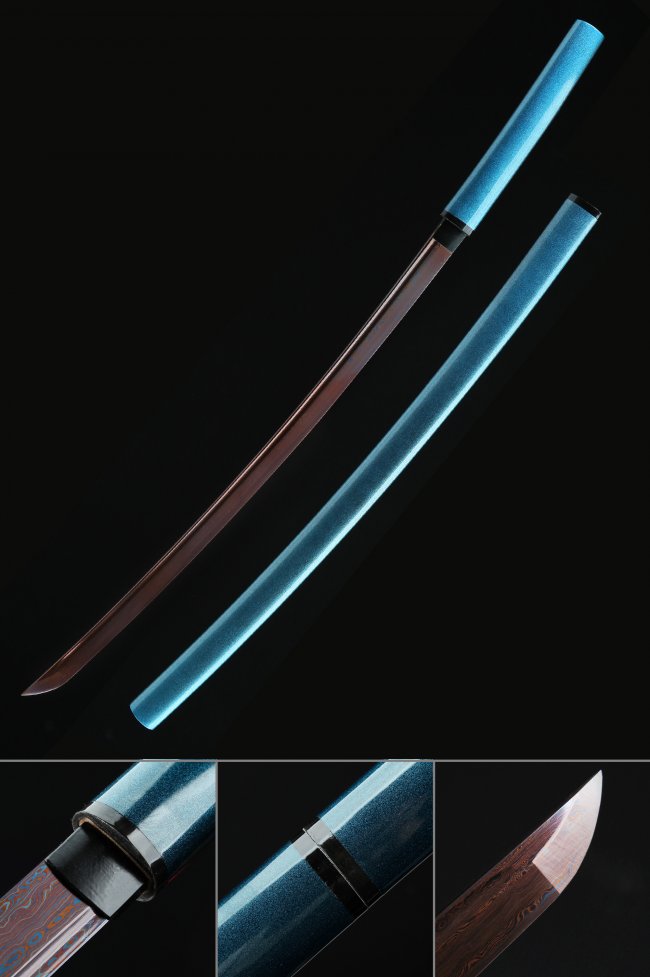
Blue Damascus Katana
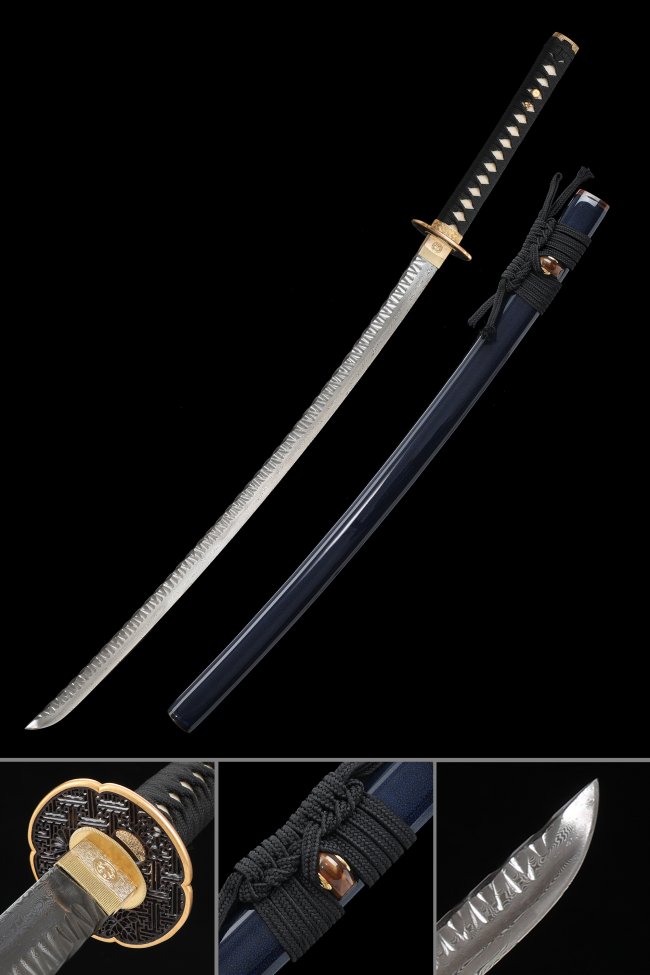
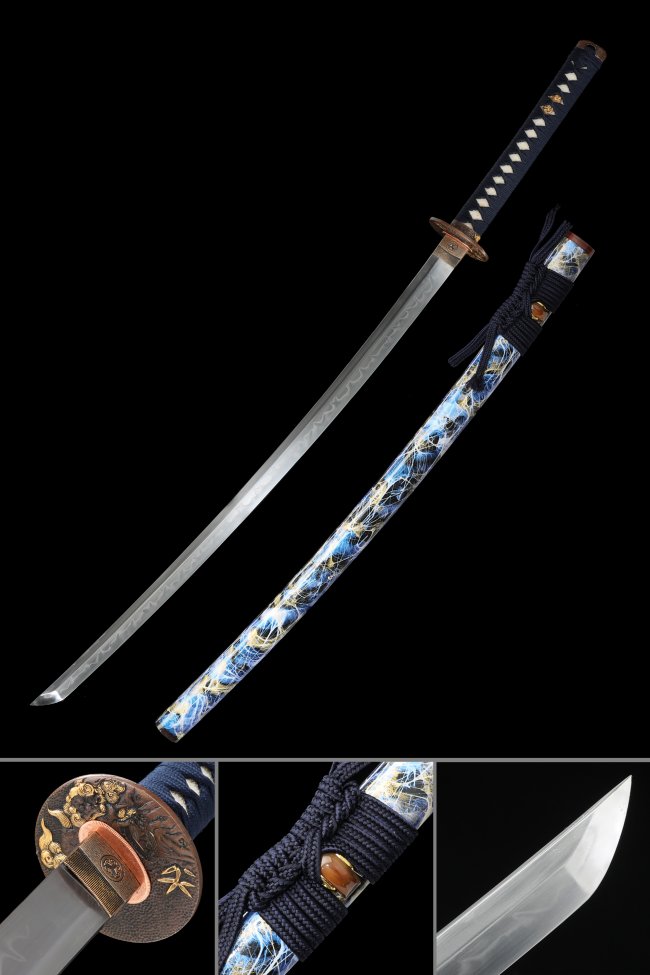
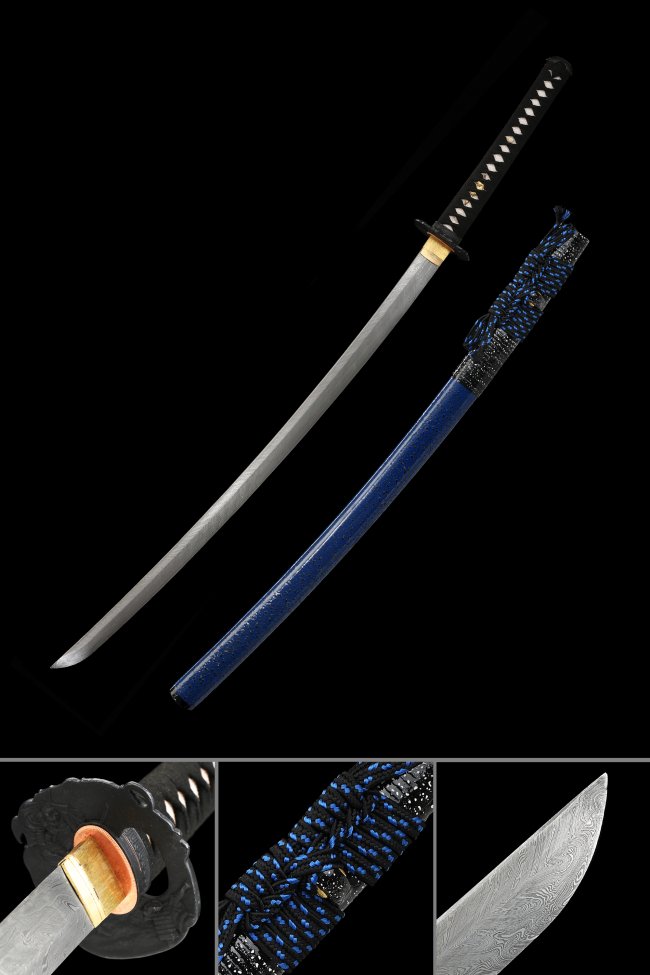
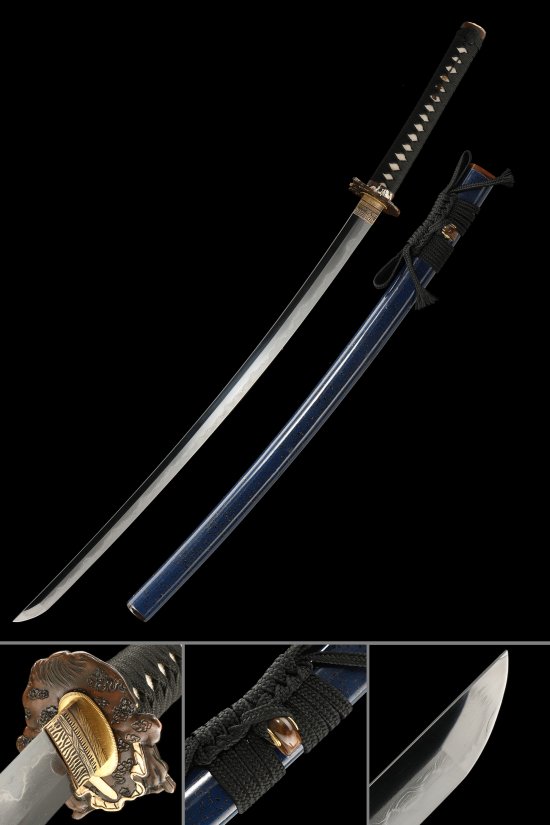
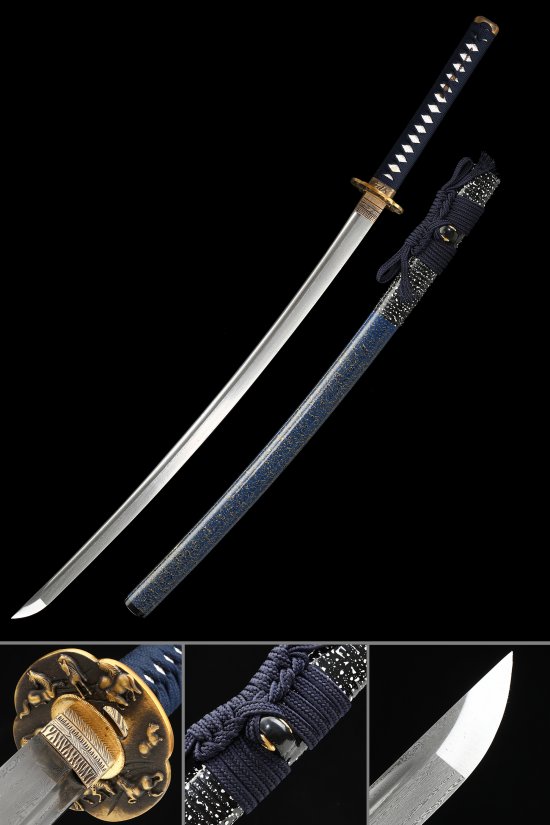
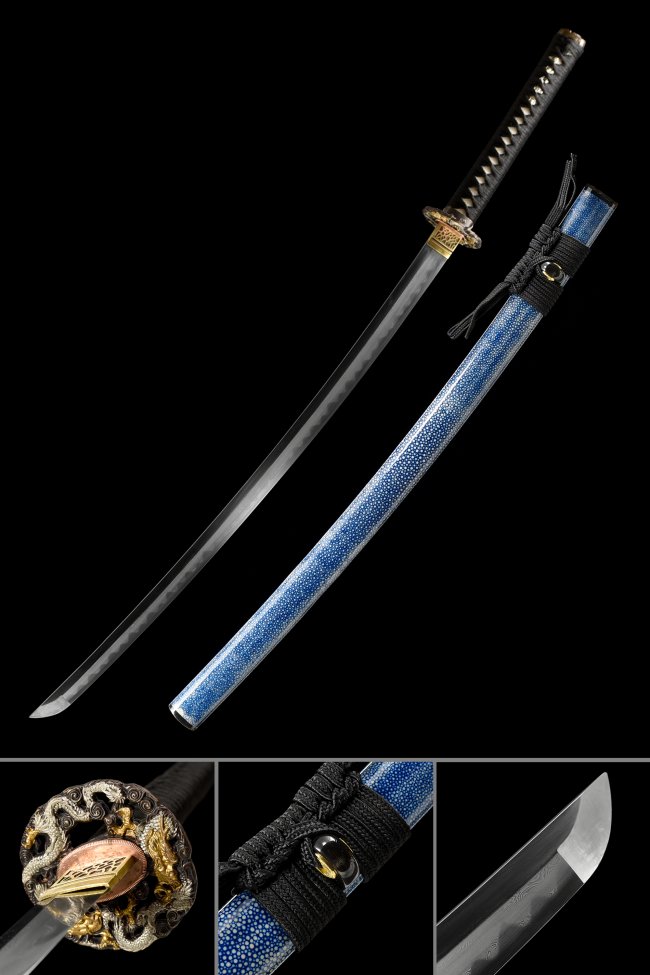
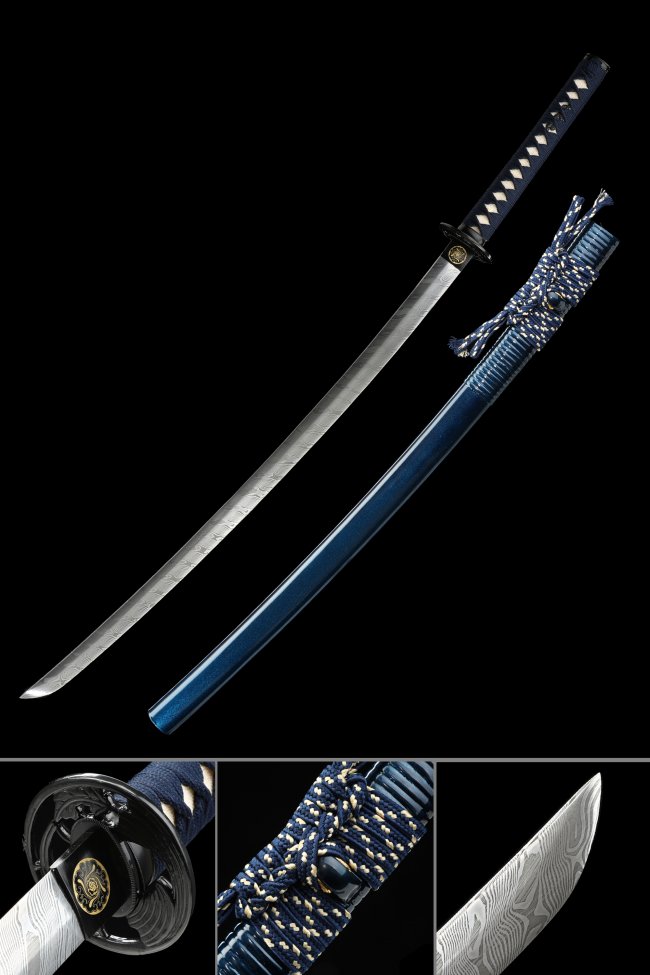
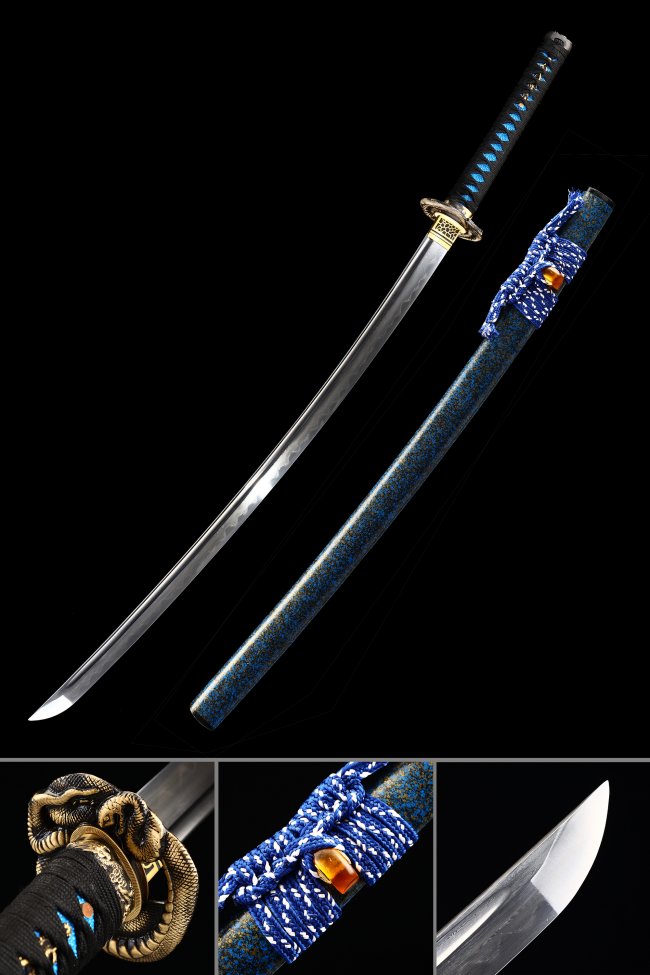
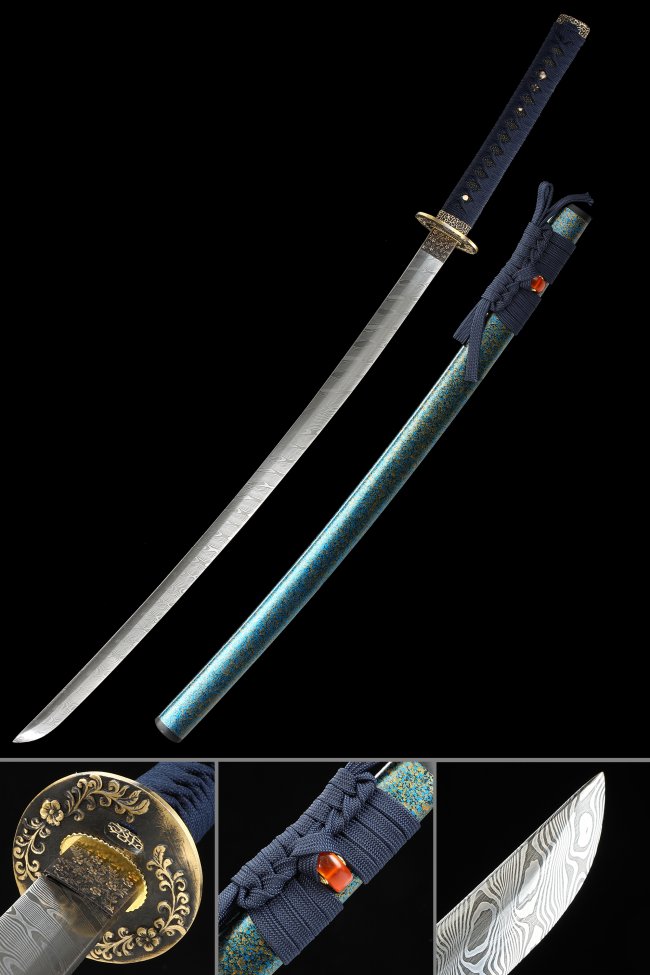
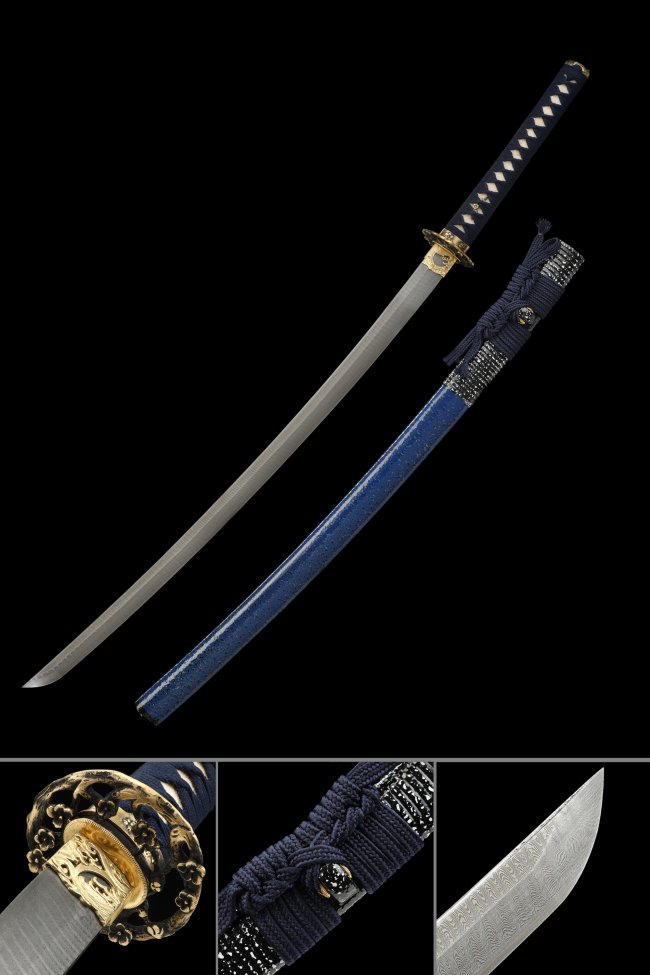
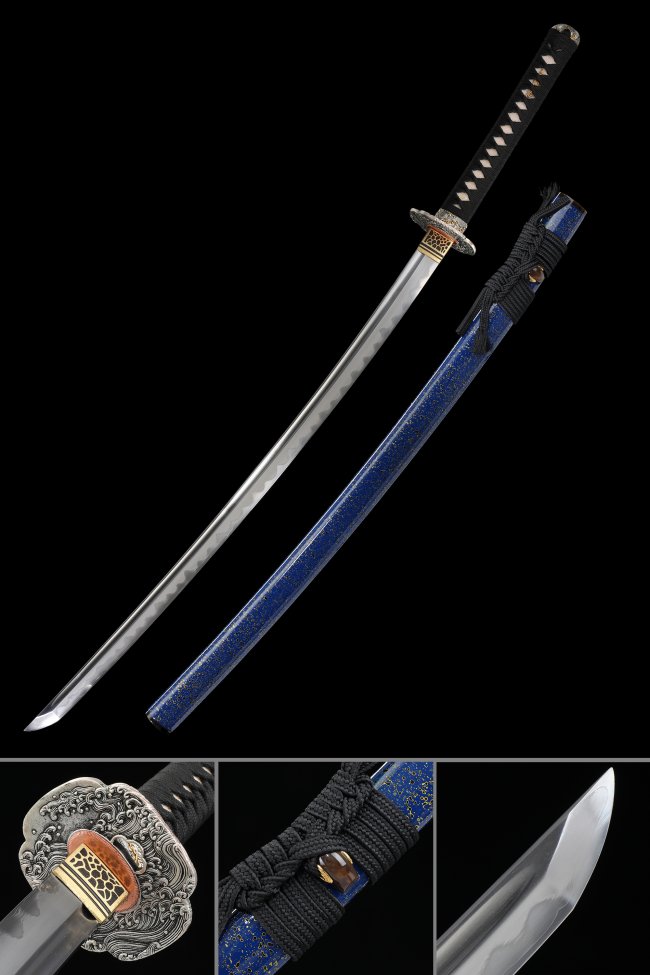
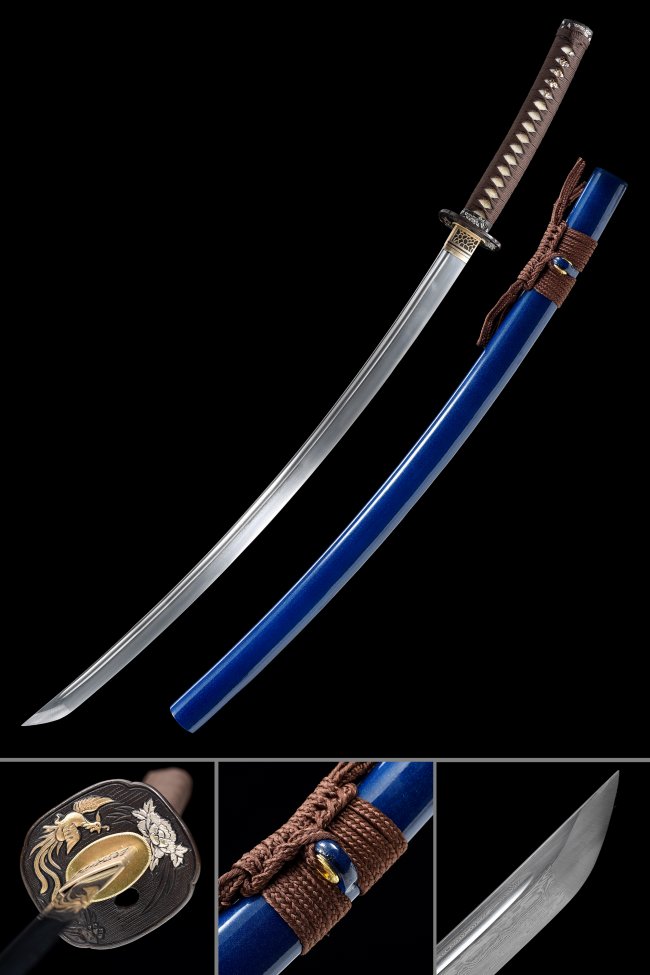
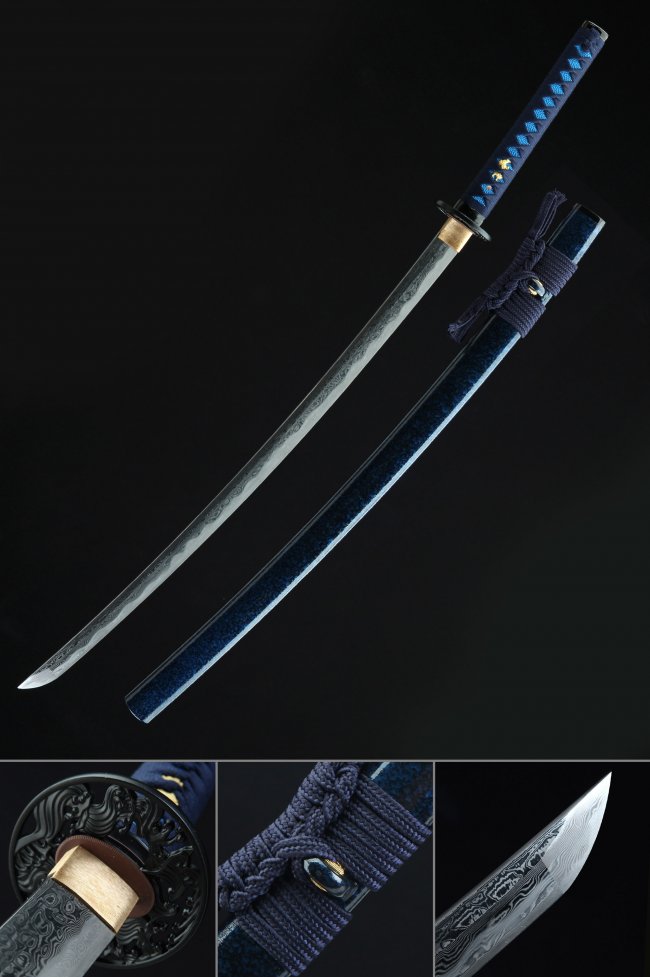
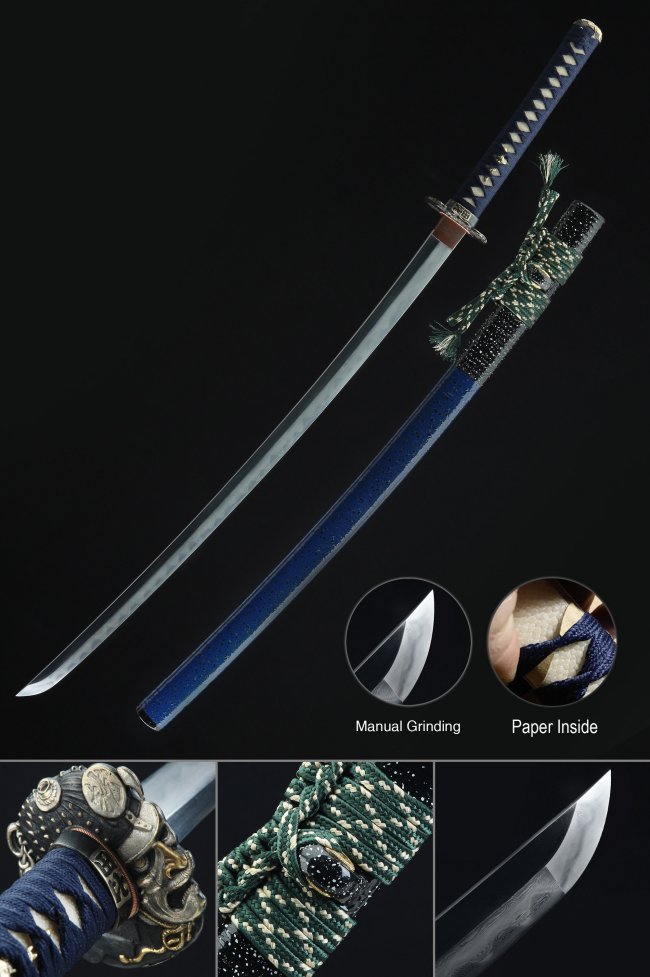
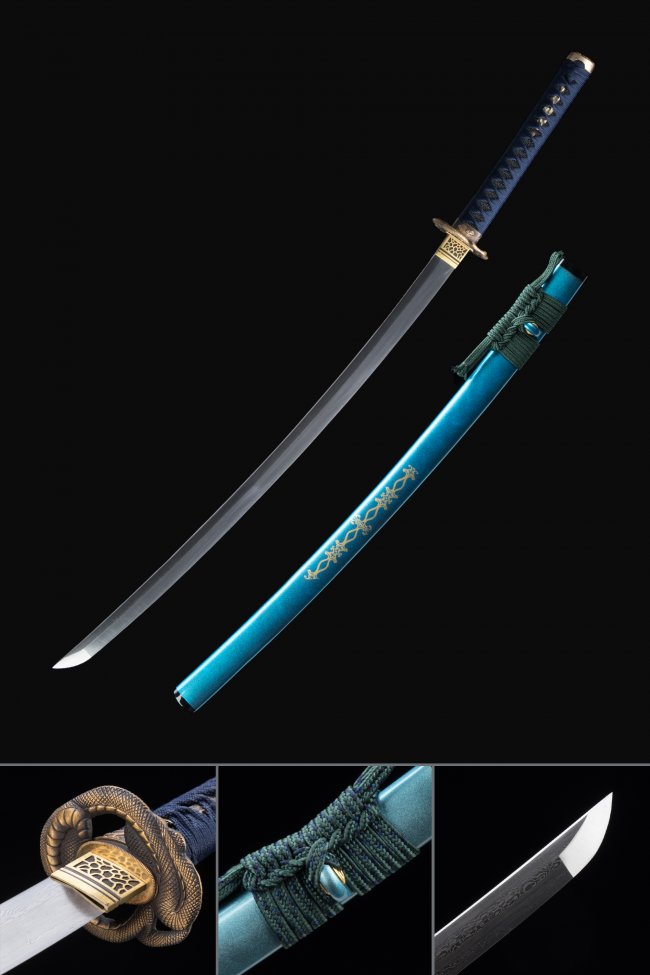
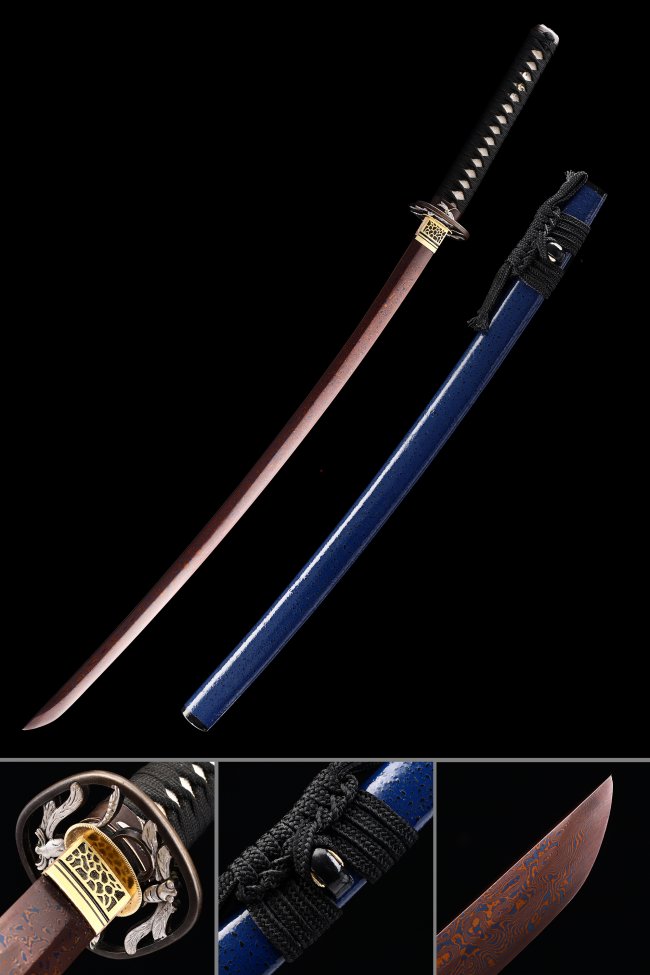
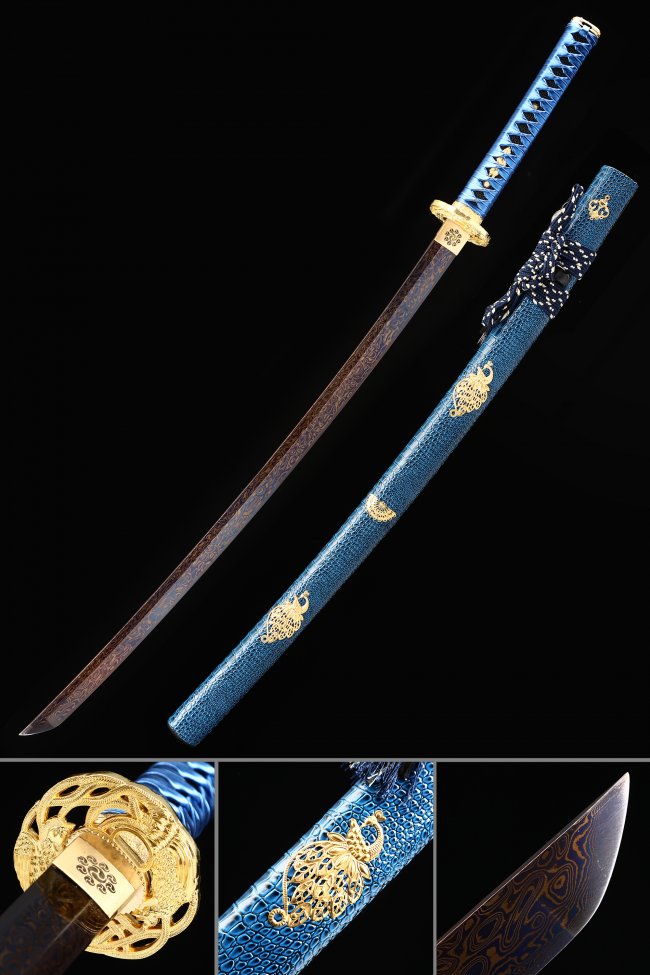
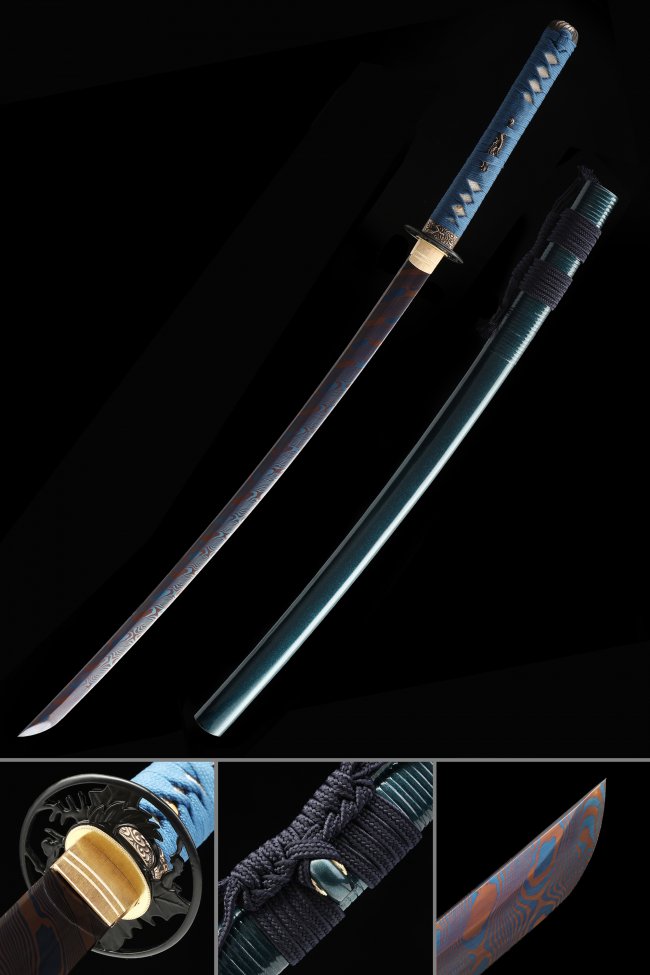
A Blue Damascus Katana catches attention fast, but the layered steel pattern is what keeps collectors interested. The flowing Damascus grain gives every blade a slightly different look, while the blue fittings and saya add a colder, modern edge without losing the feel of a traditional Japanese sword. Our Blue Damascus steel samurai sword collection includes forged full tang blades, careful heat treatment, and balanced construction that feels solid in hand rather than overly decorative. Some pieces lean toward clean minimalist styling, while others take inspiration from anime and fantasy designs. If you want a katana that stands out visually but still respects traditional sword craftsmanship, this collection is worth a closer look.
Related Collections
Kodachi Sword 34 items
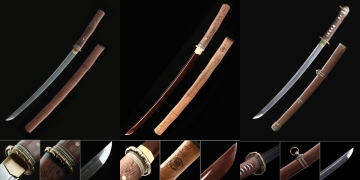
Damascus Steel Wakizashi 25 items
Customer Reviews
This sword has the most beautiful craftsmanship I have seen…truly amazing piece
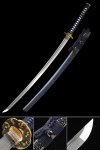 Damascus Steel Katana with Blue Lacquer Saya - Horse Tsuba, Dark Blue Cord Handle, 28.74" Blade
Verified Purchase
Damascus Steel Katana with Blue Lacquer Saya - Horse Tsuba, Dark Blue Cord Handle, 28.74" Blade
Verified Purchase
Beautiful show piece, comfortable to hold, very well made
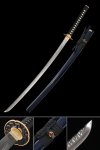 Damascus Steel Katana with Blue Lacquer Saya - Full Tang Folded Blade, Black-Gold Geometric Tsuba
Verified Purchase
Damascus Steel Katana with Blue Lacquer Saya - Full Tang Folded Blade, Black-Gold Geometric Tsuba
Verified Purchase
The sword is a great addition to the start of my collection.
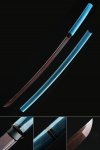 Damascus Steel Shirasaya Katana with Red Folded Blade in Blue Piano Lacquer Saya - Full Tang Collectible Sword
Verified Purchase
Damascus Steel Shirasaya Katana with Red Folded Blade in Blue Piano Lacquer Saya - Full Tang Collectible Sword
Verified Purchase
I Love It The Handling Is Great And It Looks Awesome. r
Will Definitely Be Ordering Again
Damascus Steel Shirasaya Katana with Red Folded Blade in Blue Piano Lacquer Saya - Full Tang Collectible Sword
Verified Purchase
Absolutely love it. The color is outstanding, just what I thought it would be a loved the blade. Everything is perfect on it. Couldn't ask for a better sword. Thank you so much
Damascus Steel Shirasaya Katana with Red Folded Blade in Blue Piano Lacquer Saya - Full Tang Collectible Sword
Verified Purchase
Good sword, not high level but very cool decorating item
Damascus Steel Shirasaya Katana with Red Folded Blade in Blue Piano Lacquer Saya - Full Tang Collectible Sword
Verified Purchase
Light in my hands, easy to grip and handle, love the material of the blade 👌
Damascus Steel Shirasaya Katana with Red Folded Blade in Blue Piano Lacquer Saya - Full Tang Collectible Sword
Verified Purchase
Fang lives here.. temporarily
I made short video
https://youtu.be/uIu6IK1KrM0?feature=shared
Big fan
Snake Eyes
Damascus Steel Shirasaya Katana with Red Folded Blade in Blue Piano Lacquer Saya - Full Tang Collectible Sword
Verified Purchase
All I can say is beautiful craftsmanship. The blade itself was done very good. “If looks could kill this be it.” Lol. My 2023 Xmas gift came in very fast on basic shipping. I’m very impress
Damascus Steel Shirasaya Katana with Red Folded Blade in Blue Piano Lacquer Saya - Full Tang Collectible Sword
Verified Purchase
Great quality only problem is one of the pins must have fallen off during shipment
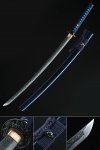 Damascus Steel Katana with Dragon Engraving - Blue Ito, Dark Blue Lacquer Saya, Wave Tsuba
Verified Purchase
Damascus Steel Katana with Dragon Engraving - Blue Ito, Dark Blue Lacquer Saya, Wave Tsuba
Verified Purchase
Excellent quality. My first of what I hope to be a large collection. Very happy with this katana and the customer service.
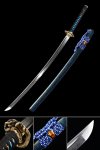 Damascus Steel Katana with Real Hamon and Snake Tsuba in Blue Speckled Saya - Collectible Samurai Sword
Verified Purchase
Damascus Steel Katana with Real Hamon and Snake Tsuba in Blue Speckled Saya - Collectible Samurai Sword
Verified Purchase
Great gift for the grandfather as his first katana. The quality of this item competes with katanas that are several thousands of $.
Damascus Steel Shirasaya Katana with Red Folded Blade in Blue Piano Lacquer Saya - Full Tang Collectible Sword
Verified Purchase
Very clean quality, wish the inside end of the sheath would maybe be polished and it's alittle rough, but over all a quality blade.
Damascus Steel Shirasaya Katana with Red Folded Blade in Blue Piano Lacquer Saya - Full Tang Collectible Sword
Verified Purchase
Good Packer Jamie excellent service excellent product really happy with it would strongly recommend
Damascus Steel Shirasaya Katana with Red Folded Blade in Blue Piano Lacquer Saya - Full Tang Collectible Sword
Verified Purchase
Love it! It’s as close to a true Shirasaya as you could find for 250$. Gorgeous blade. It came well oiled and sharp enough to cut, yet not so sharp as to be flimsy and bend under impact. It will be perfect to practice my forms and slice objects out of the air when thrown at me by my friends. Thanks TrueKatana!
Damascus Steel Shirasaya Katana with Red Folded Blade in Blue Piano Lacquer Saya - Full Tang Collectible Sword
Verified Purchase
Loading more reviews...