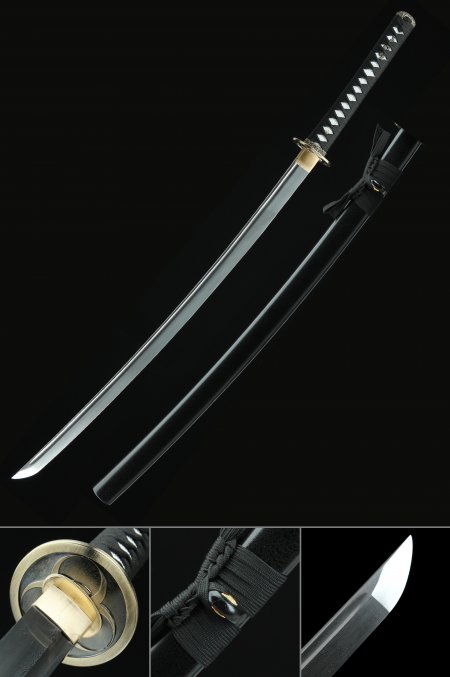
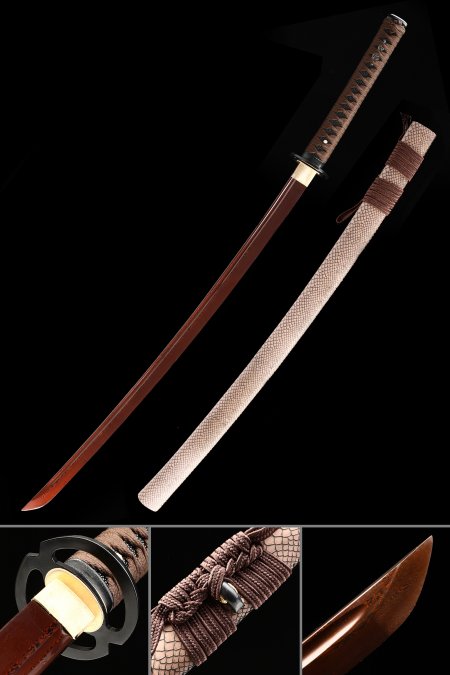
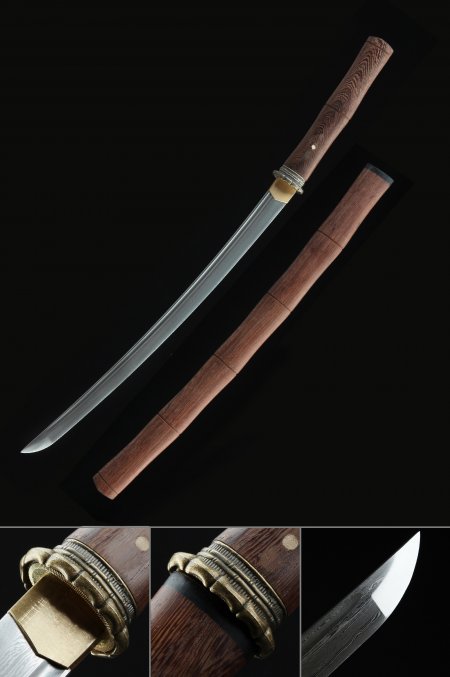
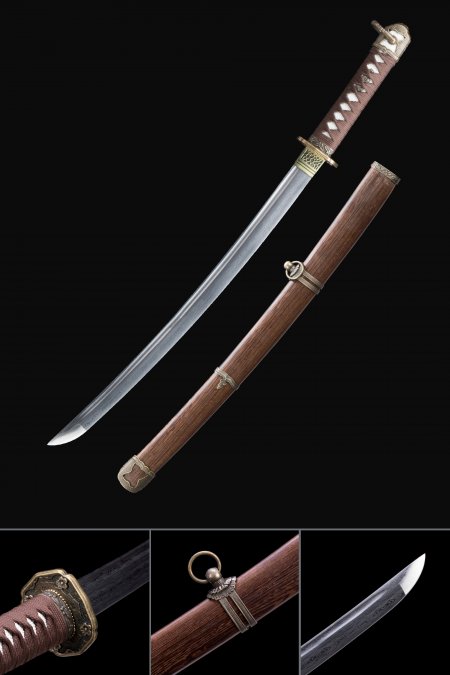
What is the difference between Damascus and T10 steel in this collection?
Updated Mar 2026
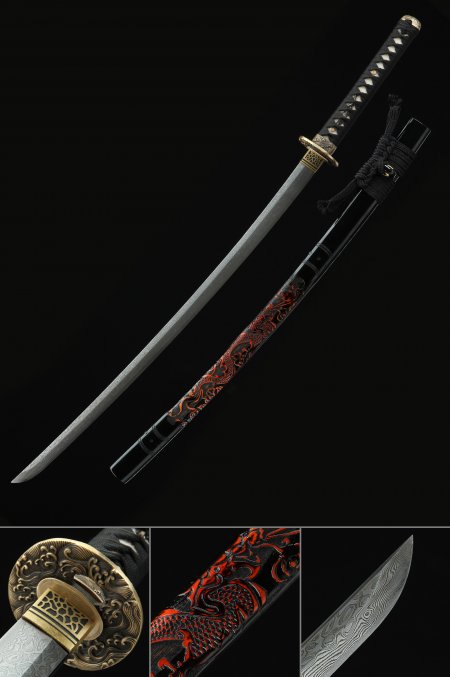
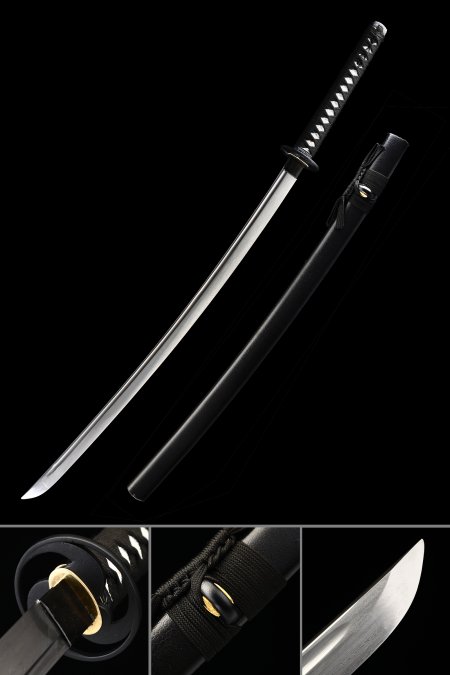
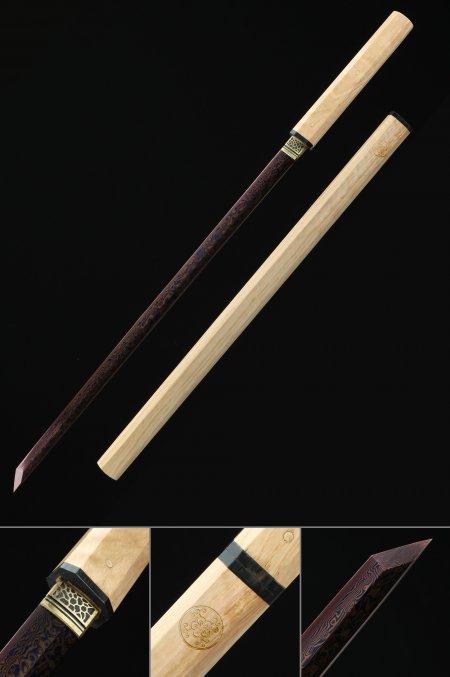
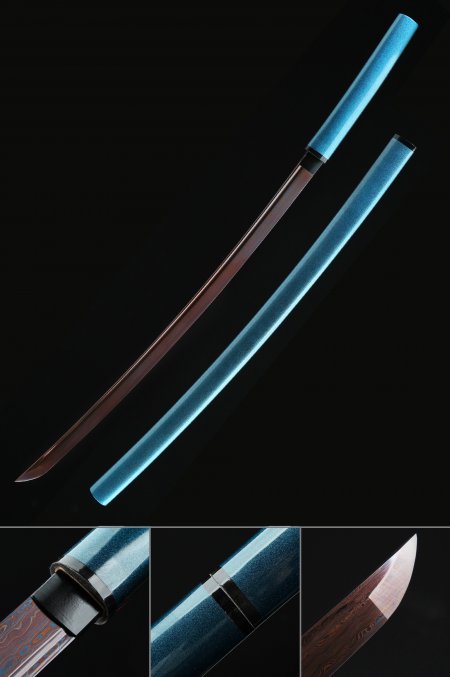
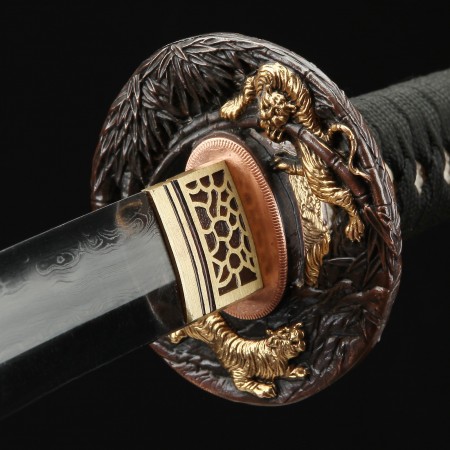
Damascus steel and T10 steel offer two very different visual and structural profiles. T10 is a high-carbon tool steel valued for its ability to take and hold a refined hamon through clay tempering; its surface, when polished, is relatively uniform, with the decorative interest concentrated in that temper line. Damascus steel is produced by forge-welding multiple layers of steel with differing carbon content, then manipulating the billet through folding and twisting before final shaping. The result is a blade surface covered in flowing, organic grain patterns that become fully visible after an acid-etch finish. For collectors who prioritize surface visual complexity across the entire blade, Damascus is the more dramatic choice. Those who prefer the traditional Japanese aesthetic of a mirror-polished blade with a single defining hamon line will generally favor T10. Both steels are full-tang in this collection, and both represent a meaningful step up from standard monosteel carbon blades.