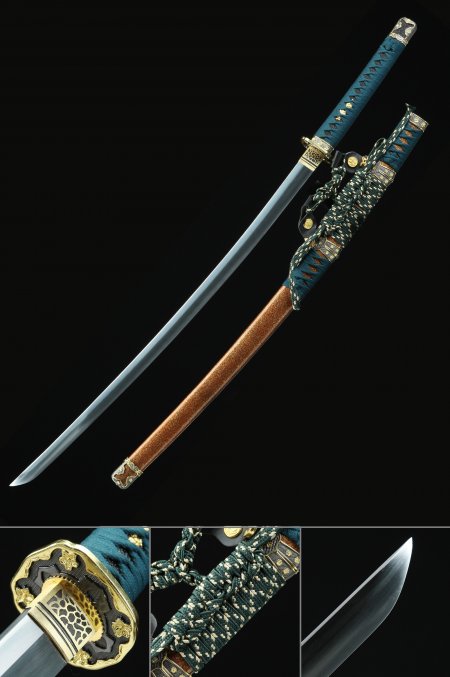
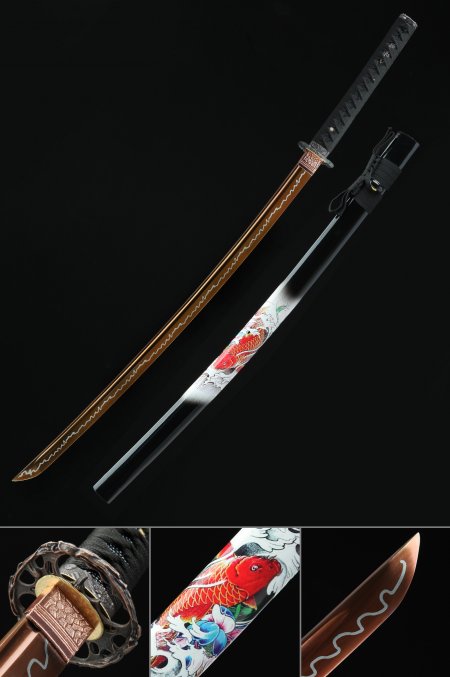
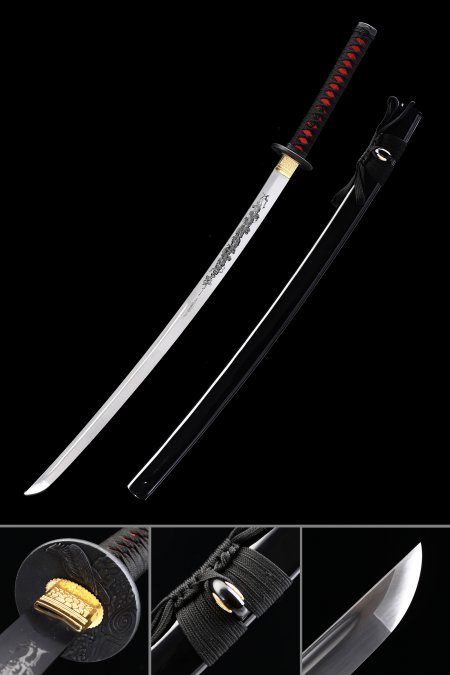
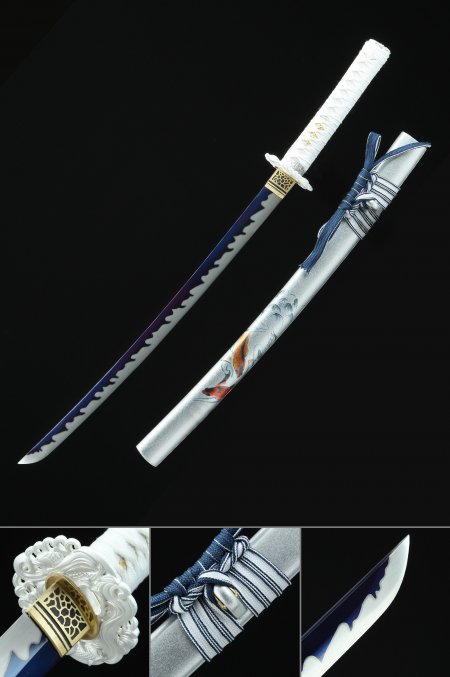
What makes high-manganese steel different from carbon steel in a katana?
Updated Mar 2026
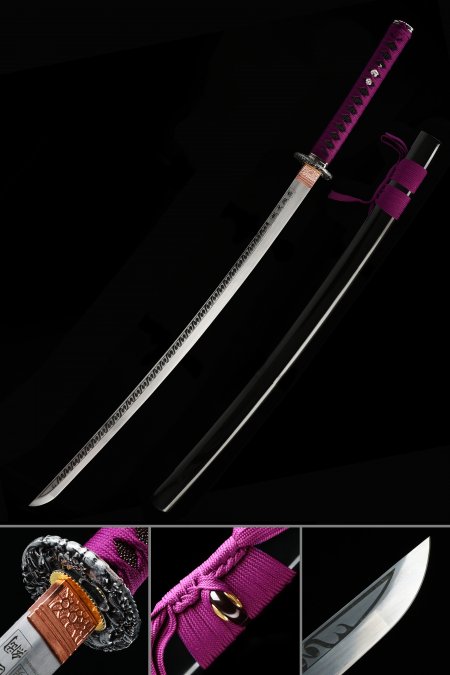
High-manganese steel is an alloy engineered with significantly elevated manganese content compared to conventional carbon steels like 1045 or 1095. This changes the material's behavior in two key ways: it increases toughness — meaning the blade resists fracturing under lateral stress — and it produces a more uniform grain structure across the full length of the blade. Carbon steels, particularly those used in traditional differential hardening, develop a harder edge and softer spine through clay tempering, creating a visible hamon. Manganese alloy blades can be finished to replicate hamon-style patterns, but their properties come from the alloy composition rather than the heat-treatment differential. For display collectibles, this translates to a polished, resilient surface that holds decorative detail well over time without requiring the same maintenance regimen as high-carbon differentially hardened steel.