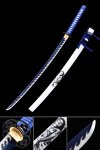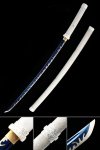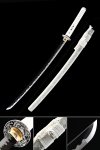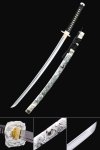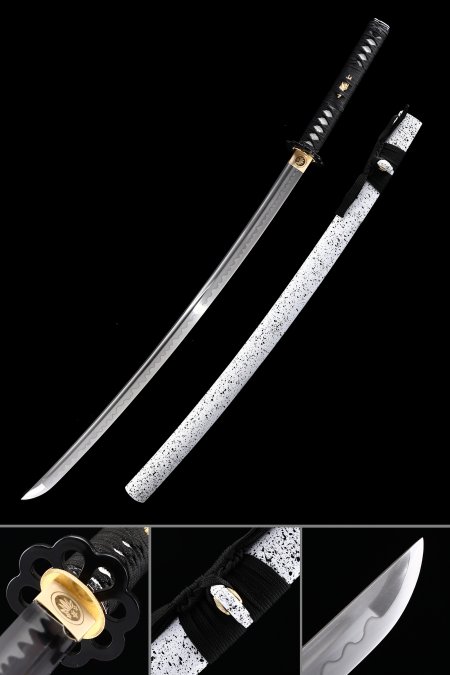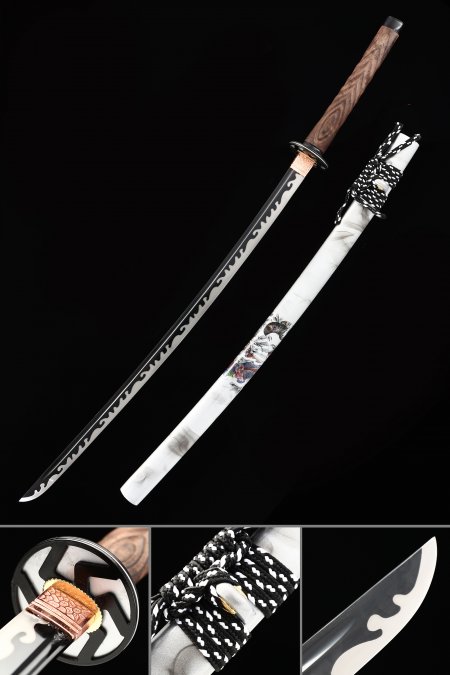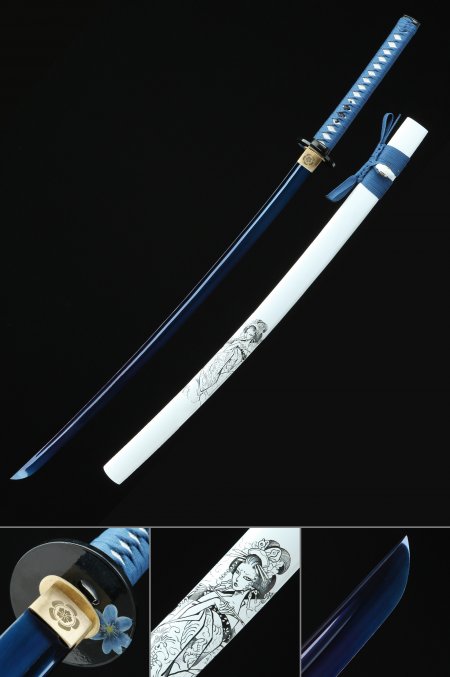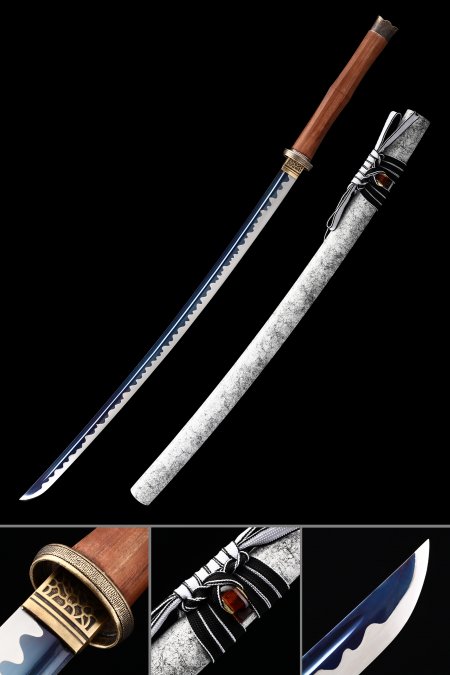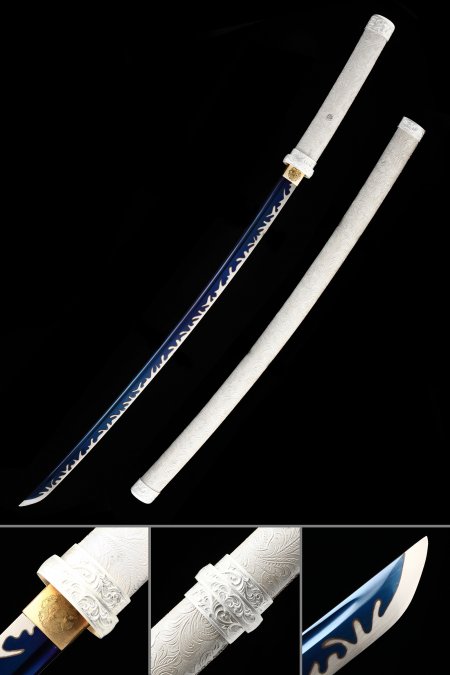
White Manganese Steel Katana

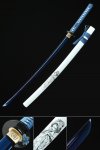
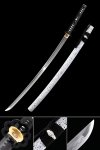
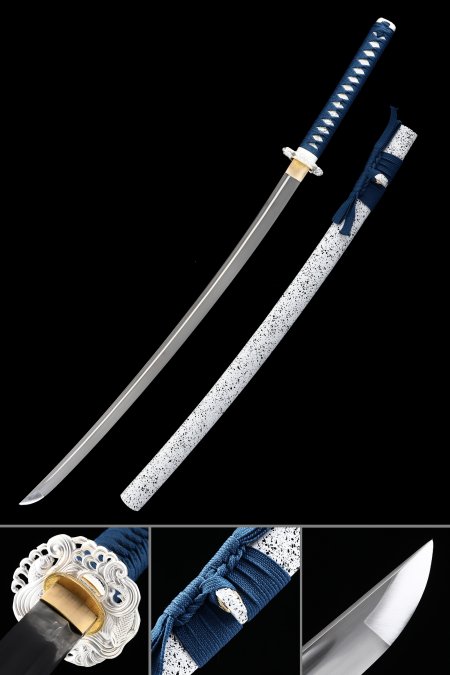
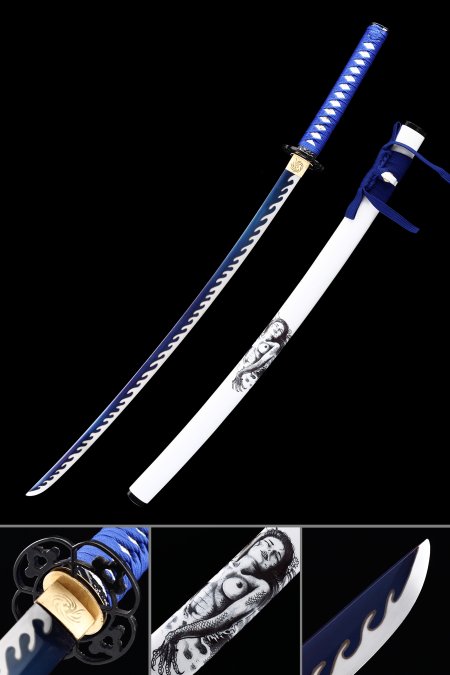
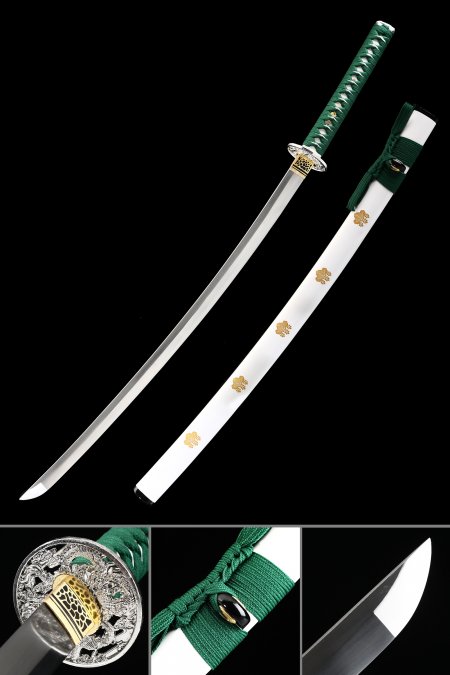
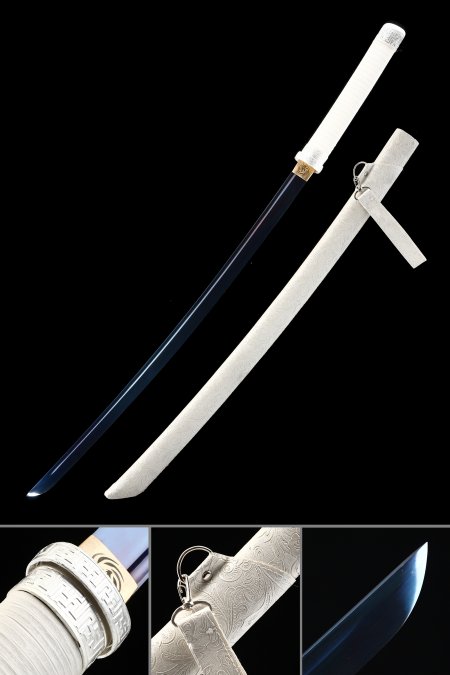
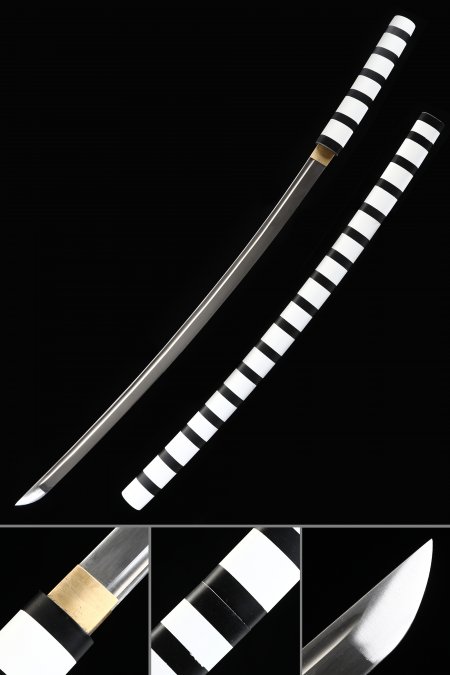
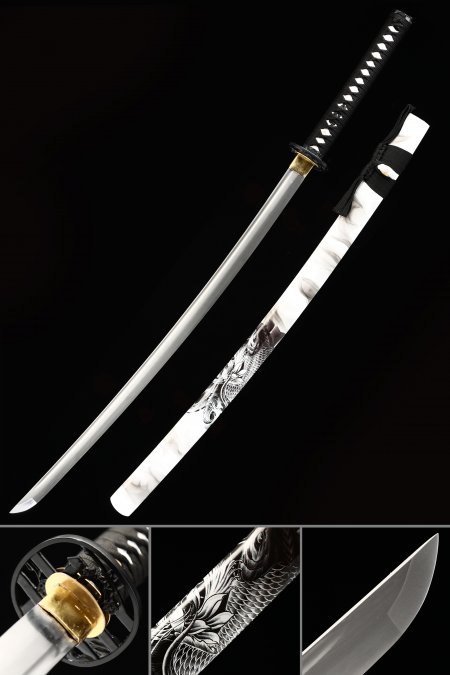
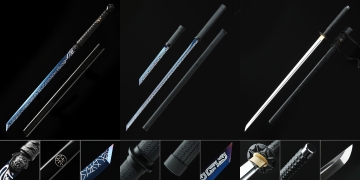
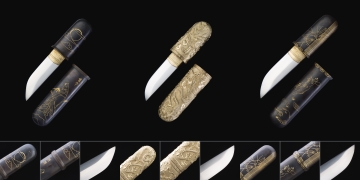
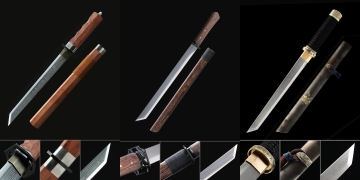
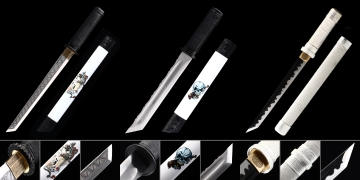
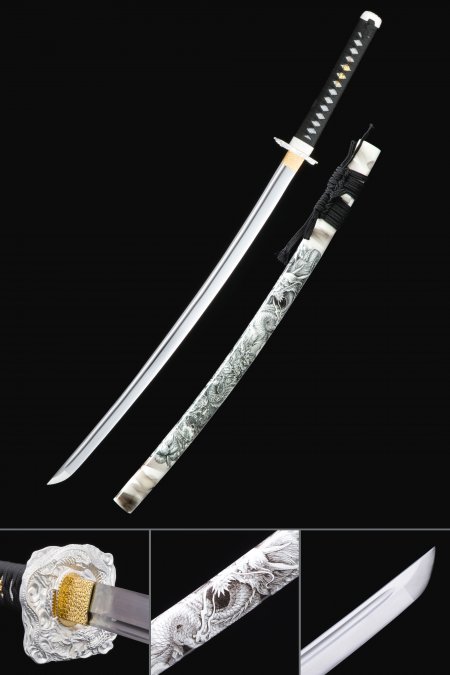
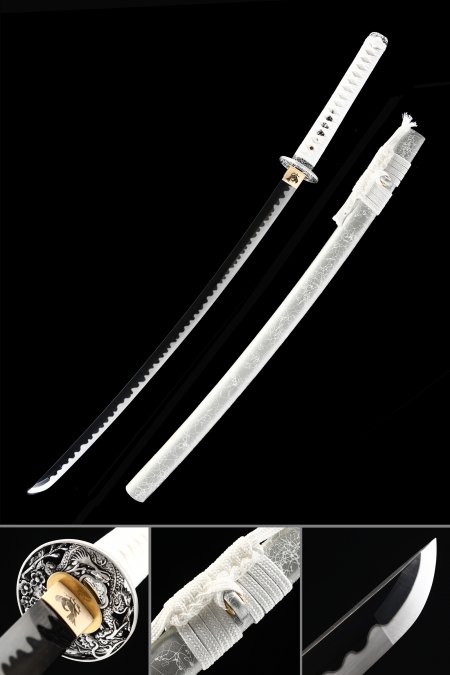
White manganese steel katana pieces in this collection unite striking visual identity with the practical resilience of high-manganese alloy steel — a material prized for its toughness and ability to hold a clean, polished edge through detailed finishing work. Each sword features a distinctive white saya, ranging from glossy lacquer and marble-patterned finishes to hand-painted geisha art and snake-motif tsuba, making every piece a genuinely individual display collectible. Fittings span dragon tsuba, floral copper guards, and carved handles wrapped in colored ito, offering collectors broad aesthetic range within a unified white-themed palette. Enjoy free shipping on all orders and a no-hassle return policy.
Showing 14 Products

Related Collections

Manganese Steel Katana325 items


1039 Reviews

Manganese Steel Sword106 items


242 Reviews

Manganese Steel Aikuchi4 items


7 Reviews

Frequently Asked Questions

What makes high-manganese steel different from carbon steel in a katana?
High-manganese steel is an alloy engineered with significantly elevated manganese content compared to conventional carbon steels like 1045 or 1095. This changes the material's behavior in two key ways: it increases toughness — meaning the blade resists fracturing under lateral stress — and it produces a more uniform grain structure across the full length of the blade. Carbon steels, particularly those used in traditional differential hardening, develop a harder edge and softer spine through clay tempering, creating a visible hamon. Manganese alloy blades can be finished to replicate hamon-style patterns, but their properties come from the alloy composition rather than the heat-treatment differential. For display collectibles, this translates to a polished, resilient surface that holds decorative detail well over time without requiring the same maintenance regimen as high-carbon differentially hardened steel.
How is a white lacquer saya made, and why does it hold up over time?
A white lacquer saya begins with a shaped wood core — typically a lightweight but stable hardwood — which is sealed and then coated with multiple layers of lacquer applied in sequence. Each coat is allowed to cure fully before the next is applied, and craftspeople sand between layers to eliminate surface imperfections and build toward a uniform gloss. The final coats are polished to achieve the characteristic smooth sheen. Quality lacquer forms a hard, moisture-resistant shell that protects the wood core from humidity fluctuations, which are the primary cause of warping and cracking in wooden scabbards. Properly stored away from direct sunlight and extreme temperature swings, a white lacquered saya will maintain its finish for decades. This multi-stage process is what separates a well-made lacquered saya from a simple painted surface, which would chip and peel under normal handling.
What is a shirasaya and why does it have no tsuba?
Shirasaya translates roughly to 'white scabbard' and refers to a plain, unadorned mounting style traditionally used in Japan for sword storage rather than active use. The design uses a simple wood saya and matching wood handle with no hand guard, no ito wrapping, and no decorative fittings. This minimalist form was developed to allow blades to rest in a low-humidity environment without metal fittings that could trap moisture against the steel. In the context of modern display collectibles, shirasaya-mounted pieces are valued precisely for that restraint — the clean lines highlight the blade geometry and the natural grain or lacquer finish of the wood without visual interruption. Collectors who appreciate traditional Japanese aesthetic principles often gravitate toward shirasaya pieces as an expression of wabi-sabi, where absence of ornament is itself a design statement.
How should I store a white-saya katana to prevent discoloration?
White and light-colored saya are more susceptible to visible discoloration than darker finishes, so storage environment matters more than it might for a black or brown piece. Keep the katana horizontally on a display stand away from direct sunlight, which causes lacquer to yellow and PU leather to fade or crack over time. Avoid rooms with high humidity fluctuations — a consistent relative humidity between 45% and 55% is ideal. For lacquer saya, a soft microfiber cloth wipe-down every few weeks removes dust and skin oils that can dull the surface. PU leather saya benefit from occasional application of a non-petroleum leather conditioner to prevent drying and surface cracking. The blade itself should be lightly wiped with a clean cloth and a small amount of mineral oil or choji oil periodically to prevent any surface oxidation, working from the spine outward toward the edge rather than along the length.
Are these white katana good display gifts for sword collectors?
White-themed katana make distinctive display gifts precisely because the aesthetic is less common than black or brown mountings, giving the recipient something visually singular on a wall rack or display stand. For gifting purposes, the most meaningful choices tend to be pieces with detailed hand-applied artwork — hand-painted geisha saya, dragon-motif tsuba, or mermaid-engraved scabbards — since these communicate that genuine artisan time was invested rather than purely mechanical production. For collectors who already own darker-toned pieces, a white-saya katana provides strong visual contrast in a paired or multi-piece display arrangement. Shirasaya-style pieces suit collectors with more traditional tastes, while blue-blade variants with white marble saya appeal to those who prefer color contrast as the central design element. Full-tang construction across the collection also means these are structurally sound display pieces, not lightweight decorative replicas with hollow handles.

Customer Reviews