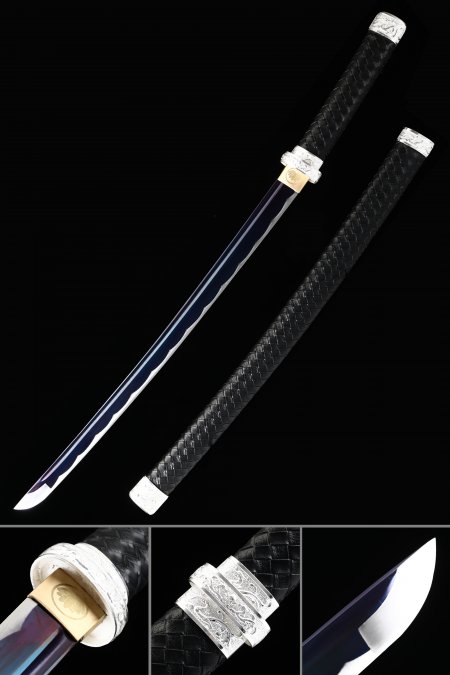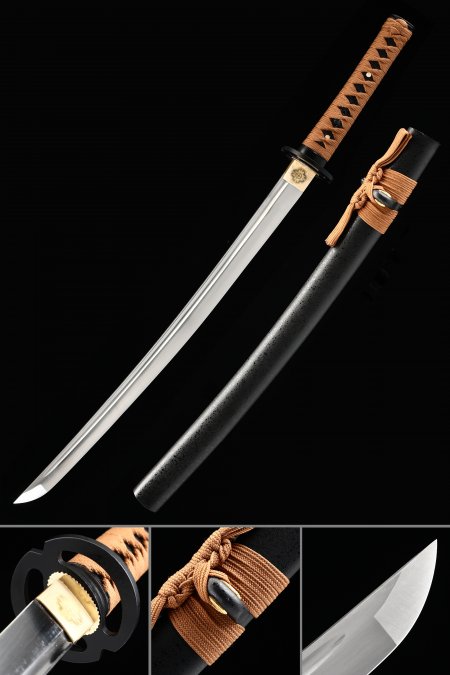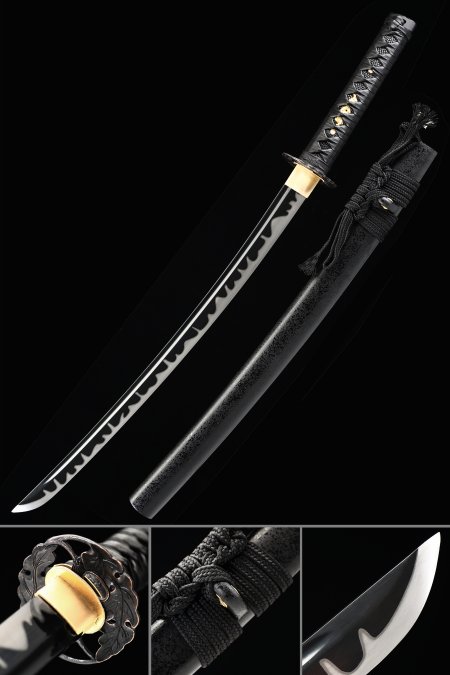
Black Manganese Steel Wakizashi

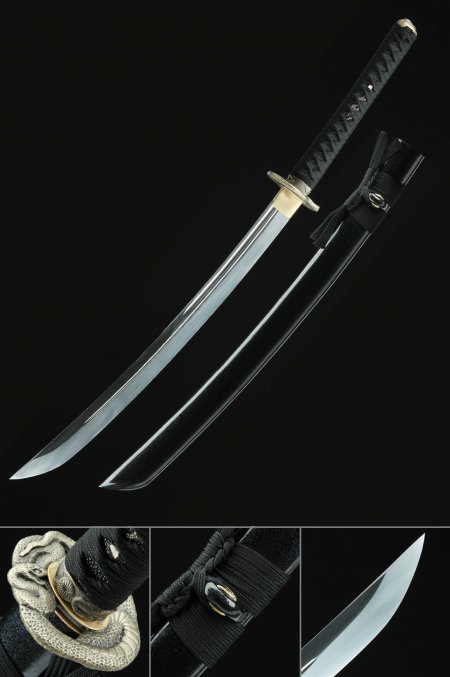
Black Manganese Steel Wakizashi from TrueKatana are crafted for collectors who demand authenticity in every detail - from the dark, heat-treated blade finish to the hand-wrapped ito and lacquered hardwood saya. Each piece is individually assembled by skilled artisans, pairing high-manganese steel construction with traditional Japanese mountings that stand up to close inspection. Enjoy free shipping on your order and hassle-free returns, so you can collect with complete confidence.
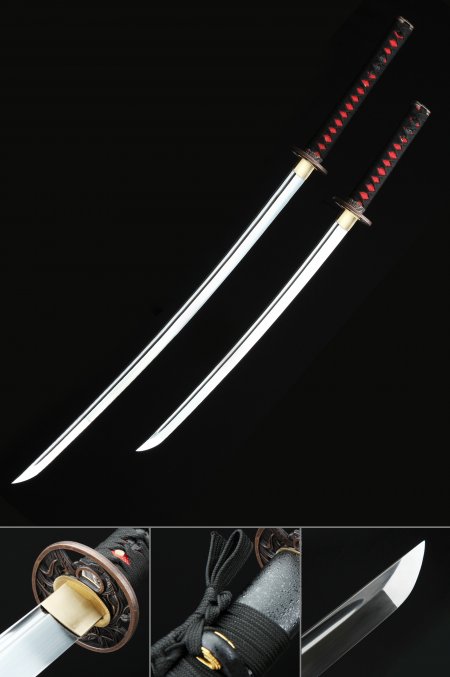
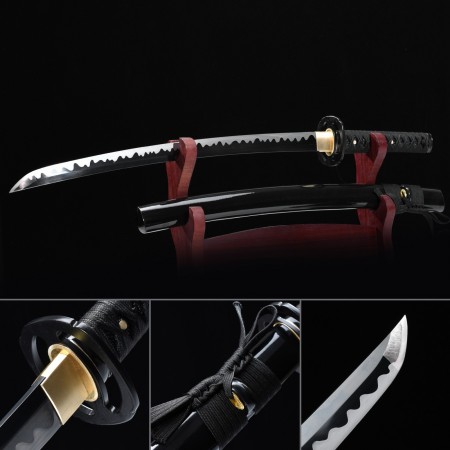
Showing 8 Products

Related Collections

Frequently Asked Questions

What makes manganese steel a good choice for a collectible wakizashi?
Manganese steel - typically composed of high-carbon steel alloyed with manganese at around 0.6-1.2% - offers a balance of toughness and surface stability that makes it particularly well-suited for display-grade collectibles. Unlike mild decorative steels, it resists deformation under handling stress and holds its geometry over time. For a wakizashi intended for display and occasional handling, this means the blade retains its profile and finish without the micro-chipping risk associated with harder but more brittle high-carbon alternatives. The steel also responds well to controlled darkening processes, which is why black-finished blades in this category achieve such consistent, deep coloration across the entire blade surface.
How does a black blade wakizashi differ from a standard polished one?
The distinction goes beyond aesthetics. A standard polished wakizashi blade is brought to a mirror or satin finish through progressive hand-polishing, which highlights the natural grain of the steel and makes the hamon (temper line) luminous and highly visible. A black-blade wakizashi, by contrast, undergoes a controlled oxidation or heat-coloring process that deposits a stable dark oxide layer across the surface. This finish mutes the reflectivity of the steel and creates a more subdued, dramatic appearance where the hamon is visible but not dominant. For collectors drawn to a cohesive, all-dark aesthetic - black saya, dark ito, darkened fittings - the black blade provides visual unity that a bright polished blade would disrupt.
What should I know about displaying a wakizashi long-term?
Long-term display care for a manganese steel wakizashi centers on three factors: humidity control, light exposure, and periodic surface maintenance. Ideally, the blade should be stored in an environment with relative humidity between 40-55%. Sustained humidity above 60% accelerates oxidation on exposed steel surfaces, particularly near the habaki (blade collar) where bare metal meets the saya opening. Ultraviolet light from direct sunlight can degrade lacquer finishes on the saya over time, causing discoloration or cracking. Regarding maintenance, lightly applying a thin coat of choji oil (or a neutral mineral oil) to the blade every few months prevents surface rust without affecting the black finish. The ito wrapping should be kept dry; if the piece is handled frequently, white cotton gloves prevent oils from the skin from contacting the cord fibers and causing premature darkening.
Is a daisho set worth considering over a single wakizashi?
For collectors whose goal is period-accurate presentation, a matched daisho set - katana and wakizashi in unified koshirae - carries significantly more display authority than two individually sourced pieces. During the Edo period, a samurai's daisho was expected to show visual consistency across the tsuba, ito, saya, and fuchi-kashira fittings, communicating that the set was commissioned or assembled as a deliberate unit. A modern daisho set replicates that coherence: matching floral alloy tsuba, identical lacquer work, and complementary ito colors ensure the pair reads as a complete object rather than two separate swords displayed adjacently. If cabinet or wall space is the constraint, a single wakizashi is the more practical choice; if the display focal point calls for a statement, the daisho format is difficult to surpass.
How is this collection different from the gold wakizashi range?
The core steel construction is consistent across both collections - high-manganese steel, full-tang assembly, hand-fitted koshirae - but the finishing philosophy differs substantially. Black manganese steel wakizashi are built around a monochromatic or high-contrast dark aesthetic: darkened blades, lacquered black saya, and fittings in alloy, silver, or selectively gilded accents. The overall impression is restrained and dramatic. The Gold Manganese Steel Wakizashi collection takes the opposite approach, pairing the same blade geometry with gilded tsuba, gold-tone menuki, and warmer koshirae materials that evoke ceremonial court presentation. Collectors often choose between them based on the existing color palette of their display space rather than differences in underlying quality.

Customer Reviews

Tyler Gworek Virginia, United States

I needed a cheap wakizashi that looked good from a distance.
I paid $135, and I got exactly what I wanted.
Under close inspection, it will not impress; but if you need it for some kind of costume, or you want it mounted beyond someone's reach, it works great.
-
It would NOT be good for a cosplay at a public comic convention though, because the blade is real metal. For those, you need wood or plastic.

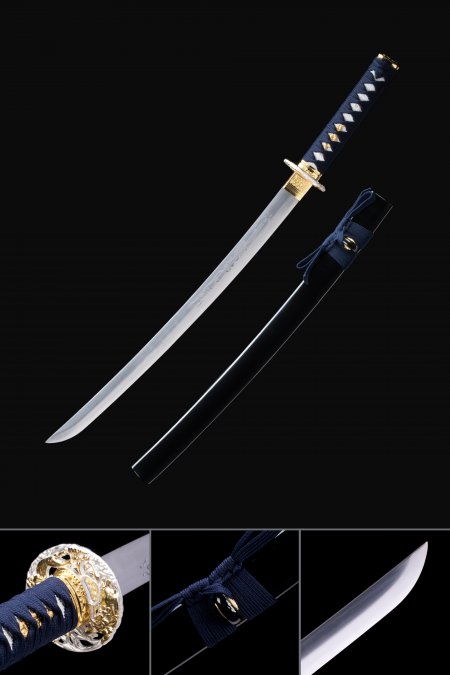
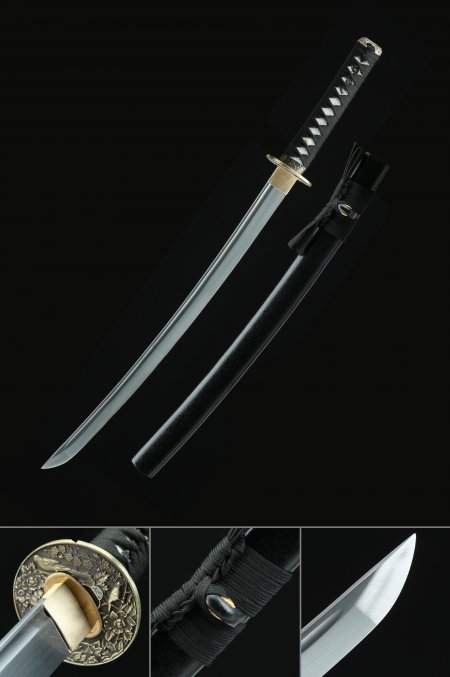
Manganese  Steel Wakizashi Sword With Black Piano Lacquer Saya And Floral Bird Tsuba Manganese Steel Wakizashi Sword With Black Piano Lacquer Saya And Floral Bird Tsuba