What makes manganese steel a good choice for an aikuchi collectible?
Manganese steel is an alloy typically composed of iron with a manganese content ranging from around 1% to 13%, depending on the application. For collectible blades, it occupies a practical middle ground: tougher and more impact-resistant than many high-carbon steels, and meaningfully less prone to surface oxidation during normal display conditions. This makes it especially suitable for the aikuchi format, where the blade sits flush inside a fitted saya and may be handled more frequently than a wall-mounted sword. The alloy also responds well to polishing and surface finishing, allowing craftsmen to achieve the clean, mirror-adjacent appearance that suits the aikuchi's minimalist aesthetic. For collectors who want a piece that holds up to regular inspection and occasional display rotation without demanding intensive maintenance, manganese steel is a practical and visually rewarding choice.
How does an aikuchi differ from a tanto or a wakizashi?
All three are short-to-medium Japanese blade forms, but they differ meaningfully in design and historical context. A tanto is defined primarily by its blade length — typically under 12 inches — and usually features a tsuba (hand guard) as part of its mountings. A wakizashi is longer, generally between 12 and 24 inches, and also typically includes a tsuba. The aikuchi is distinguished not by length but by its mounting style: it is assembled entirely without a tsuba, so the handle fits flush against the scabbard mouth with no guard between them. This tsuba-absent construction was historically associated with civilian dress wear and court contexts where a visible guard was considered unnecessary or aesthetically undesirable. Modern collectible aikuchi preserve this defining characteristic, making the guardless flush-mount silhouette the primary identifier regardless of blade length.
Are the engraved copper saya on these aikuchi handmade?
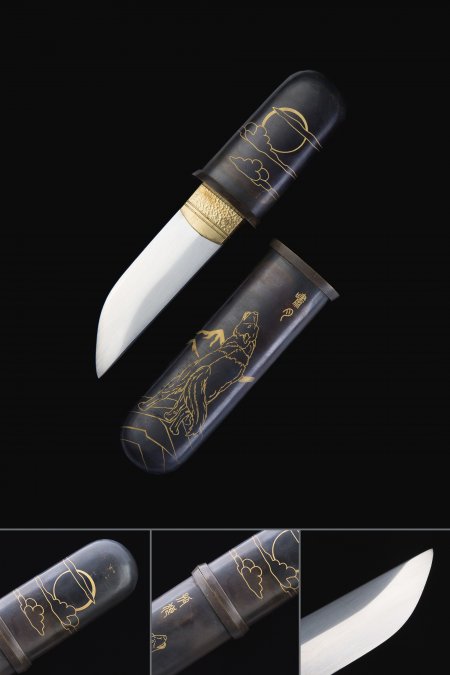
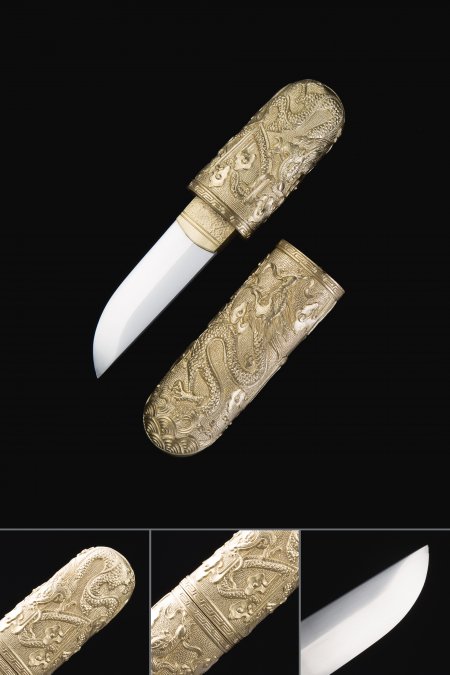
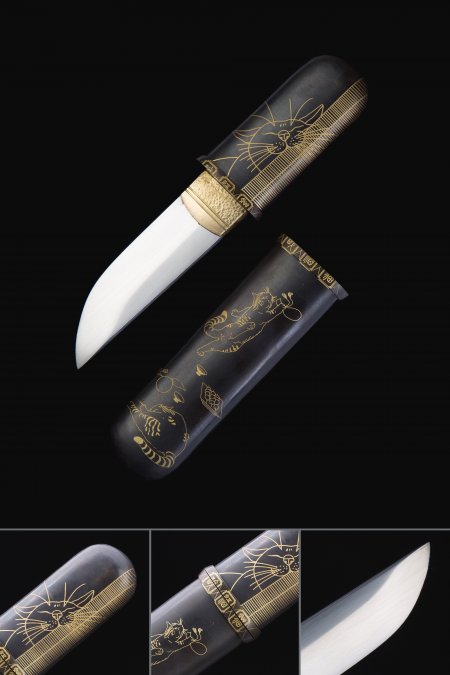
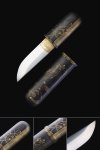
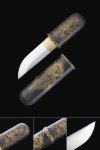
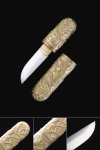
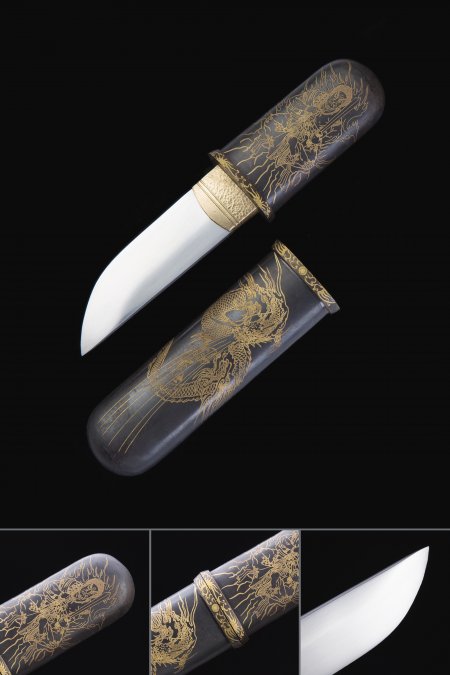
Yes. The copper saya featured across this collection — including dragon and wolf motif designs — are crafted through a combination of casting and hand-finishing techniques. The engraved or relief patterns are not printed or applied as decals; they are worked into the metal itself, which gives them dimensional depth that reads differently depending on lighting angle. This is a meaningful distinction for collectors evaluating display quality. Copper as a saya material also develops a subtle patina over time if left uncoated, which many collectors find adds character. If you prefer to maintain the original finish, a light application of Renaissance Wax or a comparable metal protectant applied every six to twelve months will preserve the brightness of the copper and slow the natural oxidation process.
How should I store a manganese steel aikuchi long-term?
Long-term storage for a collectible aikuchi involves three primary considerations: moisture, light, and pressure. Keep the blade seated in its saya at all times outside of inspection — the scabbard protects the blade geometry and keeps ambient humidity from settling on the steel. Apply a thin, even coat of choji oil or food-grade mineral oil to the blade every three to four months, or more frequently if you live in a coastal or high-humidity climate. Store the piece horizontally on a padded rack rather than standing it vertically for extended periods, as vertical storage can place uneven stress on the saya's interior fit over time. Avoid placing the aikuchi in airtight display cases without a small silica gel packet, since trapped humidity is more damaging than ambient air. Direct sunlight should also be avoided, as UV exposure will gradually fade lacquered finishes and dull the color of copper fittings.
Is an aikuchi a good gift for a Japanese sword enthusiast?
For a collector who already owns longer blades — katana, wakizashi, or nodachi — an aikuchi makes a genuinely interesting addition because it represents a distinct mounting tradition rather than simply another blade of the same type. The guardless design, the flush saya fit, and the historically specific context of aikuchi production give it real conversation value and display contrast when placed alongside a more conventional daisho arrangement. Within this collection specifically, the engraved copper and lacquered saya options give gift buyers a meaningful aesthetic choice: bold metallic dragon and wolf designs suit collectors who prefer dramatic display pieces, while cleaner lacquered finishes appeal to those with more restrained presentation preferences. The full-tang construction also signals authentic craftsmanship to knowledgeable recipients, distinguishing these pieces from decorative-only replicas.