What makes an aikuchi different from a regular tanto?
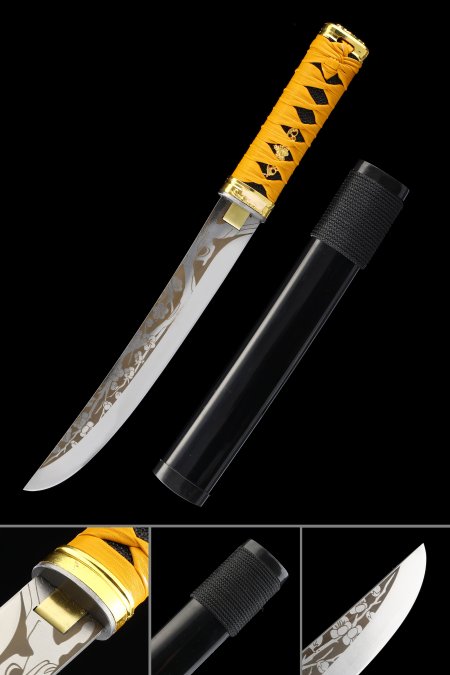
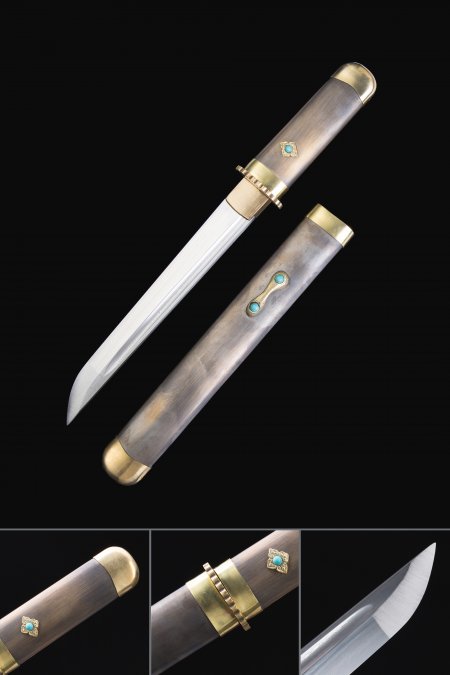
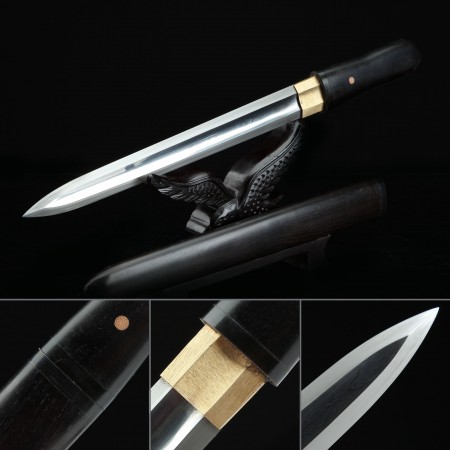
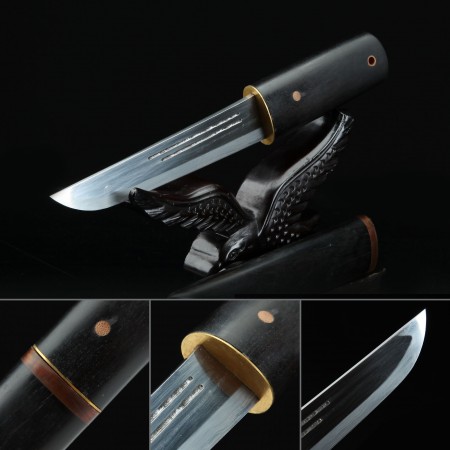
The defining feature of an aikuchi is the complete absence of a tsuba, or hand guard. On a standard tanto, the tsuba serves as a visual and structural dividing point between blade and handle. The aikuchi removes this element entirely, creating a seamless transition from saya to tsuka. This guardless construction was historically associated with formal court attire in Japan, where displaying a tsuba was considered inappropriate in certain high-status civilian settings. For collectors, the practical effect is a blade that presents as a single unified object when sheathed - the saya, habaki, and handle read as one continuous form, making the quality of each fitting and the finish of the saya far more visually prominent than on a guarded blade.
How is Damascus steel different from high-carbon steel in these pieces?
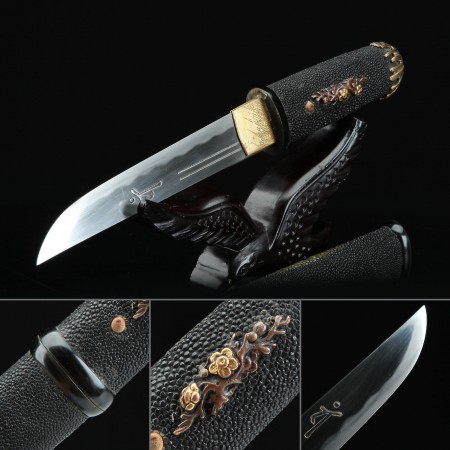
Damascus steel is produced by folding and forge-welding multiple layers of steel together, then etching the finished blade to reveal the contrasting layer patterns on the surface. The result is a blade with a visually unique, flowing grain that differs from piece to piece - no two Damascus blades are identical. High-carbon or chromium-alloy steel blades, by contrast, offer a more uniform, polished surface that serves as a cleaner canvas for engraved decorative work like cherry blossoms or cranes. From a collector's standpoint, Damascus pieces emphasize the steel itself as the primary decorative element, while engraved chromium-steel pieces place greater emphasis on skilled surface artistry. Neither is superior - the choice reflects your aesthetic preferences as a collector.
What should I know about caring for a lacquered hardwood saya?
Lacquered hardwood saya are durable but sensitive to a few environmental conditions. Avoid prolonged exposure to direct sunlight, which can cause the lacquer to yellow, crack, or fade unevenly over time. Extreme humidity fluctuations can cause the underlying wood to expand and contract, which may eventually loosen fittings or stress the lacquer surface. Store the piece in a stable indoor environment, ideally in a display case or sword bag that buffers against humidity changes. For cleaning, a soft dry cloth is sufficient for the saya exterior - avoid chemical cleaners or polishes not specifically formulated for lacquerwork. If the saya develops minor surface scratches, a specialist in Japanese lacquer restoration can address these without disturbing the surrounding finish.
Are these aikuchi good display pieces for a themed Japanese collection?
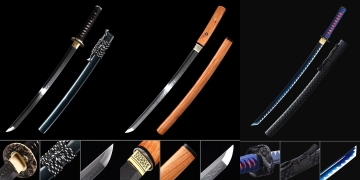
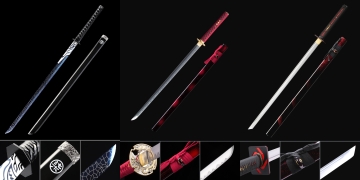
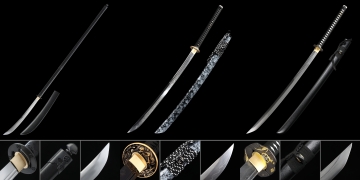
Aikuchi pair exceptionally well with other short-blade forms in a themed display. Because they lack a tsuba, they create strong visual contrast alongside guarded tanto or wakizashi pieces, highlighting the design differences between formal court blades and martial configurations. A display combining an aikuchi with one or two standard tanto - varying the saya finishes between lacquered black, natural hardwood, and ray-skin textures - creates a visually dynamic arrangement without visual repetition. Gold and bronze fitting accents across multiple pieces can serve as a unifying design thread. For collectors focused specifically on short Japanese blades, an aikuchi is often considered an essential centerpiece precisely because its restrained, guardless form embodies a distinctly different chapter of Japanese blade history.
What do gold habaki and decorative fittings indicate about quality?
The habaki is the collar that sits at the base of the blade and secures it within the saya. On production-grade pieces, habaki are often plain steel or simple brass. On artisan-crafted aikuchi, a gold-finished or gold-plated habaki signals that the maker has invested attention in the fittings as an extension of the blade's overall aesthetic - not merely as a functional component. Similarly, turquoise inlay, bronze collars, and hand-carved saya details indicate that multiple craftspeople with distinct skills contributed to the finished piece. When evaluating an aikuchi for your collection, examining the fittings alongside the blade is important: precise habaki fit, clean engraving lines, and even lacquer application are reliable indicators of the overall construction standard throughout the piece.