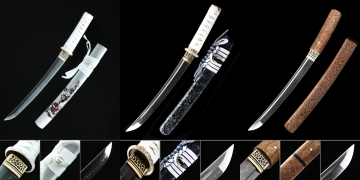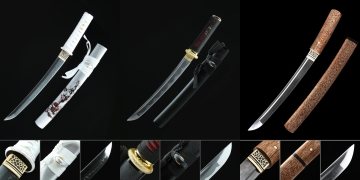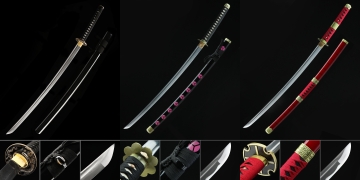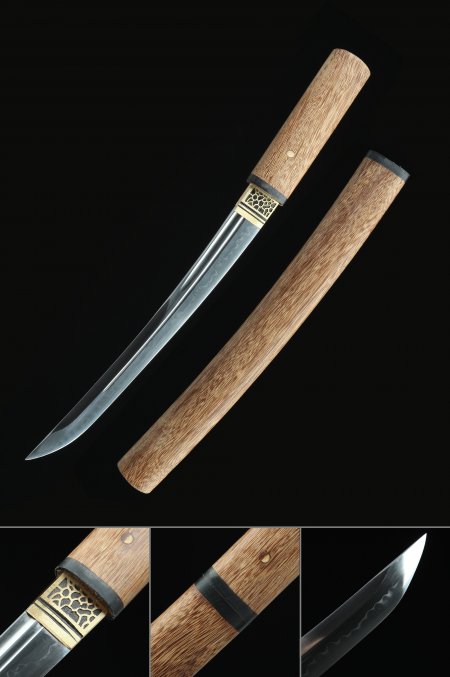
Clay Tempered Aikuchi

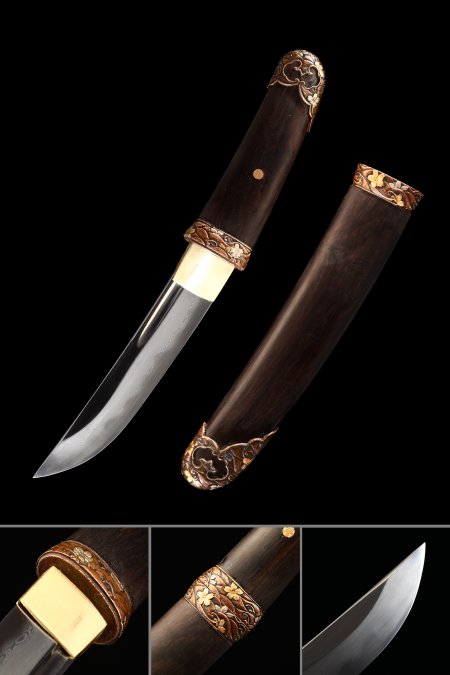
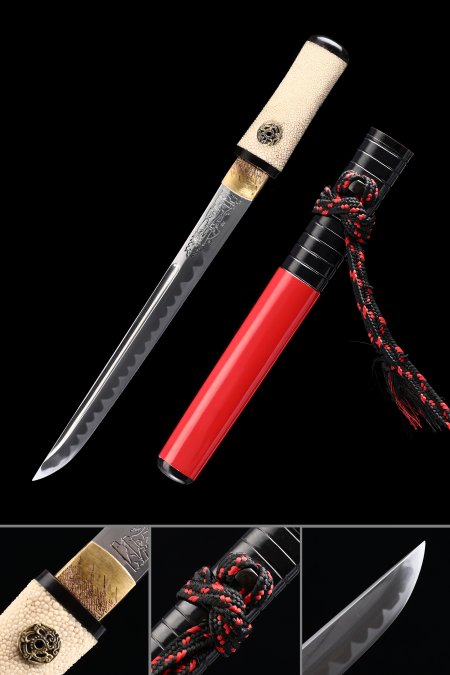
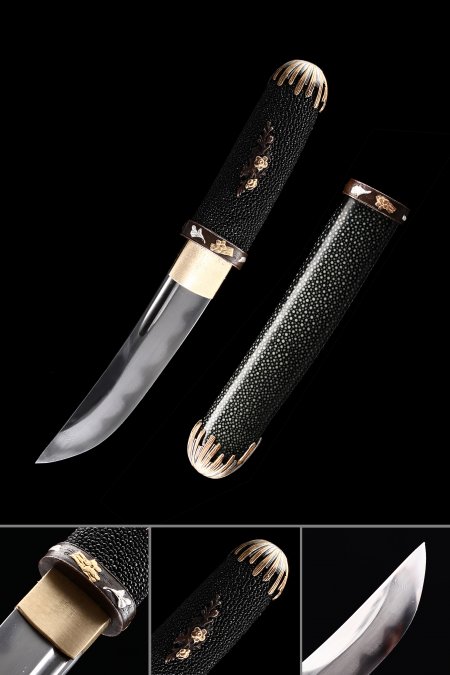
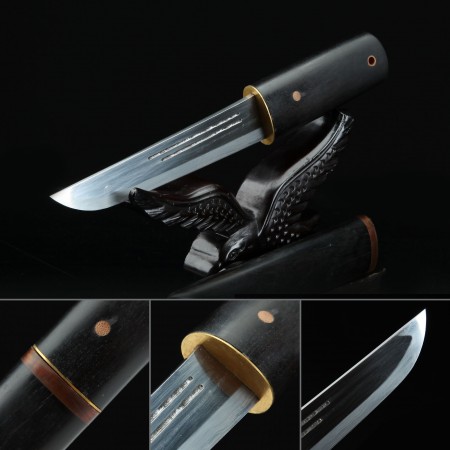
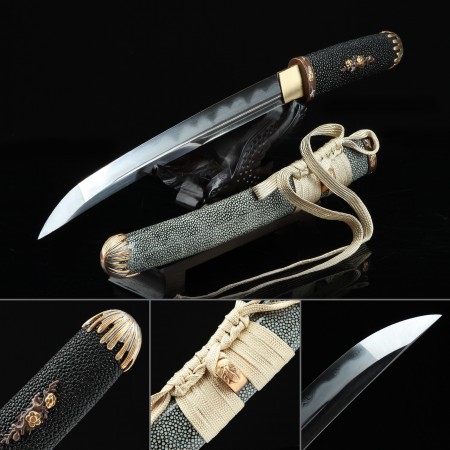
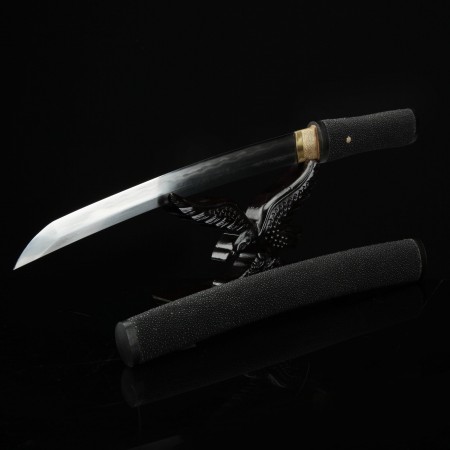
Clay tempered aikuchi tanto represent one of the most refined expressions of Japanese blade craft - a guardless design that places every detail of the fitting and steel front and center. Each piece in this collection is hand-forged, full-tang, and built with genuine materials including real rayskin, lacquered hardwood saya, and carefully selected fittings. Whether you're adding to a serious collection or searching for a distinctive gift, these aikuchi are made to impress. Enjoy free standard shipping on every order, plus hassle-free returns for your peace of mind.

Showing 7 Products

Related Collections

Japanese Tanto121 items


546 Reviews

Cool Ninja Sword122 items


624 Reviews

1060 Clay Tempered Katana32 items


175 Reviews

Clay Tempered Ninja Sword90 items


297 Reviews

Frequently Asked Questions

What makes aikuchi tanto different from standard tanto?
The defining characteristic of an aikuchi tanto is the complete absence of a tsuba — the hand guard found on most Japanese blades. In a standard tanto configuration, the tsuba serves as both a visual and structural dividing point between blade and handle. The aikuchi removes this element entirely, creating a seamless, uninterrupted silhouette from tip to pommel. This places far greater visual emphasis on the quality of the handle material, the fit of the habaki, and the polish of the blade itself. Historically, aikuchi were associated with formal dress contexts in Japanese culture, where understated elegance was preferred over ornamental hardware. For collectors, this means every detail of an aikuchi tanto must stand on its own merit — there is nowhere for inconsistent craftsmanship to hide.
How is clay tempering different from standard heat treatment?
Standard heat treatment applies uniform temperature across the entire blade, producing consistent hardness from edge to spine. Clay tempering — known in Japanese as tsuchioki — changes this by coating the spine and thicker areas of the blade with an insulating clay mixture before the quench. When the blade is plunged into water or oil, the uncoated edge cools rapidly and hardens to a higher degree, while the clay-insulated spine cools more slowly and remains comparatively tough. This differential results in the hamon, the visible temper line that marks where the two hardness zones meet. On T10 high-carbon steel, the hamon tends to appear with strong contrast and fine detail. On Damascus or pattern-welded steel, the interaction between the layered material and the clay line produces a more complex visual result. The hamon on a properly clay tempered blade is a genuine metallurgical feature, not a surface finish.
Is real rayskin worth it on a display tanto?
Real same — the Japanese term for rayskin, sourced from ray species traditionally used in blade fitting — offers several qualities that synthetic or imitation materials cannot fully replicate. The surface texture of genuine rayskin consists of small, densely packed calcified nodules that create a naturally grippy, visually distinctive surface. Over time, rayskin develops a subtle patina that adds character rather than degrading the appearance. On a display tanto, this material signals authenticity to other collectors and contributes to the overall integrity of the piece. It is also more durable than most fabric wraps or synthetic alternatives under long-term storage conditions. For a collection intended to hold its value and visual quality over years, genuine rayskin on both the handle and saya is a meaningful distinction.
How should I store a clay tempered tanto for long-term display?
Clay tempered high-carbon blades require more attentive storage than stainless alternatives. The primary concern is moisture — high-carbon steel will develop surface oxidation if exposed to humidity without a protective oil coat. Before placing a tanto in its saya for display or storage, apply a light coat of choji oil or a suitable mineral oil to the blade using a clean, lint-free cloth. The saya should be made of wood (as is standard in this collection) rather than synthetic materials, since wood allows minor humidity fluctuation without trapping moisture against the blade. Avoid storing in environments with wide temperature swings or direct sunlight, which can affect both the lacquer on the saya and the blade's surface. A monthly inspection and re-oiling schedule is sufficient for most indoor display conditions.
How does Damascus steel differ from T10 in an aikuchi tanto?
T10 and Damascus (pattern-welded) steel are distinct in both composition and visual character. T10 is a high-carbon tool steel with a tungsten addition that improves wear resistance and allows for a particularly well-defined hamon when clay tempered. It produces a blade with a refined, consistent surface and a temper line that collectors often find more legible and classically Japanese in appearance. Damascus steel in this context refers to pattern-welded construction — multiple layers of steel folded and forge-welded together, then etched to reveal the layered grain. The result is a visually complex surface where no two blades look identical. Damascus aikuchi tanto tend to appeal to collectors drawn to visible forging artistry, while T10 pieces are often preferred by those who value the purity and historical reference of a clean hamon on a single-steel blade. Both are legitimate collectible choices with different aesthetic priorities.

Customer Reviews