What defines an aikuchi compared to a standard tanto?
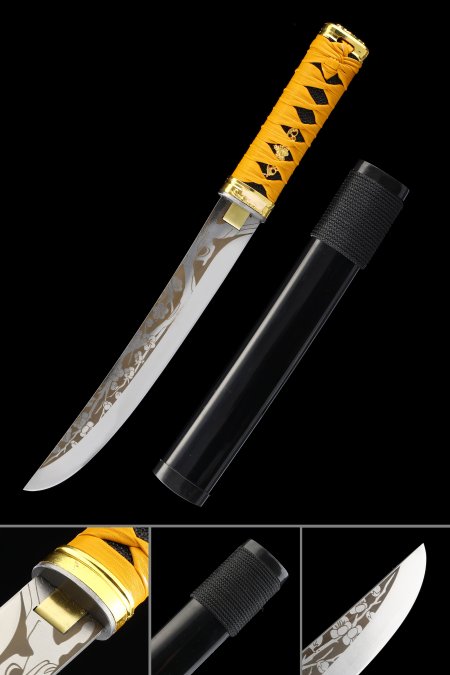
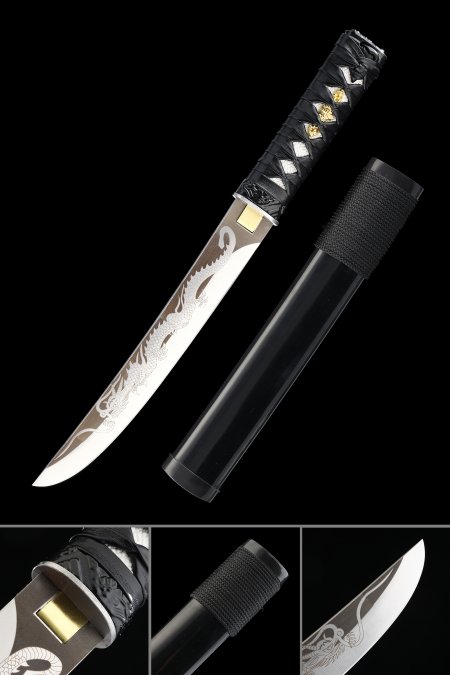
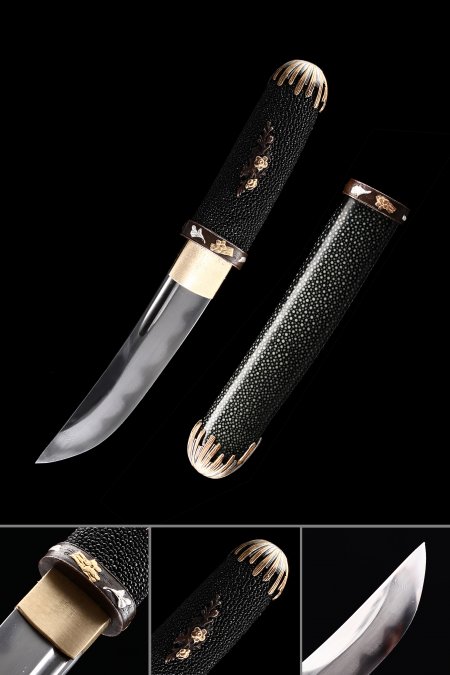
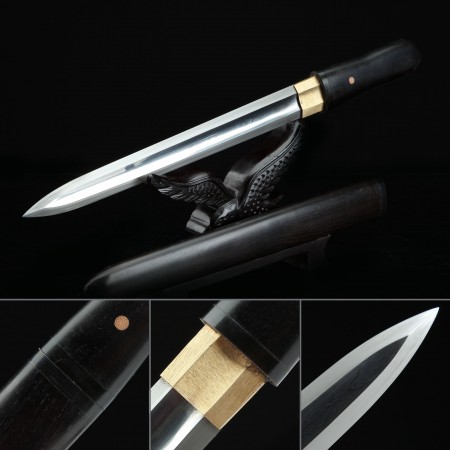
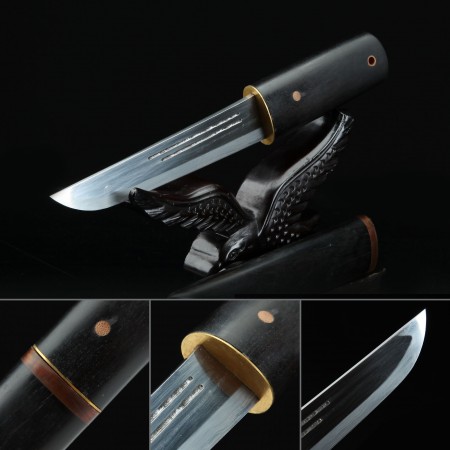
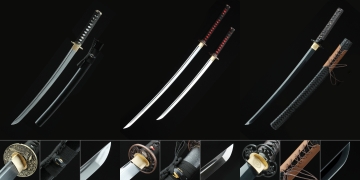
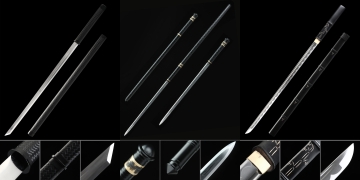
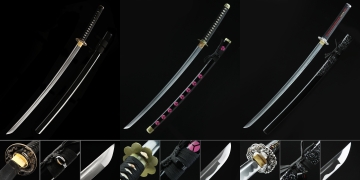
The defining characteristic of an aikuchi is the absence of a tsuba — the hand guard found on virtually every other category of Japanese sword. In a standard tanto, a small tsuba sits between the handle and the blade collar, providing a visual and structural dividing line. The aikuchi eliminates this element entirely, so the tsuka (handle) transitions directly into the saya (sheath) with a flush, uninterrupted profile. Historically, this design was favored by Japanese nobility and attendants in formal indoor settings where a protruding guard would have been considered cumbersome or visually heavy. For collectors, the aikuchi’s clean silhouette puts greater emphasis on the quality of the koiguchi fit, habaki collar, and handle wrapping, making it a rewarding form to study and display.
Why are so many aikuchi in this collection made with Damascus steel?
Damascus steel is a natural pairing with the aikuchi format because the guardless design leaves more of the blade and fittings exposed, giving the viewer an unobstructed look at surface detail. Damascus, or pattern-welded steel, is produced by folding and forge-welding alternating layers of high-carbon and low-carbon steel — often dozens or even hundreds of layers — then etching the finished blade in acid to reveal the contrasting grain. On a tanto-length aikuchi, the shorter blade means the fold pattern can be appreciated at close range, almost like a piece of metalwork art. The layered construction also gives each blade a one-of-a-kind appearance; no two Damascus billets produce identical patterns, which adds collectible value.
How should I maintain the black lacquer saya on my aikuchi?
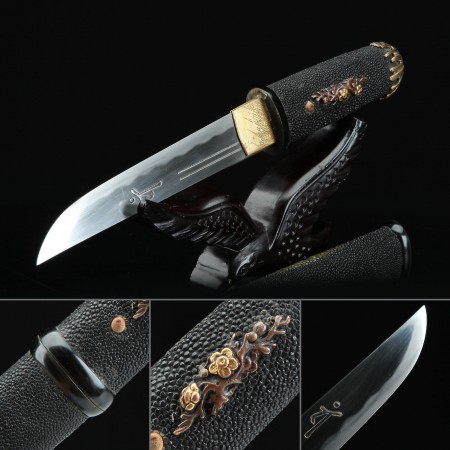
Black lacquer saya are durable but benefit from a few simple habits. Avoid handling the sheath with bare, oily fingers more than necessary — fingerprint oils can leave dull spots on high-gloss lacquer over time. Wipe the saya periodically with a soft, lint-free microfiber cloth. If dust accumulates in textured areas, a very lightly dampened cloth works well; just dry it immediately afterward. Store the aikuchi horizontally on a felt-lined stand and away from direct sunlight or heating vents, since prolonged UV exposure and low humidity can cause lacquer to crack or fade. For rayskin (samegawa) wrapped saya, the same principles apply, though you can use a soft brush to gently clean between the nodules of the ray skin.
What makes gold fittings a popular accent on black aikuchi?
Gold-toned fittings — typically the habaki blade collar, fuchi sleeve, and kashira pommel cap — serve both an aesthetic and a practical role on black aikuchi. Visually, the warm metallic accent creates a deliberate contrast against the monochrome black palette, drawing the eye to structural joints that represent some of the most skilled handwork on the entire piece. The habaki, for instance, must be precisely fitted to the blade’s machi (notch) so it locks securely inside the saya. Historically, gold or gilt copper fittings signaled the owner’s status, and this tradition carries into modern collectibles. From a care standpoint, gold-finished brass or copper alloy resists tarnish far better than bare steel fittings, meaning your display piece retains its visual impact with minimal maintenance.
Is a black aikuchi a good gift for someone new to Japanese sword collecting?
An aikuchi is actually one of the most approachable entry points into Japanese sword collecting. Its compact tanto length makes it easy to display on a desk, bookshelf, or small wall-mounted stand without requiring the dedicated space that a full katana demands. The all-black finish gives it a modern, versatile look that fits comfortably into contemporary home decor. Beyond aesthetics, the guardless design naturally invites the new collector to learn about components like the habaki, koiguchi, and tsuka construction — foundational knowledge that transfers directly to evaluating larger swords later on. Paired with a brief note explaining the aikuchi’s historical role among Edo-period nobility, it becomes a meaningful and educational gift rather than just a decorative object.