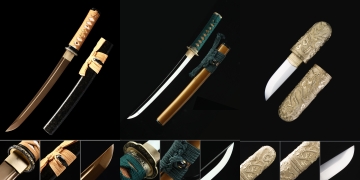
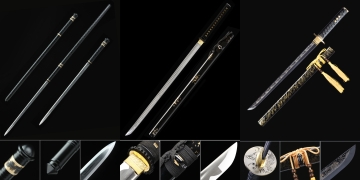
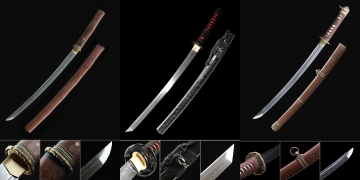
What exactly defines an aikuchi compared to a standard tanto?
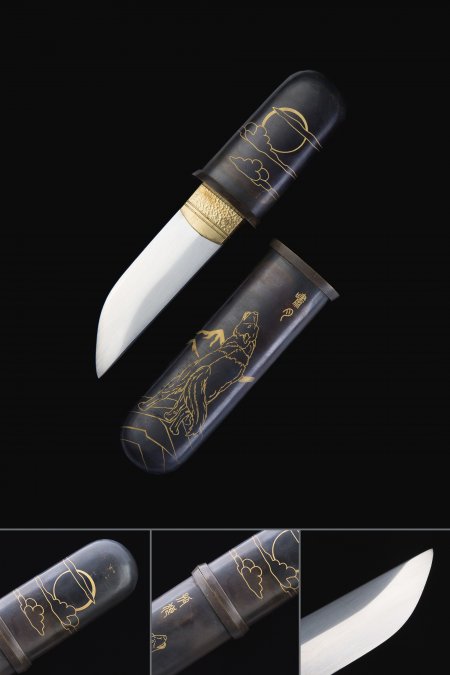
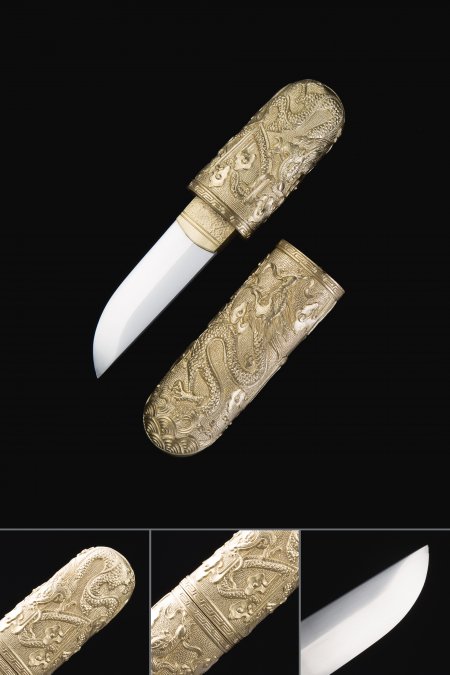
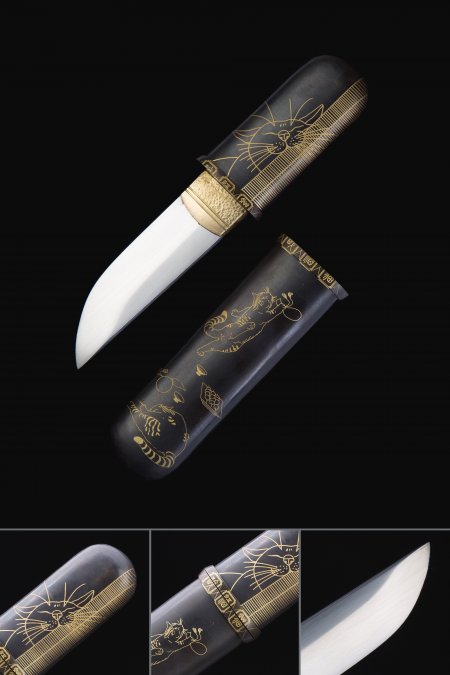
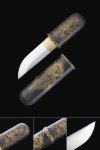
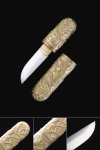
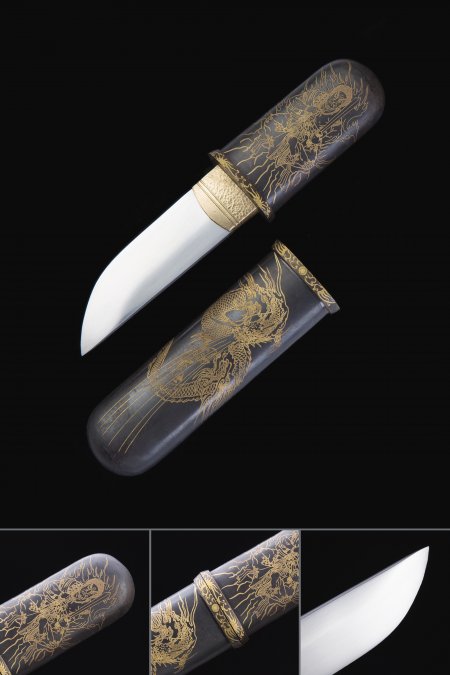
An aikuchi is a specific mounting style rather than a blade type. The defining characteristic is the total absence of a tsuba (hand guard), so the kashira end of the handle meets the koiguchi — the mouth of the scabbard — flush and without interruption. A standard tanto may feature a small round or square tsuba, but an aikuchi eliminates it entirely, resulting in an exceptionally sleek, compact profile. Historically, aikuchi mountings were favored for blades carried concealed beneath robes or for formal court settings where a visible guard was considered unnecessary. The streamlined silhouette also makes aikuchi pieces particularly striking as display collectibles, since the eye travels along one continuous line from pommel to saya tip.
Why are gold accents used on these aikuchi pieces?
Gold ornamentation on Japanese blades dates to the Edo period, when the koshirae — the full suite of blade mountings — functioned as a status symbol and artistic canvas. Gold was applied through leaf gilding, inlay, or cast fittings to highlight motifs drawn from mythology, nature, and heraldry. In our Gold Aikuchi collection, artisans use engraved copper saya plated in gold tones and cast menuki with gold finishing to echo that tradition. Beyond aesthetics, gold-toned coatings on copper fittings also offer a modest layer of oxidation resistance, helping the saya and habaki retain their luster over time with minimal maintenance.
How does T10 steel differ from manganese steel in these pieces?
T10 is a tungsten-alloyed tool steel prized for its fine grain structure and ability to hold a keen edge through extended handling and display. The tungsten content increases hardness and heat resistance, and T10 responds exceptionally well to clay tempering, producing a pronounced, natural hamon line along the blade. Manganese steel, by contrast, contains a higher proportion of manganese, which enhances toughness and flexibility. It is slightly more forgiving if the blade experiences lateral stress, making it a resilient choice for a full-tang collectible meant to be drawn and resheathed regularly. Both steels are hand-forged and differentially hardened in these aikuchi pieces, so the practical difference for display collectors comes down to personal preference between a harder edge profile and a more flexible spine.
What maintenance does a gold aikuchi need for long-term display?
A light application of choji oil — or any high-quality camellia-based blade oil — along the steel every four to six weeks will prevent surface oxidation and keep the hamon visible. Use a soft, lint-free cloth or a traditional nuguigami (blade-wiping paper) to spread the oil in smooth, single-direction strokes. For the gold-finished copper saya and fittings, a dry microfiber cloth is sufficient; avoid chemical polishes, which can strip the gold toning. Store the piece horizontally on a display stand in a room with stable humidity, ideally between 40 and 55 percent. If you live in a humid climate, adding a small silica gel packet near the stand offers extra moisture protection.
Are these gold aikuchi suitable as collector gifts?
Absolutely. The combination of compact size, ornamental gold detailing, and traditional Japanese craftsmanship makes a gold aikuchi one of the more gift-friendly collectible blades available. Unlike a full-length katana, an aikuchi takes up minimal shelf or wall space, so the recipient does not need a dedicated display area. Each piece arrives with a fitted saya and is ready to display immediately. The engraved motifs — dragons, wolves, and stylized feline guardians — carry symbolic meanings in Japanese culture such as strength, loyalty, and protection, adding a narrative layer that elevates the gift beyond a simple decorative object. Pairing an aikuchi with a tabletop tanto stand completes a presentation-ready package.