What makes an aikuchi different from a standard tanto?
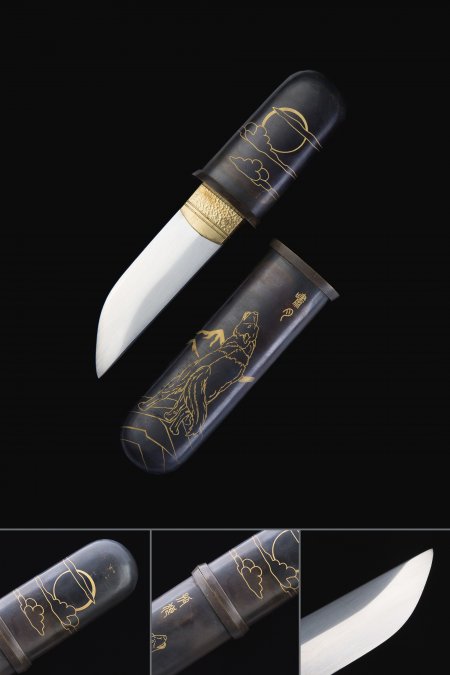
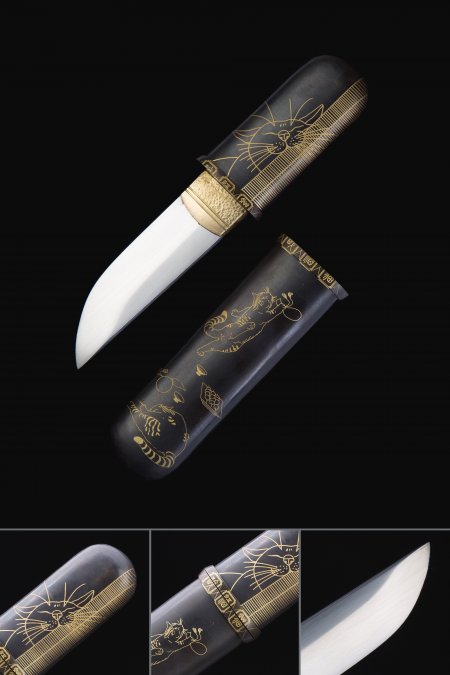
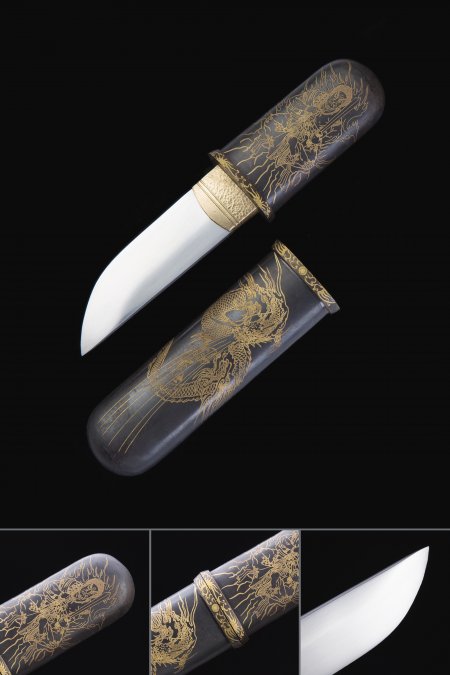
The defining feature of an aikuchi is the complete absence of a tsuba (hand guard). On a standard tanto, the tsuba sits between the handle and the scabbard as a functional and decorative separator. The aikuchi eliminates this element entirely, so the handle fits flush and seamlessly into the mouth of the saya. This produces a cleaner, more elongated silhouette that was historically associated with formal court dress rather than field use. For display collectors, this guard-free design creates a visually unified profile where the engraved saya and handle aesthetic read as a single continuous object - making motif work like the gold dragon or wolf engravings even more visually impactful when displayed horizontally on a stand.
What is the difference between T10 steel and manganese steel in these collectibles?
T10 is a high-carbon tool steel with a fine grain structure and approximately 0.95-1.05% carbon content. In display-grade collectibles, T10 is chosen for its ability to develop a visible hamon (temper line) when clay-differentially treated, adding visual complexity to the blade surface. Manganese steel - sometimes called Mn steel - uses manganese as a primary alloying element, resulting in a harder, more uniform blade with a slightly darker surface patina. It resists flex deformation well, which is why it suits the heavier aesthetic language of the dragon aikuchi in this collection. Neither is superior for display purposes; the right choice depends on whether you prioritize hamon visibility (T10) or a bold, monolithic blade character (manganese).
How should I store and maintain a lacquered saya aikuchi?
Black lacquer saya require a few specific care considerations to preserve their finish long-term. Avoid storing the piece in direct sunlight or near heat sources, as UV exposure and thermal cycling can cause lacquer to yellow, crack, or delaminate over time. Humidity matters too - aim for 45-55% relative humidity; excessive dryness causes lacquer to shrink and chip, while high moisture can encourage corrosion on any metal fittings. For the blade itself, apply a very thin coat of camellia oil (choji oil) every few months using a soft cloth, wiping away any excess. Never use silicone-based sprays on the saya surface. Store horizontally on a display stand rather than vertically to avoid stress on the kojiri (scabbard tip).
Are the animal engravings on the saya hand-done or machine-produced?
The engraving quality varies by piece and material. On the copper saya models - such as the gold wolf and gold cat variants - the relief work is achieved through a combination of casting and hand-finishing, meaning the base motif is formed during the metal fabrication process and then refined by hand to sharpen detail lines and define depth. This is standard practice for production collectibles at this price tier and produces consistent, detailed results. The dragon aikuchi uses a similar approach on its blackened copper saya. True fully hand-engraved saya (entirely cut by a single artisan) are generally found only in bespoke or museum-grade commissions at significantly higher price points. For display collectors, cast-and-finished copper engraving offers excellent visual fidelity and long-term durability.
Is a black and gold aikuchi a good display or gift choice for a Japanese art collector?
It is a particularly well-suited choice for collectors interested in Edo-period aesthetic conventions, where the pairing of black lacquer and gold was a dominant visual language across sword fittings, lacquerware, and formal attire. An aikuchi with a gold-engraved saya functions both as a standalone display object and as a conversation piece about Japanese decorative craft history. For gifting, the enclosed saya means the piece can be presented elegantly without additional packaging concerns, and the motif selection - cat, wolf, or dragon - allows for meaningful personalization based on the recipient's interests. Displayed on a horizontal hardwood stand, a black-and-gold aikuchi reads as a refined art object rather than a novelty item, which matters for collectors with established display standards.