What makes an aikuchi different from a standard tanto mounting?
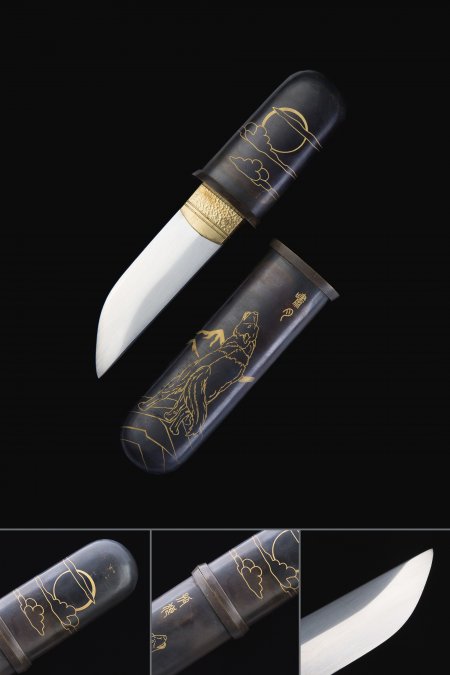
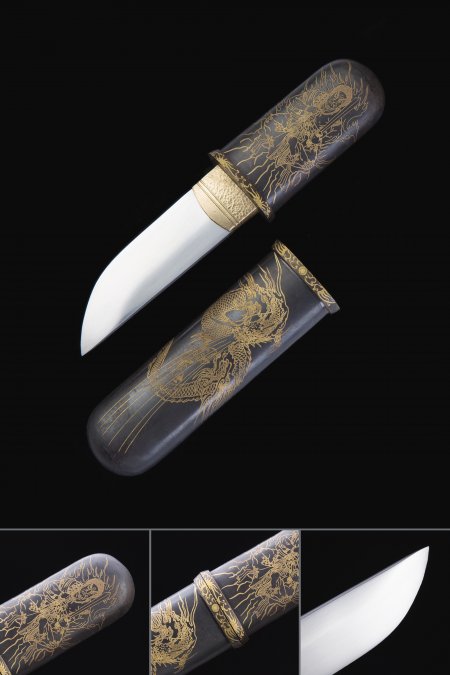
The defining feature of the aikuchi style is the absence of a tsuba — the circular hand guard found on most Japanese bladed mountings. This creates an unbroken visual line from the end of the handle straight into the saya, producing a cleaner, more formal silhouette. Historically, this mounting format was associated with court settings and high-ranking personal carry, where a discreet profile was preferred over a more overtly martial appearance. For collectors, the aikuchi format is appealing precisely because of this restraint: the craftsmanship of the saya and hilt fittings takes center stage without the structural interruption of a guard.
What is the difference between T10 and manganese steel in these collectibles?
T10 tool steel is a high-carbon steel known for its ability to develop a visible hamon — the temper line produced during differential hardening — which many collectors consider the most visually compelling feature of a traditionally finished blade. The carbon content also contributes to a fine grain structure that polishes well. Manganese steel, by contrast, is alloyed for toughness and consistency, producing a blade surface with a clean, uniform appearance that suits display pieces where a crisp, graphic finish is prioritized over temper-line activity. Neither is inherently superior; the choice depends on what a collector values most in their display piece.
How should I care for a copper saya collectible long-term?
Copper is a reactive metal that will develop a natural patina over time if exposed to air, humidity, and skin oils. For collectors who want to preserve the original lacquered black and gold finish, the most important steps are minimizing direct skin contact — use cotton gloves when handling — and storing the piece in a low-humidity environment away from direct sunlight. A light application of renaissance wax over the copper exterior every six to twelve months creates a barrier against moisture and oxidation without affecting the surface finish. Avoid silicone-based products, which can interact unpredictably with lacquered surfaces. For the blade itself, a thin coat of choji oil or equivalent mineral oil on the steel surface before storage is sufficient.
Are these aikuchi pieces suitable as display gifts for collectors?
Yes — the black and gold color palette and the hand-engraved motifs (wolf and dragon designs across current pieces) make these among the more visually distinctive options for a collector-focused gift. The aikuchi format is also less commonly encountered than standard tsuba-mounted styles, which gives the recipient something genuinely different from the typical Japanese collectible. For gifting, it is worth noting that each piece includes a fitted copper saya, so no additional display sheath is needed. Pairing with a solid hardwood display stand creates a complete presentation. These pieces are best suited for recipients who already have an appreciation for Japanese aesthetic traditions and fine metalwork.
What display stand configuration works best for the aikuchi form?
Because the aikuchi has no tsuba to rest against a peg, a horizontal two-peg stand with rubberized or felt-wrapped supports works well — the saya rests cleanly on the lower support while the handle is cradled on the upper. For wall-mounted display, a single horizontal bracket positioned near the balance point of the saya keeps the piece stable without requiring clips that might mar the lacquered surface. If displaying multiple pieces together, staggering them at slight diagonal angles creates visual movement and allows the engraved saya details to remain individually legible. Avoid display cases with poor ventilation, as trapped humidity can affect both the copper saya finish and the steel over extended periods.