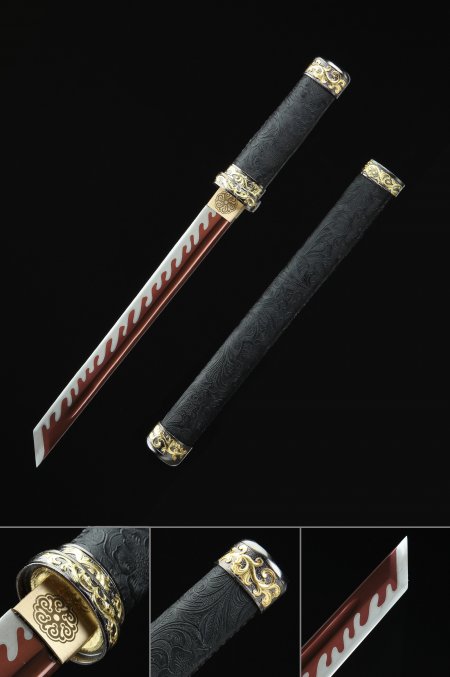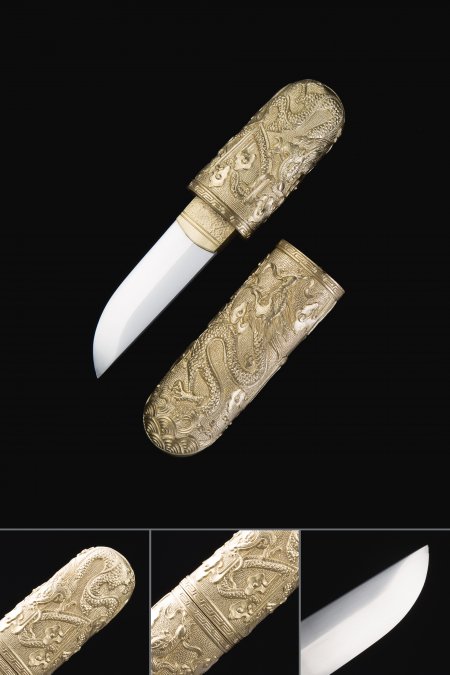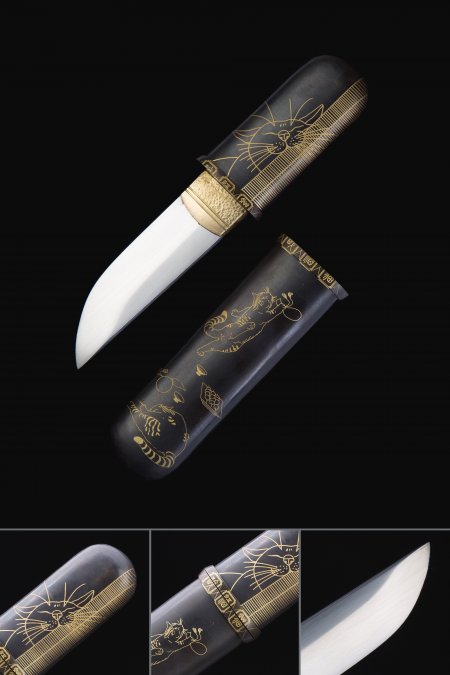
Gold Tsuba Aikuchi

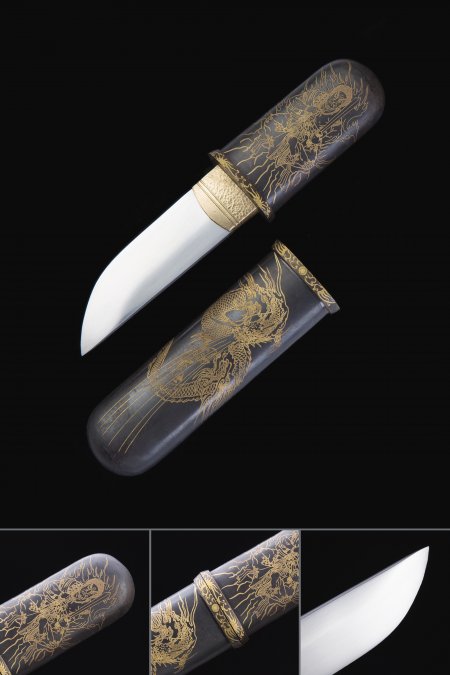
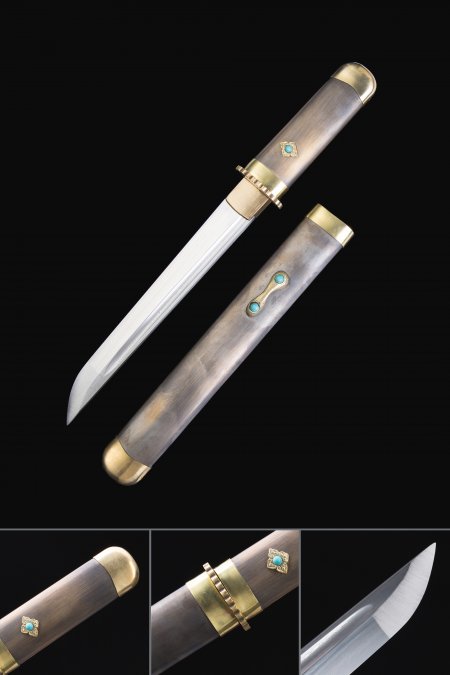
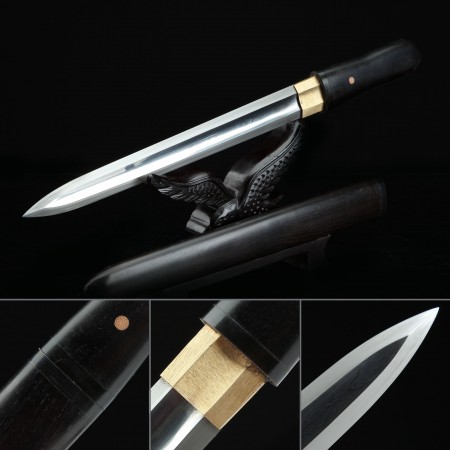
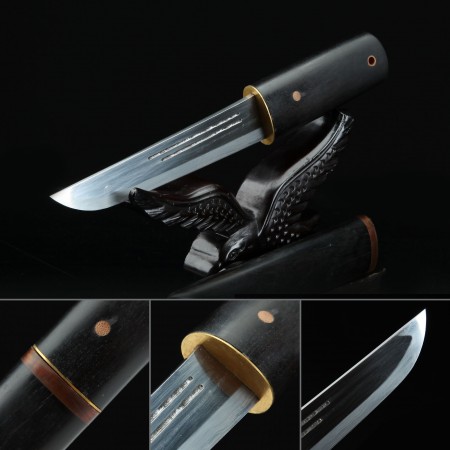
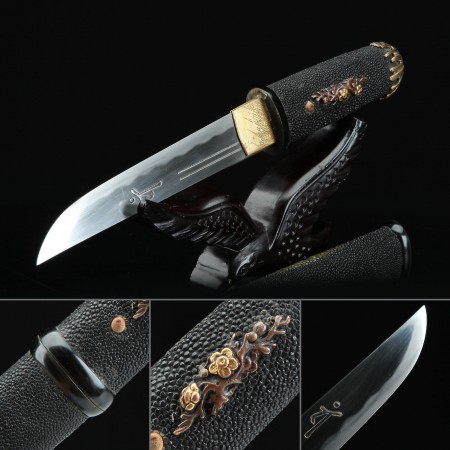
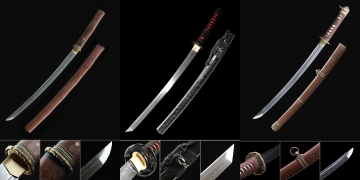
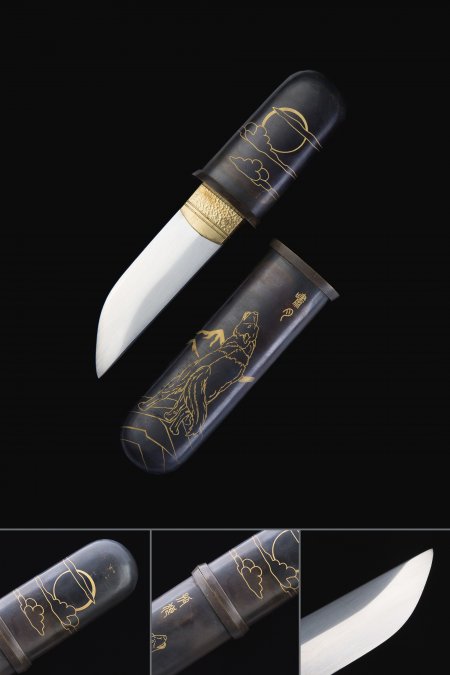
Gold Tsuba Aikuchi blends the guardless elegance of traditional Japanese tanto design with richly appointed gold fittings that elevate each piece into a genuine display-worthy collectible. From Damascus steel blades paired with real rayskin handles to hand-engraved copper scabbards featuring dragon and wolf motifs, every sword in this collection reflects meticulous handcraft and premium materials. Explore our full range with free shipping and hassle-free returns on every order.
Showing 14 Products

Related Collections

Rose Gold Sword72 items


323 Reviews

Rose Gold Katana17 items


171 Reviews

Gold Saya Aikuchi3 items


4 Reviews

Gold Scabbard Aikuchi3 items


4 Reviews

Frequently Asked Questions

What makes an aikuchi different from a standard tanto?
The defining feature of an aikuchi is the absence of a tsuba — the hand guard that separates blade from handle on most Japanese swords. Instead, the habaki (blade collar) seats directly against the koiguchi (mouth of the scabbard), and the fuchi (handle collar) closes the gap with no guard in between. This guardless design was historically associated with formal civilian dress, court attire, and presentation pieces where the wearer wanted to signal refinement rather than readiness. The visual effect is sleeker and more unified than a guarded tanto, placing all decorative emphasis on the harmony between handle materials, metal fittings, and saya finish. In gold tsuba aikuchi specifically, the term 'tsuba' is used loosely to describe the gold-toned metal fittings — habaki, fuchi, and kashira — that define the piece's aesthetic identity.
How does Damascus steel differ from T10 in a tanto blade?
Damascus steel tanto blades are distinguished by their layered construction: two or more steel types are forge-welded together and repeatedly folded, producing the flowing surface grain called hada. Each blade emerges with a pattern that is genuinely unrepeatable, making Damascus pieces inherently individual as collectibles. The visual texture tends toward organic, swirling lines that are especially striking under directional lighting on a display stand. T10 high-carbon tool steel takes a fundamentally different approach — it is a single-composition steel prized for its fine, consistent grain and its responsiveness to differential clay hardening. When properly heat-treated, T10 develops a visible hamon (temper line) along the edge, a detail that serious Japanese sword collectors recognize as a mark of traditional craft. Damascus offers visual complexity through pattern; T10 offers historical authenticity through the hamon. Both are valid choices depending on whether your collecting priority is decorative drama or classical fidelity.
Is real rayskin (samegawa) on the handle worth it for a display piece?
Genuine samegawa — the dried skin of rays, typically from the himantura or dasyatis family — has been used in Japanese sword furniture for over five centuries. The surface is covered in small calcium nodule clusters called tubercles, which create a naturally textured grip that traditionally held silk ito (handle wrap) in place without slipping. For a display collectible, samegawa adds two things synthetic alternatives cannot: tactile authenticity that is immediately perceptible when handling the piece, and an aging quality that improves over time. Real rayskin develops a subtle patina with exposure to ambient light and the oils from handling, gradually deepening in tone. Faux ray skin, typically rubber or embossed leather, does not age in the same way and can degrade or peel over years. If long-term display value and material authenticity matter to your collection, pieces with genuine samegawa handles represent a meaningful step up in craftsmanship.
How should I care for a lacquered saya on a gold-fitted aikuchi?
Lacquered scabbards require a few simple but consistent care habits to stay pristine on display. First, avoid prolonged direct sunlight — UV exposure gradually yellows or fades colored lacquer finishes, particularly red and black tones. Store the piece either in its display box or on a horizontal sword stand away from windows. Second, keep the saya away from sudden humidity changes; lacquer can develop hairline cracks if the wood substrate expands and contracts rapidly. A stable indoor environment at 40–60% relative humidity is ideal. Third, wipe the saya surface only with a soft, dry cloth — avoid any solvent-based cleaners, which can strip the lacquer's topcoat. For the blade inside, remove it periodically, apply a thin coat of choji oil or mineral oil with a soft cloth, and ensure the blade is completely dry before resheathing, as trapped moisture under lacquer can cause interior spotting over time.
Do gold-fitted aikuchi make good gifts for sword collectors?
Gold-fitted aikuchi occupy a sweet spot in the gift market for Japanese sword enthusiasts: they are compact enough to display in almost any space, visually impressive enough to serve as a conversation piece, and specific enough in their historical reference that a knowledgeable recipient will immediately understand what they are looking at. The combination of engraved motifs — dragons, wolves, or floral patterns — with gold-toned metal fittings gives each piece a distinct personality, which means you can match a specific design to the recipient's known aesthetic preferences. For someone new to Japanese edged collectibles, an aikuchi is a lower-barrier entry point than a full-length sword, requiring less display space and less maintenance knowledge. For a seasoned collector, a Damascus or T10 aikuchi with genuine samegawa and hand-engraved fittings represents a genuinely considered addition to an existing collection rather than a generic decorative item.

Customer Reviews

Alex Basti Massachusetts, United States

i have never used truekatana before and i am quite satisfied with 2 tanto purchases i made from there. first off, was packed well and was protected coming to this country. the shirasaya tanto is beautiful and is very sharp-cant wait to test cut with it. As a true gamble i ordered a higher end more ornamental tanto and was in disbelief as i saw that the blade is probably the sharpest of any blade i have. I cant wait to test. i have no doubt both tantos are properly pegged, functional, and will perform! if i have one complaint its that everything should come with its respective swordbag. I will order from truekatana again for sure.

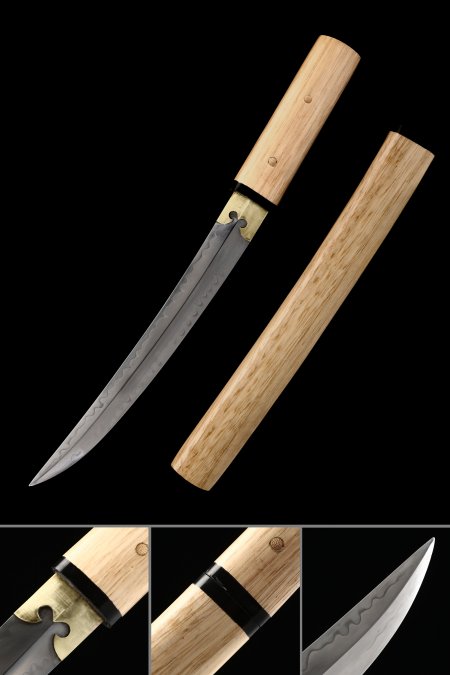
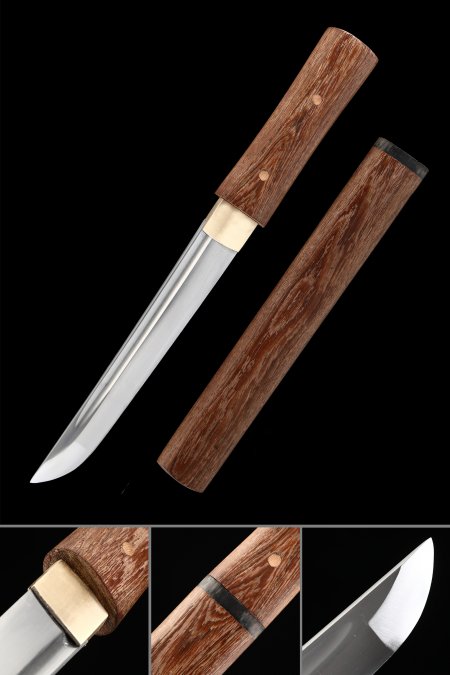
1045 Carbon Steel Aikuchi Tanto with Natural Rosewood Handle and Saya - Full Tang Collectible Japanese Short Sword 1045 Carbon Steel Aikuchi Tanto with Natural Rosewood Handle and Saya - Full Tang Collectible Japanese Short Sword
Patrick Jeffery Michigan, United States

The tanto was beautiful exotic wood grain looks and feels great was a little loose in the scabard but used the old samurai wax trick and now it's good I'm not sure what the wood is maybe tiger wood but is super attractive and with a couple of coats of oil it is amazing blade is razor sharp I've already ordered some other pieces from true katana as there selection and unique designs are very cool and the pricing is good something for everyone at different price points I'm glad I stumbled onto true katana as for shipping this item took about a week

1045 Carbon Steel Aikuchi Tanto with Natural Rosewood Handle and Saya - Full Tang Collectible Japanese Short Sword 1045 Carbon Steel Aikuchi Tanto with Natural Rosewood Handle and Saya - Full Tang Collectible Japanese Short Sword