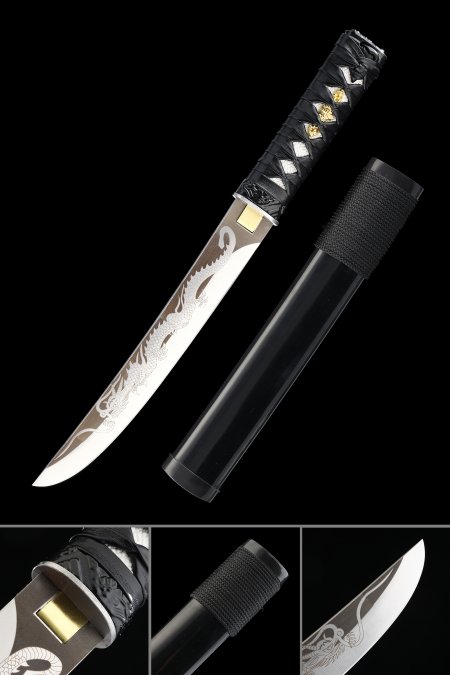
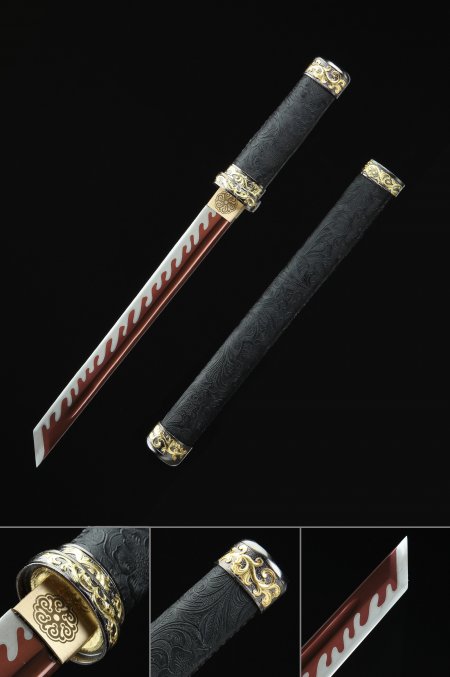
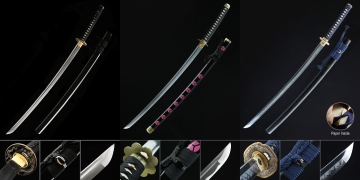
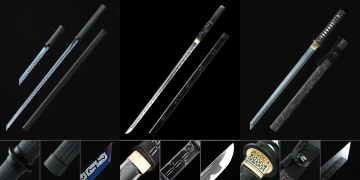
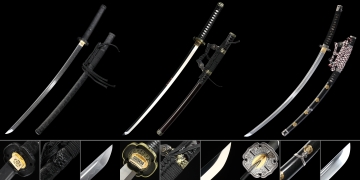
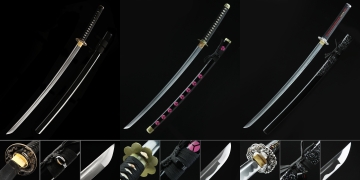
What makes an aikuchi different from a standard tanto?
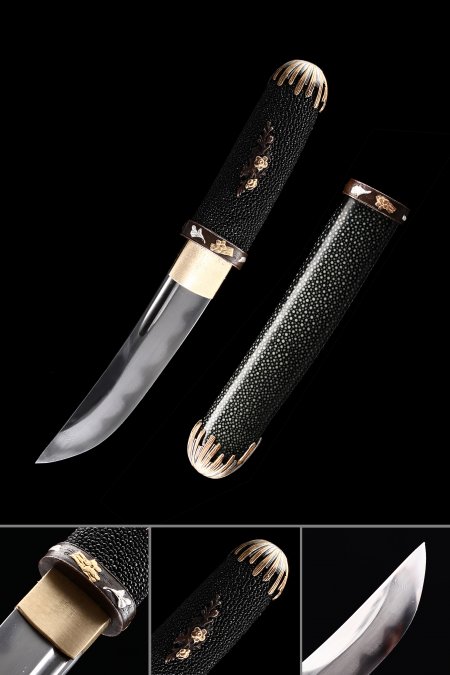
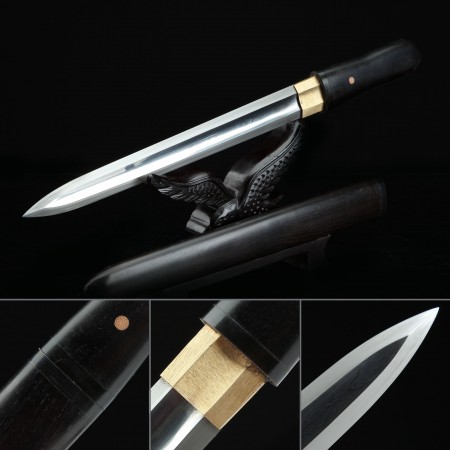
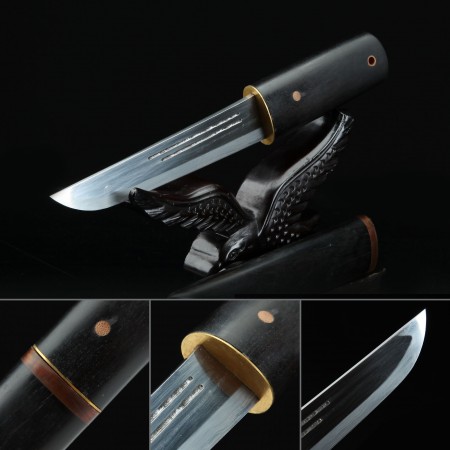
The core distinction is the absence of a tsuba — the circular or shaped hand guard found on most Japanese bladed implements. On an aikuchi, the handle fits flush against the saya's opening, creating an uninterrupted line from pommel to tip when sheathed. This guardless construction was historically associated with civilian dress wear and formal presentation pieces in feudal Japan, particularly during the Edo period. The result is a silhouette that feels more architectural than martial — a quality that makes the aikuchi especially compelling as a display collectible, where visual proportion and the relationship between components matter as much as any single element.
What is real rayskin (samegawa) and why is it used on handles?
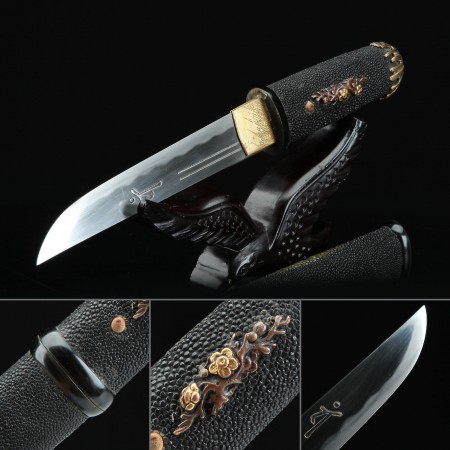
Samegawa refers to the skin of rays, specifically the spotted ray, which has been used in Japanese fittings work for centuries. The surface of ray skin is covered in small, calcified nodules called denticles that give the material a naturally textured, non-slip grip. On black handle aikuchi, the skin is either dyed black or selected from naturally darker specimens, and it may be used as a full wrap or as underlayer panels beneath cord wrapping. From a collector's perspective, samegawa is significant because no two pieces share identical nodule patterns — the central boss node in particular varies in size and placement, making each handle unique. It is also extremely durable, resisting compression and wear far better than synthetic alternatives.
How does Damascus steel differ from clay-tempered carbon steel in display pieces?
Damascus steel derives its visual character from the folding and forge-welding of two or more steel types, producing flowing layered patterns across the blade surface. These patterns are revealed through acid etching and are entirely surface-level on modern production pieces — what you see is a genuine result of the layering process, meaning no two blades are identical. Clay-tempered carbon steel takes a different approach: a clay slurry is applied to the blade before quenching, insulating the spine and allowing the edge to harden faster. This produces a hamon — a visible temper line — that runs along the blade and is considered a mark of traditional craft process. For display collectors, the choice often comes down to preference for pattern (Damascus) versus process authenticity (clay tempering).
How should I store and maintain a black lacquer saya long-term?
Black lacquer saya require stable humidity and temperature to prevent cracking or surface checking over time. Store them horizontally or at a slight angle — never blade-edge down — in a low-humidity environment away from direct sunlight, which can cause lacquer to yellow or flake. Avoid touching the lacquer surface frequently, as skin oils accumulate and can dull the finish. For the blade inside, apply a light coat of choji oil (or a neutral mineral oil substitute) every few months to prevent oxidation, and remove the blade from the saya if storing for extended periods, as trapped moisture between blade and saya can cause surface staining. A paulownia wood display box is ideal for long-term storage, as paulownia naturally regulates moisture.
Are these aikuchi suitable as gifts for Japanese blade enthusiasts?
Black handle aikuchi make particularly strong gifts for collectors who already own more conventional guarded tanto or katana, because the guardless form represents a distinct and historically specific aesthetic that stands apart on any display. The visual cohesion of black handle against gold fittings photographs exceptionally well, which matters for collectors who document their pieces. When selecting a gift, consider the recipient's existing display palette — Damascus blade pieces suit arrangements that lean into pattern and texture, while engraved stainless steel pieces work well in cleaner, more minimalist setups. Each order ships in presentation-ready packaging, making these a complete gift without additional preparation.