What makes an aikuchi different from other tanto styles?
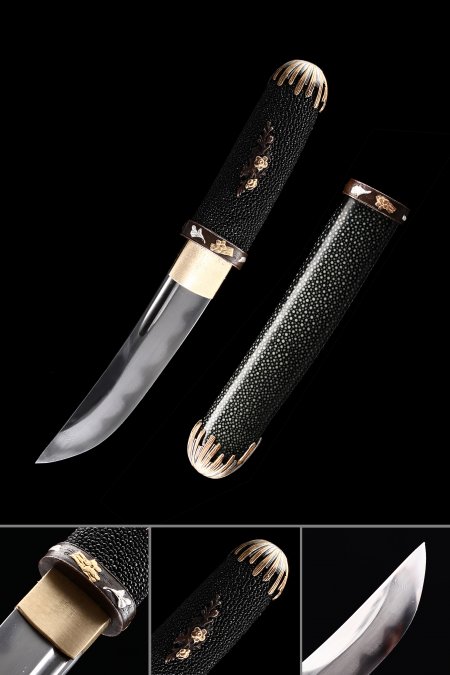
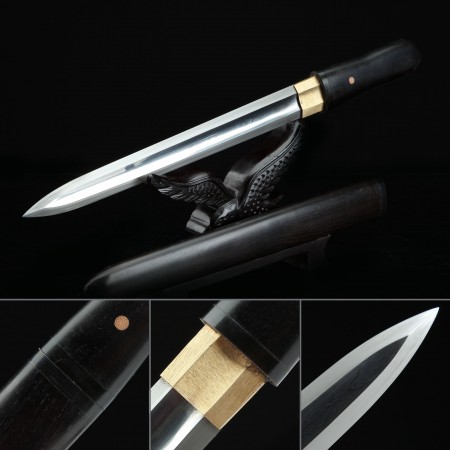
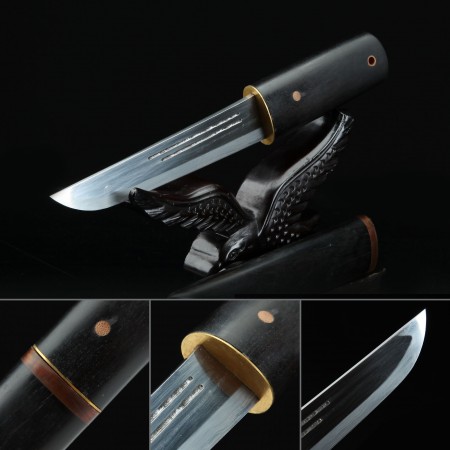
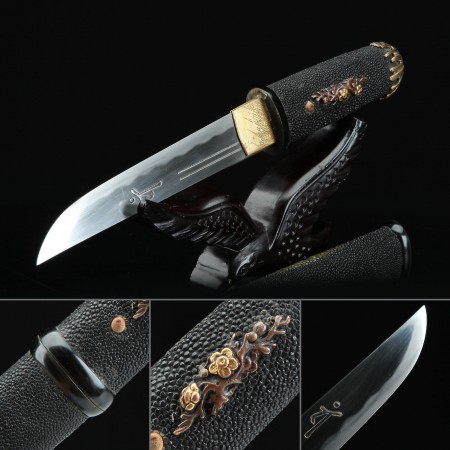
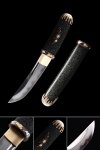
The defining feature of an aikuchi is the complete absence of a tsuba - the hand guard found on virtually every other Japanese blade form. This guardless construction creates an uninterrupted profile from the end of the handle to the tip of the blade, placing enormous emphasis on the proportions and finish of every component. Historically, aikuchi were associated with civilian formal wear in Edo-period Japan, where a low-profile blade that sat flush and discreet beneath robes was socially appropriate in settings where a visibly guarded sword would not be. For collectors today, this form is prized precisely because it strips away the decorative complexity of tsuba design and forces the eye to focus on blade geometry, handle material, and the quality of the fitting work.
How is Damascus steel pattern formed on these blades?
Pattern-welded Damascus is produced by forge-welding two or more types of steel with different carbon content into a single billet, then repeatedly folding, drawing, and manipulating that billet under heat. The alternating steel types etch at different rates when the finished blade is exposed to an acidic solution, revealing the layered grain as light and dark bands. The specific visual pattern - whether flowing water grain, ladder, or twist - is determined by how the smith manipulates the billet between folding cycles. Because each step involves direct hand-forging rather than machine rolling, the grain on every blade is genuinely unique. The black finish treatment common to this collection provides a darkened field that allows the etched Damascus pattern to read with strong visual contrast.
Is real rayskin (same) on a saya a sign of quality?
Yes - genuine rayskin, known in Japanese as same (pronounced 'sah-may'), has been used on high-status Japanese blades for centuries, both as a handle wrap under ito cord and as a decorative saya covering. The material is the dried and calcified skin of stingray or ray species, characterized by small, rounded nodules embedded across the surface. On a saya, it provides a tactile texture that distinguishes a piece from plain lacquered wood while also adding material authenticity. Synthetic or ray-embossed leather alternatives are common at lower price points. When a product listing specifies real rayskin, that indicates the use of genuine same material - a detail that informed collectors specifically look for when evaluating display quality.
How should I store a Damascus steel aikuchi long-term?
Damascus steel blades require consistent but minimal care during display and storage. The primary risks are humidity-driven oxidation and acidic oils from handling. Store the piece in a stable indoor environment - ideally between 40-55% relative humidity - and avoid placing it near exterior walls, windows, or HVAC vents where temperature fluctuates. Before extended storage, apply a thin film of choji oil or food-grade mineral oil to the blade using a soft cloth, then wipe away any excess so only a barely-visible sheen remains. Avoid touching the blade surface with bare hands; cotton gloves are practical for repositioning display pieces. The lacquered saya should be kept away from direct sunlight, which can fade and crack the finish over time.
Do these aikuchi work as display pieces alongside longer blades?
Aikuchi are well suited as companion pieces in a broader Japanese blade display precisely because their compact form contrasts with the visual weight of longer swords without competing for attention. A tanto-length aikuchi displayed beside a full-length katana creates a scale relationship that highlights the proportional differences between blade forms - a pairing that serious collectors often use to illustrate the range of Japanese blade culture within a single display. Within this collection specifically, the consistent black-and-gold palette across Damascus pieces makes it straightforward to build a thematically unified grouping. Pairing with a Black Damascus Shirasaya or a Black Damascus Steel Katana maintains material and finish continuity while introducing meaningful variation in blade length and mounting style.