
Bronze Damascus Steel Aikuchi
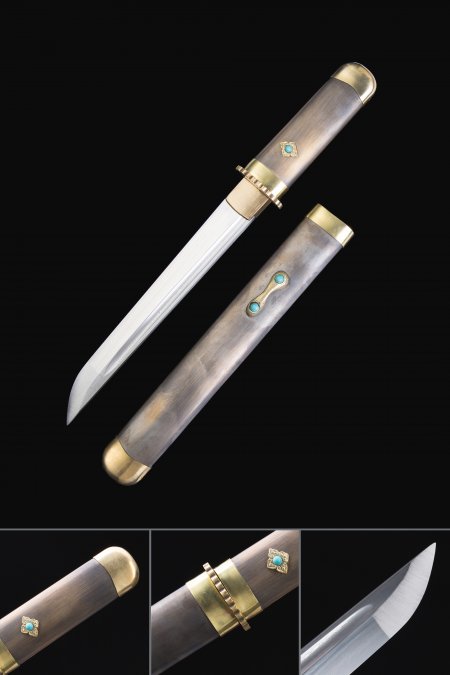
Bronze Damascus Steel Aikuchi blades unite centuries of layered steel artistry with the refined guardless elegance of classical Japanese tanto tradition. Each piece in this collection is hand-forged, showcasing the signature flowing grain patterns that only genuine Damascus construction can produce. The bronze hardware and hand-engraved fittings elevate these tantos into display-worthy centerpieces any serious collector will appreciate. Enjoy free shipping on every order, backed by our hassle-free return policy.
Related Collections
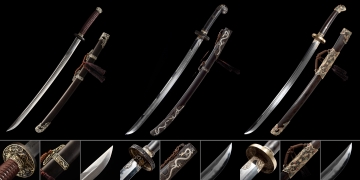
Frequently Asked Questions
What makes an aikuchi different from a standard tanto?
The defining feature of an aikuchi is the complete absence of a tsuba, or hand guard. On a standard tanto, the tsuba creates a visible break between the handle and the saya, whereas the aikuchi’s fittings are designed to sit flush so the transition from handle to sheath is nearly seamless. This produces a much cleaner, more elongated silhouette that many collectors find visually striking. Historically, the aikuchi format was associated with court dress and civilian carry precisely because that uninterrupted line read as refined rather than martial. For display purposes, that same quality makes the aikuchi one of the most architecturally elegant forms in a Japanese blade collection.
How is Damascus steel different from standard high-carbon steel?
Standard high-carbon steel blades are forged from a single homogeneous billet, so the finished surface is uniform in color and texture after polishing. Damascus steel, by contrast, is constructed by forge-welding at least two different alloys together, then folding and drawing the billet repeatedly to multiply the layers. When the finished blade is acid-etched, the differing carbon content of each layer reacts at different rates, revealing the flowing grain patterns Damascus is known for. This means Damascus blades carry both a structural story — the record of the smith’s folding process — and a visual one. Because no two billets fold identically, the surface pattern on every Damascus tanto is genuinely unique, which is a significant part of their appeal as display collectibles.
Why are bronze fittings used on these aikuchi rather than iron or silver?
Bronze has been used in Japanese blade furniture for centuries, particularly on civilian and ceremonial pieces where warmth of tone was valued over the austere look of plain iron. On a Damascus blade, bronze fittings are an especially considered choice: the amber and gold undertones in bronze harmonize with the warm ochres and charcoal grays that emerge during the acid-etching process, creating a cohesive color palette across the entire piece. Iron fittings, while historically common on military-style blades, can visually compete with the organic surface of Damascus steel rather than complement it. For a display collectible where the goal is visual coherence as much as historical accuracy, bronze is often the more elegant solution.
What is the best way to store and maintain a Damascus tanto display piece?
Damascus steel requires slightly more attentive care than stainless alloys because the high-carbon layers that create its patterned surface are also more susceptible to oxidation. For display storage, keep the blade in a climate-controlled environment with stable humidity — ideally between 40 and 55 percent relative humidity. Before placing the blade in its saya for extended periods, apply a thin, even coat of camellia oil or a dedicated blade oil using a soft cloth, then wipe away any excess to avoid pooling. When handling, use clean cotton gloves or a soft cloth to prevent skin oils from contacting the etched surface. If you notice the etch pattern beginning to dull over time, a very light re-etch by a qualified smith can restore the contrast without harming the blade’s structural integrity.
Are Bronze Damascus Steel Aikuchi a good choice as a collector’s gift?
They are an excellent choice for the right recipient. The combination of Damascus patterning, bronze hardware, and the uncommon aikuchi format gives these pieces a specificity that separates them from generic display blades. For someone who already collects Japanese edged pieces, a Bronze Damascus Steel Aikuchi introduces a format they may not yet own. For someone new to the hobby, the visual drama of the Damascus surface makes an immediate impression without requiring prior knowledge to appreciate. The engraved motifs available in this collection — such as the dragonfly design — also carry symbolic resonance that adds a personal dimension to the gift. Pieces like these tend to become the focal point of a display rather than a background element, which makes them memorable gifts for milestone occasions.



