Red-black Damascus Steel Katana
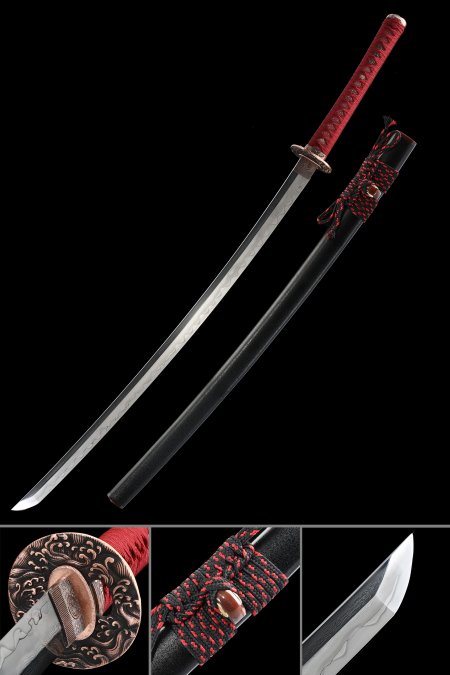
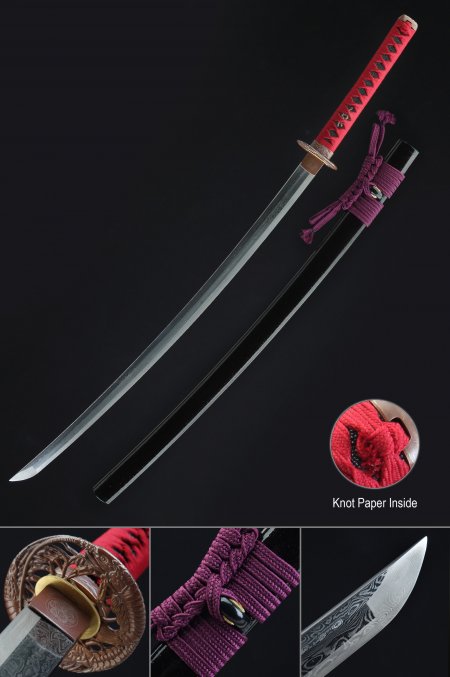
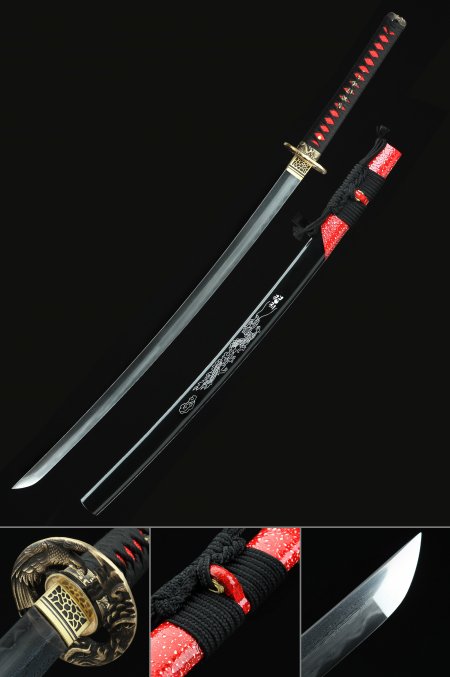
Red-black Damascus steel katana swords unite centuries-old folded-steel artistry with striking visual contrast — where the flowing grain of pattern-welded steel meets hand-wrapped crimson ito and lacquered black saya. Each piece in this collection is crafted for serious collectors who appreciate both metallurgical heritage and bold aesthetic design. Enjoy free standard shipping on your order, plus hassle-free returns for complete peace of mind.
Related Collections
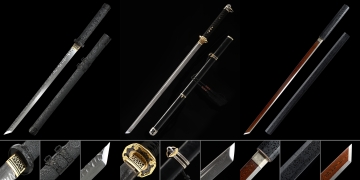
Damascus Naginata4 items
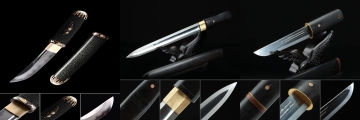
Black Damascus Steel Ninjato3 items
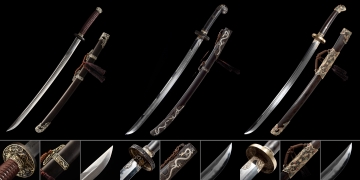
Black Damascus Steel Aikuchi4 items
Damascus Broadsword7 items
Frequently Asked Questions
What makes Damascus steel visually unique on a katana blade?
Damascus steel — more precisely called pattern-welded steel in modern sword-making — is produced by forge-welding two or more steel alloys together, then repeatedly folding and drawing out the billet. This process creates a layered internal structure that, once the blade is ground and acid-etched, reveals a flowing surface grain called hada. No two Damascus blades produce the exact same pattern; the undulating lines, swirls, or ladder motifs are a direct result of how the smith manipulated the layers during forging. On a red-black katana, this organic surface texture contrasts dramatically against the polished fittings and lacquer, making the blade itself the focal point of the display piece.
How does red ito wrapping affect a katana's collectible presentation?
The tsuka-maki — the handle wrap of a katana — is one of the most visually prominent elements of the sword's overall composition. Red ito (cord wrapping) creates a high-contrast pairing with black lacquer saya and dark steel, giving the katana an immediately striking profile on any display stand or wall mount. From a collector's standpoint, color-coordinated fittings — matching red sageo or complementary bronze and gold tsuba — indicate a sword designed with intentional aesthetic cohesion rather than assembled from generic parts. The wrap style itself, with its alternating diamond-shaped gaps revealing the ray skin (samegawa) beneath, is traditional and speaks to the maker's attention to handle construction detail.
How should I store a Damascus katana to preserve the blade's pattern?
The etched surface that reveals Damascus patterning is slightly more porous than a plain polished blade, which means it is more susceptible to moisture and fingerprint oils. To preserve the hada long-term, apply a thin, even coat of choji oil or mineral oil every one to three months depending on your climate's humidity. Always handle the blade with clean cotton gloves or a soft cloth — skin oils left on an etched surface can create uneven tarnish over time. Store the katana horizontally in its saya, ideally in a climate-controlled room away from direct sunlight and temperature swings. A silk-lined storage box or dedicated sword bag adds an extra layer of protection against dust and accidental contact.
What is the significance of dragon motifs on katana tsuba?
Dragon imagery on katana tsuba — the hand guard — carries deep symbolic roots in East Asian tradition. In Japanese and Chinese iconography, the dragon represents power, wisdom, and protection, making it a recurring motif in decorative sword furniture dating back centuries. On a collectible katana, a dragon-engraved or dragon-relief tsuba elevates the piece from a plain display sword into a thematically unified artwork. Collectors often seek tsuba with detailed relief work — visible scales, defined claws, expressive facial features — as these indicate higher casting or carving quality. Combined with the flowing patterns of Damascus steel, a dragon tsuba reinforces the narrative identity of the sword as a collector's centerpiece rather than an off-the-shelf reproduction.
How do red-black Damascus katana differ from standard folded steel katana?
A standard folded steel katana typically uses a single steel type — often 1045 or 1060 high-carbon steel — folded to refine grain structure, resulting in a relatively uniform blade appearance after polishing. Damascus or pattern-welded katana, by contrast, combine at least two steel alloys with differing carbon content or alloy composition, and the visible contrast between those layers after acid etching is the defining characteristic. The red-black aesthetic category adds another layer of curation: these swords pair that distinctive blade surface with specifically coordinated handle colors, tsuba finishes, and saya lacquer to create a cohesive display object. For collectors, this means the red-black Damascus katana occupies a more specialized niche — one where blade metallurgy, decorative fittings, and color design are all considered together.
Customer Reviews
Mary Mckee
Virginia, United States
Absolutely fantastic completely battle ready. Love it
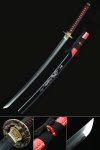 |
Damascus Steel Katana with Dragon Engraved Blade, Gold Tsuba, Black-Red Handle and Black Lacquer Saya |
Dennis Cress
Kentucky, United States
Couldn't be happier with my sword. Will definitely order again in the future!
|
Damascus Steel Katana with Dragon Engraved Blade, Gold Tsuba, Black-Red Handle and Black Lacquer Saya |