Red Damascus Steel Tanto
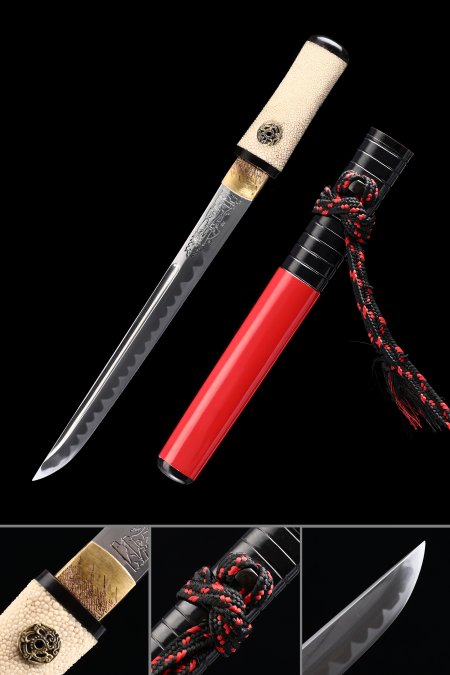
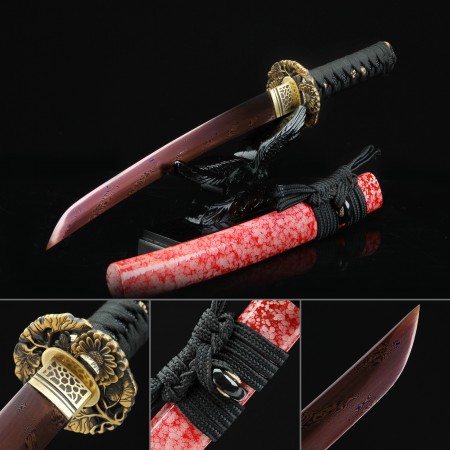
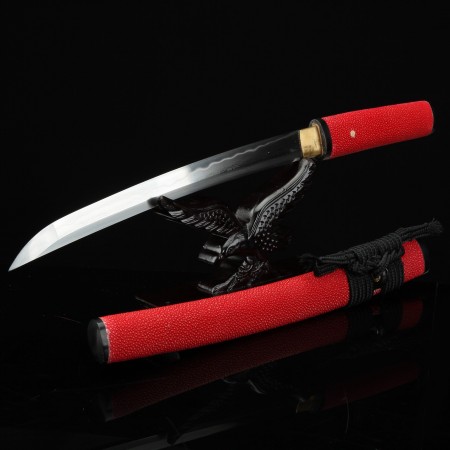
Red Damascus Steel Tanto brings together the fluid patterning of folded Damascus steel and the bold visual presence of red lacquered fittings - a combination that has made this short-blade form a standout piece in serious Japanese sword collections. Each tanto in this collection is hand-forged by skilled artisans, fitted with genuine rayskin handles, and finished with period-inspired tsuba and ito wrap details that reward close inspection. Whether displayed in a dedicated sword cabinet or studied as an example of classical Japanese blade craft, these pieces reflect a genuine commitment to material quality and traditional construction. Every order ships free with hassle-free returns.
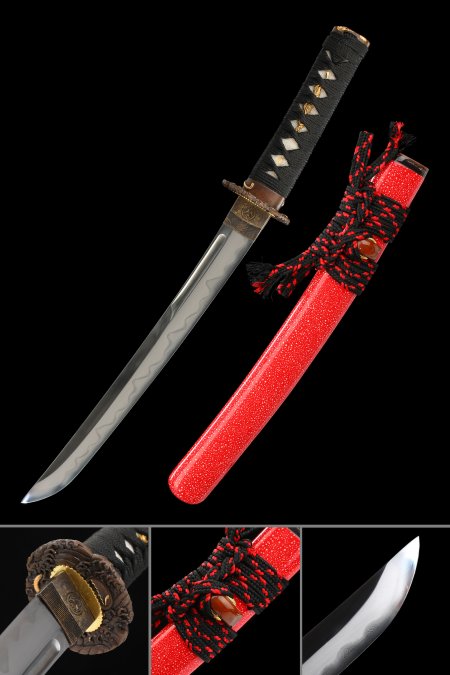
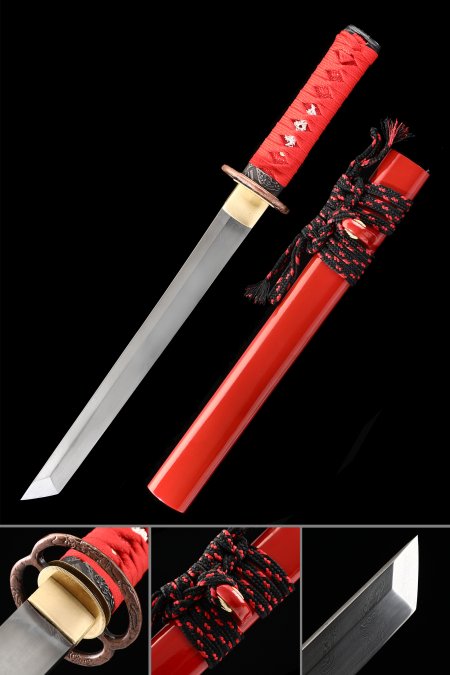
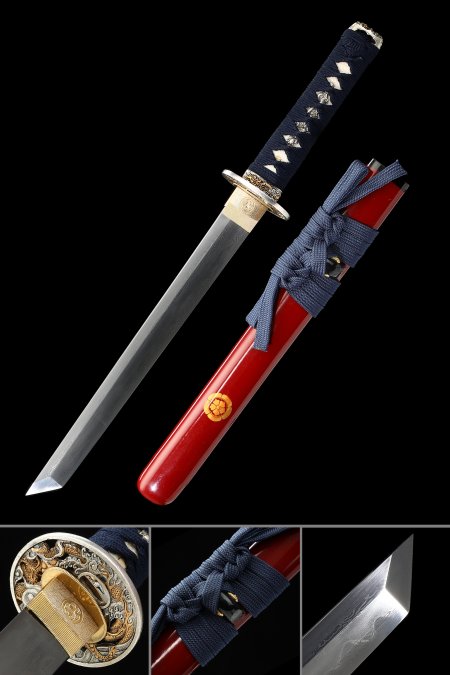
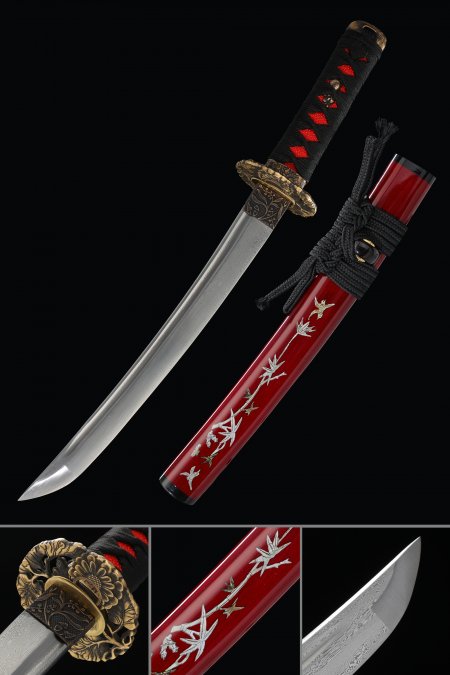
Related Collections
Frequently Asked Questions
What makes Damascus steel visually unique on a tanto blade?
Do these tanto blades have a real hamon or a cosmetic one?
How should I store a red lacquer saya to prevent finish damage?
How does a tanto pair with a katana for display purposes?
Is a full-tang construction important for a display tanto?
Customer Reviews
This tanto is top notch you can see the wood grain through the finish it's not painted gorgeous finish pearl bamboo leaves with two leaves being abalone very nice guard nice detail and smooth metal work blade is beautiful authentic ray skin overall five stars
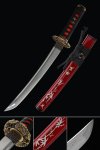 |
Damascus Steel Tanto in Red Lacquer Saya with Floral Copper Tsuba - Black & Red Cord Wrap |
This Saya is flawless and beautiful. The blade is light and elegant and the pattern steel is stunning to look at everything is tight and flush and the cord on the Saya is two tone of a thick high quality, there is a slight difference in the grinds on the blade, but this is definitely one of my favorites.
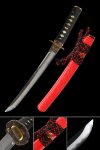 |
Damascus Steel Tanto with Red Rayskin Saya - Bronze Tsuba, Black-Red Sageo, Wave Hamon Blade |
Excellent little weapon. Well crafted, everything is tight and fits well. Very light weight for the quality. No rattling in the Saya. The blade is very sharp. This is exactly what I wanted in a tanto. Way to go!
|
Damascus Steel Tanto with Red Rayskin Saya - Bronze Tsuba, Black-Red Sageo, Wave Hamon Blade |
Craftsmanship beautiful. Was actually a bit bigger than I thought it would be. But none the less extremely happy with my tanto. Definitely buy from them again in the future.
|
Damascus Steel Tanto in Red Lacquer Saya with Floral Copper Tsuba - Black & Red Cord Wrap |
The tanto is beautiful. The blade looks awesome. Customer service are great too. My scabbard came damaged so they sent out another scabbard to me without hassle. Would recommend for sure!
 |
Clay Tempered T10 Steel Tanto with Red Damascus Blade and Floral Gold Tsuba in Red Lacquer Saya |
Was a beautiful blade all-in-all! I got it for my husband for Christmas and he loved it. Told me he liked it more than the katana I got him last year!! Well worth it for sure.
|
Clay Tempered T10 Steel Tanto with Red Damascus Blade and Floral Gold Tsuba in Red Lacquer Saya |
It was beautiful and my boyfriend loved it. It was exactly as pictured. I will be buying more for sure!
|
Clay Tempered T10 Steel Tanto with Red Damascus Blade and Floral Gold Tsuba in Red Lacquer Saya |