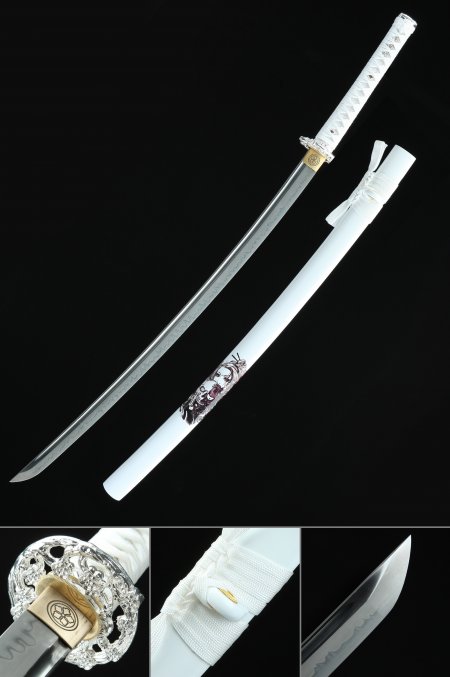
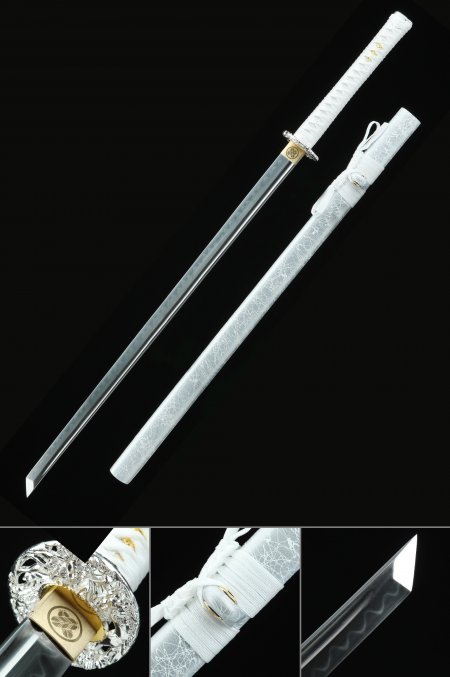
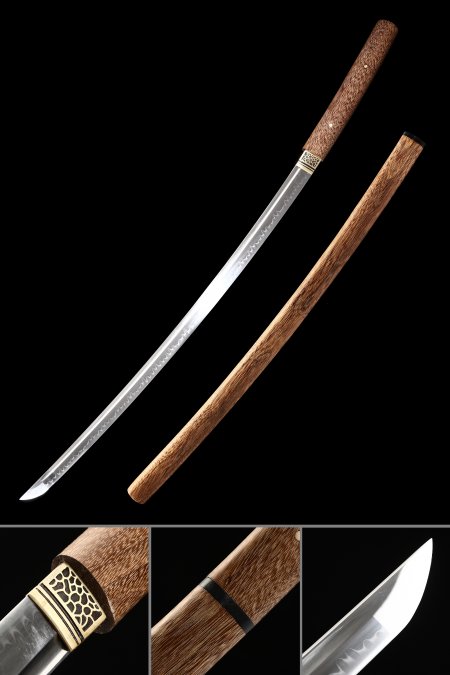
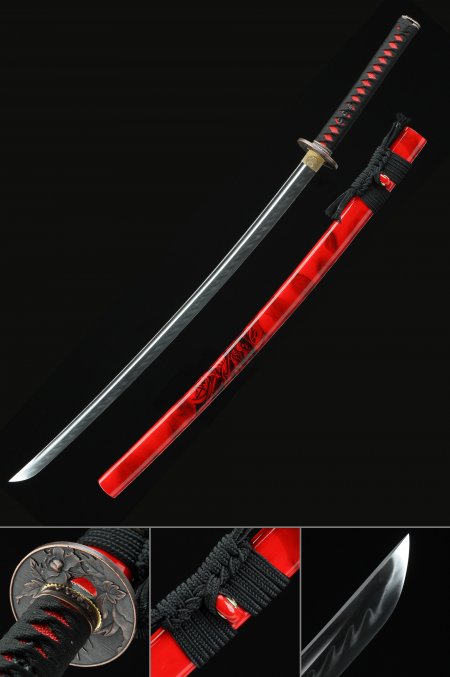
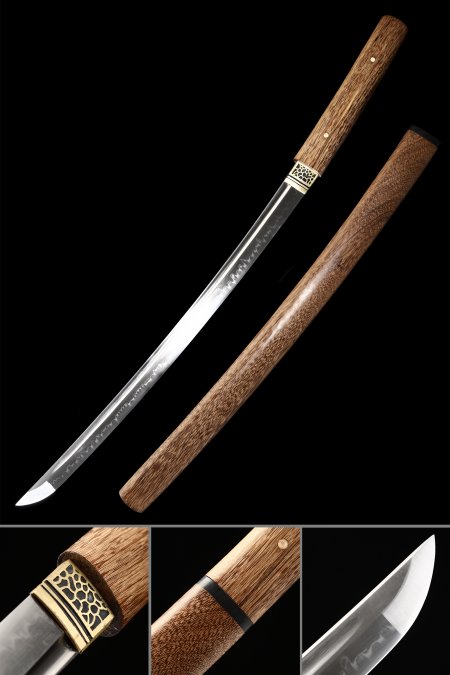
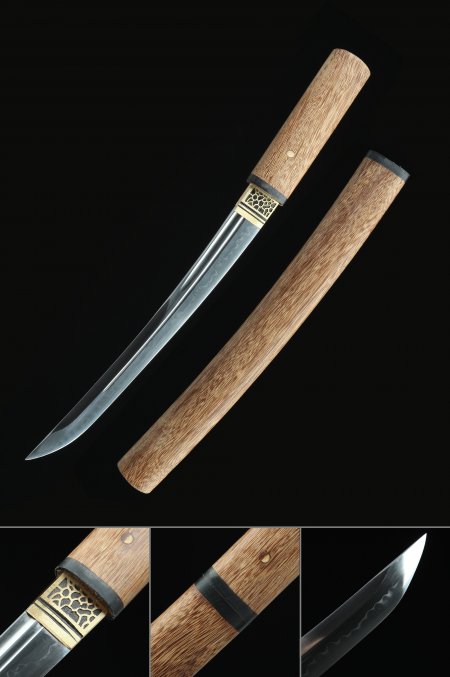
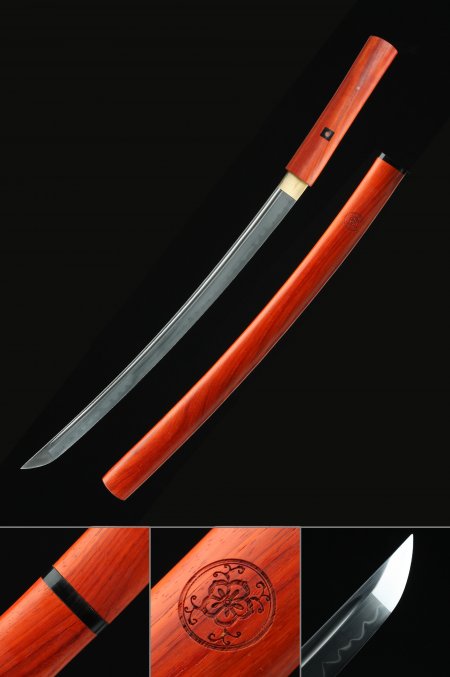
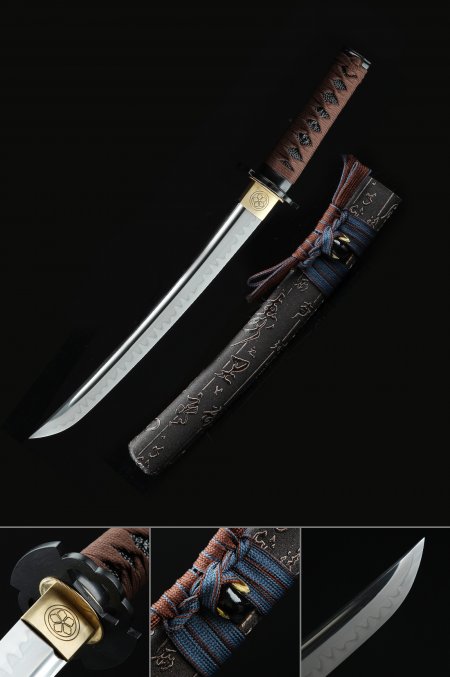
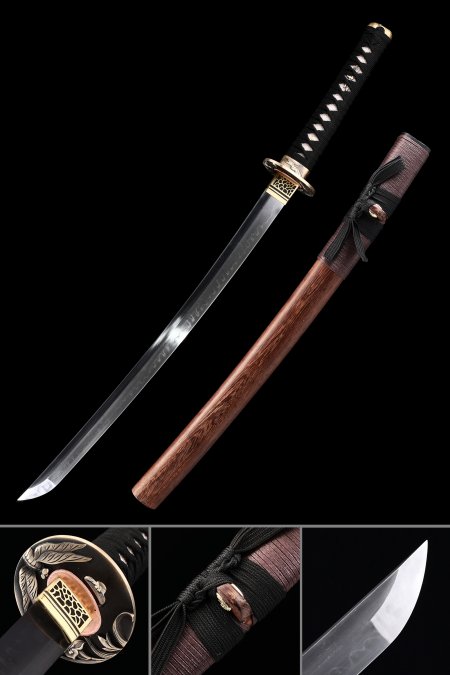
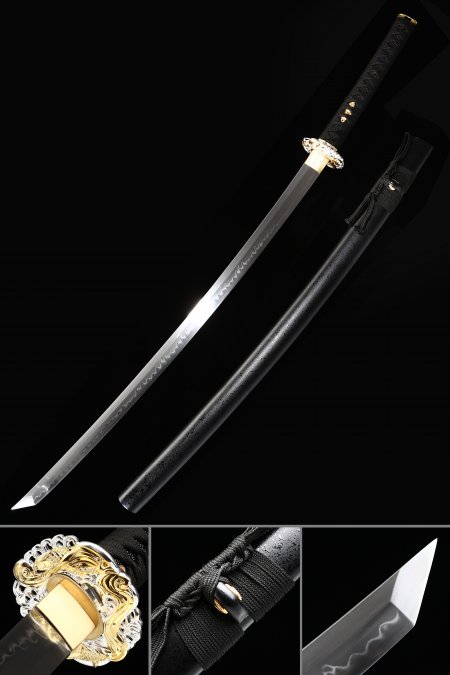
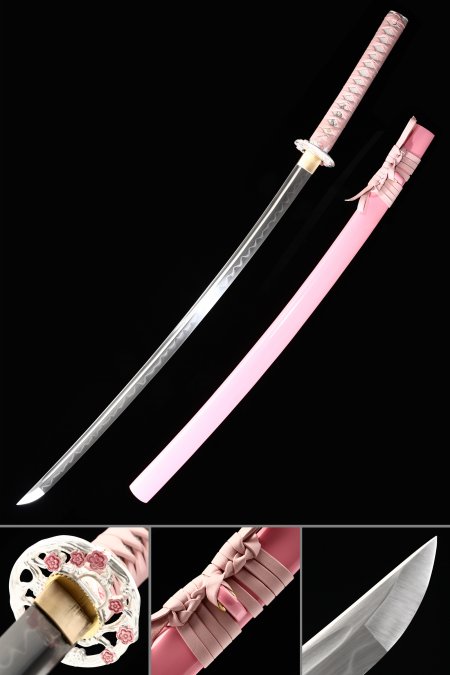
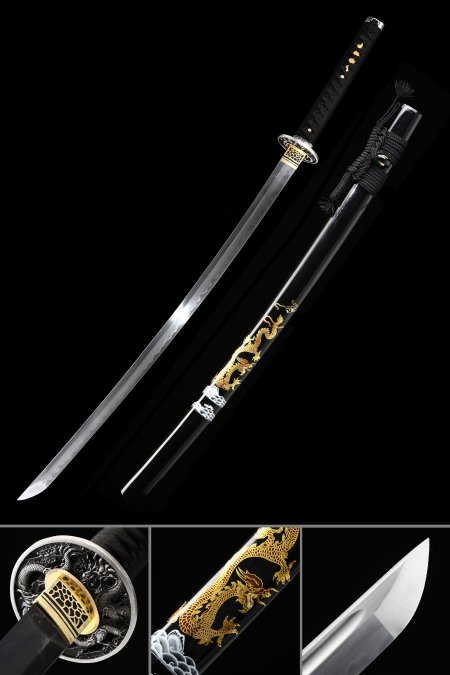
Clay tempering is a traditional Japanese heat treatment technique in which a layer of clay paste is applied along the spine of the blade before quenching, leaving the edge exposed. When the blade is quenched rapidly in water, the uncoated edge hardens more aggressively than the clay-insulated spine, creating two distinct zones within a single piece of steel. The visible boundary between these zones — the hamon — is the aesthetic signature of this process. On a T10 tanto, a real hamon produced through clay tempering is considered a mark of authentic craft, distinguishing a genuinely treated blade from one where the hamon pattern has simply been etched or polished on as a surface decoration.