How does 1095 steel compare to 1060 in a katana blade?
Updated Mar 2026
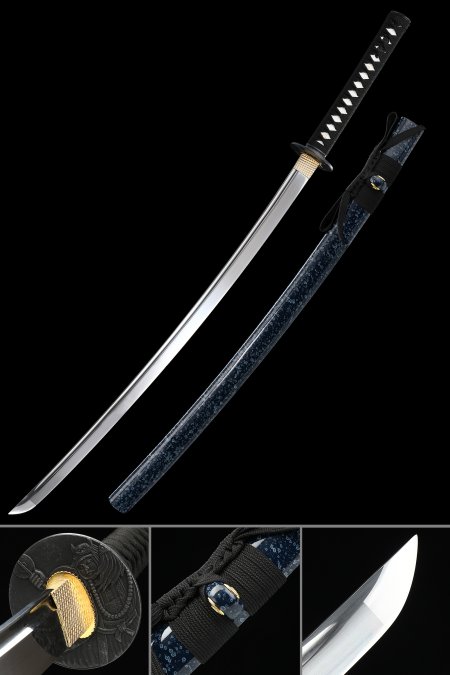
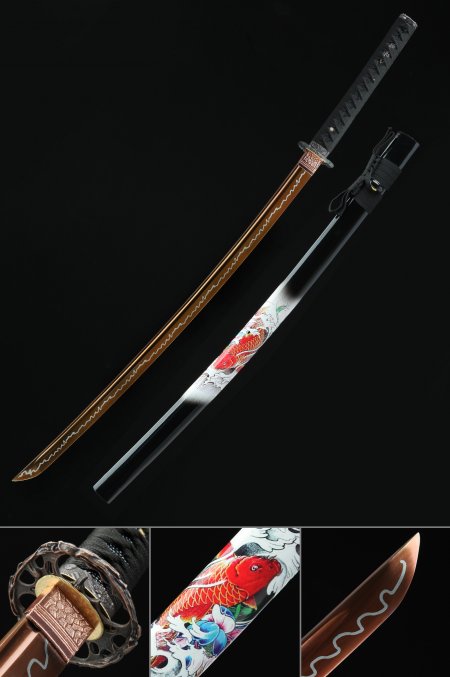
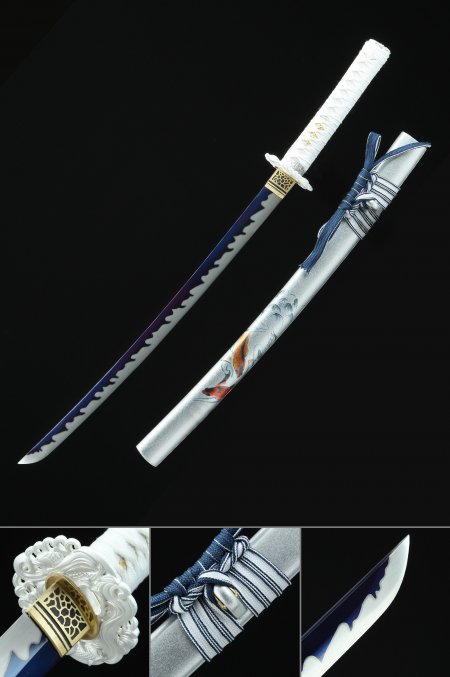
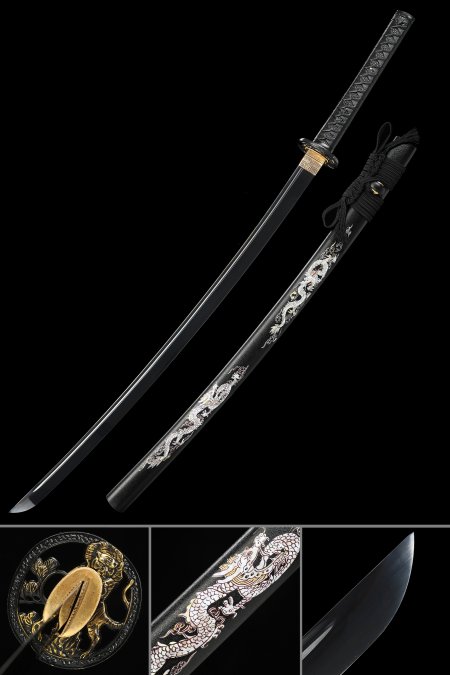
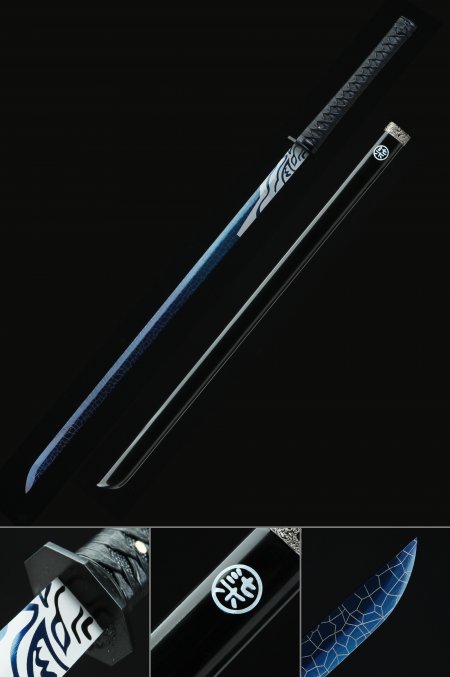
The primary difference is carbon content. 1095 steel contains approximately 0.95% carbon, while 1060 sits closer to 0.60%. Higher carbon content allows 1095 to achieve greater hardness during heat treatment, which translates to a blade that holds a finer, more refined edge geometry — a quality prized in display and collector pieces where visual sharpness of the edge profile matters. The trade-off is that 1095 is slightly more reactive to moisture and requires more attentive maintenance than lower-carbon steels. For collectors focused on material authenticity and edge aesthetics, 1095 is generally the preferred specification. For those who prioritize ease of care with a similar visual profile, the Blue 1060 Carbon Steel Japanese Samurai Swords collection offers a comparable blue-blade aesthetic with marginally more forgiving steel.