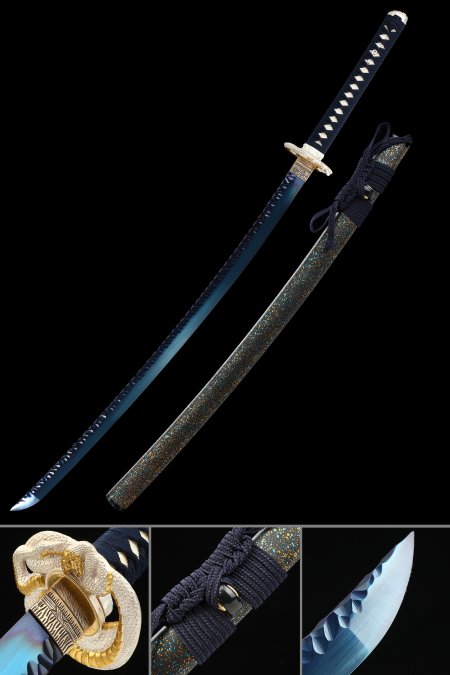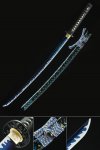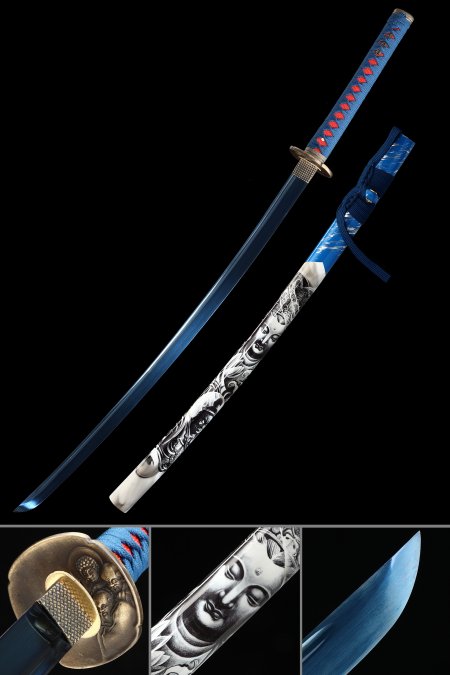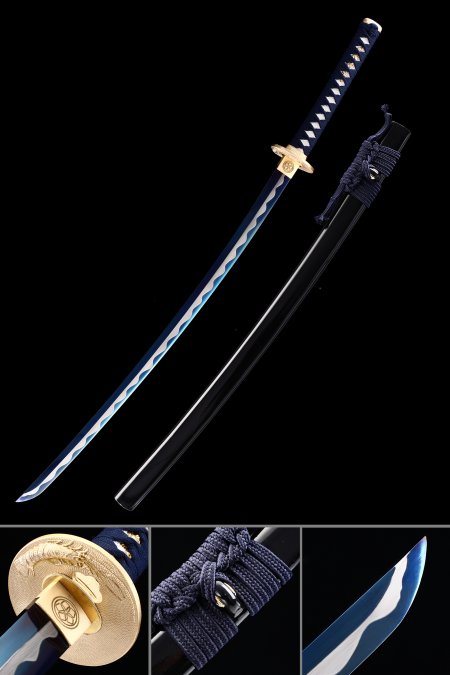
Blue Blade 1095 Carbon Steel Katana

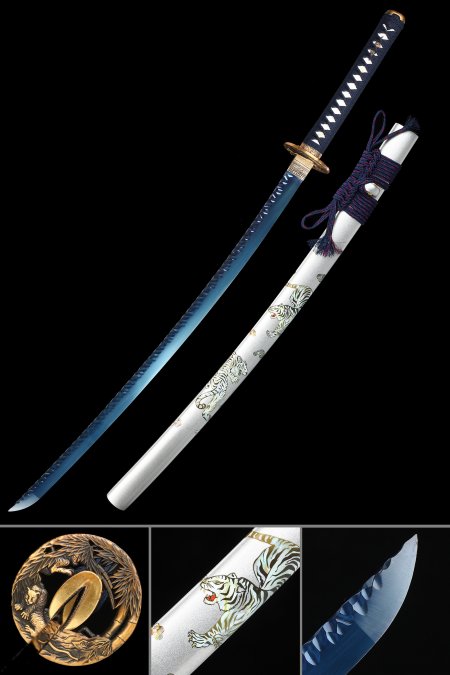
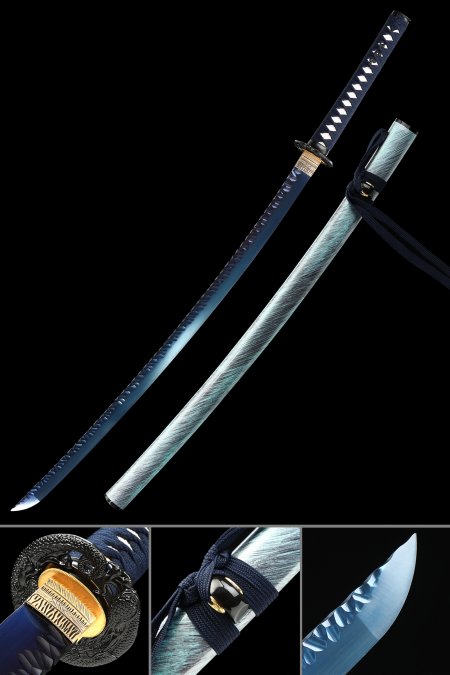
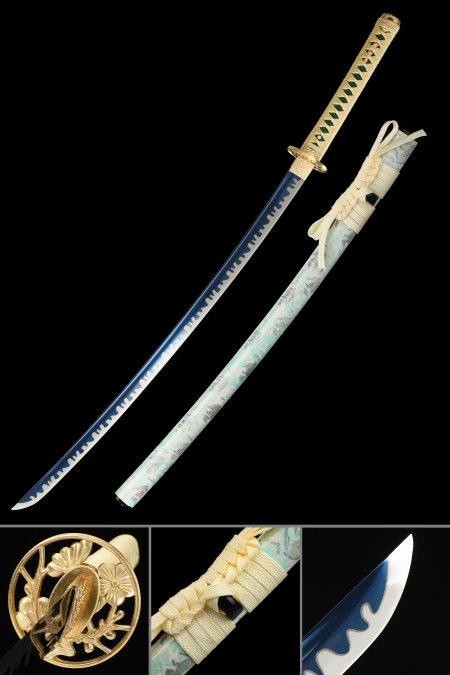
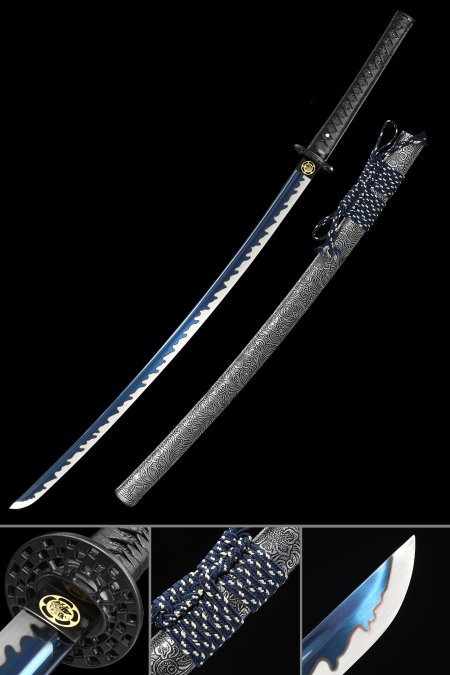
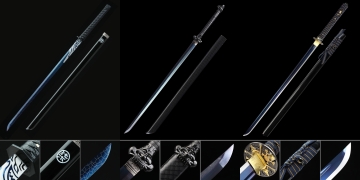
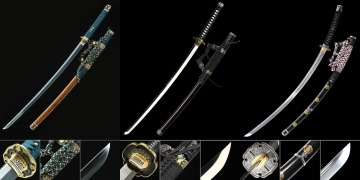
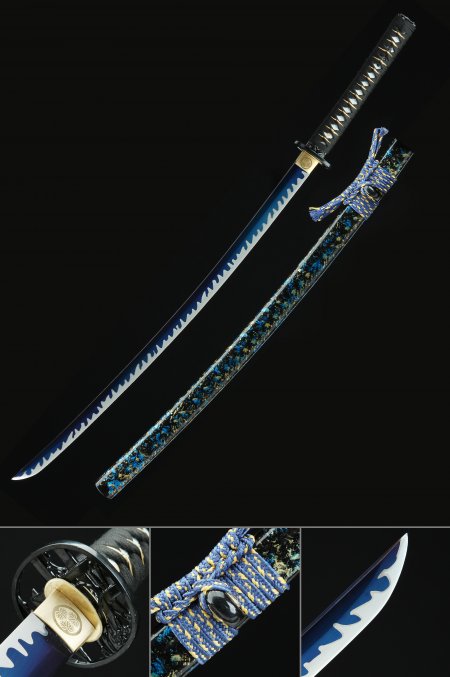
Few finishes in the world of Japanese swordsmithing command attention quite like a blue blade — and these 1095 carbon steel katana deliver exactly that striking presence. Each piece is hand-forged from high-carbon 1095 steel, dressed in distinctive blue-toned blades paired with ornate tsuba, custom lacquer saya, and carefully wrapped tsuka ito. Whether displayed on a stand or examined up close by a discerning collector, the craftsmanship speaks for itself. Enjoy free shipping on your order, backed by our hassle-free return policy.
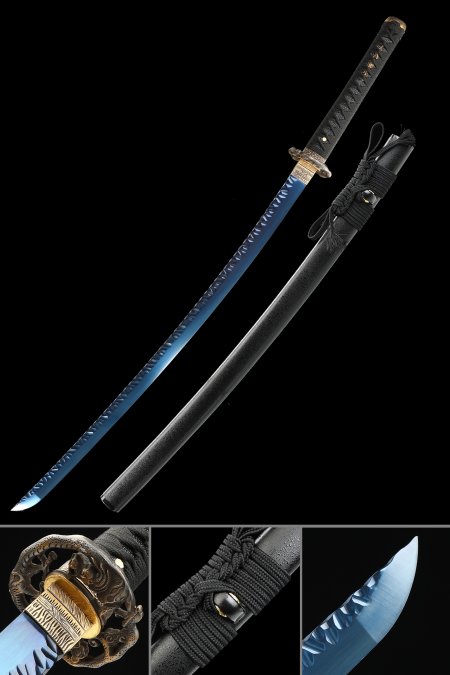
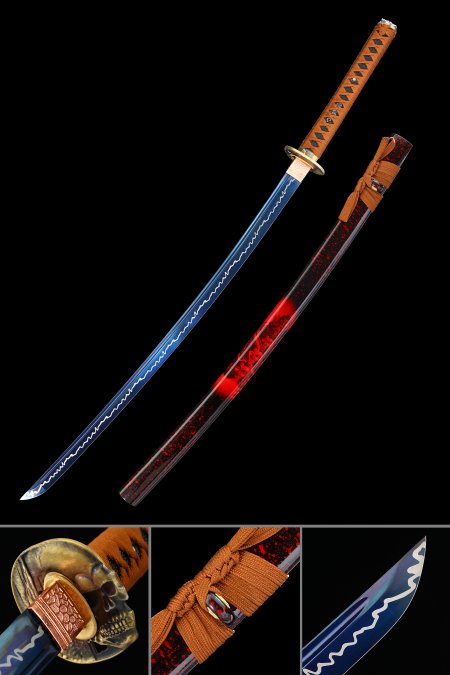
Showing 10 Products

Related Collections

Frequently Asked Questions

What gives these katana blades their blue color?
The blue finish on 1095 carbon steel katana blades is produced through a controlled oxidation or acid-treatment process applied after the blade has been forged, heat-treated, and polished. By exposing the steel surface to specific temperatures or chemical solutions, a thin oxide layer forms that refracts light at wavelengths that read as deep blue to the eye. This is the same principle behind blued steel seen on antique firearms and high-end cutlery. The finish is not paint or coating in the conventional sense — it is a surface transformation of the steel itself. One side effect collectors appreciate: the blue tone makes the blade’s geometry, including the shinogi ridge line and the kissaki tip, far more visually defined than on a standard polish.
How does 1095 steel compare to 1060 in a katana blade?
The primary difference is carbon content. 1095 steel contains approximately 0.95% carbon, while 1060 sits closer to 0.60%. Higher carbon content allows 1095 to achieve greater hardness during heat treatment, which translates to a blade that holds a finer, more refined edge geometry — a quality prized in display and collector pieces where visual sharpness of the edge profile matters. The trade-off is that 1095 is slightly more reactive to moisture and requires more attentive maintenance than lower-carbon steels. For collectors focused on material authenticity and edge aesthetics, 1095 is generally the preferred specification. For those who prioritize ease of care with a similar visual profile, the Blue 1060 Carbon Steel Japanese Samurai Swords collection offers a comparable blue-blade aesthetic with marginally more forgiving steel.
What does clay tempering add to a collectible katana?
Clay tempering — known as tsuchioki — is a traditional Japanese process in which clay is applied along the spine of the blade before the final quench. Because the clay insulates the spine during cooling, that area cools more slowly and remains relatively soft, while the exposed edge cools rapidly and hardens significantly. The boundary between these two zones, called the hamon, appears as a misty or wave-like line running the length of the blade. On blue-finish blades, the hamon is particularly legible because the color contrast between the hardened ha and the softer ji is amplified. For collectors, the hamon is one of the most important visual signatures of authentic Japanese-style metallurgy, and no two clay-tempered blades produce an identical hamon pattern.
How should I store and maintain a blue blade katana on display?
Blue oxidation finishes are more sensitive to fingerprint oils and ambient humidity than a standard polished blade. When handling for display positioning, use clean cotton gloves to avoid transferring skin oils, which can cause uneven staining over time. Apply a very light coat of choji oil or high-purity mineral oil to the blade surface every one to three months, depending on your local humidity level. Store the sword horizontally or on a tilted display stand with the edge facing upward — the traditional orientation — and keep it away from direct sunlight, which can shift the blue tone over extended periods. In humid climates, a small silica gel pack placed near the storage area helps prevent rust formation on the high-carbon steel.
Are these katana a good choice as a display gift for sword enthusiasts?
Blue blade katana with ornate fittings make exceptionally distinctive display gifts precisely because they diverge from the standard black-and-silver aesthetic most collectors already own. The combination of a visually dramatic blue blade with individually chosen tsuba — crane, dragon, skull, or geometric designs — and a coordinated lacquer saya means each sword functions as a complete visual composition rather than just a blade. For gifting, pieces featuring full-tang construction and a named fitting style (such as koshirae configuration) tend to communicate higher craft value to recipients who know what to look for. Including a display stand elevates the presentation further and allows the recipient to exhibit the piece immediately upon unboxing.

Customer Reviews