FAST SHIP
Free Shipping
159.00 USD
ON SALE! 15% OFF
Was: 189.00 USD

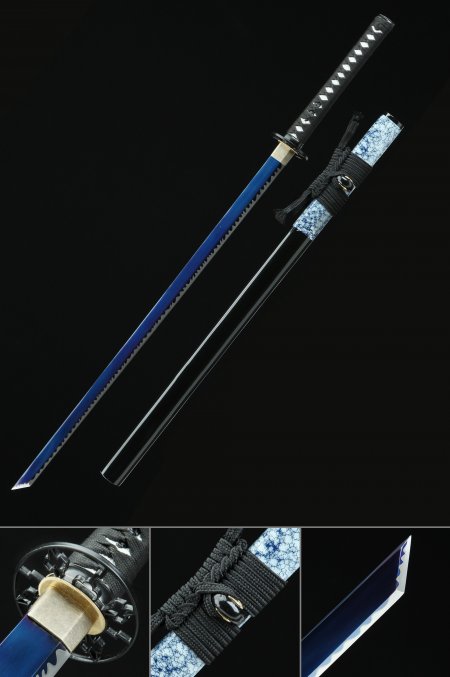
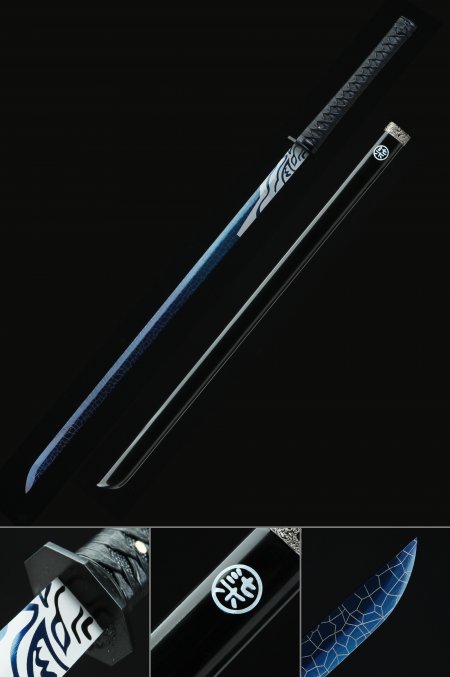
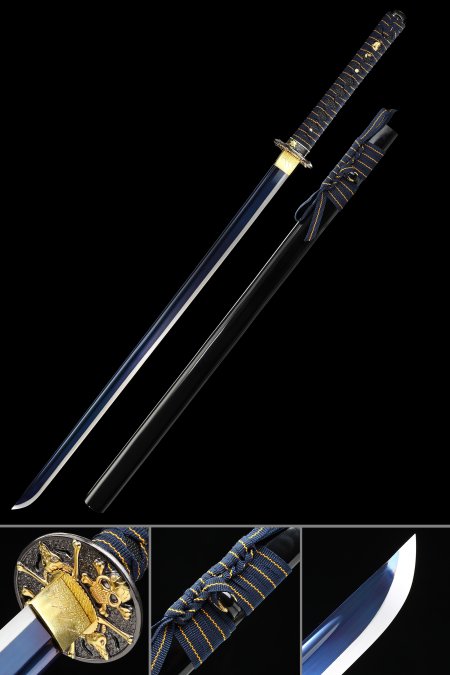
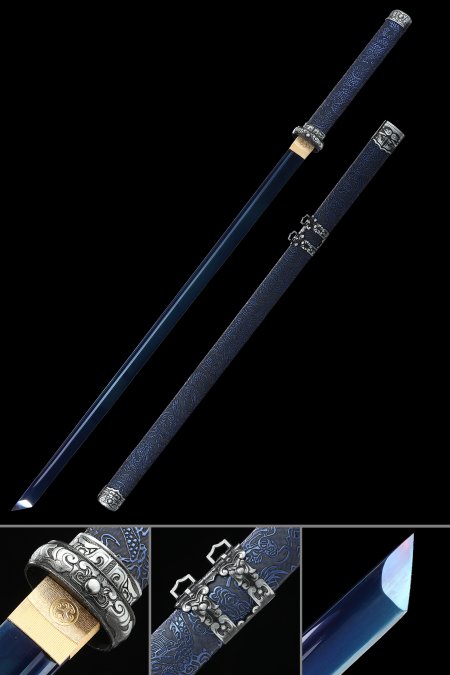
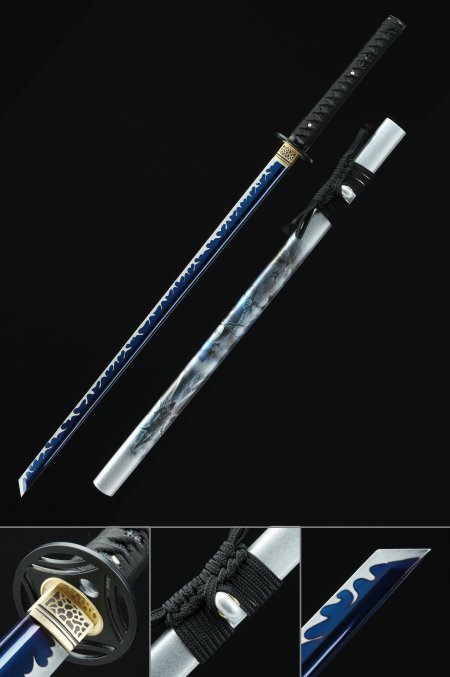
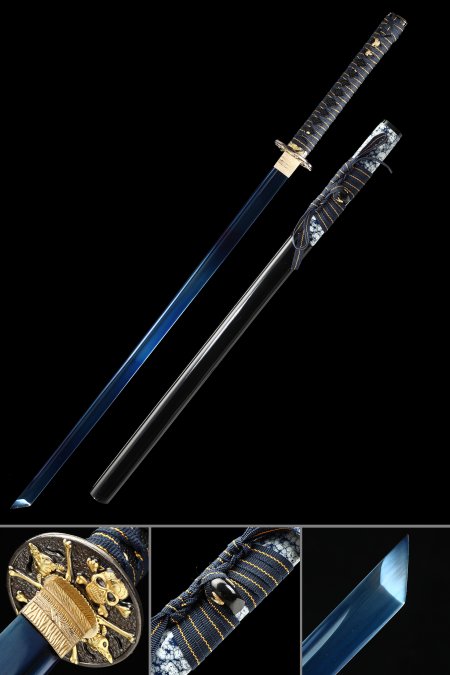
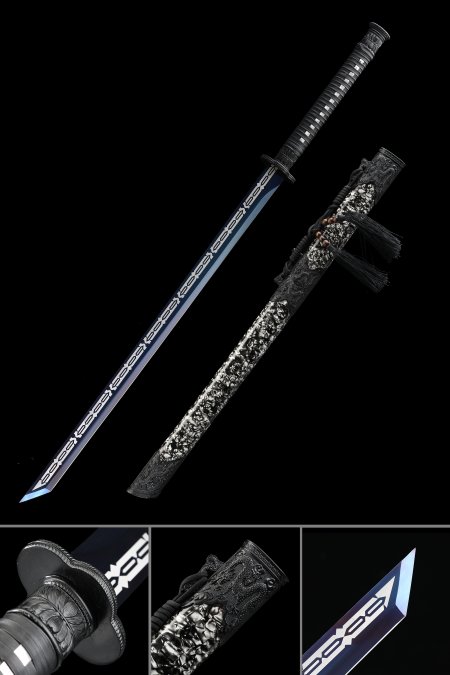
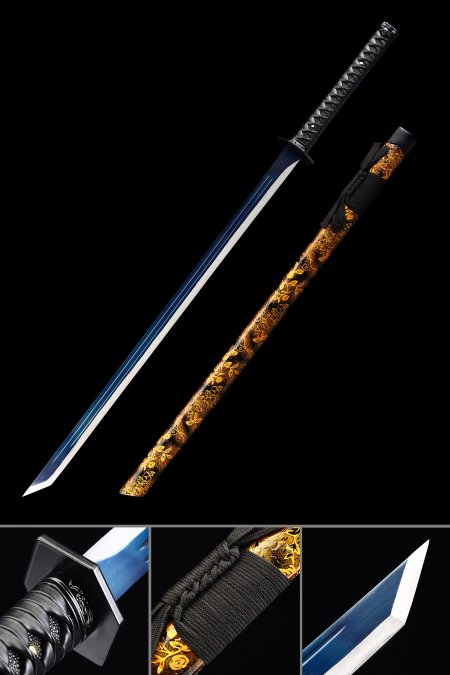
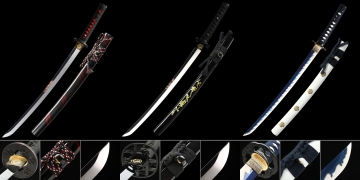
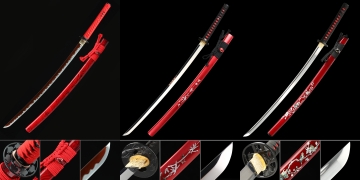
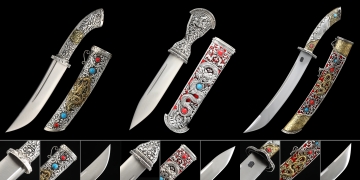
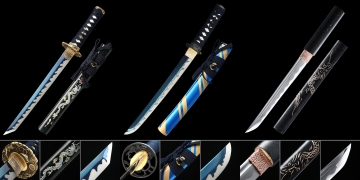
Few collectible sword styles carry the visual drama of a blue-treated blade paired with the clean, straight geometry of a ninjato - and every piece in this collection delivers exactly that. Each sword is hand-forged from 1095 high-carbon steel, differentially treated to develop that distinctive blue-grey surface finish that collectors prize for its depth and character. Fittings range from geometric iron tsuba and skull-motif guards to intricately carved dragon saya, giving every piece a distinct personality on the display rack. Complimentary shipping is included on all orders, and we back every purchase with a hassle-free return policy.
Needed one more to fill my current rack. But was really surprised by it when arrived. Great blade and absolutely beautiful.Greatest Thanks Eddie
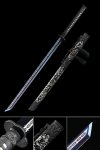 |
1095 Carbon Steel Straight Ninja Sword with Blue Blade, Black Cord Handle & Dragon Saya |
Ordered as a birthday present and they loved it! Only thing I’d say is don’t expect it to be a real sword 😅, still super impressive though. Def would recommend
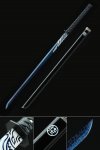 |
1095 Carbon Steel Ninjato Sword with Blue Blade and Black Matte Saya - Full Tang Ninja Collectible |
Great service and great product. Got the sword faster than I expected and in perfect condition. Very happy with my purchase.
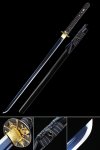 |
Ninjato in 1095 Carbon Steel with Blue Blade, Skull Tsuba and Dark Blue Lacquered Saya |
Reviewing, selecting and purchasing their swords is fun and easy, so have a great time buying your sword, but you must be willing to accept a bit of suspension of disbelief in the process that you are purchasing high quality swords of rare craftsmanship from a venerated master sword smith especially for swords that are priced below $200 that are clearly mass produced from a purely on-line company. I first purchased the Chokuto Ninjato straight sword with blue blade for $199.00 which arrived in 11 days, but I was not satisfied with several misaligned detailing on the blade that clearly disrupted the intricate look. I paid to have the sword returned and was promptly refunded my money after they received the sword. I then purchased a 1060 black steel katana with stand for $191.00. The katana arrived in 7 days, but the stand took 14 days because it was shipped from China. The katana itself is adequate, but it did slip out of the scabbard, and the handle hit the ground causing the blade to shift out of alignment with the Habaki. I will need to remove the handle at some point to realign everything and shim the scabbard to prevent this from happening again. These purchases were presents for my 17 year old son as an introduction into katanas, so the on-line experience was exactly what I needed and expected. Also, I was very satisfied seeing the joy of my son and his friends handling a real katana. For my needs and expectations, I will not hesitate to purchase another sword from Truekatana in the future; however, if I were a true collector of katana or was needing specific design elements, I would likely seek out a brick and mortar company and work one-on-one with someone to find a katana that exactly fit my needs and fully expect to pay much more. I gave 4 stars instead of 5 because the entire process was as expected for a purely on-line company, but it was not exceptional. I was particularly disappointed Truekatana did not check the quality of the first sword I purchased prior to shipping it.
|
1095 Carbon Steel Ninjato Sword with Blue Blade and Black Matte Saya - Full Tang Ninja Collectible |
I just want to say that I am SO impressed with how quickly my order came. It’s for my 18 year old son for his birthday. He loves anime and martial arts things so he is going to be thrilled! Thank you for getting it here on time. And thank you for selling superior quality products!!
|
1095 Carbon Steel Ninjato Sword with Blue Blade and Black Matte Saya - Full Tang Ninja Collectible |
bery nice and beautiful sword but the cork holding the tang in the handle is lose beside that very happy
|
1095 Carbon Steel Ninjato Sword with Blue Blade and Black Matte Saya - Full Tang Ninja Collectible |
Lovin this purchase. As sturdy as a tool and as beautiful as an art piece. I can't stop looking at it. I am definitely coming back for more.
|
1095 Carbon Steel Ninjato Sword with Blue Blade and Black Matte Saya - Full Tang Ninja Collectible |
This was a gift for my son. He loves it. Good quality for the price and design. shipping was as expected and packaging was excellent.
|
1095 Carbon Steel Ninjato Sword with Blue Blade and Black Matte Saya - Full Tang Ninja Collectible |