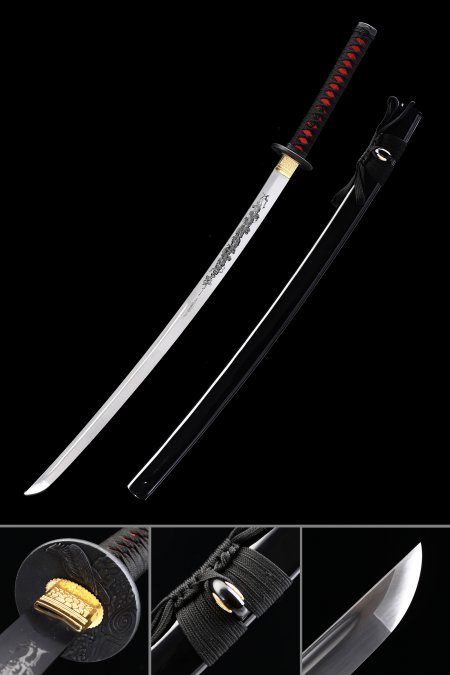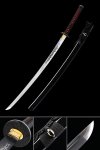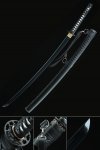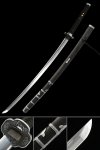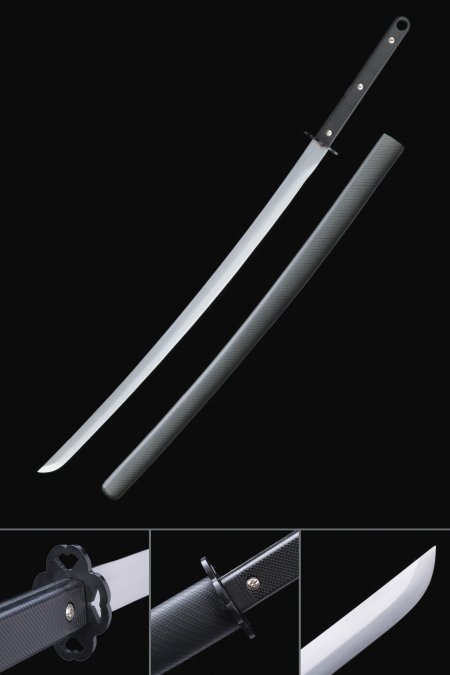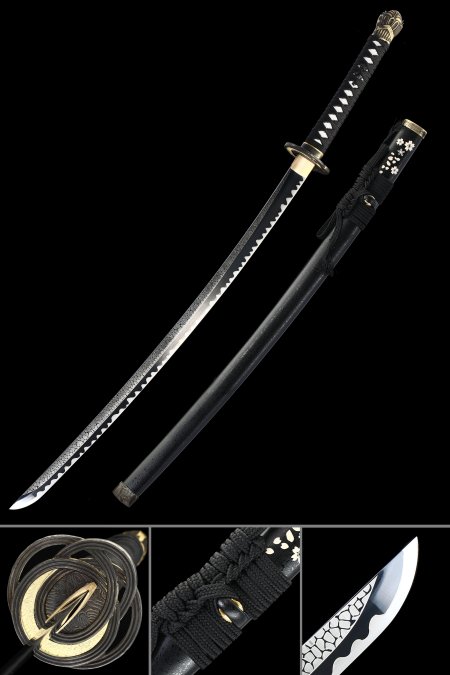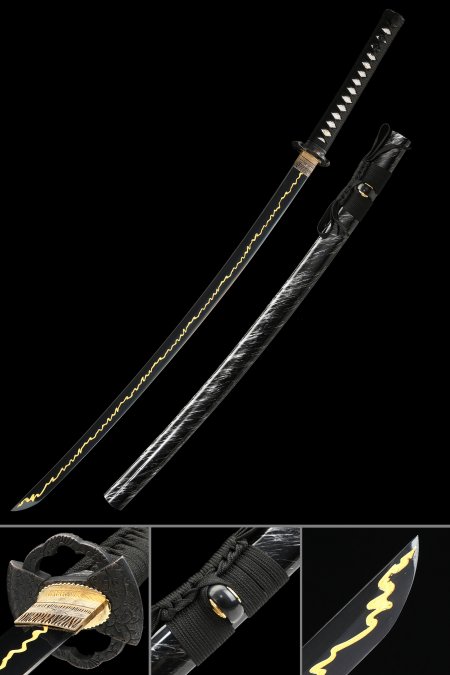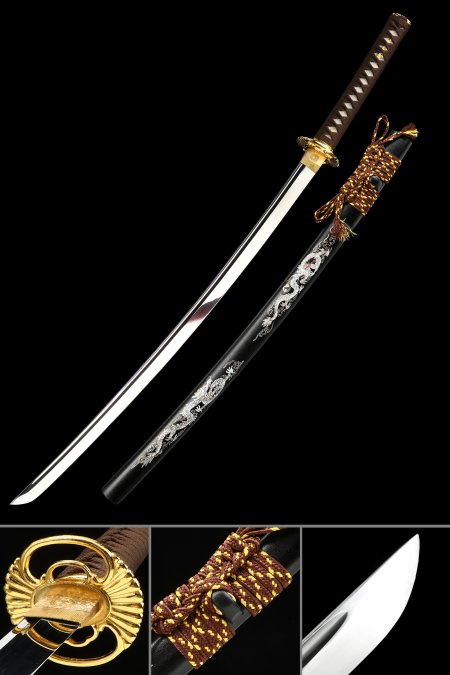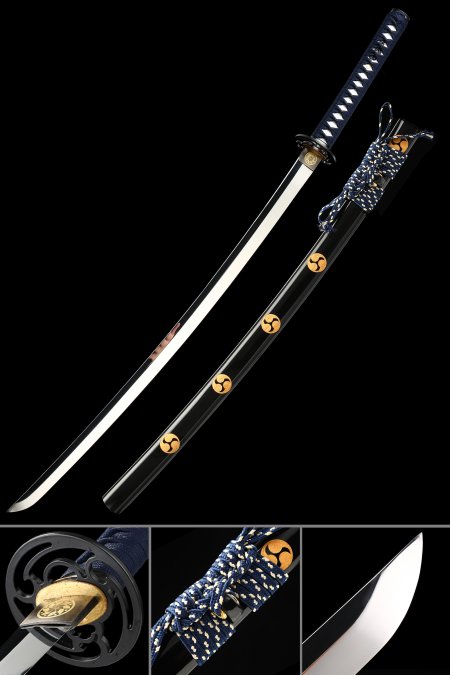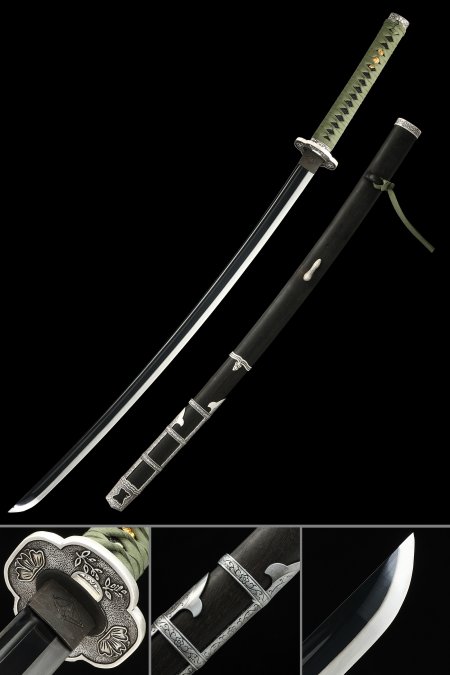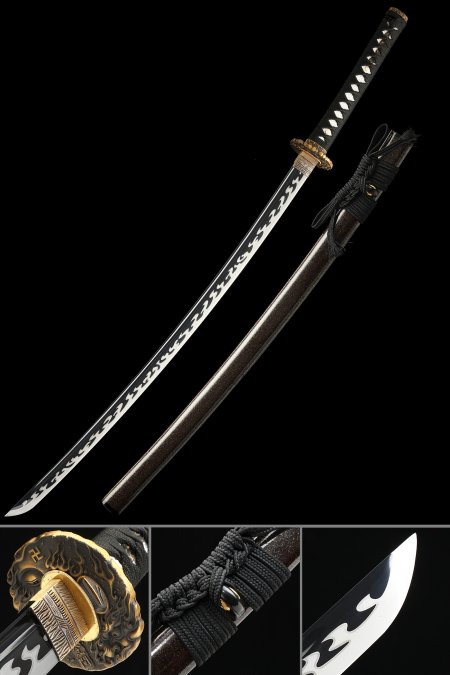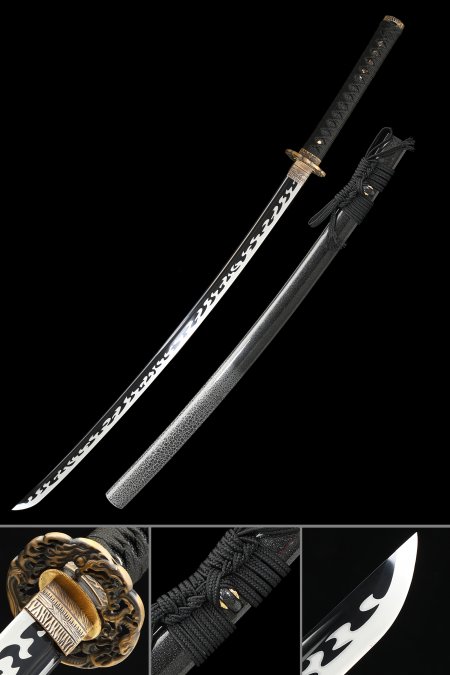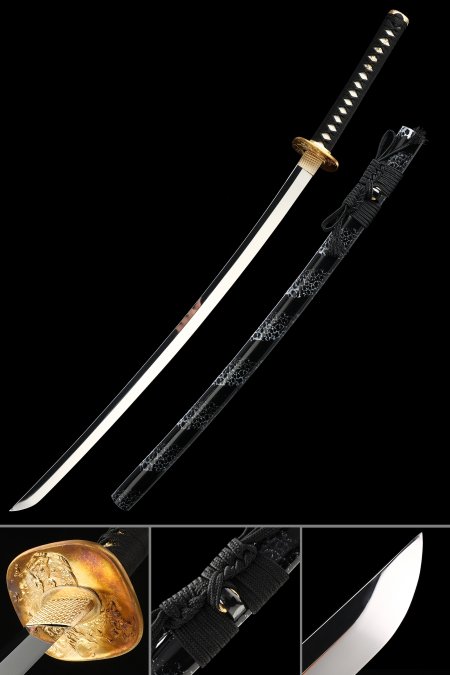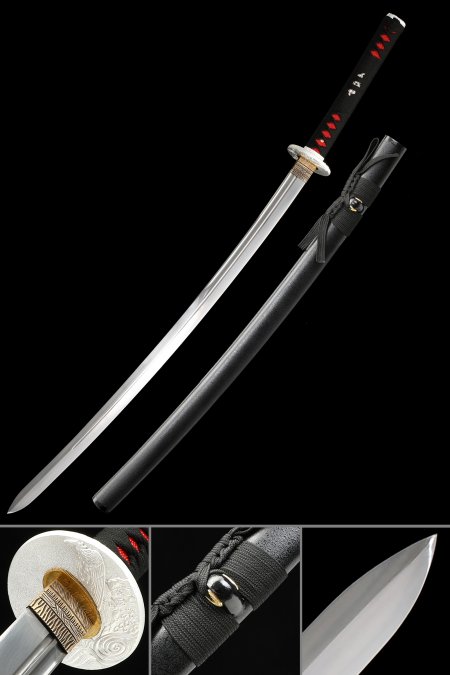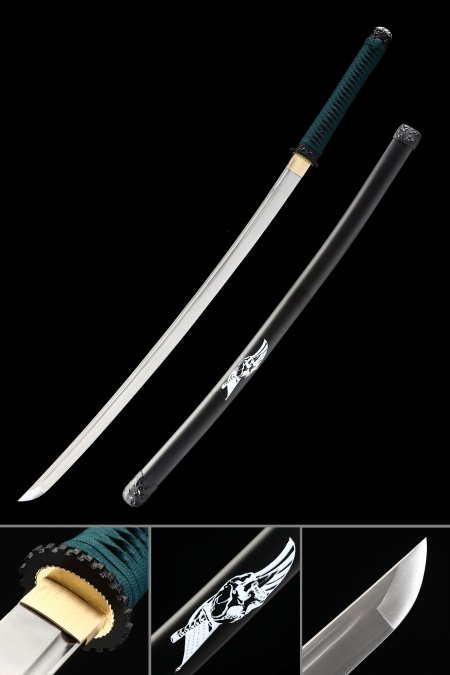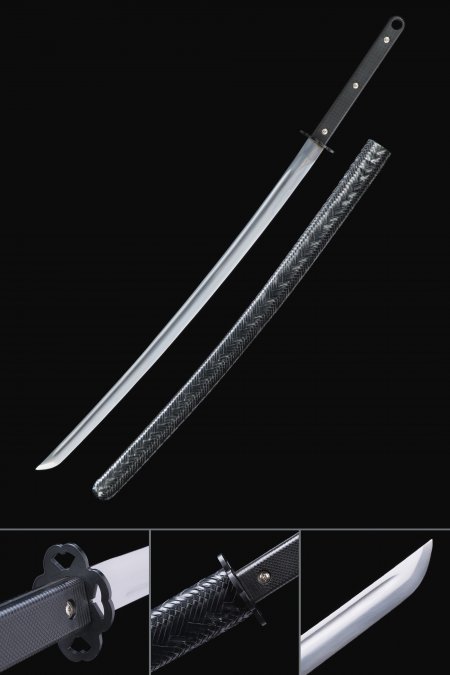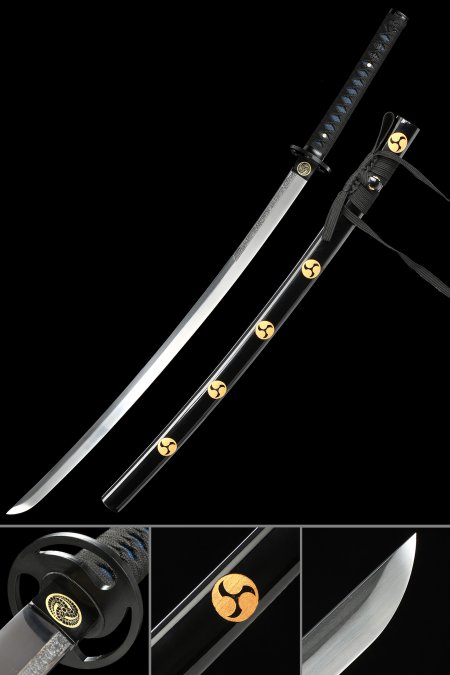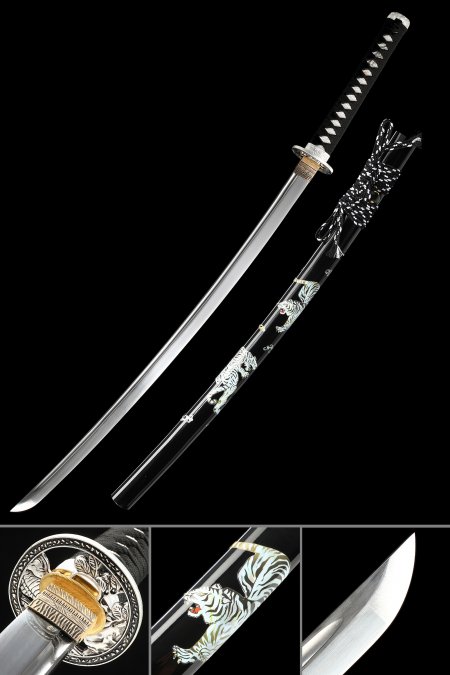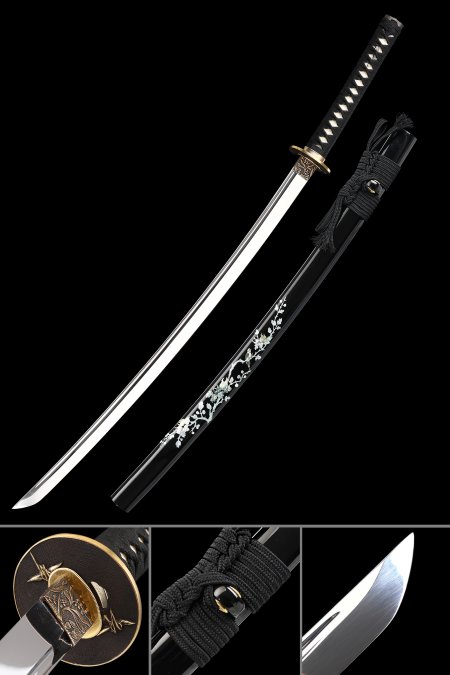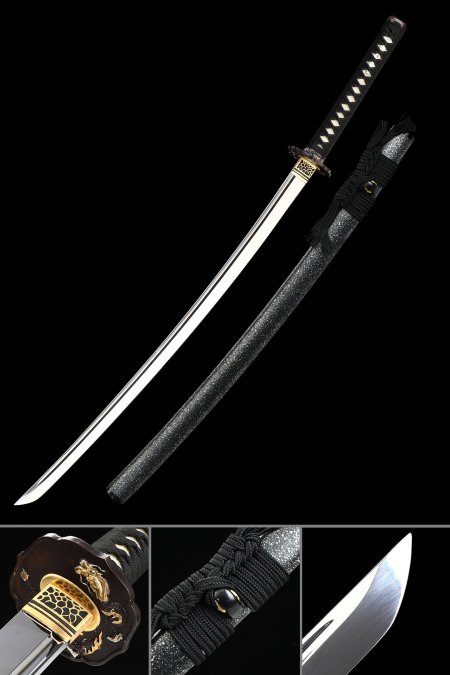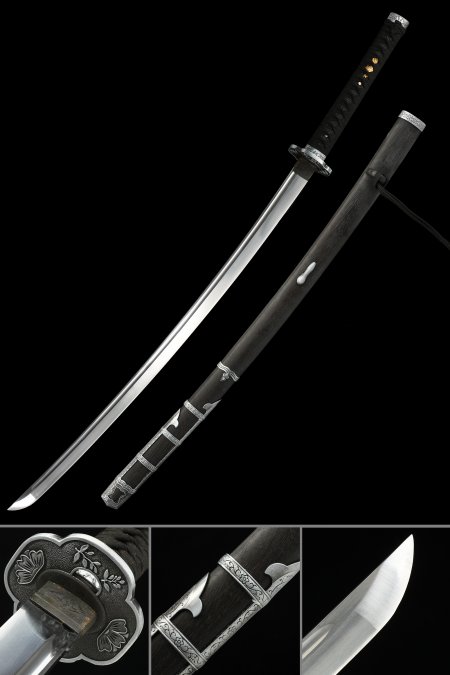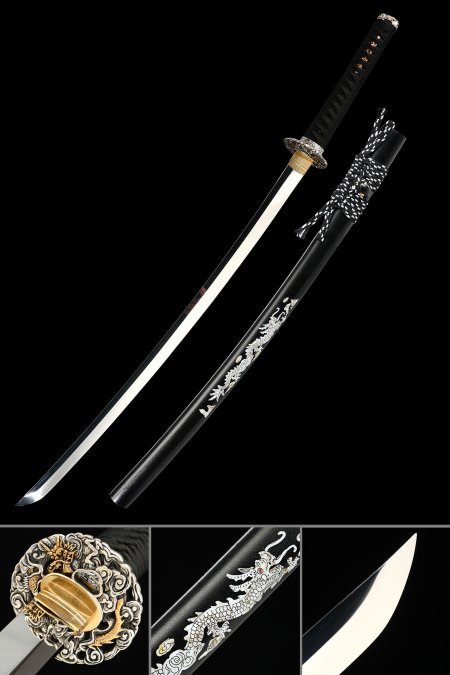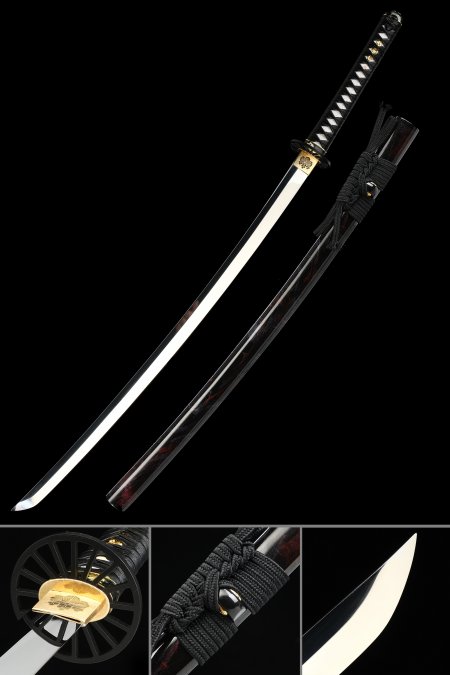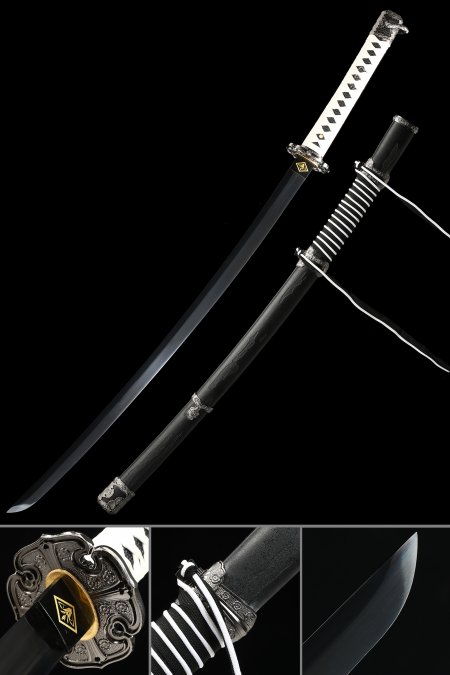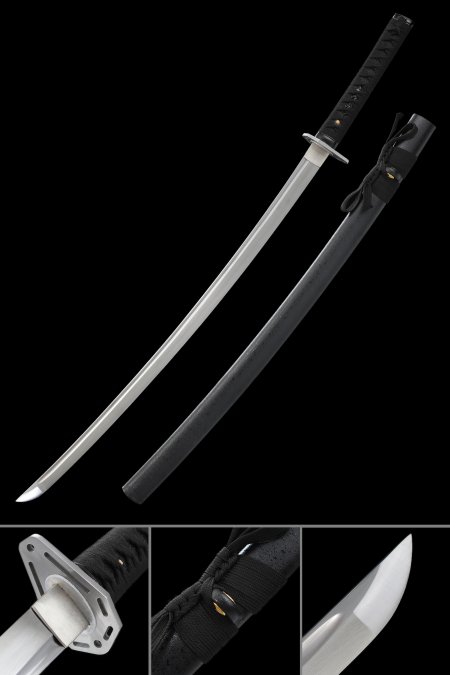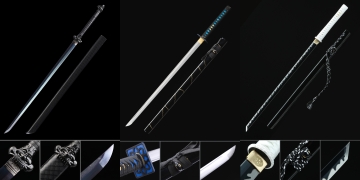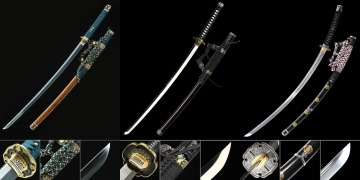
Black 1095 Carbon Steel Katana

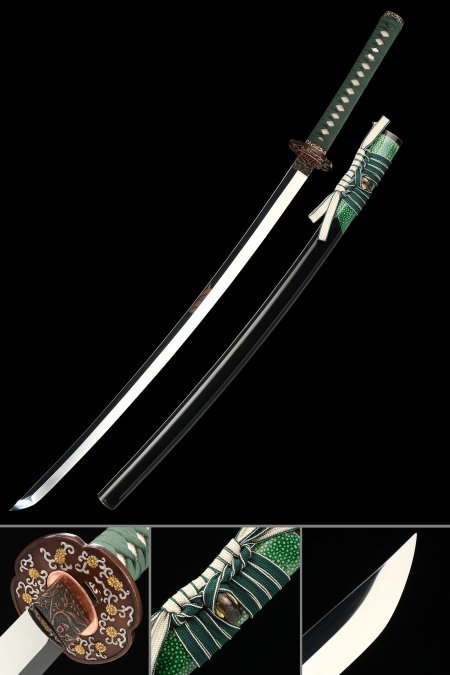
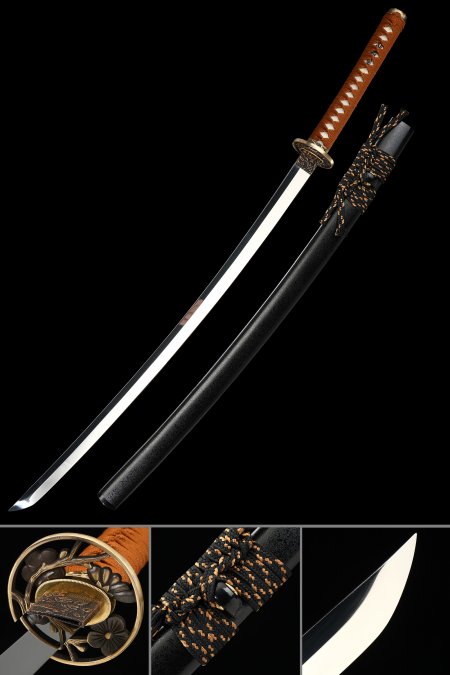
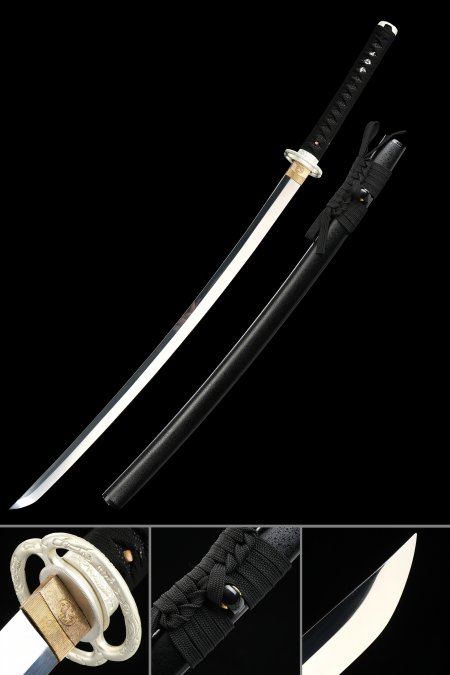
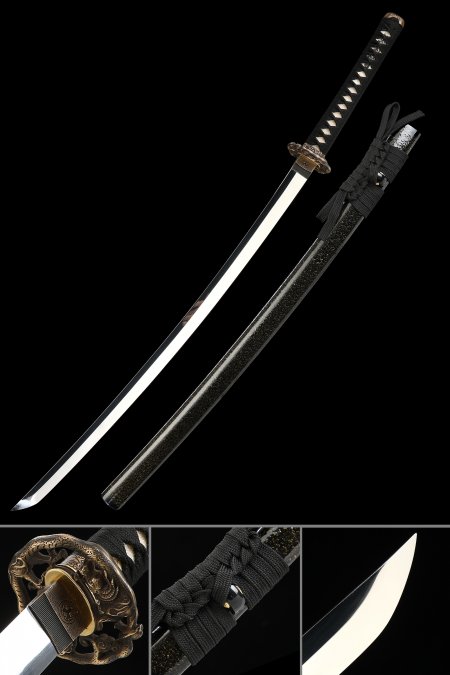
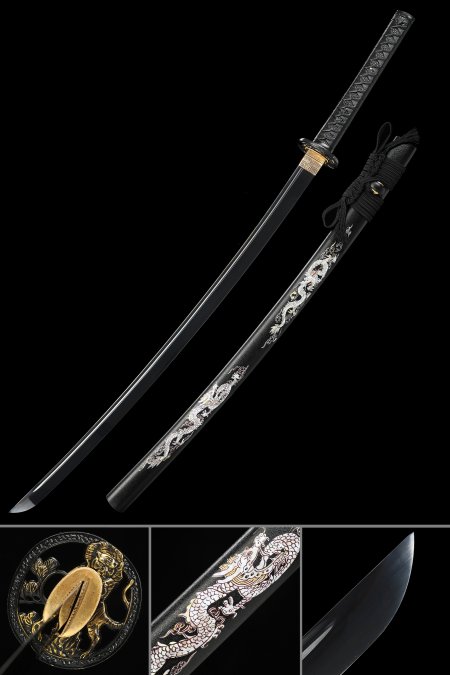
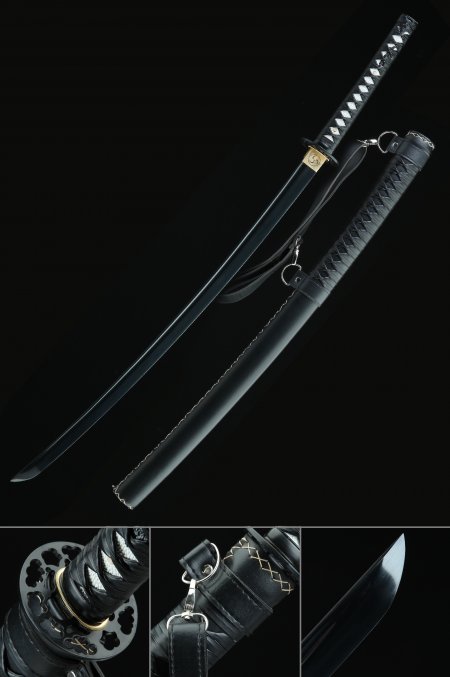
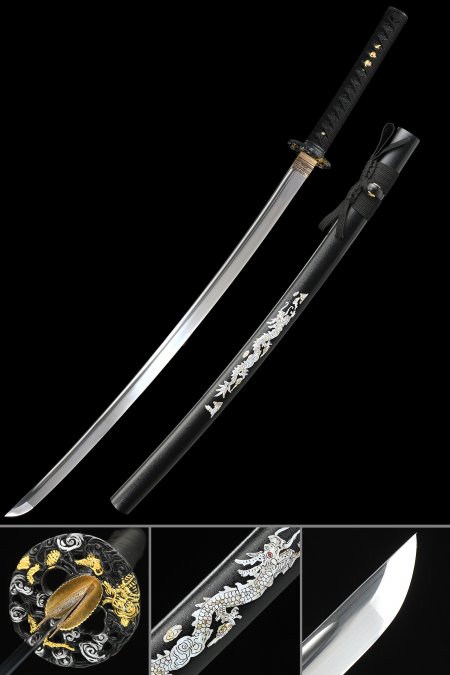
Handcrafted from 1095 high-carbon steel, each katana in this collection delivers the dark aesthetic and authentic construction that serious collectors demand — from dragon-carved blades to hand-wrapped tsuka in silk and leather. Every piece is full-tang and finished with lacquered hardwood or piano lacquer saya, pairing visual drama with genuine craftsmanship. Enjoy free shipping on your order, and if anything isn't right, returns are easy.
Showing 29 Products

Related Collections

Frequently Asked Questions

What makes 1095 carbon steel a preferred choice for katana collectors?
1095 carbon steel sits at roughly 0.95% carbon content, placing it in the high-carbon range that allows for a Rockwell hardness of 58–62 HRC after heat treatment. For collectors, this matters because the steel responds well to differential hardening — the process that creates a harder edge and tougher spine in a single blade. This characteristic is why 1095 has become a go-to material for production katana that aim to replicate the structural logic of traditionally forged blades. The trade-off is that 1095 is more reactive to moisture than stainless alternatives, so collectors should apply a light coat of camellia or mineral oil every few months, particularly in humid climates, to maintain the blade's surface integrity during display.
How is the black finish applied on these 1095 steel katana?
The black finish on 1095 carbon steel katana is typically achieved through acid etching, heat oxidation, or a layered combination of both techniques — not surface paint or coating. Acid etching reacts with the steel's carbon structure to create a matte-to-satin dark patina that actually penetrates the surface layer rather than sitting on top of it. Heat oxidation produces a blued or deep charcoal tone depending on temperature control during the process. Both methods offer genuine corrosion resistance compared to bare polished steel, though neither is fully maintenance-free. Displaying these blades away from prolonged direct sunlight and wiping them down with a clean cloth before storage helps preserve the finish and prevents fingerprint acids from degrading the surface over time.
What is a full-tang katana and why does it matter for display pieces?
A full-tang katana has its steel core — the tang, or nakago — running the complete length of the handle rather than stopping partway. This is the foundational construction detail that separates a structurally sound collectible from a decorative piece likely to loosen at the handle joint over years of display. On a properly assembled full-tang katana, the nakago is secured through the tsuka with a mekugi pin, allowing the handle to be disassembled for maintenance or re-wrapping without damaging the blade. For collectors planning long-term display, full-tang construction also means the sword retains its balance and visual proportions indefinitely, since there is no hollow handle cavity that might warp or shift as temperature and humidity fluctuate in a display environment.
How should I store a black carbon steel katana to prevent rust?
Carbon steel, including 1095, will develop surface rust if exposed to humidity, salt air, or skin oils without regular maintenance. For display storage, keep the katana in its saya — the scabbard — which slows oxidation by limiting air contact with the blade. Before sheathing, wipe the blade gently with a clean, lint-free cloth to remove any fingerprints, then apply a very thin layer of camellia oil or choji oil using a soft cloth or uchiko powder ball. Avoid over-oiling, as excess oil can seep into the tsuka wrapping and degrade organic materials. In particularly humid environments or during long-term storage, placing a silica gel packet near the display rack helps maintain stable moisture levels. Inspect the blade every three to four months and re-oil as needed.
How do these 1095 katana compare to the 1065 steel versions in the same black series?
The primary difference between 1095 and 1065 carbon steel lies in carbon content: 1095 contains approximately 0.95% carbon while 1065 sits closer to 0.65%. Higher carbon content allows 1095 to reach greater hardness after quenching, which translates to a finer, more defined edge geometry that collectors associate with premium production katana. However, 1065 offers slightly more ductility due to its lower carbon ratio, making it marginally more forgiving under flexion. For display and collection purposes, 1095 is generally the preferred choice when edge geometry, surface finish quality, and differential hardening aesthetics are the primary criteria. Collectors building a themed black-series display often pair 1095 katana with shorter blades from the Black T10 Carbon Steel Wakizashi collection to create a visually cohesive daisho arrangement with complementary steel characteristics.

Customer Reviews

Ross Nichols Oregon, United States

First thing is this is a sword for 150 and it is 1095 and ful tang that's a good start. Any collection has to have a kogarasumaru style blade which is beautifully polished and the grooves are perfect and it is quite sharp in the right places . The blade is very light but it feels powerful with to hands fast and deadly. The tsuba really stands apart among all the fittings, it is very solid and dense of quality alloy and almost 1/4 inch thick with good details . The tsuka ito is very tight and expertly done. The Saya arrived in perfect condition and is all well done and the fit is perfect being just tight enough. This sword is well worth the cost and the color scheme is subtle with a flash of silver like the blade just before you cut down your opponent.
1095 Carbon Steel Full Tang Katana - Black Lacquer Saya, Dragon Tsuba, Black-Red Ito 1095 Carbon Steel Full Tang Katana - Black Lacquer Saya, Dragon Tsuba, Black-Red Ito